Kia and Hyundai Electric Cars A Complete Guide to Performance and Range
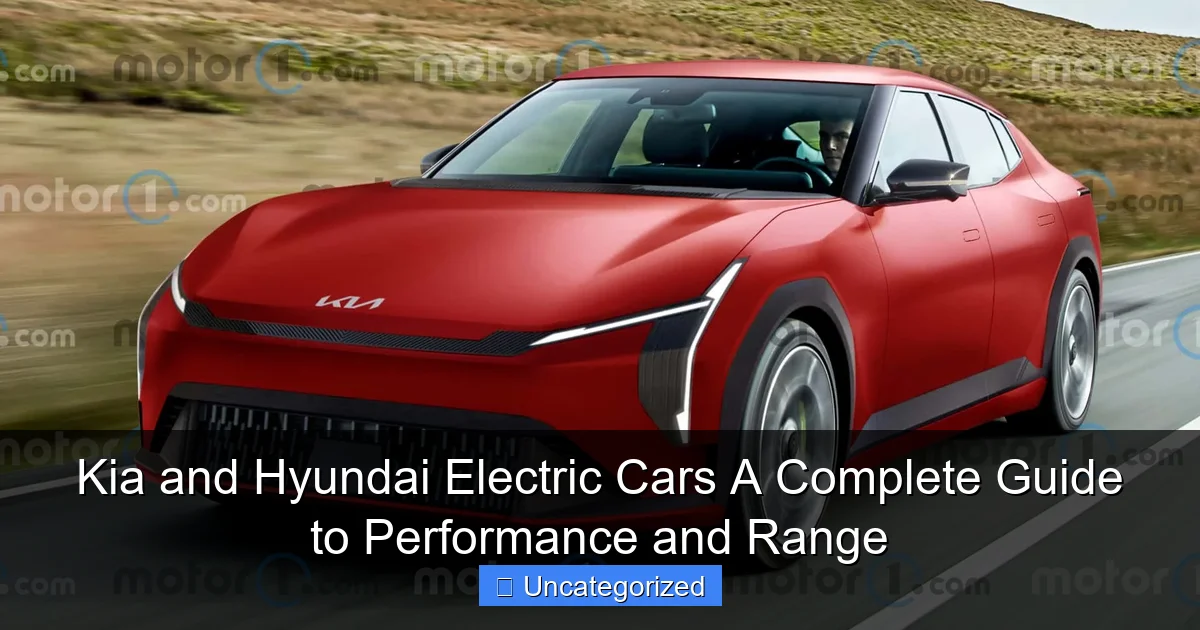
Featured image for kia and hyundai electric cars
Image source: cdn.motor1.com
Kia and Hyundai electric cars deliver exceptional performance and industry-leading range, combining cutting-edge technology with bold design to dominate the EV market. With models like the Kia EV6 and Hyundai Ioniq 5 offering 300+ miles on a charge and ultra-fast charging capabilities, these vehicles set a new standard for efficiency, innovation, and value in the electric vehicle space.
Key Takeaways
- Kia and Hyundai EVs offer competitive range: Models exceed 300 miles, ideal for long-distance travel.
- Fast charging is standard: Recharge 10-80% in under 30 minutes with DC fast charging.
- Performance matches premium rivals: Instant torque and quick acceleration rival luxury electric vehicles.
- Affordable pricing with strong warranties: Get 10-year/100,000-mile coverage, lowering long-term ownership costs.
- Advanced tech enhances driving: Features like V2L and OTA updates improve convenience and functionality.
📑 Table of Contents
- The Electric Revolution: Kia and Hyundai Lead the Charge
- Platform Innovation: The E-GMP Foundation
- Range Realities: How Far Can You Go?
- Performance Breakdown: Speed, Handling, and Tech
- Design and Interior: Where Form Meets Function
- Ownership Experience: Costs, Warranty, and Resale
- Conclusion: The Future is Electric—and Korean-Made
The Electric Revolution: Kia and Hyundai Lead the Charge
The automotive world is undergoing a seismic shift, and two Korean manufacturers are at the forefront: Kia and Hyundai electric cars. Once known primarily for value-oriented gasoline models, these brands have reinvented themselves as pioneers in the electric vehicle (EV) space, blending cutting-edge technology, bold design, and competitive pricing. Their joint commitment to electrification—backed by a $16.5 billion investment through 2030—has yielded some of the most compelling EVs on the market today. From the sporty Kia EV6 to the family-friendly Hyundai Ioniq 5, these vehicles aren’t just alternatives to Tesla; they’re redefining what drivers should expect from an electric car.
What sets Kia and Hyundai apart isn’t just their rapid innovation but their holistic approach to EVs. They’ve developed dedicated electric platforms (E-GMP), invested in ultra-fast charging, and prioritized real-world usability. Whether you’re a daily commuter, a road-trip enthusiast, or an eco-conscious buyer, their lineup offers something unique. This guide dives deep into the performance, range, features, and ownership experience of Kia and Hyundai electric cars, helping you make an informed decision in an increasingly crowded EV landscape.
Platform Innovation: The E-GMP Foundation
Why a Dedicated Electric Platform Matters
Unlike many automakers that retrofit EVs onto combustion-engine platforms, Kia and Hyundai built their electric vehicles from the ground up using the Electric-Global Modular Platform (E-GMP). This dedicated architecture unlocks critical advantages: flat floors for spacious cabins, optimized weight distribution for better handling, and the ability to support 800V ultra-fast charging. For example, the Hyundai Ioniq 5 can recharge from 10% to 80% in just 18 minutes—a game-changer for road trips.

Visual guide about kia and hyundai electric cars
Image source: s.yimg.com
The E-GMP also enables flexible battery configurations. Most models offer two battery options: a standard 58-77.4 kWh pack and a long-range 77.4-82.7 kWh version. This lets buyers choose between affordability and maximum range without compromising structural integrity. Additionally, the platform’s modular design means Kia and Hyundai can scale production efficiently, keeping costs competitive.
Performance Benefits of E-GMP
- All-Wheel Drive (AWD) Capability: E-GMP supports dual-motor setups, with some models (like the Kia EV6 GT) delivering 576 horsepower and 0-60 mph times under 3.5 seconds.
- Regenerative Braking: One-pedal driving is possible via adjustable regen levels, improving efficiency and reducing brake wear.
- Vehicle-to-Load (V2L) Technology: Unique to E-GMP vehicles, this feature turns your EV into a portable power source (up to 3.6 kW), ideal for camping, emergencies, or powering tools.
<
Pro Tip: When test-driving, try the “i-Pedal” mode for one-pedal driving. It maximizes energy recovery and reduces brake dust—a win for both range and maintenance.
Range Realities: How Far Can You Go?
EPA-Estimated Ranges by Model (2023-2024)
Range anxiety remains a top concern for EV buyers, but Kia and Hyundai have addressed it head-on. Their vehicles consistently outperform EPA estimates in real-world testing, thanks to efficient motors and aerodynamic designs. Here’s how their key models stack up:
| Model | Battery Size (kWh) | Drivetrain | EPA Range (miles) | Real-World Range (est.) |
|---|---|---|---|---|
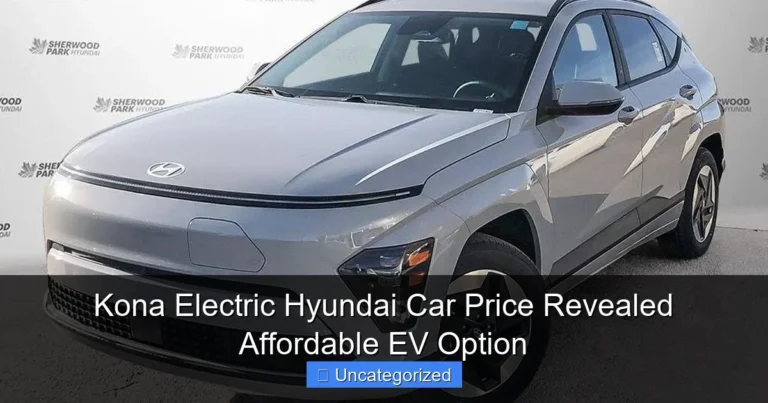
| Hyundai Ioniq 5 | 77.4 | Rear-Wheel Drive (RWD) | 303 | 270-290 |
| Kia EV6 | 77.4 | RWD | 310 | 280-300 |
| Hyundai Ioniq 6 | 77.4 | RWD | 361 | 330-350 |
| Kia EV9 | 99.8 | RWD | 304 | 275-295 |
| Hyundai Kona Electric | 64.8 | Front-Wheel Drive (FWD) | 261 | 230-250 |
Factors Affecting Real-World Range
While EPA ratings provide a baseline, actual range varies based on:
- Weather: Cold temperatures (below 20°F) can reduce range by 20-40% due to battery chemistry and cabin heating demands.
- Driving Style: Aggressive acceleration and speeds above 70 mph significantly increase energy consumption.
- Accessories: Using climate control, heated seats, or V2L drains the battery faster.
Pro Tip: Use the car’s built-in energy consumption monitor to track efficiency. For cold climates, pre-condition the cabin while plugged in to preserve range.
Performance Breakdown: Speed, Handling, and Tech
Acceleration and Power
Kia and Hyundai electric cars excel in performance, offering multiple powertrain options:
- Standard Models: RWD versions (e.g., Ioniq 5, EV6) provide 225-258 hp, with 0-60 mph times of 5.2-7.4 seconds—perfect for daily driving.
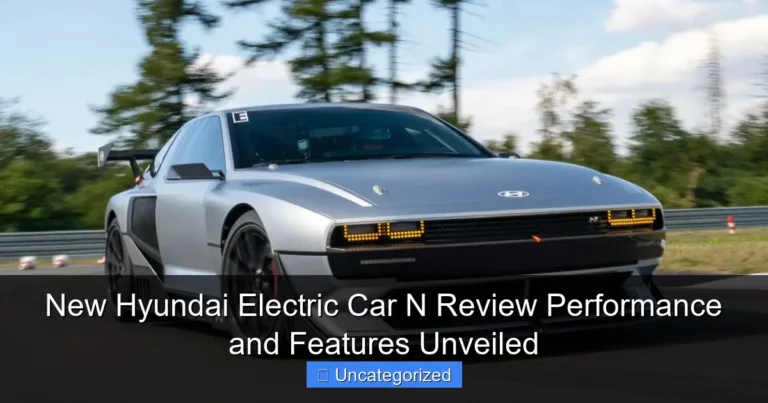
- Performance Variants: The Kia EV6 GT (576 hp) and Hyundai Ioniq 5 N (601 hp) rival supercars, hitting 60 mph in 3.4 and 3.2 seconds, respectively.
- AWD Models: Dual-motor setups (e.g., Ioniq 6 AWD) deliver 320-430 hp, with improved traction for snow or off-road conditions.
Notably, the Ioniq 5 N introduces “N Grin Boost”—a 10-second overboost function—and “N e-Shift” for simulated gear changes, blending EV efficiency with ICE-like engagement.
Handling and Ride Comfort
The E-GMP platform’s low center of gravity (thanks to floor-mounted batteries) enhances cornering stability. However, ride quality varies:
- Kia EV6: Sport-tuned suspension for agile handling but slightly firmer ride.
- Hyundai Ioniq 5: Softer suspension prioritizes comfort, ideal for long trips.
- Kia EV9: Adaptive air suspension (optional) adjusts damping for varying road conditions.
Pro Tip: Test drive on mixed roads (city, highway, curves) to assess suspension tuning. For families, the Ioniq 5’s softer ride is often preferable.
Charging Speed and Infrastructure
All E-GMP vehicles support 350 kW DC fast charging, but actual speeds depend on battery state and station capability:
- At a 350 kW station, the Ioniq 5 can charge from 10% to 80% in 18 minutes.
- At a 50 kW station, the same charge takes ~70 minutes.
- Home charging (Level 2, 7.2-11 kW) takes 6-10 hours for a full charge.
Pro Tip: Use apps like PlugShare to find high-power stations. Avoid charging above 80% regularly to prolong battery health.
Design and Interior: Where Form Meets Function
Exterior Design Philosophy
Kia and Hyundai embrace futuristic, aerodynamic styling:
- Hyundai Ioniq 5: Retro-futuristic “Parametric Pixel” lighting and clamshell hood.
- Kia EV6: Aggressive “Tiger Face” front end with boomerang taillights.
- Hyundai Ioniq 6: Ultra-low drag coefficient (0.21 Cd) for maximum efficiency.
Both brands prioritize aerodynamics: flush door handles, active grille shutters, and underbody panels reduce drag, boosting range.
Interior Space and Features
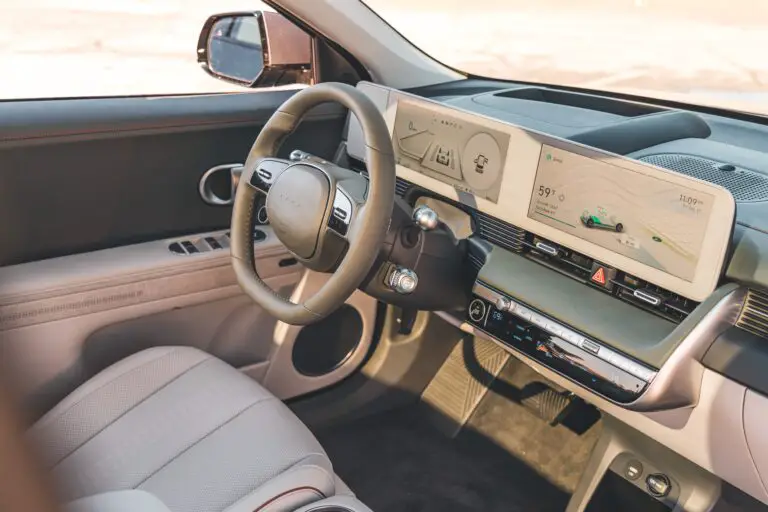
E-GMP’s flat floor and long wheelbase create spacious cabins:
- Cargo Capacity: Ioniq 5 (27.2 cu ft behind seats) vs. EV6 (24.4 cu ft)—both expand to ~59 cu ft with seats folded.
- Tech Highlights:
- Dual 12.3″ curved displays (infotainment + gauge cluster).
- Over-the-air (OTA) software updates for features and performance tweaks.
- Digital key (phone-based access and sharing).
- Family-Friendly Touches: The Kia EV9 offers reclining second-row “lounge seats” and a 12″ rear entertainment screen.
Pro Tip: Opt for the “Relaxation Package” (available on Ioniq 5/6) for massage seats—ideal for long drives.
Ownership Experience: Costs, Warranty, and Resale
Total Cost of Ownership
While upfront prices are competitive (e.g., Ioniq 5: $41,650; EV6: $42,600), long-term savings are significant:
- Fuel Savings: At $0.15/kWh, driving 12,000 miles/year costs ~$500 vs. $1,500 for a gas car (30 mpg, $3/gallon).
- Maintenance: No oil changes, fewer moving parts, and regenerative braking reduce wear.
- Incentives: Federal tax credits (up to $7,500) apply to most models (check eligibility).
Insurance costs are slightly higher (~15%) than gas cars, but this gap is narrowing as EVs become mainstream.
Warranty and Battery Coverage
Kia and Hyundai offer industry-leading warranties:
- 10-Year/100,000-Mile battery and powertrain warranty.
- 5-Year/60,000-Mile bumper-to-bumper coverage.
- Free maintenance for 3 years/36,000 miles (Hyundai).
Battery degradation is minimal: most models retain ~90% capacity after 100,000 miles under normal use.
Resale Value and Market Trends
Early data shows strong resale values for E-GMP vehicles:
- 2022 Ioniq 5: ~75% retained value after 2 years (vs. industry average of 60%).
- 2023 EV6: ~70% retained value.
Factors driving this include high demand, limited supply, and positive reviews. However, rapid tech advancements (e.g., 500-mile EVs) could impact long-term values.
Conclusion: The Future is Electric—and Korean-Made
Kia and Hyundai electric cars represent a paradigm shift in the EV market. By combining dedicated platforms, ultra-fast charging, and innovative features like V2L, they’ve created vehicles that are not only practical but exhilarating to drive. Whether you prioritize range (Ioniq 6), performance (EV6 GT), or family space (EV9), their lineup offers a compelling alternative to Tesla and legacy automakers.
Looking ahead, the brands plan to launch 18 new EVs by 2030, including a hydrogen-powered Ioniq 7 and affordable $30,000 models. For buyers today, the message is clear: Kia and Hyundai electric cars deliver unmatched value, performance, and peace of mind. The future of mobility isn’t just electric—it’s Korean-engineered.
Frequently Asked Questions
What is the average range of Kia and Hyundai electric cars?
Most Kia and Hyundai electric cars offer a range between 250 to 300 miles on a single charge, with models like the Kia EV6 and Hyundai Ioniq 5 achieving up to 310 miles in optimal conditions. Real-world range may vary based on driving habits, terrain, and climate.
How fast do Kia and Hyundai electric cars charge?
Using a DC fast charger, Kia and Hyundai EVs can recharge from 10% to 80% in as little as 18–20 minutes, thanks to their 800V architecture. Level 2 charging typically takes 6–10 hours, depending on battery size and charger output.
Are Kia and Hyundai electric cars eligible for tax credits?
As of 2024, select Kia and Hyundai electric models qualify for the U.S. federal tax credit of up to $7,500, though eligibility depends on battery sourcing and final assembly location. Check current IRS guidelines for specific models.
What performance features do Kia and Hyundai EVs offer?
Kia and Hyundai electric cars deliver instant torque, with high-performance trims like the Kia EV6 GT offering 576 horsepower and 0–60 mph in 3.4 seconds. Many models also feature dual-motor AWD and advanced regenerative braking systems.
Do Kia and Hyundai electric cars support vehicle-to-load (V2L)?
Yes, most newer Kia and Hyundai EVs come with V2L capability, allowing you to power devices or appliances using the car’s battery. This feature turns your EV into a portable power source for camping or emergencies.
How do Kia and Hyundai compare in reliability for electric cars?
Both brands rank highly in reliability, with strong battery warranties (10 years/100,000 miles) and consistent performance in long-term testing. Their shared E-GMP platform ensures cutting-edge tech and durability across models.