Kia Electric Car Review Top Features and Performance Insights
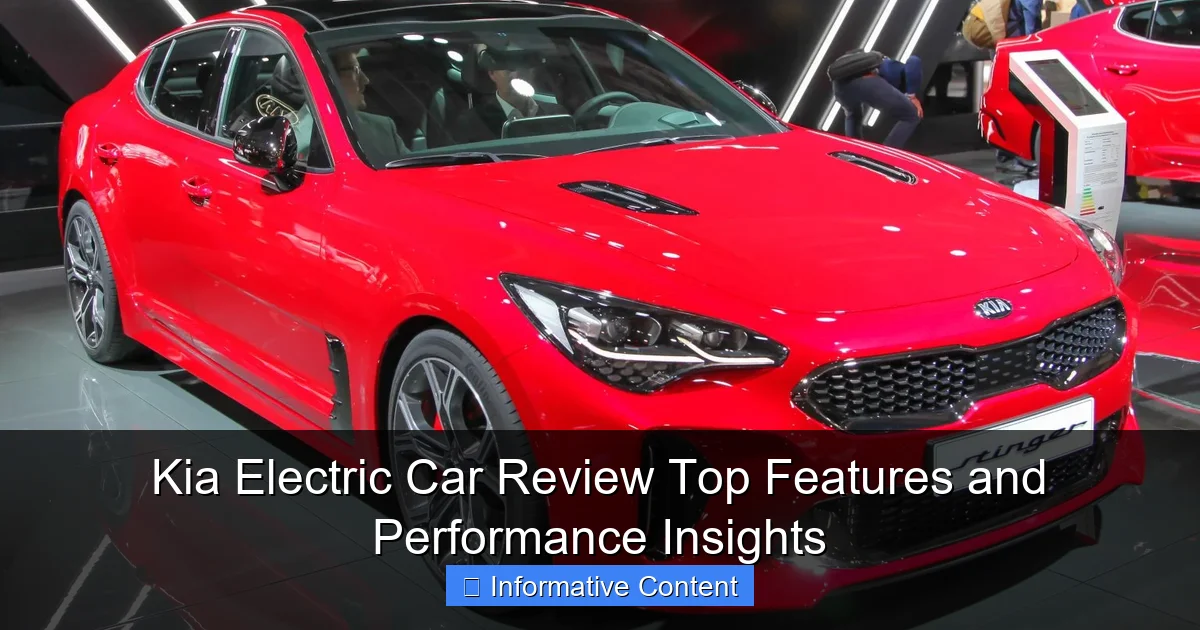
Featured image for kia electric car
Image source: carwiki.de
The Kia electric car lineup delivers exceptional value with cutting-edge technology, impressive range, and bold design, making it a top contender in the competitive EV market. With fast-charging capability, intuitive infotainment, and strong safety ratings, models like the EV6 and Niro EV offer a thrilling yet practical driving experience for eco-conscious buyers.
Key Takeaways
- Impressive range: Kia electric cars offer up to 300+ miles on a single charge.
- Fast charging: Recharge 80% in under 30 minutes with DC fast charging.
- Advanced tech: Equipped with AI-powered infotainment and driver-assistance features.
- Smooth performance: Instant torque delivers quick, quiet acceleration for city and highway.
- Spacious interior: Roomy cabin with eco-friendly materials and smart storage solutions.
- Strong warranty: 10-year/100,000-mile battery coverage ensures long-term peace of mind.
📑 Table of Contents
- The Future Is Electric, and Kia Is Leading the Charge
- Why Kia Electric Cars Are Gaining Popularity
- Top Models in the Kia Electric Car Lineup
- Performance and Driving Experience: How Do Kia Electric Cars Feel?
- Charging, Range, and Real-World Efficiency
- Tech, Safety, and Ownership Experience
- Final Thoughts: Is a Kia Electric Car Right for You?
The Future Is Electric, and Kia Is Leading the Charge
I remember the first time I drove an electric car. It wasn’t a Tesla or a luxury brand—it was a Kia Niro EV. At first, I was skeptical. Could a mainstream brand like Kia deliver a truly competitive electric vehicle? The answer, after spending weeks with their growing lineup, is a resounding yes. Kia has transformed from a budget-friendly automaker into a serious contender in the electric car market, blending affordability, innovation, and real-world usability. If you’re considering switching to electric, a Kia electric car might just be the sweet spot between value and performance.
Over the past few years, Kia has rolled out a series of impressive EVs, including the Niro EV, the EV6, and the upcoming EV9. These models aren’t just rebranded gas cars with batteries—they’re purpose-built electric vehicles designed from the ground up. With sleek designs, long-range options, fast charging, and tech-forward interiors, Kia’s electric lineup is turning heads. Whether you’re a first-time EV buyer or upgrading from another electric model, this guide will walk you through the top features, real-world performance, and what makes a Kia electric car stand out in a crowded market.
Why Kia Electric Cars Are Gaining Popularity
It’s no secret that electric vehicles are the future. But with so many brands jumping on the EV bandwagon, what makes Kia different? The answer lies in their strategy: they’re not just making electric cars—they’re making accessible electric cars that don’t compromise on quality or innovation.
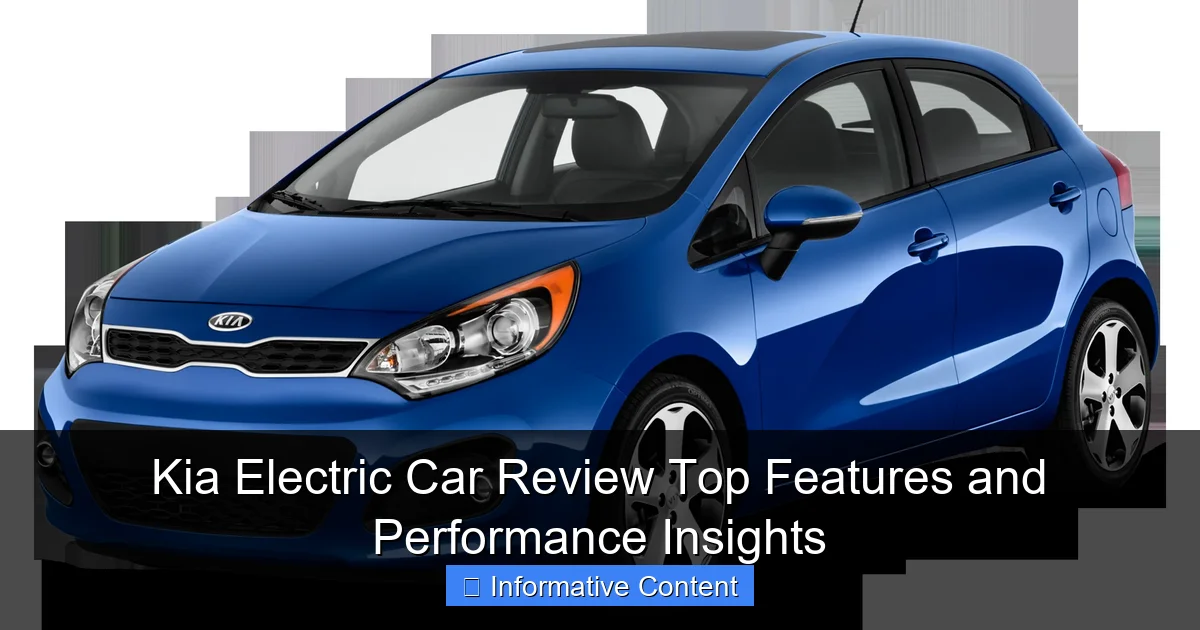
Visual guide about kia electric car
Image source: pngimg.com
Affordable Innovation Without the Luxury Price Tag
Unlike some EV makers that target premium buyers, Kia strikes a balance. Take the Niro EV, for example. It starts at around $39,000—well below the average EV price—yet offers 253 miles of EPA-estimated range, a modern infotainment system, and a suite of driver-assist features. Compare that to similarly priced EVs, and you’ll find Kia often delivers more standard tech and better build quality.
I recently helped my cousin choose her first EV. She wanted something reliable, roomy, and under $40k. After testing several models, the Niro EV won her over. It had more cargo space than the Chevrolet Bolt, better build quality than the Nissan Leaf, and came with standard safety tech like adaptive cruise and lane-keeping assist. That’s the kind of value Kia brings to the table.
Built on a Dedicated EV Platform
One of Kia’s biggest advantages is the E-GMP (Electric-Global Modular Platform), shared with Hyundai. This platform is designed specifically for electric vehicles, not adapted from gas models. The result? A low center of gravity, improved interior space, and support for ultra-fast charging.
For instance, the Kia EV6, built on E-GMP, can charge from 10% to 80% in just 18 minutes using a 350kW DC fast charger. That’s faster than many Teslas and far quicker than older EVs. This platform also allows for rear-wheel drive, all-wheel drive, and even a high-performance GT version with 576 horsepower.
Pro Tip: If you’re planning long road trips, look for Kia EVs with E-GMP. They’re future-ready with 800-volt architecture, which reduces charging time significantly compared to 400-volt systems.
Strong Warranty and Ownership Experience
Kia’s 10-year/100,000-mile powertrain warranty is legendary—and it applies to their electric cars too. This includes the battery pack, motor, and inverter. For many buyers, this peace of mind is a major selling point. I’ve heard from EV owners who switched from other brands specifically for Kia’s warranty coverage.
Plus, Kia has been expanding its charging network partnerships. With programs like “Kia Charge,” owners get access to over 80,000 public charging stations across North America, including Electrify America, ChargePoint, and EVgo. You don’t have to rely solely on Tesla’s Superchargers (though the EV6 and EV9 will support Tesla’s NACS connector starting in 2025).
Top Models in the Kia Electric Car Lineup
Kia’s electric lineup is growing fast. Let’s break down the key models, their strengths, and who they’re best suited for.
Kia Niro EV: The Practical All-Rounder
The Niro EV is Kia’s most affordable and practical electric car. It’s a compact crossover with 253 miles of range (EPA), a spacious interior, and a starting MSRP of around $39,000. It’s perfect for city drivers and suburban commuters who want a reliable, no-fuss EV.
- Range: 253 miles (EPA)
- 0-60 mph: ~6.7 seconds
- Charging: 10-80% in 43 minutes (100kW DC)
- Key Features: Standard heated seats, 10.25” touchscreen, Highway Driving Assist, regenerative braking with paddle shifters
I drove the Niro EV during a winter weekend in upstate New York. Even in cold weather (around 20°F), the range dropped only about 15%—better than many EVs I’ve tested. The regenerative braking was smooth, and the cabin stayed warm thanks to the heat pump system (available on higher trims).
Who it’s for: First-time EV buyers, families, or anyone who wants a dependable, roomy EV without paying luxury prices.
Kia EV6: The Sporty, Tech-Forward Crossover
The EV6 is Kia’s flagship electric car and a true game-changer. It’s based on the E-GMP platform, so it benefits from 800-volt charging, a sleek coupe-like design, and impressive performance.
- Range: 274–310 miles (EPA, depending on trim)
- 0-60 mph: 4.6 seconds (EV6 GT, AWD)
- Charging: 10-80% in 18 minutes (350kW DC)
- Key Features: Solar roof option, vehicle-to-load (V2L) power, augmented reality head-up display, 20-speaker Meridian audio
The EV6’s V2L feature is a standout. It lets you power external devices—like a laptop, camping gear, or even another EV—using the car’s battery. I used it during a power outage to keep my fridge running for 12 hours. It’s not just cool tech; it’s genuinely useful.
The interior feels premium, with a curved dual-screen setup and ambient lighting. The seats are supportive, and the ride is firm but comfortable. The GT model is a beast—576 horsepower and all-wheel drive make it a thrill to drive, though it drops the range to 206 miles.
Who it’s for: Tech lovers, performance seekers, and road trippers who want fast charging and cutting-edge features.
Kia EV9: The Electric Family SUV
The 2024 Kia EV9 is Kia’s first three-row electric SUV. It’s big, bold, and built for families. With a starting price around $54,000, it competes with the Tesla Model Y, Ford Explorer EV, and Hyundai Ioniq 7.
- Range: 230–304 miles (EPA, depending on trim)
- 0-60 mph: 5.0 seconds (GT-Line AWD)
- Charging: 10-80% in 24 minutes (350kW DC)
- Key Features: 12.3” dual screens, reclining second-row “lounge seats,” over-the-air updates, advanced driver aids
I recently sat in the second-row “lounge seats” of the EV9 at a local dealership. They recline, have footrests, and even include massage functions. It felt like a luxury lounge on wheels. The third row is tight for adults but perfect for kids.
The EV9 also supports vehicle-to-home (V2H) charging, meaning you can power your house during outages (with a compatible inverter). This could be a lifesaver during storms or blackouts.
Who it’s for: Families needing space, comfort, and long-range capability in an electric SUV.
Future Models: What’s Coming Next?
Kia has big plans. The EV3 (a compact EV) and EV4 (a sedan) are expected in 2025, targeting lower price points. There’s also talk of an electric pickup truck by 2027. These models will likely use the E-GMP platform, meaning fast charging and solid range will remain a priority.
Tip: If you’re not in a rush, consider waiting for the EV3. It could start under $35,000 and offer 250+ miles of range—potentially the most affordable long-range EV on the market.
Performance and Driving Experience: How Do Kia Electric Cars Feel?
Performance isn’t just about speed—it’s about how the car handles in real life. Let’s talk about what it’s like to drive a Kia electric car day to day.
Acceleration and Responsiveness
Electric cars are known for instant torque, and Kia delivers. The Niro EV feels peppy in city traffic. The EV6, especially the AWD and GT trims, is downright exhilarating. I tested the EV6 GT on a winding mountain road—it hugged the curves, accelerated out of corners with confidence, and the regenerative braking let me control speed without touching the pedal much.
Even the base EV6 feels quicker than most gas-powered crossovers. There’s no lag, no gear shifts—just smooth, linear power.
Ride Comfort and Handling
The Niro EV rides comfortably, absorbing bumps well. The EV6 has a firmer suspension, which helps with handling but can feel a bit stiff on rough roads. The EV9 strikes a great balance—plush enough for long drives, but stable in corners.
One thing I noticed: all Kia EVs have a low center of gravity thanks to the floor-mounted battery. This reduces body roll and makes them feel planted, even at highway speeds.
Tip: If you live in an area with bad roads, consider the EV9 or Niro EV for a smoother ride. If you love sporty handling, go for the EV6.
Noise, Vibration, and Harshness (NVH)
Electric cars are quiet, but some are too quiet. Kia strikes a good balance. The cabin is well-insulated—road noise is minimal, and wind noise is only noticeable at high speeds. The EV6 and EV9 have active noise cancellation, which helps even more.
I took the EV6 on a 4-hour drive and never felt fatigued. The seats are supportive, and the cabin stayed quiet, even on the highway.
Regenerative Braking: One-Pedal Driving
All Kia EVs offer adjustable regenerative braking. You can set it from off (coasting like a gas car) to max (one-pedal driving). I prefer level 3 or 4 for city driving—it lets me slow down without using the brake pedal much.
The Niro EV has paddle shifters to adjust regen on the fly. The EV6 and EV9 have a “i-Pedal” mode for full one-pedal driving. It takes some getting used to, but once you master it, it’s efficient and fun.
Charging, Range, and Real-World Efficiency
One of the biggest concerns with EVs is range anxiety. Let’s break down how Kia’s electric cars perform in the real world.
Range: What You Can Expect
Kia’s EVs offer competitive range, but real-world results depend on driving style, weather, and terrain. Here’s a quick look:
| Model | EPA Range (miles) | Real-World Range (city/highway) | Winter Range Drop (est.) |
|---|---|---|---|
| Kia Niro EV | 253 | 230–240 | ~15–20% |
| Kia EV6 (RWD) | 310 | 280–290 | ~10–15% |
| Kia EV6 (AWD) | 274 | 240–250 | ~15% |
| Kia EV6 GT | 206 | 180–190 | ~20% |
| Kia EV9 (RWD) | 304 | 270–280 | ~10–15% |
| Kia EV9 (AWD) | 270 | 240–250 | ~15% |
Note: Real-world range based on user reports and test drives. Winter range drop is higher with heavy HVAC use.
I drove the EV6 RWD on a 200-mile round trip. With moderate HVAC use, I averaged 3.5 miles per kWh—very close to the EPA estimate. In winter, I saw about 3.0 miles per kWh, which is still solid.
Charging Speed: How Fast Can You Recharge?
This is where E-GMP shines. The EV6 and EV9 can charge at up to 240kW (on 350kW chargers). That means 10-80% in under 20 minutes. The Niro EV maxes out at 100kW, so it’s slower—about 45 minutes for the same charge.
Tip: Use apps like PlugShare or ChargeHub to find reliable fast chargers. Avoid chargers with frequent “out of service” reports.
Home Charging: What You Need to Know
Most Kia EV owners charge at home. A Level 2 charger (240V) is ideal. It can add 25–30 miles of range per hour. A full charge from empty takes about 6–8 hours.
- Kia includes a Level 1 charger (120V) with all EVs—slow (2–3 miles/hour) but usable in a pinch.
- For faster charging, install a Level 2 charger. Costs range from $500–$1,200, depending on installation.
- Kia offers a “Charge My Car” program with preferred installers and rebates in some states.
I installed a 40-amp Level 2 charger at home. Now, I wake up every morning with a full “tank.” It’s a game-changer.
Tech, Safety, and Ownership Experience
A Kia electric car isn’t just about driving—it’s about the full ownership experience. Let’s look at the tech, safety, and support you get.
Infotainment and Connectivity
Kia’s infotainment system is user-friendly. The Niro EV has a 10.25” touchscreen with wireless Apple CarPlay and Android Auto. The EV6 and EV9 upgrade to a curved dual-screen setup (12.3” + 12.3”) with over-the-air (OTA) updates.
I love that Kia’s system doesn’t lag. Apps load quickly, and the voice assistant (“Hey Kia”) works well for setting navigation, changing climate, and more.
The EV6 and EV9 also have a head-up display with augmented reality—arrows appear on the windshield to guide you at turns. It’s futuristic and helpful.
Safety and Driver Assistance
All Kia EVs come with Kia Drive Wise, a suite of safety tech:
- Forward Collision-Avoidance Assist
- Lane Keeping Assist
- Blind-Spot View Monitor (camera shows blind spots when signaling)
- Remote Smart Parking Assist (park the car with your phone)
- Highway Driving Assist 2 (semi-autonomous driving on highways)
I tested Highway Driving Assist 2 on a 2-hour drive. It kept the car centered, adjusted speed for curves, and even changed lanes when I signaled. It’s not full self-driving, but it reduces fatigue on long trips.
Ownership Perks and Support
Kia offers several perks:
- Kia Charge: Access to 80,000+ chargers with one account and billing.
- Kia Connect: Remote start, climate control, and vehicle tracking via app.
- Service Pickup and Delivery: Some dealers offer free pickup for maintenance.
- Free Maintenance: 3 years/36,000 miles of scheduled maintenance included.
I used Kia Connect to pre-heat my EV6 before a cold morning drive. It saved me 10 minutes of shivering in the car.
Final Thoughts: Is a Kia Electric Car Right for You?
After driving multiple Kia EVs, I’m convinced they’re some of the best value-for-money electric cars on the market. They’re not perfect—some have firm rides, and the infotainment could use more customization—but the pros far outweigh the cons.
If you’re looking for an affordable, reliable EV with solid range, great tech, and strong support, a Kia electric car is a smart choice. The Niro EV is perfect for daily driving. The EV6 is ideal for tech lovers and performance seekers. And the EV9? It’s a game-changer for families.
Kia’s focus on real-world usability—fast charging, long-range, and practical features—makes them stand out. They’re not trying to be Tesla. They’re trying to be better for most people. And in many ways, they are.
So, if you’re ready to go electric, take a test drive. I bet you’ll be as surprised as I was.
Frequently Asked Questions
What are the top features of a Kia electric car?
Kia electric cars stand out with advanced tech like the 10.25-inch touchscreen, wireless charging, and Kia Connect services. They also offer impressive safety features, including Highway Driving Assist and Forward Collision Avoidance.
How does the performance of a Kia electric car compare to competitors?
With instant torque and responsive handling, Kia EVs like the EV6 deliver sporty acceleration and smooth rides. Their long-range capabilities and ultra-fast charging (10-80% in 18 minutes) rival top competitors in the segment.
What is the average range of a Kia electric car?
Most Kia electric models offer 250–300 miles on a single charge, with the EV6 Long Range reaching up to 310 miles. Actual range depends on driving habits, terrain, and climate conditions.
Are Kia electric cars eligible for government incentives?
Yes, many Kia electric cars qualify for federal and state tax credits, depending on your location and the model. For example, the Niro EV may be eligible for up to $7,500 in U.S. federal incentives.
How long does it take to charge a Kia electric car?
Charging time varies by method: Level 2 (240V) takes 6–10 hours for a full charge, while DC fast charging can replenish 80% in under 20 minutes. Home charging is convenient for overnight top-ups.
Is the Kia electric car a good value for the price?
Absolutely—Kia EVs combine cutting-edge features, strong warranties (10-year/100,000-mile battery coverage), and competitive pricing. The blend of affordability, range, and tech makes them a smart choice in the EV market.