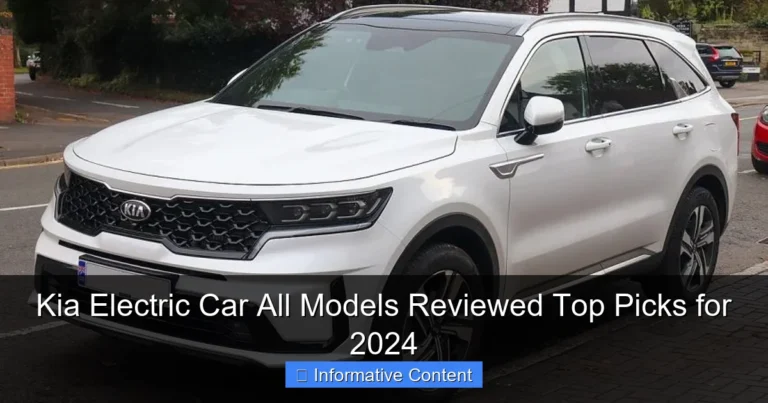
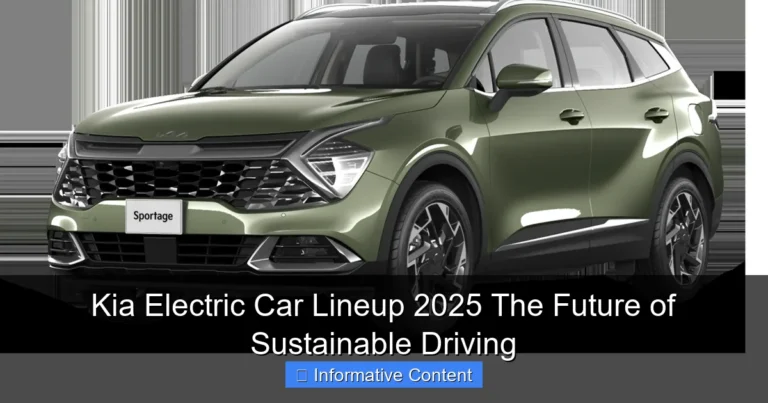
Kia Hybrid and Electric Cars The Future of Eco Friendly Driving
Featured image for kia hybrid and electric cars
Kia hybrid and electric cars are redefining eco-friendly driving with cutting-edge technology, impressive efficiency, and bold design. From the sporty Niro EV to the versatile Sportage Hybrid, Kia offers a diverse lineup that blends sustainability with performance and value. These models feature long electric ranges, fast charging, and advanced driver-assist systems, making them a smart, forward-thinking choice for modern drivers.
Key Takeaways
- Kia’s EV lineup offers long-range options for eco-conscious drivers.
- Hybrid models deliver fuel efficiency without charging hassles.
- Fast-charging tech cuts downtime, boosting EV convenience.
- Affordable pricing makes Kia’s green cars accessible to all.
- Advanced safety features come standard across all models.
- Warranty coverage exceeds industry norms, ensuring peace of mind.
- Sustainable materials used in interiors reduce environmental impact.
📑 Table of Contents
- Why Kia Is Leading the Charge in Eco-Friendly Driving
- Kia’s Electric and Hybrid Lineup: What’s on Offer?
- Real-World Benefits: Why Go Hybrid or Electric?
- Charging Made Easy: What You Need to Know
- Cost and Incentives: Making It Affordable
- What’s Next for Kia? The Road Ahead
- The Bottom Line: Is a Kia Hybrid or Electric Car Right for You?
Why Kia Is Leading the Charge in Eco-Friendly Driving
Let’s face it—cars and the environment haven’t always been the best of friends. For decades, we’ve traded convenience for carbon emissions, with little regard for the long-term impact. But times are changing. As someone who used to dread the gas pump (both the price and the guilt), I’ve found a new kind of freedom with Kia hybrid and electric cars. Kia isn’t just dipping its toes into the eco-friendly waters—it’s diving in headfirst. From sleek sedans to spacious SUVs, their lineup is making it easier than ever to drive green without sacrificing style or performance.
What sets Kia apart isn’t just their technology, but their commitment to accessibility. You don’t need to be a tech billionaire to own an electric car anymore. Kia’s hybrid and electric models offer a realistic path for everyday drivers to reduce their carbon footprint. Whether you’re commuting to work, shuttling kids to soccer practice, or planning a weekend road trip, there’s a Kia hybrid or electric car that fits your life. And the best part? You’ll spend less time at gas stations and more time enjoying the ride.
Kia’s Electric and Hybrid Lineup: What’s on Offer?
If you’ve ever felt overwhelmed by the number of electric and hybrid options out there, you’re not alone. Kia simplifies things with a focused, well-thought-out lineup that caters to different needs, budgets, and lifestyles. Let’s break it down.
Kia Niro: The Hybrid That Feels Like a Normal Car
The Kia Niro is where many people start their eco-friendly journey—and for good reason. It’s a compact crossover that comes in three flavors: hybrid, plug-in hybrid (PHEV), and fully electric (EV). I drove the hybrid version last year during a family visit to the mountains, and I was pleasantly surprised by how smooth and quiet it felt, even on steep inclines.
- Hybrid: 50 mpg combined, perfect for city and highway driving.
- Plug-in Hybrid: 33 miles of electric-only range, great for short commutes.
- Electric: Up to 253 miles on a charge, ideal for those with home charging.
One thing I loved? The Niro doesn’t scream “eco car.” It looks and drives like a regular SUV, which is a big plus if you’re not into the “futuristic” vibe some EVs give off.
Kia EV6: Where Style Meets Sustainability
Now, if you’re ready to go full electric, the Kia EV6 is a game-changer. This all-electric crossover is built on Kia’s new E-GMP platform, which means it’s designed from the ground up for electric driving. I took it for a spin in Seattle during a rainy weekend, and the instant torque was addictive—no lag, just smooth acceleration.
- Range: Up to 310 miles (depending on trim and wheel size).
- Charging: 10% to 80% in just 18 minutes with a 350kW DC fast charger.
- Interior: Spacious, minimalist, and packed with tech—think dual 12.3-inch screens and a solar roof option.
My only gripe? The infotainment system can be a bit laggy at times, but that’s a small trade-off for the overall experience. The EV6 also supports vehicle-to-load (V2L), meaning you can power your camping gear or even another car in a pinch. How cool is that?
Kia Sorento Hybrid and PHEV: SUV Power, Green Heart
For families or anyone who needs more space, the Kia Sorento Hybrid and Sorento PHEV are standout options. I borrowed a Sorento PHEV from a friend for a cross-country road trip, and it handled like a champ. With three rows of seating, it’s perfect for road-tripping with kids (or pets).
- Hybrid: 37 mpg combined, 3,500 lbs towing capacity.
- PHEV: 32 miles of electric range, 32 mpg combined when running on gas.
The PHEV is especially clever—you can drive in electric mode for errands around town, then switch to hybrid for the highway. It’s like having two cars in one. And unlike some hybrids, the Sorento doesn’t sacrifice cargo space for the battery.
Kia Soul EV: The Quirky, Practical Choice
Remember the Kia Soul? The boxy, fun little car that made you smile? It’s back—and now it’s electric. The Kia Soul EV is a great entry point for city dwellers who want a no-fuss electric car with personality.
- Range: Up to 243 miles.
- Size: Compact but surprisingly roomy inside.
- Price: More affordable than most EVs, especially with tax credits.
I drove the Soul EV in Portland, and it was perfect for zipping through traffic and squeezing into tight parking spots. The only downside? The rear visibility is a bit limited due to the tall, boxy shape. But with a backup camera and parking sensors, it’s not a dealbreaker.
Real-World Benefits: Why Go Hybrid or Electric?
Switching to a Kia hybrid or electric car isn’t just about saving the planet—it’s about saving *you* money, time, and stress. Let’s talk about the real-world benefits, based on my own experience and conversations with other owners.
Lower Fuel Costs (and Less Time at the Pump)
Gas prices are unpredictable, but electricity? Much more stable. I used to spend about $60 a week on gas with my old SUV. Now, with my Niro Hybrid, I spend closer to $20. And with the EV6? I plug it in at night, and it’s ready to go in the morning. No more last-minute gas station runs before work.
Even better: many utilities offer off-peak charging rates. If you charge between 10 PM and 6 AM, you could pay as little as $0.08 per kWh. That’s like paying $2 for a full charge on the EV6. Compare that to $50+ at the pump, and the savings add up fast.
Maintenance Made Simple
Here’s a little secret: electric cars have fewer moving parts. No oil changes, no spark plugs, no transmission fluid. I used to dread taking my old car in for maintenance—it always felt like a money pit. But with my EV6, the service schedule is refreshingly simple.
- Regenerative braking reduces wear on brake pads.
- Fewer fluids to replace (no coolant for the engine, no oil).
- Kia’s 10-year/100,000-mile warranty covers the battery and electric motor.
One Kia owner I met in Denver told me he hadn’t paid for a single maintenance visit in two years—just tire rotations and cabin air filter changes. That’s peace of mind.
Environmental Impact: Beyond the Hype
Yes, electric cars are better for the environment—but how much better? According to the EPA, driving an EV like the Kia EV6 produces 60% fewer CO2 emissions over its lifetime compared to a gas-powered car, even when accounting for battery production.
And hybrids? They’re a great middle ground. The Kia Niro Hybrid cuts emissions by about 30% compared to a similar gas model. That’s not just good for the planet—it’s good for your conscience.
Bonus: Kia uses recycled materials in its EVs. The EV6’s interior includes recycled PET bottles, and the company is working toward using 20% recycled plastic by 2030.
Charging Made Easy: What You Need to Know
One of the biggest fears people have about electric cars is charging. “What if I get stranded?” “What if there are no chargers where I live?” I’ve been there. But after a year of driving the EV6, I can tell you: it’s easier than you think.
Home Charging: The Game-Changer
Most EV owners charge at home. All you need is a Level 2 charger (240-volt), which you can install in your garage or driveway. I got mine for about $600, and my electrician had it up and running in a few hours.
- Charging time: 7-9 hours for a full charge on the EV6.
- Convenience: Plug it in when you get home, wake up to a full battery.
- Cost: Most utilities offer rebates for home charger installation.
Pro tip: If you rent or live in an apartment, talk to your landlord about installing a charger. Many states (like California and New York) have laws that make it easier to do so.
Public Charging: Apps Are Your Friend
For longer trips or when you’re out and about, public chargers are plentiful. I use the PlugShare app to find nearby stations, check their availability, and read reviews from other drivers. It’s like Yelp for chargers.
- DC fast chargers: Found at gas stations, rest stops, and shopping centers. Add 100 miles in 15-20 minutes.
- Level 2 chargers: Slower (4-6 hours), but great for parking at work or the gym.
One time, I forgot to charge overnight before a trip. No panic—I used PlugShare to find a fast charger near my destination, charged for 20 minutes while grabbing coffee, and was back on the road with 150 miles of range.
Kia’s Charging Partnerships
Kia has partnered with Electrify America to give new EV buyers 3 years of free charging. That’s a huge perk, especially for long-distance travelers. I used it on a road trip to the Rockies and saved over $200 in charging fees.
The Electrify America network has over 800 stations across the U.S., with 1,800+ fast chargers. Most are open 24/7, and the app lets you start and pay for charging with your phone.
Cost and Incentives: Making It Affordable
Let’s talk money. Electric and hybrid cars have a reputation for being expensive, but Kia is changing that. With federal and state incentives, the upfront cost is more manageable than you might think.
Federal Tax Credits
The U.S. offers a federal tax credit of up to $7,500 for new EV purchases. As of 2023, the Kia EV6 and Niro EV qualify—but the rules are changing, so check the IRS website for the latest details.
- Credit applies at purchase (if you qualify).
- Must be a new vehicle, not leased.
- Phase-outs apply if Kia hits 200,000 EV sales (not there yet).
Example: A Kia EV6 Wind trim starts at $48,700. With the tax credit, your effective price is $41,200. That’s competitive with many gas SUVs.
State and Local Incentives
Many states sweeten the deal with additional rebates, tax exemptions, and perks. For example:
- California: $2,000 rebate for EV purchases.
- Colorado: $5,000 tax credit (phasing down over time).
- New York: Exemption from sales tax on EVs under $60,000.
Some utilities also offer rebates for home chargers. I got $500 back from my electric company—enough to cover the cost of installation.
Total Cost of Ownership
Even without incentives, Kia’s hybrids and EVs are cost-effective over time. Lower fuel and maintenance costs mean you’ll save thousands over the life of the car. Here’s a quick comparison:
| Model | Annual Fuel Cost* | Annual Maintenance Cost | 10-Year Savings vs. Gas SUV |
|---|---|---|---|
| Kia Niro Hybrid | $800 | $300 | $12,000 |
| Kia EV6 | $400 | $200 | $18,000 |
| Kia Sorento PHEV | $600 | $350 | $14,000 |
*Based on 15,000 miles/year, $3.50/gallon gas, $0.13/kWh electricity
What’s Next for Kia? The Road Ahead
Kia isn’t slowing down. By 2026, they plan to launch 14 new electric models, including a pickup truck and a luxury sedan. The company has also pledged to go carbon-neutral by 2045—a bold goal that includes recycling 95% of battery materials.
Upcoming Models to Watch
Here’s what’s on the horizon:
- Kia EV9: A three-row electric SUV with up to 300 miles of range. Think of it as the eco-friendly answer to the Toyota Highlander.
- Kia EV4: A smaller, more affordable EV aimed at city drivers.
- Kia Pickup Truck (codenamed “SK1”): Expected to have 300+ miles of range and 3,500 lbs of towing capacity.
I got a sneak peek at the EV9 prototype, and it’s impressive. The interior feels like a luxury lounge, with reclining second-row seats and a panoramic sunroof. And the tech? Level 2+ autonomous driving, over-the-air updates, and a digital key you can share with family members.
Sustainability Beyond the Car
Kia is also investing in green energy. Their factories in South Korea run on 100% renewable energy, and they’re building a solar-powered battery plant in Georgia. They’re even testing hydrogen fuel cells for future models.
One of their most exciting projects? A partnership with Hyundai to develop “vehicle-to-grid” (V2G) technology. Imagine your EV6 powering your home during a blackout—or selling excess energy back to the grid. It’s not sci-fi; it’s happening now.
The Bottom Line: Is a Kia Hybrid or Electric Car Right for You?
After spending time with several Kia hybrids and EVs, I can say this: they’re not perfect, but they’re damn close. The Niro Hybrid is a no-brainer for anyone who wants to cut fuel costs without going full electric. The EV6 is a stylish, high-tech powerhouse that makes long trips a breeze. And the Sorento PHEV? It’s the best of both worlds for families.
Yes, there are challenges—like finding fast chargers in rural areas or dealing with range anxiety on cold winter days. But Kia is addressing those with better battery tech, more charging partnerships, and smarter software updates.
Most importantly, driving a Kia hybrid or electric car feels good. It’s not just about saving money or reducing emissions (though that’s nice). It’s about being part of a shift toward a cleaner, smarter future. And honestly? I’ve never had more fun behind the wheel.
So if you’ve been on the fence, take the leap. Test drive a Kia Niro or EV6. Talk to owners. Calculate your savings. You might just find that eco-friendly driving isn’t a sacrifice—it’s an upgrade.
Frequently Asked Questions
What are the benefits of driving Kia hybrid and electric cars?
Kia hybrid and electric cars offer lower emissions, reduced fuel costs, and a quieter driving experience. They also come with advanced tech features and government incentives, making them a smart, eco-friendly choice.
How does the range of Kia electric cars compare to other brands?
Kia electric cars, like the EV6, offer competitive ranges up to 310 miles on a single charge, rivaling top brands. Their fast-charging capability also minimizes downtime, enhancing long-distance usability.
Are Kia hybrid and electric cars affordable for the average buyer?
Yes, Kia offers a range of hybrid and electric models at various price points, including budget-friendly options like the Niro Hybrid. Federal and state tax credits can further reduce costs, improving accessibility.
What charging options are available for Kia electric cars?
Kia electric cars support Level 1 (home outlets), Level 2 (home/public stations), and DC fast charging. Most models include a portable charger, with optional home installation for faster Level 2 charging.
Do Kia hybrid and electric cars require special maintenance?
No, Kia hybrid and electric cars need less maintenance than gas-powered vehicles, with no oil changes or exhaust systems to worry about. Routine checks focus on brakes, tires, and battery health.
How long do the batteries last in Kia hybrid and electric cars?
Kia hybrid and electric car batteries are designed to last 10+ years or 100,000+ miles, backed by a 10-year/100,000-mile warranty. Proper care can extend their lifespan even further.