Kia India Electric Car Revolutionizing Sustainable Mobility

Featured image for kia india electric car
Image source: carvibz.com
Kia India’s electric car lineup is redefining sustainable mobility with cutting-edge technology, impressive range, and eco-friendly innovation. Models like the Kia EV6 and upcoming mass-market EVs combine sleek design, fast-charging capability, and localized manufacturing to accelerate India’s green transition.
Key Takeaways
- Kia India leads EV market with innovative, affordable electric cars for sustainable mobility.
- Fast-charging tech cuts downtime, enabling long-distance travel with minimal stops.
- Smart connectivity features enhance user experience via app-based vehicle control.
- Local manufacturing ensures affordability while reducing carbon footprint and import dependence.
- Government incentives boost adoption of Kia EVs, making them cost-competitive with ICE vehicles.
- Robust service network ensures hassle-free ownership and maintenance across India.
📑 Table of Contents
- Kia India Electric Car: Revolutionizing Sustainable Mobility
- Why India Needs an Electric Mobility Shift
- Kia India Electric Car Lineup: What’s on Offer?
- Performance, Charging, and Real-World Usability
- Ownership Experience: Cost, Maintenance, and Incentives
- Kia’s Sustainability Vision: Beyond the Car
- Data Snapshot: Kia EV6 vs. Competitors (2024)
- Final Thoughts: Is Kia India Electric Car Right for You?
Kia India Electric Car: Revolutionizing Sustainable Mobility
The world is shifting gears. From fossil fuels to renewable energy, from gas-guzzlers to silent electric motors — the future of transportation is electric. And in India, where traffic congestion and air pollution are daily challenges, this shift isn’t just a luxury — it’s a necessity. Enter Kia India electric car — a bold new chapter in the country’s journey toward cleaner, smarter, and more sustainable mobility.
You might remember Kia from its stylish SUVs like the Seltos and Sonet, or the family-friendly Carens. But now, Kia is stepping into the future with a clear vision: to lead India’s electric revolution. With global success in markets like Europe and the U.S., Kia is bringing that same innovation and confidence to Indian roads. But does it live up to the hype? Are these electric vehicles (EVs) practical for Indian driving conditions? And more importantly — do they offer real value for everyday Indian families and professionals?
In this deep dive, we’ll explore how Kia India electric car models are reshaping the EV landscape. From performance and charging to affordability and long-term ownership, we’ll cover everything you need to know — no fluff, no jargon, just real talk from someone who’s been watching this space closely.
Why India Needs an Electric Mobility Shift
Let’s start with the big picture. India is the third-largest emitter of CO₂ in the world, and transportation contributes significantly to that number. In cities like Delhi, Mumbai, and Bengaluru, poor air quality isn’t just a headline — it’s a health crisis. The World Health Organization estimates that over 1.67 million deaths in India are linked to air pollution every year.
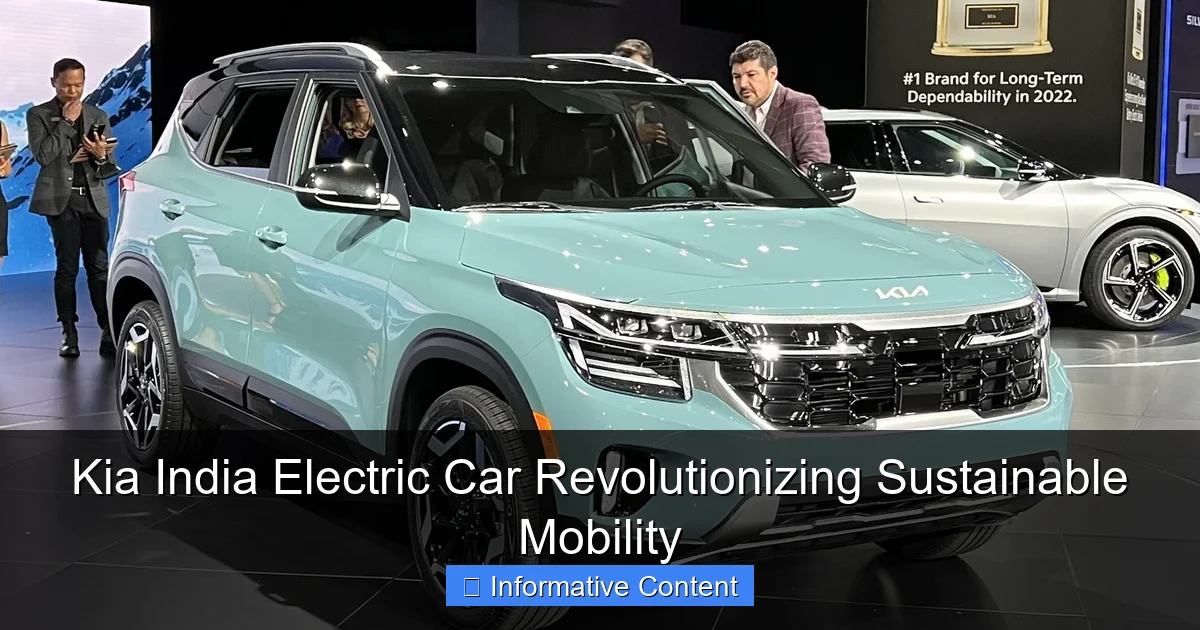
Visual guide about kia india electric car
Image source: s1.cdn.autoevolution.com
The Role of Electric Vehicles
Electric vehicles offer a cleaner alternative. With zero tailpipe emissions, EVs reduce urban pollution and lower our carbon footprint. But it’s not just about the environment. For consumers, switching to an electric car means:
- Lower fuel costs (electricity is cheaper than petrol or diesel)
- Reduced maintenance (fewer moving parts, no oil changes)
- Smoother, quieter rides
- Government incentives like tax breaks and subsidies
Still, adoption has been slow. Only about 1.3% of new vehicles sold in India in 2023 were electric. Why? Range anxiety, charging infrastructure, and high upfront costs remain major hurdles. That’s where Kia India electric car comes in — aiming to address these concerns with smart design, local manufacturing, and a long-term vision.
Kia’s Strategic Entry into India’s EV Market
Kia didn’t just drop an EV and hope for the best. They studied the Indian market carefully. Unlike some global brands that import fully built EVs (which are expensive due to import duties), Kia is betting on localization.
- Kia’s Anantapur plant in Andhra Pradesh is now producing EVs locally, reducing costs and delivery times.
- The company is investing in charging infrastructure partnerships with Tata Power, ChargeZone, and others.
- They’re focusing on SUVs and crossovers — a segment that dominates Indian preferences — instead of compact city cars.
This strategy shows Kia understands Indian consumers. We want vehicles that are practical, spacious, and tough enough for our roads — not just eco-friendly showpieces.
Kia India Electric Car Lineup: What’s on Offer?
As of 2024, Kia India has launched or announced a growing range of electric models. Let’s break them down — what they offer, who they’re for, and how they compare to rivals like Tata Nexon EV, MG ZS EV, and Hyundai Kona Electric.
Kia EV6: The Premium Flagship
The Kia EV6 is Kia’s first dedicated electric car in India. Built on Hyundai Motor Group’s E-GMP (Electric-Global Modular Platform), it’s a game-changer in terms of technology and performance.
Key specs:
- Range: Up to 528 km (ARAI-certified)
- Power: 229 PS (GT Line RWD) or 325 PS (GT Line AWD)
- Charging: 10-80% in 18 minutes with a 350 kW DC fast charger
- Top speed: 185 km/h
- Price: ₹60.95 lakh (ex-showroom)
Who is it for? The EV6 is ideal for tech-savvy urban professionals, early adopters, and families who want a premium electric SUV with global pedigree. It’s not cheap, but it’s packed with features:
- Dual 12.3-inch curved screens (driver display + infotainment)
- Vehicle-to-Load (V2L) — power appliances, charge other EVs
- 800V ultra-fast charging (rare in India)
- Advanced driver assistance (ADAS) with lane-keeping, adaptive cruise, and blind-spot monitoring
Real-world tip: If you live in a city with DC fast chargers (like Bengaluru, Hyderabad, or Pune), the EV6’s fast charging makes long trips feasible. But if you rely on home charging, the 77.4 kWh battery will take about 10 hours on a 7.2 kW AC charger.
Kia EV9: The 7-Seater Electric SUV (Coming Soon)
Announced for 2025, the Kia EV9 is a full-size 7-seater electric SUV. Think of it as the electric cousin of the Kia Carnival — but with zero emissions and a futuristic design.
Expected features:
- Range: 500+ km
- Three-row seating with lounge-style second-row seats
- Over-the-air (OTA) software updates
- Advanced ADAS with remote parking assist
- Estimated price: ₹80–90 lakh
This is a big deal. India loves big SUVs, and the EV9 could be the first truly practical 7-seater EV in the premium segment. It’s perfect for large families, road trips, or even as a luxury corporate shuttle.
Future Models: Kia EV3 and EV4 (Rumored)
Kia plans to expand its EV lineup with more affordable models. The Kia EV3 (a compact SUV) and Kia EV4 (a sporty sedan) are expected by 2026–2027. These will likely target the ₹20–30 lakh range — a sweet spot for mass adoption.
Practical insight: If Kia can localize these models (like they did with the EV6), they could undercut rivals and offer better value. Imagine a sub-30 lakh EV with 400+ km range — that’s when EVs truly go mainstream in India.
Performance, Charging, and Real-World Usability
Let’s talk about what matters most: how do these Kia India electric car models actually perform on Indian roads?
Acceleration and Driving Experience
The Kia EV6 is fast — really fast. With 325 PS and 605 Nm of torque (in AWD), it goes from 0 to 100 km/h in under 6 seconds. That’s sports car territory. But it’s not just about speed.
- The ride is smooth and quiet, thanks to low noise and vibration.
- Regenerative braking can be adjusted (via paddle shifters), allowing one-pedal driving in city traffic.
- The suspension handles potholes and rough roads well — a must in Indian cities.
- Steering feels light but precise, making it easy to maneuver in tight spaces.
Anecdote: A friend of mine drove the EV6 in Mumbai traffic. He said, “It’s like driving a silent ghost — you feel in control, and the car doesn’t stress you out.” That’s high praise for a vehicle in chaotic traffic.
Charging: The Big Challenge
Charging is where most EV buyers hesitate. Let’s break it down:
Home Charging (Most Common):
- Install a 7.2 kW wall-mounted charger (cost: ₹30,000–50,000).
- Full charge: 10–12 hours (overnight).
- Ideal for daily commutes under 50 km.
Public Charging:
- DC fast chargers (50–350 kW) can charge the EV6 from 10% to 80% in 18–30 minutes.
- Available at malls, highways, and Kia dealerships (in select cities).
- Use apps like Tata Power EZ Charge, ChargeZone, or Statiq to locate stations.
Tip: Always keep your car at 20–80% battery for optimal health. Avoid full discharges or constant 100% charging unless needed for long trips.
Range Anxiety: Is It Real?
With 528 km on the EV6, most daily commutes (even in big cities) are covered in one charge. But what about long trips?
Let’s say you’re driving from Delhi to Jaipur (270 km). With the EV6:
- You’ll use about 50% of the battery.
- Stop at a DC fast charger in Gurugram or Alwar for a 20-minute top-up.
- Arrive with 30–40% range left — plenty for city driving.
But if you’re traveling to remote areas with no charging, yes — range anxiety kicks in. Kia is working with partners to expand charging networks, but it’s still a work in progress.
Ownership Experience: Cost, Maintenance, and Incentives
Buying an electric car isn’t just about the price tag. Let’s look at the full ownership picture.
Upfront Cost vs. Long-Term Savings
The Kia EV6 starts at ₹60.95 lakh — significantly higher than petrol SUVs. But over 5 years, the savings add up:
- Fuel: Petrol at ₹100/liter vs. electricity at ₹8/kWh. For 15,000 km/year, you save ₹70,000–80,000 annually.
- Maintenance: No oil changes, fewer brake replacements (thanks to regenerative braking), and lower service costs. Kia offers free service for 3 years.
- Insurance: Slightly higher for EVs, but many insurers offer green discounts.
After 5 years, you could save ₹3–4 lakh in running costs — enough to offset the higher initial price.
Government Incentives
India offers several EV benefits:
- FAME II Subsidy: Up to ₹1.5 lakh for electric cars (varies by state).
- Road Tax Exemption: Many states (e.g., Karnataka, Maharashtra) waive road tax for EVs.
- GST Reduction: EVs are taxed at 5% vs. 28–50% for ICE vehicles.
- Corporate Incentives: Some companies offer EV purchase bonuses or charging at office parks.
Tip: Check your state’s EV policy. For example, Tamil Nadu offers additional subsidies for EV buyers.
Warranty and Service
Kia offers a 3-year/unlimited km warranty on the EV6, with 8-year/1.6 lakh km coverage for the battery. Service intervals are every 20,000 km or 1 year — longer than petrol cars.
But here’s a concern: EV service centers are still limited. Kia has 150+ touchpoints across India, but only a fraction are equipped for EVs. If you live in a smaller town, you might need to travel for major repairs.
Kia’s Sustainability Vision: Beyond the Car
Kia isn’t just selling electric cars — they’re building an ecosystem for sustainable mobility.
Green Manufacturing
Kia’s Anantapur plant runs on solar power and has a zero-waste-to-landfill policy. They’ve installed 30+ MW of solar capacity and recycle 98% of water used in production.
This matters because EVs are only as clean as the energy used to make and charge them. By reducing factory emissions, Kia shrinks the EV’s overall carbon footprint.
Charging Infrastructure Push
Kia is partnering with Tata Power, ChargeZone, and others to install fast chargers at dealerships, highways, and shopping malls. They’re also offering home charger installation support.
In 2023, Kia launched the “Kia Charge” network — a unified app to access 10,000+ charging points across India. No more juggling multiple apps.
Future: Battery Recycling and V2G
Kia is exploring battery recycling and second-life applications (e.g., using old EV batteries for solar storage). They’re also testing Vehicle-to-Grid (V2G) technology, where EVs can supply power back to the grid during peak demand.
Imagine your Kia India electric car not just as a vehicle — but as a mobile energy unit. That’s the future Kia is working toward.
Data Snapshot: Kia EV6 vs. Competitors (2024)
| Model | Range (km) | Price (₹ Lakh) | Charging (10-80%) | Seating | Key Feature |
|---|---|---|---|---|---|
| Kia EV6 | 528 | 60.95 | 18 min (350 kW) | 5 | V2L, 800V charging |
| Tata Nexon EV Max | 453 | 19.54 | 60 min (50 kW) | 5 | Affordable, local support |
| MG ZS EV | 461 | 23.38 | 50 min (50 kW) | 5 | Sunroof, ADAS |
| Hyundai Kona Electric | 452 | 23.84 | 57 min (50 kW) | 5 | Compact, reliable |
This table shows where the Kia India electric car stands. The EV6 leads in range and charging speed, but at a premium price. For budget buyers, Tata and MG offer great value. But if you want cutting-edge tech and performance, the EV6 is hard to beat.
Final Thoughts: Is Kia India Electric Car Right for You?
So, should you go electric with Kia? Let’s wrap it up with a balanced view.
Choose a Kia India electric car if:
- You want a premium, high-performance EV with global tech.
- You have access to home charging or fast public chargers.
- You drive long distances and need fast charging.
- You value sustainability and want to reduce your carbon footprint.
Consider other options if:
- You’re on a tight budget (look at Tata Nexon EV or MG ZS EV).
- You live in a remote area with no charging infrastructure.
- You need a 7-seater now (wait for the EV9 in 2025).
Kia’s entry into India’s EV market isn’t just about selling cars — it’s about changing mindsets. They’re proving that electric doesn’t mean compromised. With the Kia India electric car lineup, you get style, space, performance, and peace of mind — all while driving a cleaner future.
Yes, challenges remain. Charging infrastructure needs to grow faster. Prices need to come down for mass adoption. But Kia is playing the long game. With local manufacturing, smart partnerships, and a clear vision, they’re not just joining the electric revolution — they’re helping lead it.
So, the next time you’re stuck in traffic, breathing in exhaust fumes, ask yourself: What if my car was silent? What if it charged overnight? What if it helped, not hurt, the planet?
The answer might just be a Kia India electric car.
Frequently Asked Questions
What are the available models in Kia India’s electric car lineup?
Kia India currently offers the EV6 as its flagship electric car, with plans to expand its EV portfolio in the coming years. The EV6 combines cutting-edge technology, a 77.4 kWh battery, and a range of up to 708 km (ARAI-certified). More affordable Kia India electric car models are expected to launch soon.
How does the Kia EV6 support sustainable mobility in India?
The Kia EV6 is built on an eco-friendly E-GMP platform, reducing carbon emissions and energy consumption during production. With fast-charging capability (10-80% in 18 minutes) and zero tailpipe emissions, it aligns with India’s green mobility goals. Kia also promotes sustainable practices like battery recycling programs.
What is the price range of Kia India electric cars?
The Kia EV6 is priced between ₹60.95 lakh and ₹65.95 lakh (ex-showroom), positioning it as a premium EV option in India. Future Kia India electric car models may cater to mid-range buyers with more affordable pricing. Incentives like FAME II subsidies can further reduce ownership costs.
How long does it take to charge a Kia India electric car?
The Kia EV6 supports 350kW DC fast charging, delivering 10-80% charge in just 18 minutes. Using a standard 11kW AC charger, a full charge takes around 6-7 hours, ideal for overnight home charging. Public charging infrastructure is expanding across major Indian cities.
What safety features do Kia India electric cars offer?
Kia India electric cars like the EV6 feature advanced driver-assistance systems (ADAS), including lane-keeping assist, blind-spot monitoring, and autonomous emergency braking. The EV6 also has a 5-star Euro NCAP safety rating, reinforced battery protection, and multiple airbags.
Does Kia India provide home charging solutions for its electric cars?
Yes, Kia India offers a 11kW home charger installation service with every EV6 purchase, ensuring convenient daily charging. The package includes site assessment, installation, and a 3-year warranty. Kia also partners with charging providers to enhance accessibility.