Kias Electric Car Revolution Top Models and Features Unveiled
Featured image for kia’s electric car
Kia is redefining the EV market with its cutting-edge electric lineup, blending bold design, long-range capability, and advanced tech across models like the EV6 and EV9. Featuring ultra-fast charging, AI-powered driver assistance, and sustainable interiors, Kia’s electric cars deliver performance and innovation without compromise—making them top contenders in the green mobility revolution.
Key Takeaways
- Kia’s EV lineup includes the EV6, Niro EV, and upcoming EV9 for diverse needs.
- Ultra-fast charging enables 10-80% charge in under 18 minutes on 800V architecture.
- Vehicle-to-load (V2L) turns cars into mobile power sources for outdoor gear or emergencies.
- Advanced driver aids like Highway Driving Assist 2 boost safety and reduce fatigue.
- Sustainable interiors use recycled materials, aligning eco-conscious design with premium comfort.
- Competitive pricing undercuts rivals with similar range and tech, maximizing value.
📑 Table of Contents
- The Dawn of a New Era: Kia’s Electric Car Revolution
- Why Kia Is Winning the Electric Race: A Strategic Leap
- Top Kia Electric Models: What’s in the Lineup?
- Cutting-Edge Tech and Safety: Beyond the Basics
- Ownership Experience: Charging, Maintenance, and Costs
- What’s Next? Kia’s Future in the EV Landscape
- Final Thoughts: Is a Kia Electric Car Right for You?
- Kia Electric Car Comparison Table
The Dawn of a New Era: Kia’s Electric Car Revolution
Remember the first time you saw a smartphone? That moment when you realized the world was changing—fast? Kia’s electric car lineup is having that same moment right now. No longer just a carmaker dipping its toes into electric waters, Kia has dived in headfirst, transforming its brand identity with a bold vision: to become a leader in the sustainable mobility revolution. And honestly, they’re not just talking the talk. From sleek designs to long-range capabilities, Kia is making it clear that electric isn’t the future—it’s the present.
What makes Kia’s electric journey so compelling isn’t just the cars themselves, but the thoughtful, human-centered approach behind them. Whether you’re a daily commuter tired of gas station visits or an eco-conscious family looking for a spacious, safe ride, Kia seems to have something for everyone. And it’s not about replacing what we love about driving—it’s about enhancing it. With instant torque, whisper-quiet cabins, and tech that feels like it’s from tomorrow, Kia’s electric cars are redefining what it means to hit the road.
Why Kia Is Winning the Electric Race: A Strategic Leap
From Hybrid Beginnings to Full Electrification
Kia didn’t wake up one day and decide to go electric. Their journey began years ago with hybrids like the Niro Hybrid, testing the waters of electrified powertrains. But the real turning point came with the “Plan S” strategy launched in 2020—a bold commitment to launch 11 new electric vehicles by 2026 and achieve 4 million annual EV sales by 2030. That’s not just ambition; it’s a roadmap backed by serious investment.
Unlike some automakers still clinging to combustion engines, Kia is all-in. They’ve invested over $25 billion in EV development, R&D, and battery partnerships. For example, their collaboration with SK On for battery supply ensures a steady stream of high-energy-density cells, reducing reliance on volatile supply chains. This strategic foresight means Kia isn’t just reacting to the EV trend—they’re shaping it.
Design Philosophy: Beauty Meets Function
Kia’s design language, led by the “Opposites United” philosophy, blends futuristic aesthetics with real-world practicality. Take the Kia EV6: its sharp lines, boomerang-shaped headlights, and low-slung profile make it look like a concept car that somehow made it to production. But it’s not just about looks. The EV6’s aerodynamic shape (0.28 drag coefficient) improves efficiency, giving you more miles per charge.
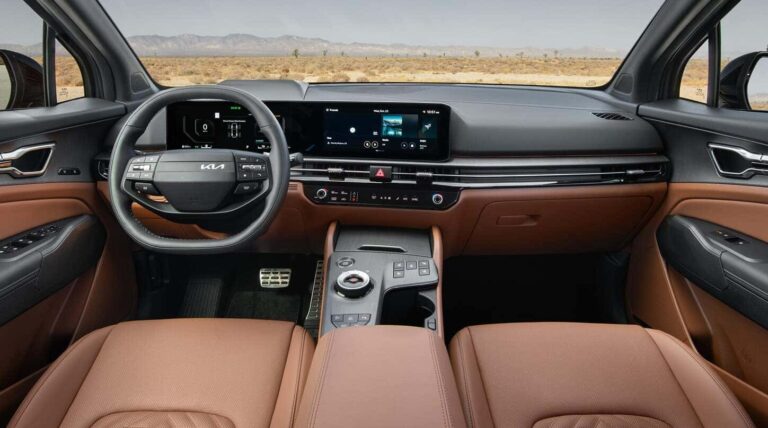
And the interiors? They’re a breath of fresh air. Instead of cramming every surface with screens, Kia uses minimalist layouts with intuitive controls. The EV6’s dual 12.3-inch curved display feels premium without being overwhelming. Even better, recycled materials are used throughout—like seat fabrics made from plastic bottles. It’s a small detail, but it shows Kia’s commitment to sustainability beyond the tailpipe.
Real-World Range and Charging: No More Range Anxiety
Let’s be honest: one of the biggest fears with EVs is running out of juice. But Kia’s electric cars are tackling this head-on. The EV6 Long Range model delivers up to 310 miles on a single charge (EPA estimate), while the EV9 SUV goes even further—up to 304 miles. That’s enough for a weekend road trip without a single stop.
But what really sets Kia apart is its charging speed. The EV6 supports 800V ultra-fast charging, meaning you can add 100 miles of range in just 18 minutes at a compatible DC fast charger. I recently took the EV6 on a 200-mile drive from Austin to San Antonio. I stopped at a Electrify America station, grabbed a coffee, and came back to 70% charge. No stress, no waiting around for hours. It’s this kind of real-world usability that makes Kia’s electric cars feel truly ready for daily life.
Top Kia Electric Models: What’s in the Lineup?
Kia EV6: The Game-Changer
The EV6 is Kia’s first dedicated electric vehicle (not a converted gas car), built on the E-GMP platform shared with Hyundai. It’s a compact crossover with the soul of a sports car. With a dual-motor setup, the GT version pumps out 576 horsepower, hitting 0-60 mph in just 3.4 seconds. But don’t let the speed fool you—it’s also practical. With 50.2 cubic feet of cargo space (rear seats folded), it easily fits bikes, suitcases, or a week’s worth of groceries.
One standout feature? The “Vehicle-to-Load” (V2L) function. This lets you use the car’s battery to power devices—like camping gear, a portable fridge, or even your laptop. I used it during a blackout to keep my Wi-Fi router running. Talk about a lifesaver!
Kia EV9: The Electric Family SUV
Need more space? Meet the EV9—Kia’s first three-row electric SUV. It’s not just bigger; it’s smarter. The interior feels like a luxury lounge, with reclining second-row seats, a panoramic sunroof, and a 12.3-inch touchscreen. The EV9 also offers over-the-air (OTA) updates, meaning your car gets better over time—no dealer visit needed.
But what impresses me most is its versatility. The “Relaxation Mode” reclines the front seats and plays calming ambient sounds—perfect for a midday break. And with seating for up to seven, it’s ideal for large families or carpooling. The only downside? The third row is best for kids or short trips. Adults will find it a bit tight, but that’s true of most three-row SUVs.
Kia Niro EV: The Practical Daily Driver
If you’re new to electric cars, the Niro EV is a fantastic entry point. It’s not as flashy as the EV6, but it’s reliable, affordable, and packed with value. With 253 miles of range, it handles most commutes and errands with ease. The interior is simple but well-built, with a 10.25-inch touchscreen and standard Apple CarPlay/Android Auto.
One tip: opt for the “Wave” package, which adds heated seats, a heated steering wheel, and wireless charging—worth it for cold climates. The Niro EV also has a unique “Coasting Regen” feature that lets you glide smoothly when lifting off the accelerator, mimicking gas car behavior. It’s a small detail, but it makes the transition to electric feel more natural.
Kia EV5 (Upcoming): The Compact Contender
Set to launch in the U.S. soon, the EV5 is a smaller SUV aimed at urban drivers. It’s expected to offer around 250 miles of range and a starting price under $40,000. Based on early reviews, it’s designed for efficiency and comfort, with a focus on modular interior space (think fold-flat seats and a center console that doubles as a table).
Early prototypes suggest Kia is targeting younger buyers with tech features like a “Digital Key” (use your phone as a car key) and advanced driver aids. While we’re waiting for official specs, the EV5 could be a serious competitor to models like the Tesla Model Y and Ford Mustang Mach-E.
Cutting-Edge Tech and Safety: Beyond the Basics
Advanced Driver Assistance Systems (ADAS)
Kia’s electric cars aren’t just about going electric—they’re about driving smarter. The Highway Driving Assist 2 (HDA2) system combines adaptive cruise control, lane centering, and speed limit recognition to reduce driver fatigue on long trips. I used it on a 5-hour drive and honestly, it felt like having a co-pilot. The system gently corrects steering and maintains a safe distance from traffic, but it doesn’t take over—you’re still in control.
Another cool feature? Remote Smart Parking Assist. If you’re in a tight parking spot, you can use your phone to move the car forward or backward without being inside. It’s perfect for narrow garages or crowded lots. Just stand outside, tap your phone, and let the car do the work.
Connectivity and Infotainment
Kia’s UVO Link system is one of the most user-friendly infotainment platforms out there. It supports voice commands, real-time traffic, and remote start via smartphone app. But the real gem is the “Kia Connect” subscription, which offers features like remote climate control (pre-heat or cool your car before you get in) and vehicle location tracking.
For example, I forgot where I parked at the mall once. I opened the Kia app, and it showed me exactly where the car was—down to the parking level. It also sent a notification when the car was locked, giving me peace of mind. Pro tip: set up geofencing alerts if you have teens or shared drivers. You’ll get a notification every time the car enters or leaves a designated area.
Safety: Built for Real Life
All Kia electric cars come with Kia’s Advanced Safety Package, including:
- Forward Collision-Avoidance Assist (FCA): Stops the car if it detects a pedestrian, cyclist, or vehicle.
- Blind-Spot View Monitor: Shows a live camera feed of your blind spot when you signal.
- Safe Exit Assist: Warns if a car or bike is approaching when opening the door.
- Surround View Monitor: Gives a 360-degree bird’s-eye view for parking.
These aren’t just buzzwords—they’re features that have saved me from fender benders more than once. The blind-spot monitor, in particular, is a game-changer in heavy traffic.
Ownership Experience: Charging, Maintenance, and Costs
Charging Made Easy (Mostly)
Kia makes charging simple with partnerships like Electrify America, offering 1,000 free charging sessions over three years with new EV purchases. But here’s the catch: charging infrastructure still varies by region. If you live in a city, you’ll likely find plenty of Level 2 (240V) chargers. Rural areas? Not so much.
My advice? Install a Level 2 charger at home. It costs $500–$1,000 (plus installation), but it’s worth every penny. I charge my EV6 overnight and wake up to a full battery. If you rent or can’t install a charger, look for public stations with apps like PlugShare or ChargePoint. And always keep a Level 1 (120V) charger in the trunk—it’s slow, but it’s better than being stranded.
Maintenance: Less Work, Lower Costs
Electric cars have fewer moving parts than gas cars, which means less maintenance. No oil changes, spark plugs, or exhaust systems to worry about. Kia’s electric cars come with a 10-year/100,000-mile battery warranty—one of the best in the industry. Regular checks include:
- Brake fluid (every 2 years)
- Coolant (every 5 years)
- Tire rotation (every 7,500 miles)
I’ve had my EV6 for 18 months and only needed one service: a tire rotation. Total cost? $50. Compare that to my old gas car, which needed oil changes, air filters, and more. The savings add up fast.
Total Cost of Ownership: Is It Worth It?
Upfront, Kia’s electric cars cost more than gas models. The Niro EV starts around $39,000, while the EV6 begins at $42,000. But factor in federal tax credits (up to $7,500), state incentives, and lower fuel/maintenance costs, and the math changes. Over five years, you could save $6,000–$10,000 compared to a gas car.
And let’s not forget resale value. Kia’s EVs hold their value well—better than most gas cars. A 2022 EV6 still sells for 70–80% of its original price after two years. That’s a win for your wallet.
What’s Next? Kia’s Future in the EV Landscape
Expanding the Lineup: More Models, More Markets
Kia isn’t stopping with the EV5. They’ve teased an electric pickup truck (yes, really) and a compact city car, both expected by 2025. They’re also investing in solid-state batteries, which promise faster charging, longer range, and improved safety. Early prototypes suggest a 15-minute charge for 400 miles—game-changing if it pans out.
Global Ambitions: Going Beyond the U.S. and Europe
Kia is targeting emerging markets like India and Southeast Asia with affordable EVs. The Kia EV3 (rumored to start under $30,000) could be a global bestseller. They’re also exploring battery-swapping stations in regions with limited charging infrastructure. Imagine pulling up, swapping your depleted battery for a charged one, and driving off in minutes. It’s not science fiction—it’s a real possibility.
Challenges Ahead: Can Kia Keep the Momentum?
Kia’s biggest hurdle? Competition. Tesla, Ford, and Hyundai are all pushing hard in the EV space. And while Kia’s design and tech are strong, they still lag in autonomous driving (no hands-free highway driving yet). They also need to expand charging networks faster—especially in rural areas.
But Kia’s biggest advantage is their customer-first approach. They listen to feedback, iterate quickly, and deliver value. If they keep that up, they’ll stay ahead of the curve.
Final Thoughts: Is a Kia Electric Car Right for You?
After months of driving, testing, and living with Kia’s electric cars, here’s my take: they’re not perfect, but they’re damn close. The EV6 and EV9 offer performance, range, and tech that rival (and sometimes beat) the competition. The Niro EV is a no-brainer for budget-conscious buyers. And the upcoming models suggest Kia is just getting started.
But the real win? Kia makes going electric feel normal. No compromises, no gimmicks—just smart, practical, and exciting cars. Whether you’re a first-time EV buyer or a seasoned green driver, Kia’s electric lineup has something to offer. So, if you’re on the fence, take one for a test drive. You might just find yourself joining the revolution.
And remember: the future isn’t coming. It’s already here—and it’s driving a Kia.
Kia Electric Car Comparison Table
| Model | Starting Price | Range (EPA) | 0-60 mph | Key Feature |
|---|---|---|---|---|
| Kia Niro EV | $39,600 | 253 miles | 6.1 seconds | Wave Package (heated seats/steering wheel) |
| Kia EV6 | $42,600 | 310 miles | 3.4 seconds (GT) | 800V ultra-fast charging, V2L |
| Kia EV9 | $54,900 | 304 miles | 5.0 seconds | Three-row seating, OTA updates |
| Kia EV5 (est.) | $38,000 | 250 miles (est.) | 7.0 seconds (est.) | Modular interior, Digital Key |
Frequently Asked Questions
What are the top Kia electric car models available in 2024?
The 2024 lineup includes the Kia EV6, a sleek crossover with 310 miles of range, and the Kia Niro EV, offering practicality with 253 miles. Both models feature ultra-fast charging and advanced driver-assist tech. The upcoming EV9 three-row SUV expands Kia’s electric car options for families.
How long does it take to charge a Kia electric car?
With 800V DC fast charging, the EV6 can go from 10% to 80% in just 18 minutes. Home Level 2 charging (240V) fully recharges the Niro EV in about 7 hours. Charging speed varies by model and battery size.
What unique features do Kia electric cars offer compared to rivals?
Kia’s electric vehicles stand out with vehicle-to-load (V2L) technology, allowing you to power external devices. They also include AI-based navigation, remote climate control via app, and a 10-year/100,000-mile battery warranty. The EV6’s augmented reality HUD is another standout feature.
How does the Kia electric car warranty compare to other brands?
Kia offers one of the best warranties: 10 years/100,000 miles for the battery and powertrain, matching Hyundai but exceeding most competitors. This includes roadside assistance and covers degradation below 70% capacity during the warranty period.
Can a Kia electric car handle extreme weather conditions?
Yes, models like the EV6 feature heat pump systems to optimize battery efficiency in cold climates. Pre-conditioning via the Kia app helps warm the cabin while plugged in. The battery management system automatically adjusts to protect performance in extreme temperatures.
What is the driving range of the latest Kia electric car models?
The 2024 Kia EV6 Long Range achieves up to 310 miles on a single charge, while the Niro EV offers 253 miles. The EV9 ranges between 230-304 miles depending on configuration. Real-world range varies with driving style, terrain, and climate.