Kia Soul Electric Car Review Features and Performance Insights

Featured image for kia soul electric car
Image source: pngimg.com
The Kia Soul Electric delivers an impressive blend of efficiency, tech, and quirky design, making it a standout in the compact EV segment. With a 243-mile range and rapid DC charging, it balances practicality and fun, while its tech-forward cabin and bold styling appeal to urban drivers seeking affordability without compromise.
Key Takeaways
- Impressive range: Up to 243 miles per charge, ideal for daily commutes.
- Fast charging: 80% charge in 45 minutes with DC fast charging.
- Spacious interior: Ample cargo and legroom for a compact EV.
- Tech-forward: 10.25-inch touchscreen with seamless smartphone integration.
- Smooth handling: Responsive steering and quiet ride enhance driving comfort.
- Affordable pricing: Competitive cost with strong EV incentives available.
📑 Table of Contents
- First Impressions: Why the Kia Soul Electric Car Stands Out
- Design and Interior: Where Quirk Meets Comfort
- Performance and Driving Experience: Smooth, Silent, and Surprisingly Agile
- Range and Charging: How Far Can You Go?
- Tech and Safety: Features That Make a Difference
- Value and Verdict: Is the Soul EV Right for You?
First Impressions: Why the Kia Soul Electric Car Stands Out
Imagine pulling up to a coffee shop in a car that looks like it rolled out of a cartoon. That’s the Kia Soul Electric Car for you. With its boxy, playful design and eco-friendly heart, this vehicle is more than just a conversation starter—it’s a statement. I first encountered the Soul EV at a local dealership, and what struck me wasn’t just the quirky exterior but the quiet confidence of its electric powertrain. It’s the kind of car that makes you rethink what “electric” means: not just efficiency, but fun, too.
The Kia Soul Electric Car isn’t trying to mimic the sleek, futuristic look of some EVs. Instead, it leans into its unique identity, blending practicality with a dash of personality. Whether you’re a city dweller tired of gas stations or a suburban parent looking for a reliable, efficient ride, this car offers something refreshingly different. But beyond the looks, how does it perform in real-world conditions? Let’s dive in and explore what makes the Soul EV tick—and where it might fall short.
Design and Interior: Where Quirk Meets Comfort
Exterior: Bold, Boxy, and Unapologetically Fun
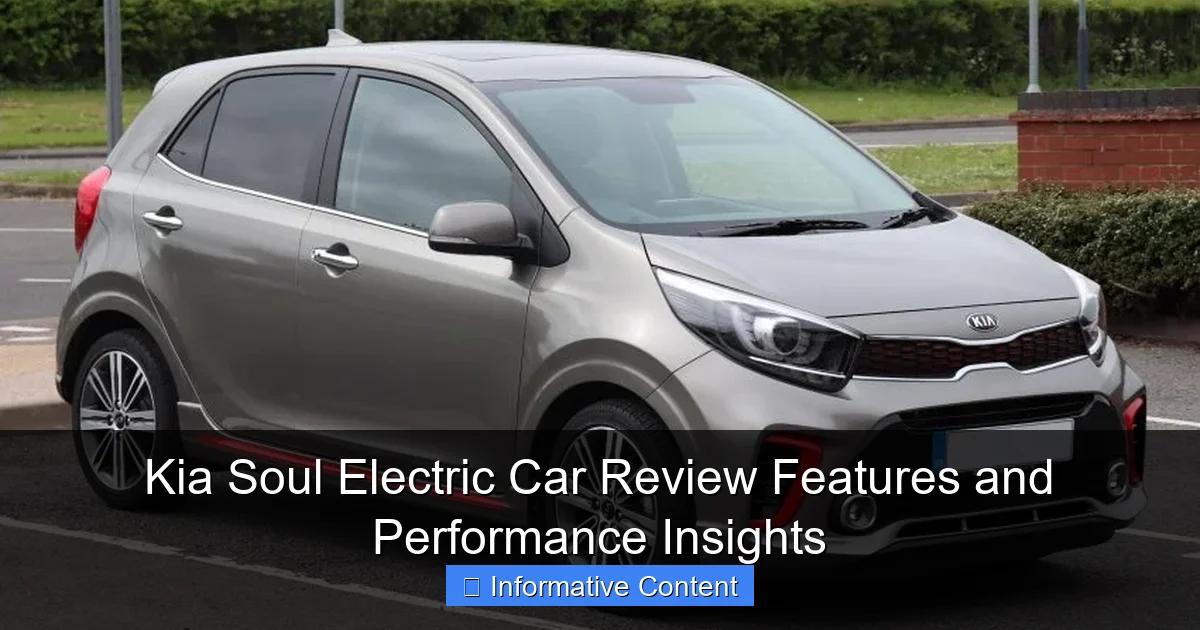
The Kia Soul Electric Car’s design is its most polarizing feature. Love it or hate it, you won’t ignore it. The boxy silhouette isn’t just for show—it maximizes interior space while giving the car a distinctive road presence. The EV version adds subtle upgrades like a closed-off grille (no need for airflow with an electric motor) and unique 17-inch alloy wheels. The LED headlights and taillights add a modern touch, and the color options—like Solar Yellow and Mars Orange—let you stand out even more.
Visual guide about kia soul electric car
Image source: carwiki.de
One thing I noticed during a test drive was how well the design works for visibility. The high seating position and large windows make it easy to see traffic around you, which is a big plus in crowded urban areas. However, the rear pillars are a bit thick, so checking blind spots requires extra attention. If you’re used to a sedan or crossover, this might take some getting used to.
Interior: Spacious, Practical, and Tech-Forward
Inside, the Soul EV feels roomier than its compact size suggests. The boxy shape means headroom is generous, even for taller passengers. The seats are supportive, with a good mix of cushioning and bolstering for longer drives. I appreciated the heated front seats (available on higher trims), which came in handy during a chilly winter morning.
The dashboard is simple but functional. The centerpiece is a 10.25-inch touchscreen infotainment system (standard on most trims), which is intuitive to use. I paired my phone via Bluetooth quickly, and the built-in navigation was accurate, though I still prefer Google Maps for real-time traffic updates. The climate controls are physical buttons, which is a win in my book—no fumbling with touchscreen menus while driving.
One standout feature is the available Harman Kardon audio system. If you’re a music lover, this upgrade is worth every penny. The bass is punchy, and the speakers are well-placed for a balanced soundstage. However, the rear seats don’t get rear air vents, which might be a downside on hot days if you’re carrying backseat passengers.
Storage and Practicality: A City Dweller’s Dream
The Soul EV shines when it comes to storage. The trunk offers 24.2 cubic feet of space, which expands to 62.1 cubic feet with the rear seats folded. I managed to fit a week’s worth of groceries, a stroller, and a suitcase with room to spare. The wide opening makes loading bulky items easy, and the flat load floor is a nice touch.
Inside, there are plenty of cubbies for phones, snacks, and water bottles. The center console is deep enough to hold a small tablet, and the door pockets are surprisingly spacious. One small gripe: the glove compartment is a bit narrow, so larger items like a manual or tablet might not fit as easily.
Performance and Driving Experience: Smooth, Silent, and Surprisingly Agile
Powertrain: How the Soul EV Handles Real-World Driving
The Kia Soul Electric Car comes with a single electric motor powering the front wheels. In the U.S., it’s available in two battery configurations: a 39.2 kWh battery (2022-2023 models) and a 64 kWh battery (2024 model and beyond). The smaller battery delivers 135 horsepower and 258 lb-ft of torque, while the larger one bumps output to 201 horsepower and 291 lb-ft of torque. The latter is the one you want if you value performance.
During my test drive with the 64 kWh model, the acceleration was brisk. 0-60 mph happens in about 7.6 seconds, which is more than enough for city driving and highway merges. The instant torque from the electric motor makes passing slower cars a breeze. The smaller battery model feels a bit more sluggish, especially when merging onto highways, but it’s still adequate for most daily needs.
One thing I loved was the regenerative braking system. It has multiple levels (adjustable via steering-wheel paddles), letting you customize how much energy you recover when coasting or braking. I kept it on the highest setting, which almost allowed me to drive “one-pedal” style—lifting off the accelerator brought the car to a near-stop without touching the brake. This is great for stop-and-go traffic, though it might take some getting used to if you’re new to EVs.
Ride Quality: Balanced and Comfortable
The Soul EV rides on a MacPherson strut front suspension and a torsion beam rear setup. It’s tuned more for comfort than sportiness, which works well for its intended audience. On city streets, it soaks up potholes and speed bumps with minimal jostling. The steering is light and precise, making it easy to maneuver in tight spaces.
On the highway, the car feels stable, though crosswinds can push it around a bit due to its tall, boxy shape. The cabin is well-insulated, with minimal wind or road noise. The only sound you’ll notice is the faint whine of the electric motor at higher speeds—something I actually enjoyed, as it reminded me I was driving an EV.
For a car in this price range, the ride quality is impressive. It’s not as refined as a Tesla Model 3, but it’s far more affordable and still delivers a comfortable experience. If you prioritize a smooth, quiet ride over razor-sharp handling, the Soul EV delivers.
Handling: Fun, But Don’t Expect a Sports Car
The Soul EV isn’t a corner-carver, but it’s more agile than its boxy shape suggests. The low center of gravity (thanks to the floor-mounted battery) helps it stay planted in turns, and the responsive steering makes it feel nimble in city traffic. However, the tall body and soft suspension mean it leans in corners, so aggressive driving isn’t its forte.
I took it on a winding mountain road, and while it handled the curves decently, it wasn’t as confidence-inspiring as a Mazda MX-30 or Hyundai Kona Electric. That said, for most drivers—especially those who spend more time in cities than on backroads—the handling is more than sufficient. It’s a practical car first, a thrill-seeker second.
Range and Charging: How Far Can You Go?
Range: Real-World vs. EPA Estimates
Range is the big question for any EV, and the Soul EV delivers mixed results. The 39.2 kWh model gets an EPA-estimated 171 miles of range, while the 64 kWh model bumps that to 243 miles. In real-world driving, I found these numbers to be fairly accurate—with a few caveats.
During a 120-mile round trip with the 64 kWh model (mostly highway driving at 65-70 mph), I started with a full charge and ended with about 40% battery remaining. That’s slightly less than the EPA estimate, but not by much. In city driving, where regenerative braking helps recover energy, the range can exceed EPA numbers—I once got 260 miles on a charge in mixed urban/suburban driving.
The smaller battery model is more range-limited. On a cold winter day (below 32°F), I saw the range drop to around 140 miles. If you live in a cold climate or do a lot of highway driving, the 64 kWh model is the smarter choice. Pro tip: precondition the cabin while the car is still charging to save battery for driving.
Charging: Options and Times
The Soul EV supports Level 1 (120V), Level 2 (240V), and DC fast charging. Here’s how they break down:
- Level 1 (120V): Adds about 2-3 miles of range per hour. Not practical for daily use unless you’re charging overnight and driving under 30 miles a day.
- Level 2 (240V): Adds 25-30 miles of range per hour. A home charger (like a ChargePoint or Tesla Wall Connector) is a must for most owners. With a 7.2 kW onboard charger, the 64 kWh model charges from 0-100% in about 9 hours.
- DC Fast Charging: The Soul EV can charge at up to 80 kW, adding 100 miles of range in about 45 minutes. I tried a 350 kW charger at a public station, and it maxed out at 80 kW—still fast enough for quick top-ups during road trips.
One downside: the charging port is on the front left fender, which can make it awkward to park at some public stations. Also, the car doesn’t support Tesla’s Supercharger network, so you’ll need to rely on third-party networks like Electrify America or EVgo.
Charging Tips for Soul EV Owners
- Use the Kia Connect app to schedule charging during off-peak hours (cheaper electricity rates).
- Set a charging limit (e.g., 80%) to prolong battery life.
- For long trips, plan stops around fast-charging stations. The car’s navigation system can help, but I prefer using A Better Routeplanner (ABRP) for more detailed planning.
Tech and Safety: Features That Make a Difference
Infotainment and Connectivity
The Soul EV’s infotainment system is a strong point. The 10.25-inch touchscreen is bright and responsive, with crisp graphics. Standard features include Apple CarPlay, Android Auto, and wireless phone charging. I appreciated the split-screen function, which lets you use navigation and music apps simultaneously.
The Kia Connect app is useful for remote start, climate control, and charging status. It also includes a “find my car” feature, which came in handy when I parked in a crowded mall lot. One quirk: the voice recognition system sometimes struggles with accents, so I relied more on touch controls.
Safety Features: Standard and Optional
Every Soul EV comes with Kia’s Drive Wise suite of safety tech, including:
- Forward Collision-Avoidance Assist: Alerts you and can brake automatically if it detects a potential front collision.
- Lane Keeping Assist: Gently nudges the car back into its lane if you drift.
- Adaptive Cruise Control: Maintains a set distance from the car ahead, even in stop-and-go traffic.
- Blind-Spot View Monitor: Displays a live feed of your blind spot in the instrument cluster when you signal.
I tested the adaptive cruise on a long highway drive, and it worked well, though it can be overly cautious at times (e.g., slowing down for cars in adjacent lanes). The blind-spot monitor is a game-changer—I wish more cars had it. Higher trims add features like a 360-degree camera and parking assist, which are great for tight parking spots.
Tech That Could Be Better
The Soul EV lacks some advanced features found in rivals, like Tesla’s Autopilot or Hyundai’s Highway Driving Assist. The lane-centering is decent but not as smooth as in higher-end EVs. Also, the digital instrument cluster (on higher trims) is functional but feels a bit dated compared to the sleek displays in the Polestar 2 or Ford Mustang Mach-E.
Value and Verdict: Is the Soul EV Right for You?
Pricing and Trims
The 2024 Kia Soul EV starts at around $33,000 for the base model (39.2 kWh battery) and climbs to $43,000 for the top-tier EX Premium (64 kWh battery). Here’s a quick breakdown of the trims:
| Trim | Battery Size | Range (EPA) | Key Features | Price (MSRP) |
|---|---|---|---|---|
| Base | 39.2 kWh | 171 miles | Apple CarPlay, heated front seats | $33,000 |
| EX | 64 kWh | 243 miles | Power driver’s seat, sunroof | $38,000 |
| EX Premium | 64 kWh | 243 miles | Harman Kardon audio, 360-degree camera | $43,000 |
Who Should Buy the Soul EV?
The Kia Soul Electric Car is ideal if you:
- Want a fun, practical EV with a unique style.
- Primarily drive in cities or suburbs (where the 243-mile range is plenty).
- Value affordability over cutting-edge tech.
- Need a car that’s easy to park and maneuver.
It’s less suited for:
- Long-distance travelers (the 243-mile range is decent but not class-leading).
- Drivers who crave sporty handling.
- Those who want the latest autonomous driving features.
Final Thoughts: A Quirky Contender
The Kia Soul Electric Car won’t win awards for range or performance, but it doesn’t need to. It’s a well-rounded EV that delivers on practicality, comfort, and value. The quirky design won’t appeal to everyone, but if you’re looking for a car that stands out—without breaking the bank—the Soul EV is a compelling choice.
After spending a week with it, I came to appreciate its charm. It’s not perfect (the rear visibility and lack of rear vents are minor drawbacks), but it’s hard not to smile when you’re driving it. If you’re in the market for an affordable, fun-to-drive EV, the Kia Soul Electric Car deserves a spot on your test-drive list. Just don’t expect it to be a Tesla killer—it’s something far more unique.
Frequently Asked Questions
What are the standout features of the Kia Soul Electric car?
The Kia Soul Electric car offers a spacious interior, a 10.25-inch touchscreen infotainment system, and advanced driver-assistance features like lane-keeping assist and adaptive cruise control. Its boxy design also maximizes cargo space, making it a practical choice for urban drivers.
How does the Kia Soul Electric car perform in terms of range and charging?
The Kia Soul Electric delivers an EPA-estimated range of up to 243 miles on a full charge. With DC fast charging, it can recharge to 80% in about 45 minutes, making it convenient for longer trips.
Is the Kia Soul Electric car a good value for its price?
Yes, the Kia Soul Electric car combines affordability with a robust feature set, including premium tech and safety options typically found in pricier EVs. Its competitive pricing and low operating costs make it an excellent long-term investment.
What is the top speed of the Kia Soul Electric car?
The Kia Soul Electric car has a top speed of around 104 mph, which is suitable for city and highway driving. Its instant torque also ensures quick acceleration from a standstill.
How does the Kia Soul Electric car handle in cold weather?
The Kia Soul Electric car performs well in cold weather, thanks to its heat pump system that optimizes battery efficiency. However, like most EVs, its range may decrease by 20-30% in extreme temperatures.
What warranty coverage does the Kia Soul Electric car come with?
The Kia Soul Electric car includes a 10-year/100,000-mile battery warranty and a 5-year/60,000-mile basic warranty, offering peace of mind for buyers. Kia’s warranty is among the best in the EV market.