Kia vs Hyundai Electric Cars Which One Should You Choose
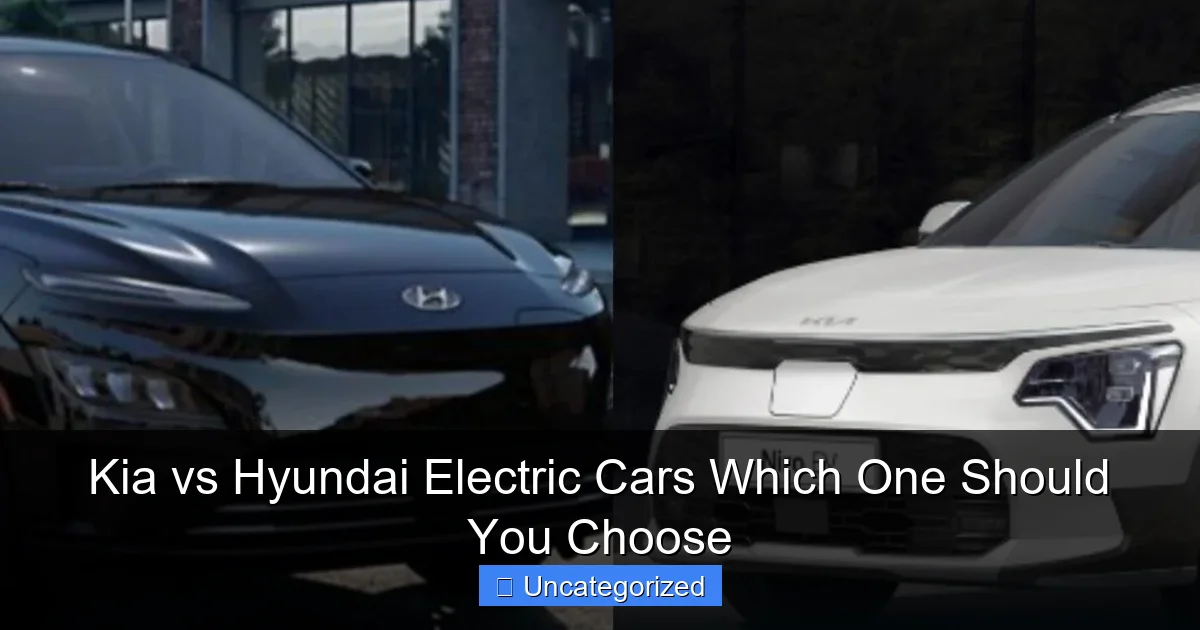
Featured image for kia vs hyundai electric cars
Image source: learnelectriccars.com
Kia and Hyundai electric cars deliver exceptional value, but Kia edges ahead with bolder designs and longer ranges, while Hyundai counters with slightly lower prices and cutting-edge tech features. If performance and style are your priorities, Kia wins—but Hyundai remains a smart pick for budget-conscious buyers wanting innovation.
Key Takeaways
- Choose Kia for edgier design and sportier EV driving dynamics.
- Pick Hyundai for refined interiors and smoother ride comfort.
- Compare battery warranties: both offer 10-year coverage—verify terms.
- Hyundai leads in charging speed with 800V architecture (IONIQ 5/6).
- Kia offers better value in mid-range trims with more standard features.
- Test both brands: driving experience varies notably between models.
- Check local incentives: availability may sway cost-effectiveness by region.
📑 Table of Contents
- The Electric Showdown: Kia vs Hyundai Electric Cars – Which One Should You Choose?
- 1. Shared Technology, Different Philosophies
- 2. Performance and Driving Experience: Sporty vs Smooth
- 3. Interior and Technology: Minimalism Meets Modernism
- 4. Pricing, Value, and Incentives
- 5. Charging, Range, and Real-World Efficiency
- 6. Long-Term Ownership and Brand Ecosystem
The Electric Showdown: Kia vs Hyundai Electric Cars – Which One Should You Choose?
The electric vehicle (EV) revolution is in full swing, and two South Korean automakers—Kia and Hyundai—are leading the charge with bold, innovative, and competitively priced electric cars. Both brands, under the Hyundai Motor Group umbrella, share engineering DNA, battery technology, and even manufacturing facilities. Yet, despite their shared roots, Kia and Hyundai have carved out distinct identities in the EV market. Whether you’re a first-time EV buyer or a seasoned green driver looking to upgrade, the choice between Kia vs Hyundai electric cars can be surprisingly nuanced.
From sleek designs and cutting-edge infotainment to impressive range and charging capabilities, both brands offer compelling options. The Kia EV6 and Hyundai Ioniq 5 are often pitted against each other as direct rivals, while the Hyundai Kona Electric and Kia Niro EV cater to the compact SUV segment. But beyond the specs, what truly sets them apart? Is it brand philosophy, design language, pricing strategy, or long-term ownership experience? This comprehensive guide dives deep into the Kia vs Hyundai electric cars debate, comparing performance, technology, pricing, design, and ownership factors to help you make an informed decision. Whether you’re drawn to Kia’s sporty flair or Hyundai’s futuristic minimalism, we’ve got the insights you need.
1. Shared Technology, Different Philosophies
Under the Same Umbrella: The E-GMP Platform
At the heart of both Kia and Hyundai’s modern electric vehicles lies the Electric-Global Modular Platform (E-GMP), a dedicated EV architecture developed by the Hyundai Motor Group. This platform powers the Kia EV6, EV9, and upcoming EV3, as well as the Hyundai Ioniq 5, Ioniq 6, and Ioniq 7. The E-GMP enables 800-volt ultra-fast charging, vehicle-to-load (V2L) functionality, and a flat floor design that maximizes interior space.
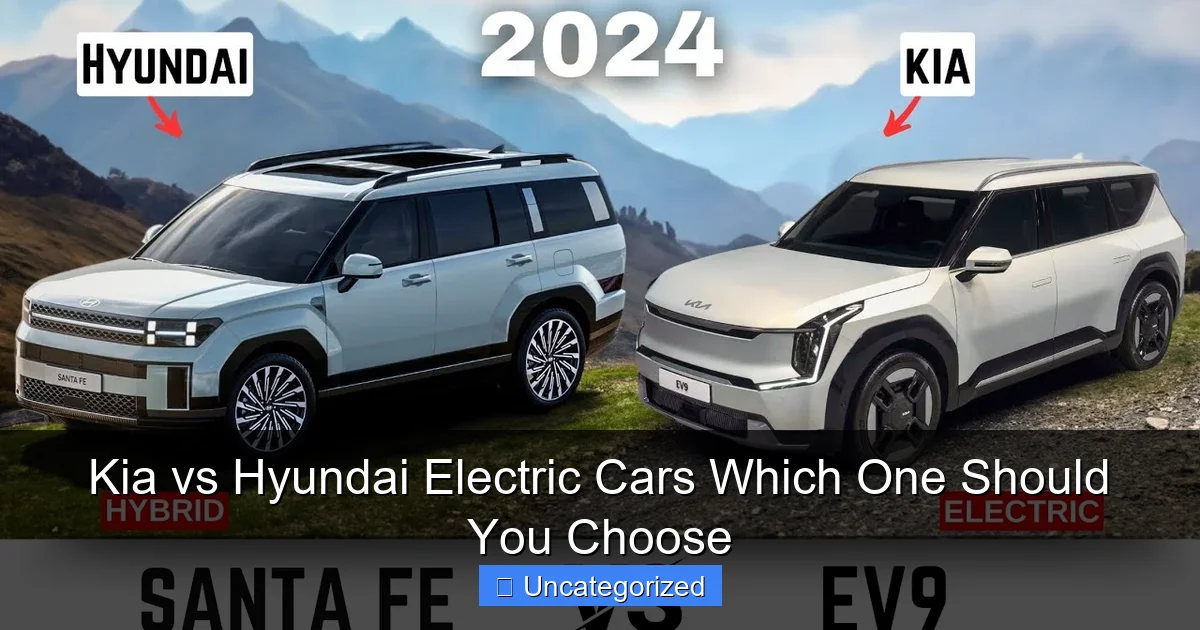
Visual guide about kia vs hyundai electric cars
Image source: i.ytimg.com
Thanks to this shared foundation, both brands offer:
- Charging from 10% to 80% in as little as 18 minutes (with a 350 kW charger)
- Bidirectional charging (V2L) to power external devices or even your home during outages
- Long-range variants with over 300 miles on a single charge
- All-wheel drive (AWD) and rear-wheel drive (RWD) configurations
For example, the Kia EV6 GT and Hyundai Ioniq 5 N—both performance-oriented models—use the same 77.4 kWh battery and dual-motor setup, delivering over 500 horsepower. Yet, the tuning, suspension, and driving dynamics differ significantly, reflecting each brand’s approach.
Brand Identity and Design Language
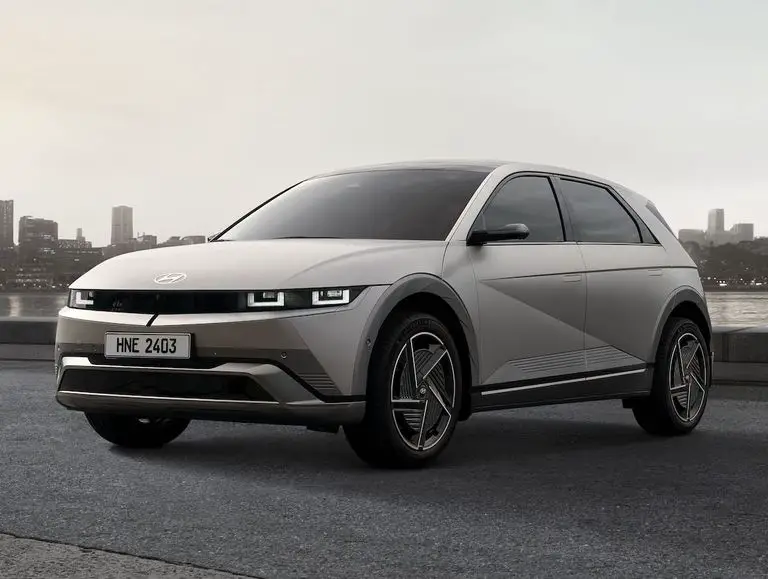
While the mechanical underpinnings are nearly identical, Kia and Hyundai have diverged in their design philosophies and brand messaging. Hyundai leans into a futuristic, minimalist aesthetic with the “Sensuous Sportiness” design language. The Ioniq 5, for instance, features pixel-inspired lighting, a retro-futuristic 80s-inspired silhouette, and a spacious, lounge-like interior with a movable center console.
Kia, on the other hand, embraces a more aggressive, sporty, and driver-focused identity. The “Opposites United” design language emphasizes bold lines, sharp angles, and dynamic proportions. The EV6, for example, has a sloping coupe-like roofline, aggressive front fascia, and a cockpit-style driver’s seat that feels more like a sports car than an SUV.
For practical buyers, this means:
- Hyundai appeals to those who value innovation, sustainability, and a tech-forward, calming interior.
- Kia targets drivers who want a more engaging, performance-oriented experience with bold styling.
Tip: If you’re torn between the two, test drive both the Ioniq 5 and EV6 back-to-back. The driving feel, steering weight, and cabin ambiance are distinct enough to sway your preference.
2. Performance and Driving Experience: Sporty vs Smooth
Acceleration and Powertrain Options
When comparing Kia vs Hyundai electric cars in terms of performance, the differences are more about tuning than hardware. Both the Ioniq 5 and EV6 offer:
- RWD Standard Range: 58 kWh battery, ~220 miles range, 168 hp (Ioniq 5) / 167 hp (EV6)
- RWD Long Range: 77.4 kWh battery, ~303 miles (Ioniq 5) / ~310 miles (EV6), 225 hp
- AWD Long Range: 77.4 kWh, ~256 miles (Ioniq 5) / ~274 miles (EV6), 320 hp
The slight edge in range for the EV6 comes from aerodynamic refinements and slightly more efficient motors. However, the real difference emerges in the performance trims.
The Hyundai Ioniq 5 N, launched in 2023, is Hyundai’s first high-performance EV. With 601 hp (641 with N Grin Boost), 0–60 mph in 3.4 seconds, and track-tuned suspension, it’s a serious contender in the hot hatch segment. It even simulates gear shifts and engine sounds via the “N e-shift” and “N Active Sound+” systems.
The Kia EV6 GT, released earlier, delivers 576 hp, 0–60 mph in 3.4 seconds, and a top speed of 161 mph. It features a drift mode, rear torque vectoring, and a sport-tuned chassis. While both are blisteringly fast, the EV6 GT feels slightly more planted and aggressive in corners.
Driving Dynamics and Ride Comfort
The Ioniq 5 prioritizes ride comfort and daily usability. Its adaptive dampers (available on higher trims) and softer suspension tuning make it ideal for city driving and long commutes. The cabin is whisper-quiet, with excellent noise insulation.
The EV6, especially in GT-Line or GT trims, feels sportier. The steering is heavier, the suspension stiffer, and the body roll more controlled. It’s more fun on winding roads but can feel firm over rough pavement. For example, a driver commuting on a mix of highways and urban streets might prefer the Ioniq 5’s smoother ride, while an enthusiast might enjoy the EV6’s sharper handling.
Pro Tip: If you’re considering the AWD models, the EV6’s rear-biased torque distribution (especially in GT mode) gives it a more engaging driving feel. The Ioniq 5 feels more balanced and neutral.
3. Interior and Technology: Minimalism Meets Modernism
Infotainment and Connectivity
Both Kia and Hyundai use nearly identical infotainment systems based on a 12.3-inch touchscreen and 12.3-inch digital instrument cluster. The interface is intuitive, with crisp graphics, over-the-air updates, and standard Apple CarPlay and Android Auto (wired on lower trims, wireless on higher ones).
However, Hyundai takes a slight lead in user experience with:
- Digital Key 2.0: Allows smartphone-based keyless entry and sharing (via app or message)
- Bluelink+: Enhanced connectivity with remote start, climate control, and vehicle status via app
- OTA Updates: More frequent software improvements and new features (e.g., new charging station filters)
Kia’s UVO system is robust but lags slightly in feature updates. That said, Kia offers a more customizable home screen and better voice command recognition in real-world testing.
Interior Materials and Comfort
The Ioniq 5’s interior is a masterclass in minimalist design. The “Living Space” concept features:
- A movable center console (“Universal Island”) that slides forward and back
- Recycled materials (seat fabric from PET bottles, bio-paint)
- Panoramic sunroof and ambient lighting with 64 colors
The cabin feels open and airy, with excellent visibility and legroom. Rear passengers enjoy a flat floor and reclining seats.
The EV6’s interior is more driver-centric. The “Digital Tiger Face” dashboard flows into the door panels, creating a cockpit feel. Materials include soft-touch surfaces, optional vegan leather, and a head-up display. However, the rear seats are slightly less spacious than the Ioniq 5’s, and the sloping roofline reduces headroom for taller passengers.
Example: A family of four might prefer the Ioniq 5’s roomier back seat and sliding console for child gear. A couple who values a sporty, immersive cabin might lean toward the EV6.
Technology and Driver Aids
Both brands offer advanced driver assistance systems (ADAS), including:
- Highway Driving Assist (HDA) with lane centering and adaptive cruise
- Remote Smart Parking Assist (RSPA) for tight spots
- Blind-spot view monitor (BVM) that shows side views in the instrument cluster
Hyundai’s Highway Driving Assist 2 (HDA2) is more refined, with smoother lane changes and better traffic flow adaptation. Kia’s system is reliable but can be more conservative in merging scenarios.
4. Pricing, Value, and Incentives
Base Prices and Trim Levels
When comparing Kia vs Hyundai electric cars, pricing is nearly identical across equivalent trims, but Kia often offers slightly better standard features. Here’s a 2024 comparison (USD, before incentives):
| Model | Trim | Starting MSRP | Range (EPA) | Standard Features |
|---|---|---|---|---|
| Hyundai Ioniq 5 | SE Standard Range | $41,650 | 220 miles | 19″ wheels, 12.3″ screens, HDA, V2L |
| Hyundai Ioniq 5 | SEL Long Range | $48,750 | 303 miles | 20″ wheels, heated seats, sunroof, RSPA |
| Hyundai Ioniq 5 | Limited Long Range AWD | $55,750 | 256 miles | Premium audio, ventilated seats, HDA2 |
| Kia EV6 | Light RWD | $42,600 | 232 miles | 19″ wheels, 12.3″ screens, HDA, V2L |
| Kia EV6 | Wind AWD | $50,600 | 274 miles | 20″ wheels, heated/ventilated seats, sunroof |
| Kia EV6 | GT AWD | $61,600 | 206 miles | Performance suspension, Nappa leather, 21″ wheels |
Notable observations:
- The Ioniq 5 offers a slightly lower entry price with the SE Standard Range trim.
- The EV6 Wind AWD includes ventilated seats as standard—something only available as an option on the Ioniq 5 SEL.
- The EV6 GT is pricier but offers more performance-focused features (e.g., drift mode, sport seats).
Incentives and Ownership Costs
Both the Ioniq 5 and EV6 qualify for the full $7,500 federal tax credit (as of 2024), provided they meet battery component and assembly requirements. However, Hyundai has a slight edge due to:
- Hyundai’s 10-year/100,000-mile powertrain warranty (vs. Kia’s 10-year/100,000-mile for powertrain, 5-year/60,000-mile for basic).
- Hyundai’s free maintenance for 3 years/36,000 miles (Kia offers 5 years/60,000 miles but excludes wear items).
Insurance and charging costs are similar, but Kia’s higher residual values (per ALG data) may lead to better lease deals.
Tip: Check local utility rebates—some states offer additional incentives for EVs built in the U.S. (Ioniq 5 is made in Alabama; EV6 in Georgia).
5. Charging, Range, and Real-World Efficiency
Ultra-Fast Charging and V2L
Thanks to the E-GMP platform, both brands support 800-volt charging, enabling:
- 10–80% charge in ~18 minutes (using a 350 kW DC fast charger)
- 100 miles of range added in ~10 minutes
In real-world tests (by Edmunds and Car and Driver), both the Ioniq 5 and EV6 achieved 90–95% of their EPA range on highways. However, the EV6’s lower drag coefficient (0.28 vs. 0.29) gives it a slight efficiency edge, especially at high speeds.
Both offer vehicle-to-load (V2L) functionality, allowing you to power devices up to 3.6 kW. The Ioniq 5’s V2L outlet is more conveniently located (under the rear seat), while the EV6’s is in the cargo area.
Range Anxiety and Daily Usability
For most drivers, 250–300 miles of range is more than sufficient. But real-world factors matter:
- Winter Range: Expect a 20–30% drop in cold weather. Both cars have heat pumps (standard on higher trims) to mitigate this.
- Charging Network: Both support CCS and can use Electrify America, EVgo, and ChargePoint. Hyundai’s partnership with Electrify America includes 2 years of free 30-minute charging (up to 500 kWh/year).
- Home Charging: A Level 2 charger (240V) adds ~25 miles per hour. Both support 11 kW AC charging (4 miles per hour).
Example: A 30-mile daily commute with weekend trips to the mountains? The Ioniq 5’s 303-mile range and heat pump (on SEL+ trims) make it ideal. Need a fun, fast EV for spirited drives? The EV6 GT’s sport tuning and drift mode deliver.
6. Long-Term Ownership and Brand Ecosystem
Resale Value and Reliability
Kia has consistently outperformed Hyundai in resale value (per Kelley Blue Book and iSeeCars). The EV6 retains ~55% of its value after 3 years, compared to ~52% for the Ioniq 5. This is due to Kia’s stronger brand perception and higher demand in the used EV market.
Reliability ratings (from J.D. Power and Consumer Reports) are excellent for both, with few reported issues. However, Kia’s 5-year/60,000-mile basic warranty is more comprehensive than Hyundai’s 5-year/60,000-mile (but with fewer covered components).
Future-Proofing and Model Lineup
Hyundai is expanding its Ioniq sub-brand aggressively:
- Ioniq 6: Sedan with 361-mile range and ultra-low drag (0.21 Cd)
- Ioniq 7: Three-row SUV launching in 2025
- Ioniq 9: Flagship SUV (2026)
Kia’s lineup is equally ambitious:
- EV3: Compact SUV (~$35,000, 2024)
- EV4: Sedan (~$40,000, 2025)
- EV9: Three-row SUV (~$55,000, available now)
For buyers planning to stay in the brand long-term, Kia’s broader range of affordable EVs (EV3, EV4) might be more appealing. Hyundai’s focus on premium, tech-heavy models (Ioniq 6, 7) targets luxury buyers.
Ultimately, the Kia vs Hyundai electric cars decision comes down to your priorities. Choose Hyundai if you value:
- Futuristic, minimalist design
- Superior ride comfort and cabin space
- Free charging and maintenance perks
Choose Kia if you prefer:
- Sporty, aggressive styling
- Sharper driving dynamics
- Better resale value and standard features
Both brands deliver exceptional EVs built on cutting-edge technology. Whether you’re drawn to the Ioniq 5’s lounge-like interior or the EV6’s GT performance, you’re getting a future-proof, high-efficiency vehicle. Test drive both, compare real-world range in your climate, and factor in incentives. In the end, the right choice isn’t just about specs—it’s about which brand aligns with your lifestyle, values, and driving spirit. The future of mobility is here, and with Kia and Hyundai, it’s never been more exciting.
Frequently Asked Questions
What are the key differences between Kia and Hyundai electric cars?
Kia and Hyundai electric cars share similar platforms and battery technology (like the E-GMP), but differ in design, pricing, and feature emphasis. Kia often leans toward sportier styling and driver engagement, while Hyundai prioritizes comfort and tech-forward interiors, making the “Kia vs Hyundai electric cars” debate a matter of preference.
Which brand offers better range in their electric vehicles?
Both brands offer comparable ranges across similar models—for example, the Kia EV6 and Hyundai Ioniq 5 both deliver up to 300+ miles on a single charge. Real-world range may vary slightly due to tuning and aerodynamics, but neither has a significant edge in this category.
Are Kia and Hyundai electric cars priced the same?
Hyundai typically positions its EVs as slightly more premium, with higher starting prices for models like the Ioniq 5 compared to the Kia EV6. However, both brands offer competitive pricing within the same segment, with overlapping trim levels and incentives that narrow the cost gap.
Which has better charging speed: Kia or Hyundai electric cars?
Both brands use the same 800V architecture, enabling ultra-fast charging (10–80% in ~18 minutes). The “Kia vs Hyundai electric cars” charging debate is a tie—identical peak rates and battery management systems make charging performance nearly indistinguishable.
Do Kia and Hyundai electric cars come with the same warranty?
Yes, both offer a 10-year/100,000-mile powertrain warranty, including the battery and electric motor. This industry-leading coverage is a shared strength, giving buyers confidence regardless of which brand they choose.
Which brand has more advanced tech in their electric models?
Hyundai tends to introduce newer tech first (e.g., Ioniq 5’s solar roof or vehicle-to-load), while Kia focuses on intuitive interfaces and driver aids. Your preference—cutting-edge features or user-friendly design—will determine which brand’s tech feels “better.”