Kia vs Hyundai Electric Cars Which One Should You Choose

Featured image for kia vs hyundai electric cars
Kia and Hyundai electric cars deliver exceptional value, but your choice hinges on priorities: Kia emphasizes bold design and sportier performance, while Hyundai focuses on tech-forward features and longer range in base models. Both brands share reliable EV platforms and warranties, making the decision largely about style, driving experience, and specific model strengths.
Key Takeaways
- Kia offers longer ranges on most models, ideal for frequent long-distance drivers.
- Hyundai leads in affordability with competitive pricing and strong entry-level options.
- Kia’s design stands out with sportier, more aggressive styling than Hyundai’s conservative approach.
- Hyundai provides faster charging on select models, reducing downtime on road trips.
- Both share similar tech but Kia’s infotainment is more intuitive and user-friendly.
- Warranty coverage is equal with 10-year/100k-mile terms on powertrains and batteries.
📑 Table of Contents
- Why the Electric Car Showdown Between Kia and Hyundai Matters
- Shared DNA, Different Personalities: The Platform Story
- Performance and Driving Experience: How They Handle the Road
- Range, Charging, and Real-World Efficiency
- Technology and Infotainment: Screens, Apps, and Smarts
- Value, Pricing, and Ownership Experience
- The Final Verdict: Which One Should You Choose?
Why the Electric Car Showdown Between Kia and Hyundai Matters
Picture this: You’re standing in a parking lot, staring at two nearly identical electric SUVs—one with a tiger-nose grille, the other with a sleek, futuristic face. Both promise long range, fast charging, and cutting-edge tech. One is a Kia, the other a Hyundai. They share the same parent company, the same battery tech, and even the same factory floor. So, why does choosing between them feel so hard?
If you’re shopping for an electric car, you’ve probably noticed this pattern. Kia and Hyundai are siblings in the automotive world, both under the Hyundai Motor Group umbrella. They share platforms, batteries, and even some interior features. But when you look closer, subtle differences in design, driving feel, and value start to emerge. Whether you’re a first-time EV buyer or a seasoned driver making the switch, picking between Kia vs Hyundai electric cars isn’t just about specs—it’s about personality, priorities, and what matters most to you.
Shared DNA, Different Personalities: The Platform Story
Same Foundation, Different Flavor
Let’s get one thing straight: Kia and Hyundai are not just related—they’re practically twins. Both brands use the E-GMP (Electric-Global Modular Platform), a state-of-the-art EV architecture designed specifically for long-range, high-performance electric vehicles. This means models like the Kia EV6 and Hyundai Ioniq 5 share:
- The same 800-volt electrical system (enabling ultra-fast charging)
- Identical battery packs (58 kWh standard, 77.4 kWh long-range)
- Rear- and all-wheel-drive powertrains
- Regenerative braking systems with one-pedal driving (i-Pedal)
But here’s the twist: while the bones are the same, the skin, soul, and vibe are different. Think of it like two siblings raised in the same house—same upbringing, but one became a rockstar and the other a minimalist architect.
Design Philosophy: Bold vs. Retro-Futuristic
Kia leans into bold, aggressive styling. The EV6, for example, has sharp angles, a low-slung roof, and a sporty stance. It looks like it’s always in motion, even when parked. The front end features Kia’s “Digital Tiger Face,” which gives it a more modern, almost cyberpunk feel.
Hyundai, on the other hand, takes a retro-futuristic approach with the Ioniq 5. Inspired by the 1970s Hyundai Pony, it has pixel-style headlights, flush door handles, and a boxy, 80s-inspired silhouette. It’s quirky, nostalgic, and undeniably unique. Some call it “a spaceship from the 1980s,” and honestly? It fits.
Tip: If you love standing out in a crowd, the Ioniq 5’s design might win your heart. But if you want something sleek and sporty, the EV6 feels more like a traditional performance EV.
Interior: Minimalism vs. Sporty Luxury
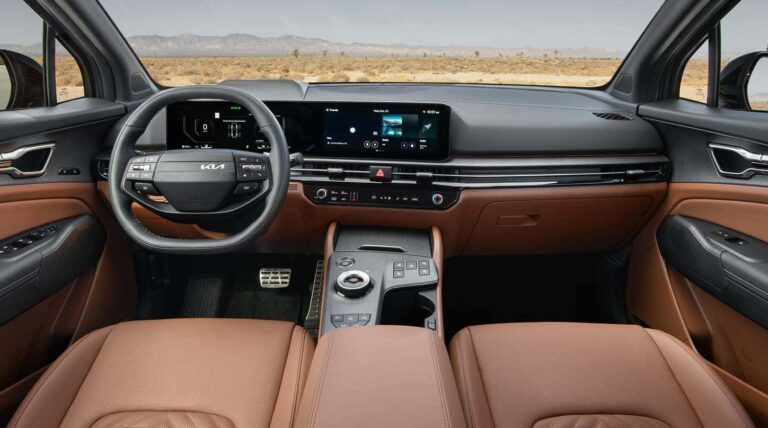
Inside, the differences continue. The EV6 feels like a cockpit—driver-focused, with a curved dual-screen display, sporty seats, and ambient lighting that can pulse to your music. The steering wheel is flat-bottomed, and the center console is angled toward the driver.
The Ioniq 5, by contrast, embraces open space. It has a “living room” vibe, with a flat floor, sliding center console, and seats that can recline almost flat. The interior feels airy, with sustainable materials like recycled plastic bottles and bio-based fabrics. It’s more about comfort and relaxation than sportiness.
Real talk: If you drive a lot of highway miles and want a cozy, lounge-like cabin, the Ioniq 5 wins. But if you enjoy a more engaged, driver-centric experience, the EV6’s interior will feel more natural.
Performance and Driving Experience: How They Handle the Road
Acceleration and Power: Numbers That Matter
Both the EV6 and Ioniq 5 offer multiple powertrain options. Let’s break down the key specs:
- Rear-wheel drive (RWD): 225 hp, 258 lb-ft torque
- All-wheel drive (AWD): 320 hp (EV6), 320 hp (Ioniq 5), but torque differs slightly (446 lb-ft vs. 449 lb-ft)
- Top speed: 115 mph (RWD), 130 mph (AWD)
On paper, they’re nearly identical. But on the road? Slight differences emerge. The EV6 GT, Kia’s performance model, cranks out 576 hp and hits 0–60 mph in 3.4 seconds—making it one of the fastest electric SUVs under $65,000. The Ioniq 5 doesn’t have a direct GT rival (yet), so if speed is your thing, Kia has the edge.
For everyday driving, both feel quick and responsive. The RWD versions are nimble and efficient, while AWD models offer better traction in rain or snow. The steering in the EV6 is a bit sharper, with more feedback. The Ioniq 5 feels softer, more relaxed—like it’s designed for long cruises rather than canyon carving.
Ride Comfort and Noise Levels
Hyundai tends to prioritize ride comfort. The Ioniq 5 has slightly softer suspension tuning, which makes it better at absorbing potholes and rough pavement. It’s quieter at highway speeds, too—thanks to acoustic glass and better sound insulation.
The EV6 rides a bit firmer, especially on 20-inch wheels. That’s great for handling, but on bumpy city roads, you might feel more vibrations. Some drivers love the sporty feedback; others find it tiring on long commutes.
Pro tip: If you live in a city with rough roads (looking at you, Chicago and NYC), test-drive both on uneven pavement. You’ll notice the difference immediately.
One-Pedal Driving and Regen Modes
Both cars offer i-Pedal (Hyundai) and i-Pedal (Kia)—a feature that lets you drive with just the accelerator pedal. Lift off, and the car slows down dramatically using regenerative braking. It’s great for city traffic and reduces brake wear.
But the tuning differs. The EV6’s regen feels stronger and more linear—great for aggressive drivers. The Ioniq 5’s regen is smoother, more gradual, which some find easier to modulate. You can also adjust regen levels via paddle shifters in both cars, but Kia’s system feels more intuitive.
Range, Charging, and Real-World Efficiency
EPA Range: What the Numbers Say
Let’s look at the official EPA estimates:
- Kia EV6 RWD (77.4 kWh): 310 miles
- Hyundai Ioniq 5 RWD (77.4 kWh): 303 miles
- Kia EV6 AWD (77.4 kWh): 274 miles
- Hyundai Ioniq 5 AWD (77.4 kWh): 266 miles
Kia wins by a narrow margin—about 7–8 miles more range in comparable trims. But here’s the catch: real-world range depends on how you drive. Cold weather, AC use, and highway speeds can reduce range by 20–30%.
Real-world example: A driver in Colorado reported getting 240 miles from their EV6 AWD in winter (with heated seats and steering wheel on). The same driver’s friend with an Ioniq 5 AWD got 235 miles. Close, but every mile counts when you’re on a road trip.
Charging Speed: Where They Shine
This is where both brands truly shine—thanks to that 800-volt system. When plugged into a 350 kW DC fast charger, both cars can go from 10% to 80% in about 18 minutes. That’s faster than most competitors (like the Ford Mustang Mach-E or Volkswagen ID.4).
But there’s a nuance: peak charging rates. The EV6 can sustain higher charging speeds for longer, especially in warm conditions. The Ioniq 5 tapers off slightly sooner, which means it might take an extra minute or two on long trips.
Also, both cars support vehicle-to-load (V2L)—a feature that lets you power devices (like camping gear, laptops, or even another EV) via an adapter. It’s a game-changer for road trips and emergencies.
Home Charging and Daily Use
Both come with a 11 kW onboard charger (for Level 2 charging). That means you can add about 25–30 miles of range per hour on a 240V home charger. A full charge from empty takes 7–8 hours—perfect for overnight charging.
Tip: If you don’t have home charging, check your local public charger network. Both brands offer free charging credits (Kia: 1,000 kWh at Electrify America; Hyundai: 250 kWh at ChargePoint). Kia’s deal is more generous, especially if you drive a lot.
Technology and Infotainment: Screens, Apps, and Smarts
Infotainment Systems: Same Tech, Different UX
Both cars use Hyundai Motor Group’s latest infotainment system, with a 12.3-inch touchscreen and a 12.3-inch digital gauge cluster. They run on the same software, so features like:
-
<
- Wireless Apple CarPlay and Android Auto
- Over-the-air (OTA) updates
- Voice commands (“Hey Kia” or “Hey Hyundai”)
- Navigation with EV routing (shows chargers along your route)
are nearly identical. But the user experience (UX) differs. Kia’s interface feels more modern, with cleaner menus and faster response times. Hyundai’s system is functional but can feel slightly clunkier—especially when using voice commands.
The EV6 also has a head-up display (HUD) in higher trims, which projects speed, navigation, and ADAS alerts onto the windshield. The Ioniq 5 offers a HUD too, but it’s less customizable.
Advanced Driver Assistance (ADAS)
Both come with Smart Cruise Control (SCC), Lane Keeping Assist, and Forward Collision Avoidance. But Kia’s Highway Driving Assist 2 (HDA2) is a step above. It offers:
- Hands-free driving on highways (with driver monitoring)
- Automatic lane changes (when you signal)
- Smoother transitions between curves
Hyundai’s Highway Driving Assist (HDA) is good, but it doesn’t offer hands-free mode or auto lane changes. It’s more of a “set it and forget it” system.
Note: Neither system is full self-driving (like Tesla’s FSD), but HDA2 comes close to being a “set-and-forget” highway co-pilot.
App Integration and Remote Features
Both brands offer strong app support. You can:
- Precondition the cabin (heat or cool it before you get in)
- Check battery status and charging progress
- Send navigation routes from your phone
- Lock/unlock remotely
But Kia’s app is slightly more polished, with better push notifications and a cleaner interface. Hyundai’s app works fine, but it feels a bit outdated.
Value, Pricing, and Ownership Experience
Base Prices and Trim Levels
Let’s compare starting MSRPs (as of 2024):
| Model | Trim | Starting MSRP | Key Features |
|---|---|---|---|
| Kia EV6 | Light (RWD) | $42,600 | 225 hp, 232-mile range, 19″ wheels, basic ADAS |
| Hyundai Ioniq 5 | SE (RWD) | $41,600 | 225 hp, 220-mile range, 19″ wheels, similar ADAS |
| Kia EV6 | Wind (RWD) | $45,900 | 310-mile range, heated seats, sunroof, better audio |
| Hyundai Ioniq 5 | SEL (RWD) | $46,550 | 303-mile range, heated seats, sunroof, ambient lighting |
| Kia EV6 | GT-Line (AWD) | $52,600 | 320 hp, HUD, sport seats, 20″ wheels |
| Hyundai Ioniq 5 | SEL (AWD) | $52,950 | 320 hp, panoramic roof, premium audio, V2L |
Kia tends to offer more standard features at similar price points. For example, the EV6 Wind includes a sunroof and better audio, while the Ioniq 5 SEL charges extra for those. But Hyundai often includes more comfort features (like a panoramic roof) in higher trims.
Warranty and Maintenance
Both brands offer 10-year/100,000-mile powertrain and battery warranties—among the best in the industry. They also include:
- 5-year/60,000-mile basic warranty
- 5-year/60,000-mile roadside assistance
- Free scheduled maintenance for 3 years/36,000 miles
No major differences here. But Kia has a slight edge in customer service ratings (per J.D. Power), with faster response times at dealerships.
Resale Value and Long-Term Ownership
Historically, Hyundai has held slightly better resale value, especially for SUVs. But Kia’s EV6 is newer and gaining popularity fast. Early data suggests the EV6 may depreciate slightly slower than the Ioniq 5—especially the GT and GT-Line trims.
Tip: If you plan to keep the car 5+ years, resale value matters less. But if you trade every 3–4 years, Hyundai might save you a few hundred at trade-in.
The Final Verdict: Which One Should You Choose?
So, after all that—Kia vs Hyundai electric cars—which one wins?
It depends on you.
Choose the Kia EV6 if you:
- Want a sportier, more driver-focused experience
- Love bold, aggressive styling
- Need the fastest charging and longest range
- Value cutting-edge tech (like HDA2 and a HUD)
- Drive a lot of highway miles and want hands-free assist
Choose the Hyundai Ioniq 5 if you:
- Prefer a relaxed, lounge-like interior
- Love quirky, retro-futuristic design
- Want a smoother, more comfortable ride
- Appreciate sustainable materials and open cabin space
- Like the idea of V2L for camping or emergencies
And here’s the best part: you can’t really go wrong. Both are built on the same world-class platform, with excellent range, fast charging, and strong warranties. They’re not just good EVs—they’re great EVs.
So go test-drive both. Take them on your daily commute. Try the infotainment, test the regen, and see which one feels right. Because at the end of the day, the best electric car is the one that fits your life—not just your garage.
And hey, if you’re still torn? Remember: they’re siblings. You’re getting the same great genes, just with different haircuts. Pick the one that makes you smile when you walk up to it. That’s the one you’ll keep charging—and driving—for years to come.
Frequently Asked Questions
What are the key differences between Kia and Hyundai electric cars?
Kia and Hyundai electric cars share many underlying technologies since they’re part of the same parent company, but Kia tends to focus on sportier designs and driving dynamics, while Hyundai emphasizes sleek, futuristic aesthetics and comfort. Both offer competitive range and features, but Kia often edges out in value with longer warranties.
Which brand offers better range in their electric cars: Kia or Hyundai?
Both brands deliver similar ranges across comparable models—for example, the Kia EV6 and Hyundai Ioniq 5 offer around 300 miles on a charge. Hyundai’s Ioniq 6 sedan, however, leads slightly with up to 361 miles, making it a standout in the Kia vs Hyundai electric cars debate for long-distance drivers.
Are Kia and Hyundai electric cars priced similarly?
Yes, pricing is closely aligned between equivalent models, though Kia often includes more standard features at the base level, giving it a slight value advantage. Hyundai counters with unique tech and design touches, so the best choice depends on your priorities.
Which has better charging speeds: Kia or Hyundai electric vehicles?
Both brands use the same 800V architecture, enabling ultra-fast charging (10–80% in ~18 minutes). Performance is nearly identical, so charging speed won’t be a deciding factor in the Kia vs Hyundai electric cars comparison.
Do Kia and Hyundai offer the same warranty on electric cars?
Kia provides a superior 10-year/100,000-mile battery warranty (vs. Hyundai’s 10-year/100,000-mile limited warranty), including coverage for battery capacity loss below 70%. This makes Kia a safer long-term investment for some buyers.
Which brand has more advanced tech in their electric cars?
Hyundai often debuts cutting-edge features first, like vehicle-to-load (V2L) charging in the Ioniq 5, while Kia focuses on intuitive infotainment and driver-assist systems. Both are tech-forward, but Hyundai leans into innovation, and Kia prioritizes user-friendliness.