MG Electric Car Battery Everything You Need to Know
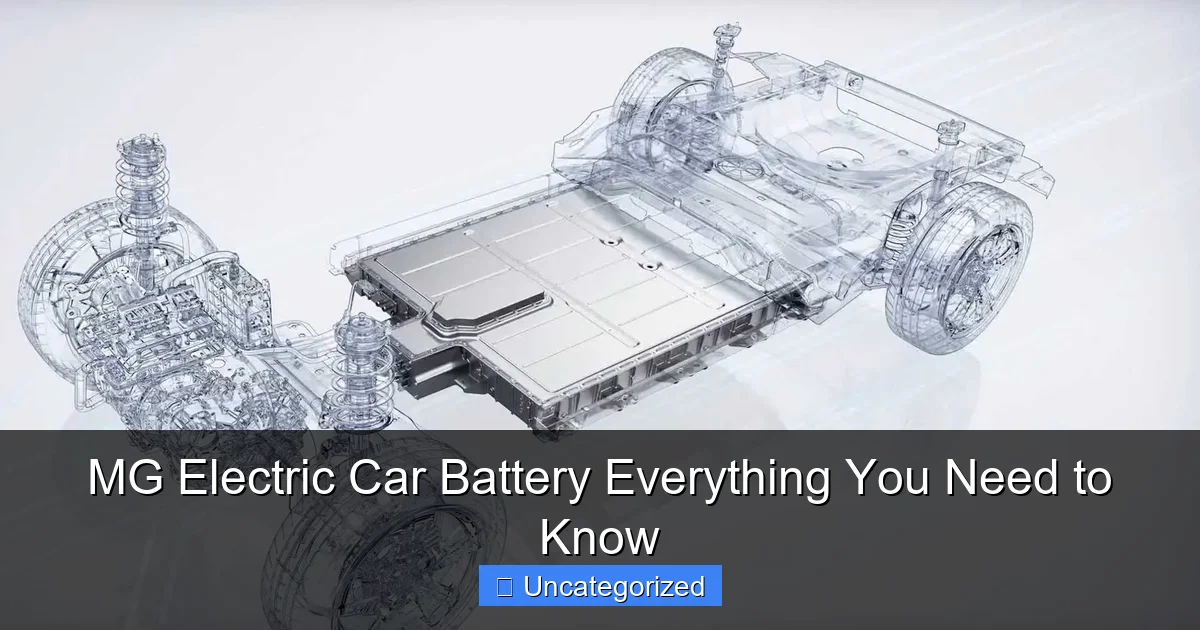
Featured image for mg electric car battery
Image source: cdn.motor1.com
MG electric car batteries combine cutting-edge lithium-ion technology with impressive longevity, offering ranges up to 437 km on a single charge and an industry-leading 8-year/150,000 km warranty. Designed for performance and reliability, these batteries feature advanced thermal management and fast-charging capabilities, making MG a smart choice for eco-conscious drivers seeking value without compromise.
Key Takeaways
- MG batteries last 8+ years with proper care and regular use.
- Fast charging available on most models—30 minutes for 80% charge.
- Warranty covers 7 years or 150,000 km, ensuring long-term peace of mind.
- Thermal management enhances performance and extends battery life in all climates.
- Regenerative braking boosts efficiency and reduces wear on brake components.
- Monitor battery health via app for real-time insights and usage patterns.
📑 Table of Contents
- The Power Behind the Wheel: Understanding MG Electric Car Batteries
- 1. Battery Chemistry and Technology: The Core of MG’s Electric Power
- 2. Capacity, Range, and Real-World Performance
- 3. Charging: Speed, Infrastructure, and Battery Health
- 4. Battery Lifespan, Warranty, and Degradation
- 5. Safety, Sustainability, and Future Innovations
- Conclusion: Powering the Future with MG
- MG Electric Car Battery: Key Data Summary
The Power Behind the Wheel: Understanding MG Electric Car Batteries
The automotive landscape is undergoing a revolutionary shift, and at the heart of this transformation lies the electric vehicle (EV). Among the rising stars in the EV world is MG Motor, a brand with a rich heritage that’s now making bold strides in electrification. From the compact MG ZS EV to the stylish MG5 Electric, MG’s electric lineup is gaining traction globally, and a critical component behind their success is the MG electric car battery. But what makes these batteries tick? What technology powers them, and how do they stack up against the competition? This comprehensive guide dives deep into everything you need to know about MG electric car batteries, from their chemistry and performance to lifespan, charging, and future innovations.
Whether you’re a prospective MG EV buyer, a current owner curious about maximizing your battery’s health, or simply an EV enthusiast, understanding the nuances of MG electric car battery technology is essential. We’ll explore the types of batteries used, their real-world range capabilities, charging infrastructure compatibility, degradation factors, and the brand’s commitment to sustainability and safety. By the end of this article, you’ll have a clear, data-driven understanding of what powers your MG electric car and how to get the most out of it for years to come. Let’s plug in and explore the electrifying world of MG’s battery technology.
1. Battery Chemistry and Technology: The Core of MG’s Electric Power
At the foundation of every MG electric car battery is its electrochemical makeup. MG, like most modern EV manufacturers, primarily relies on Lithium-ion (Li-ion) battery technology, but the specific chemistry and cell configuration are crucial differentiators. Understanding these details helps explain performance, cost, and longevity.

Visual guide about mg electric car battery
Image source: i.ytimg.com
Lithium-Ion Variants: NMC and LFP
MG utilizes two primary types of lithium-ion chemistries, each with distinct advantages:
- Nickel Manganese Cobalt (NMC): This is the most common chemistry found in many of MG’s current EVs, including the MG ZS EV (especially higher capacity versions) and MG4 (in certain markets). NMC batteries offer a high energy density, which translates to longer driving range per charge and a higher power output for better acceleration. The typical NMC ratio (e.g., NMC 811) indicates the proportion of Nickel (80%), Manganese (10%), and Cobalt (10%), with higher nickel content boosting energy density. However, NMC can be slightly less thermally stable than other types, requiring robust battery management systems (BMS).
- Lithium Iron Phosphate (LFP): Increasingly popular for its inherent safety and longevity, LFP batteries are used in some MG models, particularly the MG5 Electric and potentially base models of others. LFP offers excellent thermal and chemical stability, making them less prone to thermal runaway (a critical safety feature). They also boast a longer cycle life (more charge/discharge cycles before significant degradation) and are more sustainable due to the absence of cobalt and nickel. The trade-off is lower energy density compared to NMC, resulting in a slightly shorter range for the same physical battery size and potentially heavier for the same capacity.
Example: The MG5 Electric uses an LFP battery, prioritizing safety, durability, and lower cost over maximum range. The MG4 Long Range often uses a high-nickel NMC battery to achieve its impressive range figures.
Cell, Module, and Pack Architecture
Individual battery cells are the smallest units. MG sources its cells from major manufacturers like CATL (Contemporary Amperex Technology Co. Limited), a global leader. These cells are assembled into modules, which are then integrated into the final battery pack that sits under the vehicle floor.
- Cell Format: MG primarily uses prismatic cells (rectangular) in its battery packs. Prismatic cells offer good energy density, are relatively easy to package, and provide structural rigidity to the pack.
- Pack Design: The battery pack is a complex system. It includes the cells/modules, a robust thermal management system (critical for performance and safety), a battery management system (BMS) (the “brain” that monitors cell voltage, temperature, state of charge, and health), safety fuses, high-voltage connectors, and a protective casing. MG designs its packs for optimal weight distribution, impact protection, and efficient heat dissipation.
Tip: The physical layout of the battery pack directly impacts the vehicle’s center of gravity and handling. MG’s underfloor placement contributes to the low center of gravity characteristic of EVs, enhancing stability.
2. Capacity, Range, and Real-World Performance
When evaluating an MG electric car battery, two metrics dominate discussions: battery capacity (measured in kWh) and the resulting driving range. These are directly linked but influenced by numerous real-world factors.
Battery Capacity: What the Numbers Mean
The kWh (kilowatt-hour) rating indicates the total electrical energy the battery can store. A higher kWh generally means more range. MG offers a range of capacities across its models:
- MG5 Electric: Typically features a **61.1 kWh** LFP battery.
- MG ZS EV: Offers multiple options: **50.3 kWh** (Standard Range, NMC), **72.6 kWh** (Long Range, NMC).
- MG4: Ranges from **51 kWh** (Standard Range, NMC) to **77 kWh** (Long Range, NMC), with a **64 kWh** LFP option in some markets.
It’s important to distinguish between total capacity and usable capacity. The BMS reserves a small buffer (typically 5-10%) at the top and bottom of the charge range to protect the battery’s health and longevity. For example, a 72.6 kWh battery might have ~68 kWh of usable energy for driving.
Official Range vs. Real-World Range: Bridging the Gap
Manufacturers quote range using standardized tests (WLTP – Worldwide Harmonized Light Vehicles Test Procedure, or EPA). While useful for comparison, real-world range varies significantly:
- WLTP Range: Often optimistic. The MG4 Long Range might claim ~320 miles (515 km) on a 77 kWh battery.
- EPA Range: Generally more conservative. Expect figures 10-15% lower than WLTP for the same model.
- Real-World Range: This is the crucial number. It depends on:
- Driving Style: Aggressive acceleration and high speeds drastically reduce range.
- Speed: Range drops significantly above 70 mph (113 km/h) due to air resistance.
- Climate Control: Heating (especially in cold weather) and air conditioning are major energy consumers. Preconditioning the cabin while plugged in is a key tip.
- Terrain: Hilly routes consume more energy than flat terrain.
- Load: Carrying heavy passengers or cargo increases energy use.
- Tyre Pressure: Under-inflated tyres increase rolling resistance.
- Battery Temperature: Cold batteries are less efficient. MG’s thermal management helps, but range can drop 20-30% in sub-zero temperatures.
Example: An MG ZS EV Long Range (72.6 kWh) with a WLTP range of ~273 miles (440 km) might achieve ~220-240 miles (350-385 km) in mixed city/highway driving in mild weather, but potentially only ~170-190 miles (270-305 km) in cold winter conditions with the heater on.
Efficiency: kWh per 100km
Another key metric is efficiency, measured in kWh/100km (or kWh/100 miles). Lower is better. The MG4 is known for its good efficiency, often achieving ~15-17 kWh/100km in real-world driving, meaning it uses 15-17 kWh to travel 100 kilometers. This efficiency directly impacts the effective range for a given battery capacity.
3. Charging: Speed, Infrastructure, and Battery Health
How you charge your MG electric car battery is as important as the battery itself. Charging speed, infrastructure availability, and charging habits significantly impact convenience, time, and long-term battery health.
Charging Levels and Speeds
MG EVs support different charging levels:
- Level 1 (Trickle Charging): Uses a standard household outlet (120V in the US, 230V in Europe). Extremely slow (1-5 miles of range per hour). Suitable only for emergencies or very short daily commutes.
- Level 2 (AC Charging): Uses a dedicated home charger or public AC stations (240V, 7-22 kW). This is the most common charging method. A typical 7kW home charger can add ~20-25 miles of range per hour. Charging a 72.6 kWh battery from 0-100% takes ~10-12 hours.
- Level 3 (DC Fast Charging): Uses high-voltage DC current (typically 50-350 kW). Found at public charging stations (e.g., Ionity, Electrify America, ChargePoint). MG EVs support varying DC fast charging speeds:
- MG5 Electric: Up to ~80 kW peak.
- MG ZS EV: Up to ~100-120 kW peak (depending on model and battery state).
- MG4: Up to ~150 kW peak (enabling faster charging on compatible networks).
*DC charging is fastest between **10% and 80%** state of charge. Speed slows significantly below 10% (to protect the battery) and above 80% (tapering effect). Charging from 10-80% on a 150 kW charger can take ~30-35 minutes for a 77 kWh battery.*
Charging Infrastructure and MG’s Support
Access to reliable charging is vital. MG often partners with charging networks to provide benefits:
- Home Charger Installation Support: MG may offer guidance or partnerships for installing a Level 2 charger at home (highly recommended).
- Public Charging Partnerships: In some regions, MG provides access to discounted or free charging on partner networks (e.g., BP Pulse, Ionity) for a limited period. Check your specific model and region.
- MG Charging App: Many MG EVs come with a companion app that helps locate nearby charging stations, check availability, initiate charging, and monitor status remotely.
Charging Best Practices for Battery Health
To maximize the lifespan of your MG electric car battery, follow these tips:
- Daily Charging: Keep the battery between **20% and 80%** for regular use. Avoid frequent deep discharges (0%) and rarely charge to 100% unless needed for a long trip.
- DC Fast Charging: Use it strategically for long trips, not daily charging. Frequent use of DC fast charging (especially at high power) can accelerate degradation over time. Use Level 2 charging at home whenever possible.
- Preconditioning: Use the MG app to precondition the cabin (heat/cool) while the car is still plugged in. This uses grid power, not battery power, saving range.
- Avoid Extreme Temperatures:** Park in shaded areas or garages when possible, especially in hot climates. Prolonged exposure to high temperatures degrades batteries faster.
- Use Scheduled Charging:** If your electricity rate varies (e.g., lower rates at night), use the car’s timer to charge during off-peak hours, reducing cost and grid load.
- Monitor State of Health (SoH):** Some MG apps or third-party tools can provide an estimated SoH percentage. A gradual decline (1-2% per year) is normal.
Tip: “Topping up” to 80-90% daily is healthier than charging from 20% to 100% every few days.
4. Battery Lifespan, Warranty, and Degradation
One of the biggest concerns for EV buyers is battery longevity. How long will the MG electric car battery last? What happens when it degrades? MG provides clear warranty terms and uses technology to mitigate degradation.
Understanding Battery Degradation
Battery degradation is the natural loss of capacity and maximum power over time and charge cycles. It’s measured as a loss of State of Health (SoH). Key factors include:
- Charge Cycles: Each full charge/discharge counts as one cycle. Partial cycles accumulate (e.g., two 50% cycles = 1 full cycle). LFP batteries typically handle more cycles than NMC.
- State of Charge (SoC): Storing at very high (100%) or very low (0%) SoC for extended periods accelerates degradation. The 20-80% rule is key.
- Temperature: High temperatures are the biggest enemy. Prolonged exposure to heat (e.g., parking in the sun) causes faster degradation.
- Charging Habits:** Frequent DC fast charging and high charging currents contribute to wear.
Degradation is usually gradual. A battery losing 1-2% of its original capacity per year is considered normal. Severe degradation (e.g., >20% loss in 5 years) is rare with modern BMS and good charging habits.
MG’s Battery Warranty: What’s Covered?
MG offers competitive battery warranties, designed to provide peace of mind:
- Duration:** Typically **8 years or 100,000 miles (160,000 km)**, whichever comes first. This applies to the MG ZS EV, MG5 Electric, and MG4.
- Coverage:** The warranty guarantees the battery will maintain a minimum SoH (usually **70-75%** of original capacity) within the warranty period. If the SoH falls below this threshold due to a defect, MG will repair or replace the battery.
- What’s Not Covered:** Damage from accidents, misuse, improper charging (e.g., using non-approved equipment), or failure to follow maintenance guidelines. Normal wear and tear within the expected degradation rate is not covered.
- Warranty Transfer:** Most MG battery warranties are transferable to subsequent owners, which can significantly enhance the vehicle’s resale value.
Example: If your 72.6 kWh MG ZS EV battery degrades to 50 kWh (69% SoH) within 8 years/100,000 miles due to a manufacturing defect, MG will likely replace or repair it under warranty.
Beyond the Warranty: Long-Term Expectations
While the warranty provides a safety net, many MG batteries are expected to last well beyond the warranty period. With proper care (adhering to the best practices mentioned above), a battery could retain 70-80% of its capacity after 10-12 years, providing usable range for many drivers. Second-life applications (e.g., home energy storage) are also being explored for retired EV batteries.
5. Safety, Sustainability, and Future Innovations
Beyond performance and longevity, the MG electric car battery reflects the brand’s commitment to safety and environmental responsibility, with an eye on future advancements.
Safety Features: Preventing Thermal Runaway
Safety is paramount. MG implements multiple layers of protection:
- Thermal Management System (TMS):** This is critical. It uses liquid cooling (in most MG EVs) to maintain the battery within an optimal temperature range (typically 20-35°C / 68-95°F). It prevents overheating during fast charging, high-speed driving, or hot weather.
- Battery Management System (BMS):** Continuously monitors individual cell voltage, temperature, and current. It balances cells, prevents overcharging/over-discharging, and detects anomalies that could lead to failure.
- Robust Pack Design:** The battery pack is encased in a strong, impact-resistant housing designed to protect cells in a crash. It includes pressure relief valves and fire-resistant materials.
- LFP Advantage:** As mentioned, LFP chemistry is inherently more stable and less prone to thermal runaway than NMC, offering an extra safety margin.
- Emergency Cut-off:** High-voltage circuits can be automatically disconnected in a collision or fault.
MG batteries undergo rigorous testing (e.g., nail penetration, crush, vibration, extreme temperature) to meet global safety standards.
Sustainability: Sourcing, Recycling, and the Lifecycle
MG is increasingly focused on the environmental impact of battery production and disposal:
- Responsible Sourcing:** MG works with cell suppliers like CATL who are investing in ethical sourcing of raw materials (lithium, nickel, cobalt, iron, phosphate) and reducing the carbon footprint of mining and processing.
- Recycling:** Battery recycling is a key focus. MG supports initiatives to recover valuable materials (lithium, cobalt, nickel) from end-of-life batteries. Recycling reduces the need for virgin mining and lowers the overall environmental impact.
- Second-Life Applications:** Retired EV batteries (with reduced capacity but still functional) can be repurposed for stationary energy storage (e.g., home batteries, grid storage), extending their useful life.
- Manufacturing Efficiency:** MG and its partners are working to reduce the energy and water used in battery production.
The use of LFP batteries in models like the MG5 Electric significantly reduces reliance on cobalt and nickel, aligning with sustainability goals.
Future Innovations: What’s Next for MG Batteries?
MG is investing in next-generation battery technology:
- Solid-State Batteries:** These promise higher energy density, faster charging, improved safety (no liquid electrolyte), and longer lifespan. While not yet in production vehicles, MG is monitoring advancements closely.
- Higher Energy Density NMC:** Ongoing research aims to increase the nickel content in NMC (e.g., NMC 9:0.5:0.5) to boost range without significantly increasing cost or size.
- Improved LFP:** Research is focused on increasing the energy density of LFP batteries to close the gap with NMC.
- Faster Charging:** Development of battery packs and BMS systems capable of handling ultra-fast charging (350+ kW) without degradation.
- Cell-to-Pack (CTP) Technology:** Eliminating modules to integrate cells directly into the pack, saving space, weight, and cost, potentially increasing range or reducing vehicle cost.
These innovations aim to deliver longer range, shorter charging times, lower costs, and even greater safety and sustainability in future MG EVs.
Conclusion: Powering the Future with MG
The MG electric car battery is far more than just a power source; it’s the sophisticated heart of a modern, efficient, and increasingly sustainable vehicle. From the choice of Lithium-ion (NMC and LFP) chemistries, optimized for range, safety, and longevity, to the advanced thermal management systems and intelligent battery management systems (BMS), MG demonstrates a commitment to delivering reliable and high-performing electric mobility. The battery capacity and range offered across models like the ZS EV, MG5, and MG4 provide compelling options for various needs and budgets, while real-world performance data helps set realistic expectations.
Understanding charging is key to maximizing convenience and battery health. Utilizing Level 2 charging at home, strategically using DC fast charging for long trips, and adopting best practices like keeping the battery between 20-80%, preconditioning, and avoiding extreme temperatures are essential for longevity. The comprehensive 8-year/100,000-mile warranty with a 70-75% SoH guarantee provides significant peace of mind, reflecting confidence in the battery’s durability. Furthermore, MG’s focus on safety (through robust design, thermal management, and the inherent stability of LFP) and sustainability (responsible sourcing, recycling, second-life applications) shows a responsible approach to the entire battery lifecycle.
Looking ahead, the future of the MG electric car battery is bright, with ongoing research into solid-state batteries, higher density chemistries, faster charging, and CTP technology promising even greater performance, range, and sustainability. As MG continues to innovate and expand its electric vehicle lineup, the battery technology powering these vehicles will remain at the forefront of their success. For drivers seeking an accessible, reliable, and forward-thinking electric vehicle, understanding the capabilities and care requirements of the MG battery is the first step towards enjoying a smooth, efficient, and electrifying driving experience for years to come. The power is in your hands – and it’s stored in the battery.
MG Electric Car Battery: Key Data Summary
| Model | Battery Chemistry | Capacity (kWh) | WLTP Range (miles/km) | Peak DC Charging (kW) | Warranty (Years/Miles) | Min. SoH Guarantee |
|---|---|---|---|---|---|---|
| MG5 Electric | LFP | 61.1 | ~250 / 400 | ~80 | 8 / 100,000 | 70-75% |
| MG ZS EV (Standard) | NMC | 50.3 | ~198 / 318 | ~100 | 8 / 100,000 | 70-75% |
| MG ZS EV (Long Range) | NMC | 72.6 | ~273 / 440 | ~120 | 8 / 100,000 | 70-75% |
| MG4 (Standard Range) | NMC | 51 | ~218 / 351 | ~150 | 8 / 100,000 | 70-75% |
| MG4 (Long Range) | NMC | 77 | ~323 / 518 | ~150 | 8 / 100,000 | 70-75% |
| MG4 (LFP, select markets) | LFP | 64 | ~260 / 418 | ~150 | 8 / 100,000 | 70-75% |
Frequently Asked Questions
How long does an MG electric car battery last?
An MG electric car battery typically lasts between 8 to 12 years, depending on usage, climate, and charging habits. Proper maintenance and avoiding extreme temperatures can help maximize its lifespan.
What is the MG electric car battery replacement cost?
The replacement cost for an MG electric car battery ranges from $5,000 to $10,000, depending on the model and capacity. Many owners opt for refurbished or warranty-covered replacements to reduce expenses.
How fast can the MG electric car battery charge?
Using a DC fast charger, the MG electric car battery can charge from 10% to 80% in about 30-40 minutes. Standard Level 2 chargers take 6-8 hours for a full charge at home.
Does the MG electric car battery degrade over time?
Yes, like all lithium-ion batteries, the MG electric car battery gradually loses capacity over time, typically 5-10% after 5 years. Regular software updates and balanced charging can slow degradation.
What warranty does MG offer for its electric car battery?
MG provides a 7-8 year/100,000-mile warranty for its electric car battery, covering defects and excessive capacity loss. Some regions offer extended warranty options for added peace of mind.
Can I upgrade my MG electric car battery for more range?
Currently, MG does not offer official battery upgrades for older models, but third-party solutions may exist. Always consult an authorized dealer to avoid voiding your warranty or damaging the vehicle.