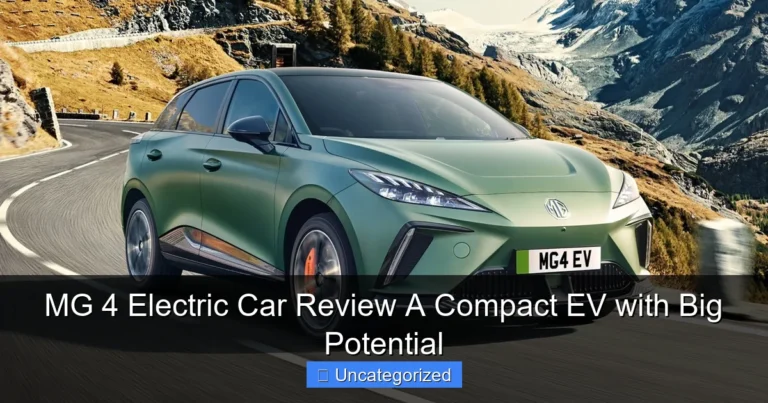
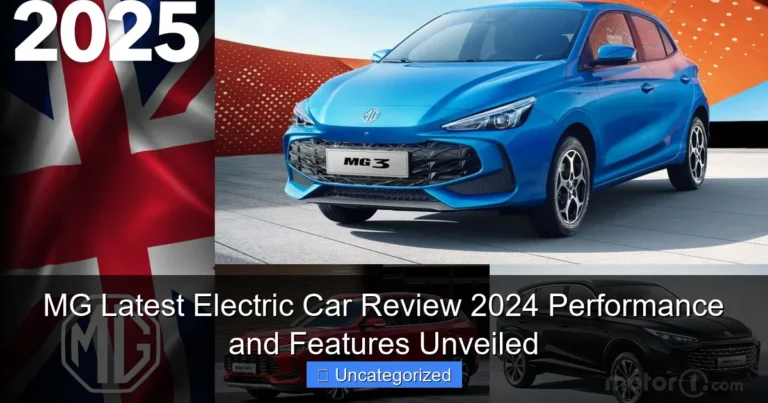
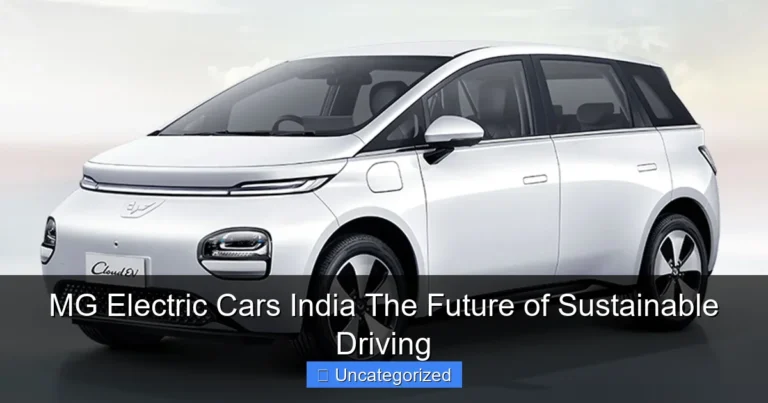
MG Electric Car in Nepal A Game Changer for Green Commuting
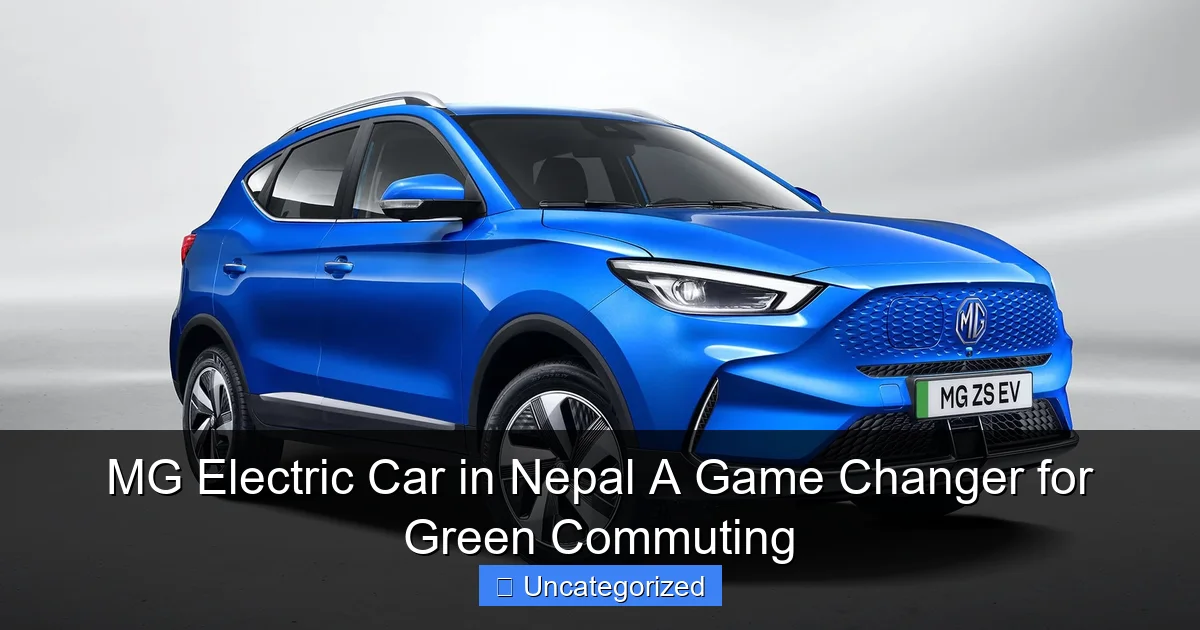
Featured image for mg electric car in nepal
Image source: english.onlinekhabar.com
The MG electric car is revolutionizing green commuting in Nepal, offering a sustainable, cost-effective alternative to fossil fuel vehicles in a country grappling with pollution and rising fuel prices. With zero emissions, advanced battery technology, and expanding charging infrastructure, MG’s entry marks a turning point for eco-conscious urban mobility across Kathmandu and beyond.
Key Takeaways
- MG Electric Cars offer zero-emission commuting, ideal for Nepal’s urban pollution challenges.
- Lower operating costs save up to 60% compared to petrol vehicles over time.
- Fast-charging tech enables 80% charge in 45 minutes at select Nepali stations.
- Government incentives include tax breaks and subsidies for EV buyers in Nepal.
- Robust after-sales network ensures easy maintenance across major Nepali cities.
- Long-range models cover 400+ km per charge, perfect for city and intercity travel.
📑 Table of Contents
- The Dawn of Electric Mobility in Nepal: MG Takes the Lead
- Why MG Electric Cars Are Perfect for Nepal’s Urban and Rural Landscapes
- Top MG Electric Models Available in Nepal: Features and Specifications
- Charging Infrastructure and Ownership Experience in Nepal
- Economic and Environmental Impact of MG EVs in Nepal
- Future of MG Electric Cars in Nepal: What’s Next?
- Conclusion: MG Electric Car in Nepal – A Sustainable Revolution
The Dawn of Electric Mobility in Nepal: MG Takes the Lead
The streets of Kathmandu, Pokhara, and other urban centers in Nepal have long echoed with the hum of two-stroke engines, the rattle of aging diesel vehicles, and the ever-present smog of exhaust fumes. However, a new era is dawning—one defined by cleaner air, quieter commutes, and smarter transportation. At the heart of this transformation is the arrival of MG electric cars in Nepal, a bold move that signals the country’s readiness to embrace sustainable mobility. With rising fuel prices, growing environmental awareness, and government incentives for electric vehicles (EVs), MG Motors Nepal has positioned itself as a pioneer in the green revolution sweeping the nation.
MG, or Morris Garages, a British-born brand now under the umbrella of China’s SAIC Motor, has rapidly gained global recognition for its blend of modern design, cutting-edge technology, and affordable electric mobility. In Nepal, MG’s electric vehicles (EVs) are not just a luxury statement—they are a practical, eco-friendly solution to the country’s pressing urban and environmental challenges. As Nepal aims to reduce carbon emissions and transition toward 20% electric vehicle adoption by 2030, the MG electric car in Nepal emerges as a game changer, offering Nepali drivers a reliable, stylish, and sustainable alternative to traditional combustion engines.
Why MG Electric Cars Are Perfect for Nepal’s Urban and Rural Landscapes
Tailored for Nepal’s Diverse Terrain
Nepal’s geography is a mix of steep hills, winding mountain roads, bustling cities, and remote villages. This diversity demands vehicles that are not only efficient but also durable and adaptable. The MG electric car in Nepal, particularly models like the MG ZS EV and MG4 Electric, are engineered to handle these challenges with ease. With high torque delivery from the electric motor, these cars provide instant acceleration—ideal for climbing steep inclines in places like Nagarkot, Dhulikhel, or even the winding roads of Mustang.

Visual guide about mg electric car in nepal
Image source: autolife.com.np
Unlike internal combustion engines that lose efficiency at higher altitudes, electric motors maintain consistent performance. This makes MG EVs particularly effective in high-altitude regions like Manang or Solukhumbu, where oxygen levels are low and fuel delivery becomes problematic for traditional vehicles. The regenerative braking system also helps recharge the battery during downhill drives, extending range and reducing brake wear—a crucial advantage in mountainous terrain.
Compact Design for Narrow Streets and Dense Traffic
Urban centers like Kathmandu and Lalitpur are notorious for narrow alleys, heavy traffic, and limited parking. MG electric cars, especially the MG ZS EV, offer a compact yet spacious design, making them ideal for navigating congested city roads. With a turning radius of just 5.6 meters and responsive steering, the MG ZS EV can easily maneuver through tight spots, while its elevated driving position gives drivers better visibility in chaotic traffic.
Moreover, the absence of a loud engine reduces noise pollution—a welcome change in cities where honking and engine noise are constant companions. For delivery services, ride-hailing platforms, or daily commuters, the MG electric car in Nepal offers a quiet, efficient, and cost-effective way to move through the urban jungle.
Reliability in Power-Scarce Regions
Frequent power outages in rural Nepal have historically been a barrier to EV adoption. However, MG has addressed this concern through smart charging solutions. Many MG EVs come with a portable charging cable that can be used with standard 15-amp wall sockets, allowing charging even in areas with limited grid stability. Additionally, MG Nepal is partnering with local solar energy providers to offer off-grid solar charging stations in remote districts, enabling villagers to charge their EVs using clean, renewable energy.
For example, in the village of Ghandruk in Kaski district, a pilot project has been launched where MG4 Electric vehicles are being used by eco-tourism operators, powered entirely by rooftop solar panels. This model proves that EVs are not just for cities—they can thrive in off-grid environments too.
Top MG Electric Models Available in Nepal: Features and Specifications
MG ZS EV: The Flagship SUV for Families and Professionals
The MG ZS EV is the most popular electric SUV in Nepal, combining practicality, style, and performance. With a 50.3 kWh battery pack, it offers an NEDC-rated range of up to 428 km on a single charge—more than enough for a round trip from Kathmandu to Pokhara (approx. 200 km each way). Real-world driving in hilly conditions yields around 320–350 km, still impressive for a mid-sized SUV.
- Motor Power: 110 kW (150 PS), 280 Nm torque
- 0–100 km/h: 8.5 seconds
- Fast Charging: 50 kW DC fast charger (0–80% in 40 mins)
- Home Charging: 7.4 kW AC wall box (0–100% in 8 hours)
- Infotainment: 10.1-inch touchscreen, Apple CarPlay, Android Auto
- Safety: 6 airbags, ABS, EBD, ESP, rear parking camera
The ZS EV also features MG Pilot, an advanced driver assistance system (ADAS) that includes adaptive cruise control, lane departure warning, and autonomous emergency braking—rare features in this price segment in Nepal.
MG4 Electric: The Compact Hatchback for Urbanites
For city dwellers seeking agility and affordability, the MG4 Electric is a standout choice. Launched in 2023, this compact hatchback is built on SAIC’s innovative Modular Scalable Platform (MSP), offering superior battery efficiency and interior space.
- Battery Options: 51 kWh (435 km range), 64 kWh (520 km range)
- Motor Power: 125 kW (170 PS), 250 Nm torque
- 0–100 km/h: 7.7 seconds (64 kWh version)
- Charging: 100 kW DC fast charging (10–80% in 27 mins)
- Weight: 1,550 kg (lighter than most EVs in class)
The MG4’s minimalist interior, digital cockpit, and over-the-air (OTA) software updates make it a tech-forward option. Its compact size (4.28 meters long) makes parking in tight city spaces a breeze. For young professionals, students, or small families, the MG4 Electric is a practical, eco-friendly daily driver.
MG Comet EV: The Ultra-Compact City Runabout
For short commutes and last-mile connectivity, MG introduced the MG Comet EV—a two-seater micro-EV designed for urban agility. With a length of just 2.97 meters, it’s perfect for Kathmandu’s narrow alleys and crowded markets.
- Range: 230 km (NEDC)
- Battery: 17.3 kWh
- Charging Time: 3.5 hours (7.4 kW AC)
- Top Speed: 80 km/h
- Price: Starting at NPR 22.99 lakhs (most affordable EV in Nepal)
The Comet EV is ideal for delivery riders, university students, or elderly citizens who need a reliable, low-maintenance vehicle for short trips. Its low cost of ownership—just NPR 0.30 per km—makes it a smart financial choice.
Charging Infrastructure and Ownership Experience in Nepal
Expanding Charging Network Across Key Cities
One of the biggest concerns for EV owners in Nepal has been the lack of charging infrastructure. However, MG Nepal has taken proactive steps to build a robust network. As of 2024, there are over 45 public charging stations in operation, strategically located in:
- Kathmandu (Thamel, New Road, Boudha, Baneshwor)
- Pokhara (Lakeside, Mahendrapul, Batulechaur)
- Biratnagar, Dharan, Butwal, and Janakpur
- Highway rest stops along the Prithvi and Mahendra Highways
MG has partnered with Nepal Electricity Authority (NEA) and private energy firms to install DC fast chargers (50–100 kW) at major transit points. For example, the MG charging station at the Thankot checkpoint allows drivers to charge their EVs while waiting to cross into Kathmandu Valley.
Home Charging: Easy, Affordable, and Accessible
For most Nepali EV owners, home charging is the primary method. MG offers a free 7.4 kW AC wall box with every ZS EV and MG4 purchase. Installation is handled by certified technicians, who assess the home’s electrical setup and ensure safety compliance.
Tips for Home Charging:
- Use a dedicated 32-amp circuit to avoid tripping.
- Charge overnight when electricity tariffs are lower (NEA offers off-peak rates).
- Install a surge protector to safeguard against voltage fluctuations.
- Monitor charging via the MG i-SMART app, which provides real-time data and scheduling.
For apartment dwellers, MG is working with housing societies to install shared charging bays with smart meters. In the upscale neighborhood of Budhanilkantha, a pilot project allows residents to book charging slots via a mobile app, reducing queue times and optimizing energy use.
Maintenance and After-Sales Support
One of the biggest advantages of the MG electric car in Nepal is its low maintenance cost. With no engine oil, transmission fluid, or exhaust system, EVs require far fewer service visits. MG Nepal offers a 3-year/100,000 km warranty on the vehicle and a 8-year/150,000 km battery warranty, giving buyers peace of mind.
Authorized service centers in Kathmandu, Pokhara, and Biratnagar are equipped with diagnostic tools, battery testing equipment, and trained technicians. The MG i-SMART app also enables remote diagnostics, so issues can be identified before they become major problems.
Economic and Environmental Impact of MG EVs in Nepal
Cost Comparison: MG EV vs. Petrol/Diesel Car
While the upfront cost of an MG electric car is higher than a conventional vehicle, the long-term savings are significant. Below is a cost comparison for a 5-year ownership period (15,000 km/year):
| Parameter | MG ZS EV | Toyota Corolla (Petrol) | Hyundai Creta (Diesel) |
|---|---|---|---|
| Initial Price (NPR) | 52,00,000 | 48,00,000 | 50,00,000 |
| Fuel/Electricity Cost (5 years) | 3,37,500 (NPR 0.45/km) | 11,25,000 (NPR 1.50/km) | 9,00,000 (NPR 1.20/km) |
| Maintenance Cost (5 years) | 75,000 | 1,50,000 | 1,80,000 |
| Total 5-Year Cost | 56,12,500 | 60,75,000 | 60,80,000 |
| CO2 Emissions (5 years) | 0 kg (if charged with hydro/solar) | 18,000 kg | 15,000 kg |
As the table shows, the MG ZS EV saves over NPR 4.5 lakhs in fuel and maintenance over five years. When charged using Nepal’s hydroelectric grid (which is 90% renewable), it produces zero tailpipe emissions, making it a truly green choice.
Government Incentives and Tax Benefits
The Government of Nepal has introduced several policies to promote EV adoption:
- Zero customs duty on imported EVs (vs. 100% on petrol cars)
- 50% discount on road tax for EVs
- Subsidy of NPR 1.5 lakh for EV buyers under the “Green Mobility Scheme”
- Free registration for EVs in major cities
These incentives reduce the effective price of an MG ZS EV by up to NPR 4 lakhs, making it competitive with mid-range SUVs. For businesses, the 150% tax depreciation on EVs in the first year is a major financial incentive.
Environmental Benefits: A Cleaner, Greener Nepal
Nepal’s air quality index (AQI) in Kathmandu often exceeds 150—classified as “unhealthy.” Transportation accounts for over 30% of urban emissions. By replacing 10,000 petrol cars with MG EVs, Nepal could reduce CO2 emissions by 180,000 tons annually—equivalent to planting 3 million trees.
Moreover, EVs contribute to noise reduction. A study by the Clean Energy Nepal found that replacing 50% of two-wheelers and cars with EVs could reduce urban noise pollution by up to 40%.
Future of MG Electric Cars in Nepal: What’s Next?
Upcoming Models and Technological Upgrades
MG Nepal has ambitious plans for the next five years. In 2025, the company will launch the MG5 Electric Estate—a practical, long-range station wagon ideal for family use. With a 61 kWh battery and 400 km range, it will be perfect for weekend getaways to Chitwan or Bandipur.
Additionally, MG is developing vehicle-to-grid (V2G) technology, allowing EVs to supply power back to the grid during peak hours. This could help stabilize Nepal’s electricity supply, especially during dry seasons when hydropower generation drops.
Expansion of Charging Network to Rural Areas
MG plans to install 100 solar-powered charging stations in rural districts by 2026, focusing on tourist hotspots like Annapurna, Everest Base Camp, and Rara Lake. These stations will use lithium-ion battery banks to store solar energy, enabling 24/7 charging even during power cuts.
Local Assembly and Job Creation
In a major development, MG has signed an MoU with the Government of Nepal to establish a local EV assembly plant in Bhairahawa. This facility will assemble MG4 and MG ZS EVs using semi-knocked-down (SKD) kits, creating over 500 jobs and reducing vehicle prices by 10–15%. Local assembly will also allow MG to customize vehicles for Nepali conditions, such as reinforced suspension for rough roads.
Conclusion: MG Electric Car in Nepal – A Sustainable Revolution
The arrival of the MG electric car in Nepal marks a turning point in the country’s transportation history. No longer a distant dream, electric mobility is now a tangible, affordable, and eco-friendly reality for thousands of Nepali families, businesses, and travelers. With models like the MG ZS EV, MG4, and MG Comet, MG has successfully addressed Nepal’s unique challenges—mountainous terrain, urban congestion, and power instability—while delivering world-class technology, safety, and comfort.
Beyond convenience, MG EVs offer a path toward a cleaner, quieter, and more sustainable future. By reducing dependence on imported fuel, cutting greenhouse gas emissions, and leveraging Nepal’s abundant hydropower, these vehicles align perfectly with the nation’s environmental goals. The government’s supportive policies, expanding charging infrastructure, and growing public awareness further cement the role of MG as a game changer for green commuting.
As more Nepalis make the switch to electric, the vision of a smoke-free Kathmandu, a silent Pokhara, and a carbon-neutral Nepal becomes increasingly achievable. The road ahead is electric—and MG is leading the charge. For anyone considering a new vehicle, the message is clear: go green, go MG.
Frequently Asked Questions
What are the available models of MG electric cars in Nepal?
Currently, MG Motor Nepal offers the MG ZS EV, a compact SUV with a 44.5 kWh battery, and the MG4 EV, a hatchback with up to 450 km range. Both models cater to eco-conscious drivers seeking premium features and reliable performance in Nepal’s urban and hilly terrains.
How much does an MG electric car cost in Nepal?
The MG electric car in Nepal starts at around NPR 55 lakhs for the MG4 EV and goes up to NPR 75 lakhs for the higher-spec ZS EV. Prices vary based on trim levels, battery options, and import duties, but they remain competitive compared to other EVs in the market.
Where can I charge my MG EV in Nepal?
MG Nepal provides home charging solutions with every purchase, and public charging stations are expanding in cities like Kathmandu, Pokhara, and Chitwan through partnerships with NOC and private operators. The MG ZS EV also supports fast charging, reaching 80% in under an hour.
Is the MG electric car suitable for Nepal’s hilly roads?
Yes, the MG ZS EV’s 150 kW motor and high torque (353 Nm) handle steep climbs efficiently, while its regenerative braking system aids in downhill control. The suspension is tuned for rough roads, making it ideal for Nepal’s diverse topography.
What is the warranty and maintenance support for MG EVs in Nepal?
MG Nepal offers a 5-year/unlimited km warranty on the vehicle and an 8-year/150,000 km warranty on the battery. Dedicated service centers in major cities ensure seamless maintenance, with technicians trained specifically for electric vehicles.
How does the MG electric car compare to other EVs in Nepal?
The MG electric car in Nepal stands out with its premium interiors, advanced safety features (ADAS in top trims), and proven global reliability. Unlike budget EVs, it offers a longer range and faster charging, positioning it as a top-tier sustainable commuting option.