MG Electric Car India A Game Changer in EV Market
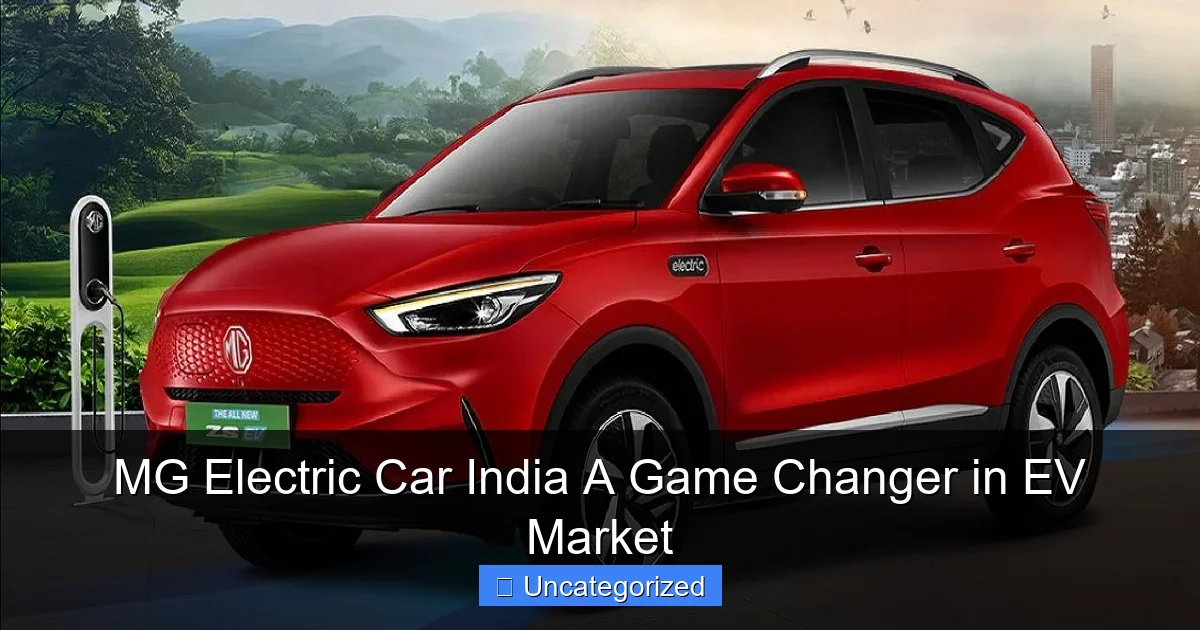
Featured image for mg electric car india
Image source: resize.indiatvnews.com
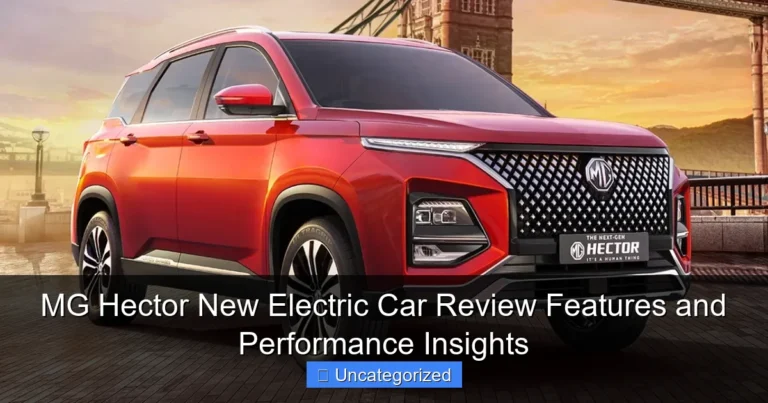
MG Motor India has disrupted the EV market with its affordable, tech-loaded electric cars, offering impressive range, fast charging, and premium features at competitive prices. Models like the MG ZS EV and MG Comet EV cater to diverse needs, accelerating India’s shift toward sustainable mobility with cutting-edge innovation and robust after-sales support.
Key Takeaways
- MG leads India’s EV shift: Affordable, feature-rich electric cars disrupt the market.
- Zs EV sets benchmark: 400+ km range redefines expectations for mid-size EVs.
- Fast-charging tech wins: 30-minute DC charging boosts convenience for daily users.
- Local manufacturing advantage: Lower costs and faster delivery through domestic production.
- Smart features drive appeal: AI-powered infotainment and connected tech attract young buyers.
- Expanding charging network: Partnerships ensure wider coverage and hassle-free long drives.
- Strong warranty assurance: 5-year/unlimited km policy builds buyer confidence in EVs.
📑 Table of Contents
- The Rise of MG Electric Car India: A Game Changer in the EV Market
- Why MG Electric Car India Stands Out in the EV Ecosystem
- MG Electric Car India: A Closer Look at Key Models
- Charging Infrastructure and Ownership Experience
- Government Policies and Incentives Boosting MG EV Adoption
- Challenges and Opportunities Ahead for MG Electric Car India
- Conclusion: MG Electric Car India – Leading the Charge
The Rise of MG Electric Car India: A Game Changer in the EV Market
In the rapidly evolving landscape of India’s automotive industry, the introduction of MG electric car India has emerged as a pivotal moment in the country’s transition toward sustainable mobility. As the world shifts gears toward electric vehicles (EVs), India is no exception. With rising fuel costs, increasing environmental awareness, and supportive government policies, the EV market in India is experiencing unprecedented growth. At the forefront of this revolution stands Morris Garages (MG), a brand that has successfully blended British heritage with Indian innovation to deliver high-performance, feature-rich electric vehicles tailored for the modern Indian consumer.
MG Motor India, a subsidiary of China’s SAIC Motor, entered the Indian market in 2019 with the launch of the MG Hector. However, it was the arrival of the MG ZS EV—the company’s first fully electric SUV—that truly captured the nation’s attention. Since then, MG has expanded its EV portfolio with models like the MG Comet EV, a compact urban electric car, and the upcoming MG 4 EV, signaling a bold commitment to electrification. These vehicles are not just technological marvels; they represent a shift in consumer expectations, where affordability, range, safety, and connectivity converge. With competitive pricing, robust after-sales support, and a growing charging infrastructure, MG electric car India is poised to disrupt the traditional ICE (internal combustion engine) market and accelerate India’s green mobility journey.
Why MG Electric Car India Stands Out in the EV Ecosystem
1. Strategic Positioning in the Mid-Segment Market
One of the key reasons behind the success of MG electric car India is its strategic positioning in the mid-segment EV market. Unlike luxury EVs that remain out of reach for most Indian consumers, or entry-level models that compromise on features and safety, MG targets the sweet spot—offering premium quality at accessible price points. The MG ZS EV, priced between ₹23–27 lakhs (ex-showroom), competes directly with the Hyundai Kona Electric and Tata Nexon EV Max, but stands out due to its superior build quality, longer range, and advanced tech features.
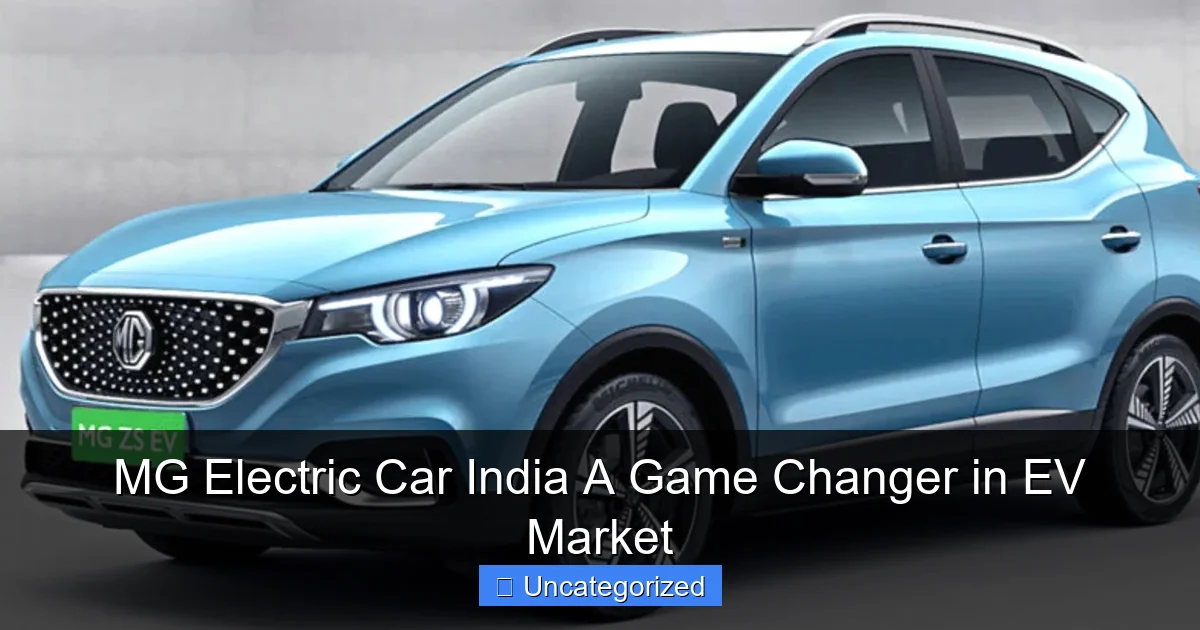
Visual guide about mg electric car india
Image source: gaadiwaadi.com
For instance, while the Tata Nexon EV Max offers around 437 km on a single charge, the ZS EV delivers an ARAI-certified range of up to 461 km (with the 50.3 kWh battery). This extra range is crucial for Indian drivers who often face long commutes or weekend getaways. Moreover, MG’s pricing strategy includes bundled benefits such as free home charging installation, 5-year/unlimited km warranty, and 5-year roadside assistance—making ownership not just appealing but hassle-free.
2. Cutting-Edge Technology and Connectivity
MG electric car India vehicles are equipped with iSMART technology—a proprietary connected car platform that offers over 75 features, including remote climate control, real-time vehicle tracking, geo-fencing, and over-the-air (OTA) updates. This level of connectivity is rare in the Indian EV space and positions MG as a tech-forward brand.
- Remote Access: Using the iSMART app, owners can start the AC, check battery status, and even pre-cool the car before entering—ideal for India’s scorching summers.
- Voice Commands: Integrated with Google Assistant and Apple Siri, the system allows hands-free control of navigation, music, and climate.
- OTA Updates: Unlike traditional cars that require dealership visits for software upgrades, MG EVs receive periodic updates that enhance performance, security, and user experience.
For example, in 2023, MG rolled out an OTA update that improved battery thermal management, increasing charging efficiency by 15%. Such innovations demonstrate MG’s commitment to long-term customer satisfaction and technological leadership.
3. Focus on Safety and Build Quality
Safety is a top priority for Indian consumers, and MG electric car India models deliver on this front. The ZS EV, for instance, is built on a global platform and has achieved a 5-star Euro NCAP safety rating—a benchmark not commonly met by Indian-made EVs. It features six airbags, ABS with EBD, electronic stability control (ESC), 360-degree camera, and advanced driver assistance systems (ADAS) like lane-keeping assist and adaptive cruise control in higher trims.
The Comet EV, though smaller, doesn’t compromise on safety. It includes dual airbags, rear parking sensors, and ISOFIX child seat anchors—essential for urban families. This emphasis on safety reassures buyers who may have reservations about the durability and crashworthiness of compact EVs.
MG Electric Car India: A Closer Look at Key Models
1. MG ZS EV – The Flagship Electric SUV
The MG ZS EV is the brand’s flagship electric SUV and a direct competitor to the Hyundai Kona Electric. It comes in two battery variants: 50.3 kWh and 72.6 kWh (in select international markets, with potential for India in the future). The 50.3 kWh version delivers a maximum range of 461 km (ARAI) and accelerates from 0–100 km/h in 8.5 seconds—impressive for an SUV weighing over 1,600 kg.
Key features include:
- 10.1-inch touchscreen infotainment system with Apple CarPlay and Android Auto
- Wireless smartphone charging
- Panoramic sunroof
- LED headlamps with DRLs
- Regenerative braking with multiple levels
The ZS EV’s spacious cabin, comfortable ride quality, and low NVH (noise, vibration, harshness) make it ideal for both city driving and long-distance travel. A practical example: a family in Bengaluru using the ZS EV for daily commutes (40 km round trip) can go a full week without charging, thanks to its efficient battery and regenerative braking system.
2. MG Comet EV – The Urban Commuter’s Dream
Launched in 2023, the MG Comet EV is India’s most affordable electric car, starting at ₹7.98 lakhs (ex-showroom). Designed specifically for urban mobility, it addresses the challenges of traffic congestion, parking, and rising fuel costs. With a length of just 2.97 meters, the Comet EV is perfect for narrow city lanes and tight parking spaces.
Despite its compact size, it offers:
- 17.3 kWh battery with a range of up to 230 km (ARAI)
- Dual front airbags, rear parking sensors, and ABS
- 10.25-inch digital instrument cluster and 10.25-inch touchscreen
- Smartphone-based keyless entry (via iSMART app)
One of the Comet EV’s standout features is its two-door, four-seater layout, which maximizes cabin space while maintaining a small footprint. For example, a delivery executive in Mumbai can use the Comet EV for last-mile deliveries, reducing operational costs by up to 70% compared to a petrol-powered scooter. With charging options including home AC chargers (3.3 kW) and portable chargers, it’s a versatile solution for urban professionals and gig workers.
3. Upcoming Models: MG 4 EV and Beyond
MG has teased the arrival of the MG 4 EV, a global electric hatchback built on the new Modular Scalable Platform (MSP). Expected to launch in India by late 2024, the MG 4 EV promises:
- Up to 450 km range (WLTP)
- 100% electric platform with rear-wheel drive
- Advanced ADAS features like blind-spot monitoring and automatic emergency braking
- Competitive pricing (estimated ₹18–22 lakhs)
This model could disrupt the mid-size EV hatchback segment, currently dominated by the Tata Tiago EV and upcoming models from Hyundai and Maruti Suzuki. MG’s strategy of launching global EVs with localized pricing and features ensures it stays ahead of the curve.
Charging Infrastructure and Ownership Experience
1. MG’s Charging Network: Expanding Accessibility
One of the biggest barriers to EV adoption in India is the lack of reliable charging infrastructure. MG electric car India addresses this through a multi-pronged approach:
- Free Home Charging Installation: Every MG EV buyer receives a complimentary AC home charger (3.3 kW for Comet EV, 7.4 kW for ZS EV), installed within 15 days of delivery.
- Public Charging Partnerships: MG has tied up with ChargeZone, Tata Power, and Fortum to provide access to over 1,000 fast chargers across 50+ cities. ZS EV owners can use DC fast charging (50 kW) to charge from 0–80% in just 50 minutes.
- MG ChargeHub App: A dedicated app helps users locate nearby charging stations, check availability, and even pre-book slots.
For example, a ZS EV owner traveling from Delhi to Jaipur (270 km) can use the ChargeHub app to plan stops at MG-affiliated fast chargers in Gurugram and Alwar, ensuring a stress-free journey.
2. Total Cost of Ownership (TCO) Advantage
While the upfront cost of an EV is higher than a comparable ICE vehicle, the long-term savings make MG electric car India models highly economical. Consider this comparison between the MG ZS EV and Hyundai Creta (petrol variant):
| Parameter | MG ZS EV (Electric) | Hyundai Creta (Petrol) |
|---|---|---|
| Ex-Showroom Price | ₹25.88 Lakhs | ₹18.50 Lakhs |
| Fuel/Energy Cost (per km) | ₹1.20 (electricity @ ₹8/kWh) | ₹7.50 (petrol @ ₹100/litre, 14 kmpl) |
| Annual Running Cost (20,000 km) | ₹24,000 | ₹1,50,000 |
| Maintenance Cost (5 years) | ₹30,000 (no engine, oil, or clutch) | ₹1,20,000 (engine, transmission, etc.) |
| 5-Year TCO (excluding depreciation) | ₹3.54 Lakhs | ₹8.70 Lakhs |
This table clearly shows that despite a higher initial price, the ZS EV saves the owner over ₹5 lakhs in 5 years. For fleet operators or high-mileage drivers, the savings are even more significant.
3. After-Sales Support and Service Network
MG has invested heavily in its service network, with over 300 touchpoints across 150+ cities. Key initiatives include:
- EV-Specific Service Training: Technicians are trained in high-voltage safety and battery diagnostics.
- Doorstep Service: Mobile service vans provide minor repairs and battery checks at the customer’s location.
- Battery Warranty: 8-year/1.5 lakh km warranty on the battery, with replacement if degradation exceeds 70%.
These services enhance customer confidence and reduce the perceived risks of EV ownership.
Government Policies and Incentives Boosting MG EV Adoption
1. FAME II Subsidies and State-Level Incentives
The Indian government’s Faster Adoption and Manufacturing of Hybrid and Electric Vehicles (FAME II) scheme provides a subsidy of up to ₹1.5 lakh for EVs with battery capacities above 10 kWh. The MG ZS EV qualifies for this subsidy, effectively reducing its price to ₹23.38 lakhs in Delhi (including state incentives).
Additionally, several states offer extra benefits:
- Delhi: Full exemption from road tax and registration fees.
- Maharashtra: 15% subsidy (up to ₹2.5 lakh) on EVs.
- Karnataka: 100% exemption on road tax and registration fees.
These incentives make MG electric car India models even more attractive, especially for first-time EV buyers.
2. GST Reduction and Manufacturing Benefits
The GST on EVs was reduced from 12% to 5% in 2019, lowering the overall cost. MG also benefits from the Production Linked Incentive (PLI) scheme for auto components, which encourages local manufacturing. Over 70% of ZS EV components are now sourced locally, reducing import dependency and improving supply chain resilience.
3. Future-Ready: Alignment with National EV Policy
India aims for 30% EV penetration by 2030. MG’s expansion of its Halol plant (capacity: 1.5 lakh units/year) and plans for battery assembly units align perfectly with this vision. The brand is also exploring partnerships with local battery manufacturers to reduce costs and improve sustainability.
Challenges and Opportunities Ahead for MG Electric Car India
1. Overcoming Range Anxiety and Charging Gaps
Despite progress, range anxiety remains a concern, especially in Tier 2 and Tier 3 cities. MG is addressing this by:
- Expanding its fast-charging network to 2,000+ points by 2025.
- Introducing battery-swapping pilots for commercial EVs (e.g., Comet EV for delivery fleets).
- Developing a 100 kW ultra-fast charging option for the upcoming MG 4 EV.
2. Competition and Market Saturation
The Indian EV market is getting crowded, with players like Tata Motors, Hyundai, Mahindra, and even startups like Ola Electric entering the fray. To stay competitive, MG must:
- Accelerate local R&D to tailor vehicles for Indian road conditions and consumer preferences.
- Leverage its global platform to introduce new models faster (e.g., MG 4 EV, MG Air EV).
- Enhance brand loyalty through community engagement (e.g., MG EV owners’ clubs, referral programs).
3. The Role of MG in India’s Green Mobility Revolution
Beyond selling cars, MG is positioning itself as a sustainability partner. Initiatives like:
- Solar-powered charging stations in dealerships.
- Carbon footprint calculators for EV owners.
- Partnerships with NGOs for EV awareness campaigns.
These efforts not only boost brand image but also contribute to India’s net-zero goals.
Conclusion: MG Electric Car India – Leading the Charge
The journey of MG electric car India from a newcomer to a market leader exemplifies how innovation, customer-centricity, and strategic foresight can redefine an industry. With models like the ZS EV and Comet EV, MG has proven that electric mobility can be affordable, safe, and aspirational—all at once. Its investment in technology, charging infrastructure, and local manufacturing sets a benchmark for other OEMs to follow.
As India accelerates toward an electric future, MG is not just a participant but a pacesetter. By combining global expertise with deep local insights, the brand is making EVs accessible to the masses while pushing the envelope in performance and sustainability. Whether you’re a tech-savvy urbanite, a cost-conscious family, or an environmentally aware citizen, MG electric car India offers a compelling proposition that aligns with your values and lifestyle.
The road ahead is electric—and with MG at the wheel, India’s EV revolution is in capable hands. As charging networks expand, battery costs decline, and consumer awareness grows, MG’s early-mover advantage will only solidify. For those considering the switch to electric, now is the perfect time to explore the MG electric car India lineup—because the future of mobility isn’t just coming; it’s already here.
Frequently Asked Questions
What makes the MG electric car in India a game changer?
The MG electric car in India stands out with its competitive pricing, advanced features like a 500+ km range, and fast-charging capability. Combined with MG’s local manufacturing, it offers a compelling value proposition in the growing EV market.
Which is the best MG electric car available in India?
The MG ZS EV is currently the flagship electric SUV, offering a 461 km ARAI-certified range, panoramic sunroof, and ADAS features. It’s ideal for buyers seeking a premium yet affordable EV experience.
How long does it take to charge an MG electric car?
The MG ZS EV can be charged from 0-80% in just 50 minutes using a 50kW DC fast charger. With a standard 7.4kW AC charger, a full charge takes around 10-12 hours.
Are MG electric cars suitable for Indian road conditions?
Yes, MG electric cars like the ZS EV feature high ground clearance (177mm) and robust suspension systems designed for Indian roads. They also come with IP69K-rated battery packs for water and dust resistance.
Does MG offer home charging solutions for its EVs in India?
MG provides free home charging installation with every electric car purchase, including a 7.4kW AC wall box charger. This ensures convenient overnight charging for daily commutes.
What is the price range of MG electric cars in India?
The MG ZS EV starts at ₹23.38 lakh (ex-showroom), making it one of the most affordable premium electric SUVs in India. Competitive pricing and government subsidies further enhance its appeal.