Nissan 2020 Electric Car Review Top Features and Performance Insights

Featured image for nissan 2020 electric car
The Nissan 2020 electric car delivers an impressive blend of affordability, efficiency, and tech-forward features, making it a top contender in the compact EV market. With a 226-mile range and rapid charging capability, it outpaces rivals while offering a sleek design, intuitive infotainment, and advanced driver aids like ProPILOT Assist. This EV proves practicality and innovation can coexist without breaking the bank.
Key Takeaways
- Impressive range: Up to 226 miles on a single charge, ideal for daily commutes.
- Quick acceleration: 0-60 mph in 7.4 seconds, delivering spirited driving performance.
- Advanced e-Pedal: One-pedal driving enhances control and boosts energy efficiency.
- ProPILOT Assist: Semi-autonomous tech reduces driver fatigue on highways effectively.
- Spacious interior: Roomy cabin and cargo space outperform many EV rivals.
- Affordable pricing: Competitive MSRP with strong value among 2020 electric cars.
📑 Table of Contents
- Introduction to the Nissan 2020 Electric Car Revolution
- Power and Performance: What the 2020 Nissan Electric Car Delivers
- Interior Design and Technology: Comfort Meets Innovation
- Exterior Styling and Practical Features
- Ownership Experience: Cost, Maintenance, and Incentives
- Environmental Impact and Sustainability
- Conclusion: Is the 2020 Nissan Electric Car Right for You?
Introduction to the Nissan 2020 Electric Car Revolution
The electric vehicle (EV) revolution is in full swing, and the Nissan 2020 electric car lineup stands as a testament to how far the industry has come in just a few short years. As one of the pioneers in mass-market electric mobility, Nissan has consistently pushed the boundaries of what affordable EVs can achieve. With the 2020 model year, Nissan didn’t just refine its flagship Leaf—it redefined it. Whether you’re a first-time EV buyer, an eco-conscious commuter, or a tech-savvy driver looking for a blend of innovation and practicality, the 2020 Nissan Leaf and Leaf Plus offer compelling reasons to consider going electric.
Launched during a pivotal year for the EV market, the 2020 Nissan electric car lineup arrived with improved range, smarter technology, and a more confident driving experience. The 2020 models built upon the legacy of the original Leaf—the world’s first mass-produced EV—by addressing key consumer concerns: range anxiety, charging convenience, and interior refinement. With two distinct trims—the standard Leaf and the extended-range Leaf Plus—Nissan offered a scalable solution for different driving needs. From daily commutes to weekend road trips, the 2020 Nissan electric car lineup proved that sustainability and performance don’t have to be mutually exclusive. In this comprehensive review, we’ll explore the top features, performance insights, and real-world usability of Nissan’s 2020 electric vehicles.
Power and Performance: What the 2020 Nissan Electric Car Delivers
Dual Powertrain Options: Leaf vs. Leaf Plus
The 2020 Nissan electric car lineup features two primary variants: the standard Leaf and the Leaf Plus. The standard Leaf is powered by a 147-horsepower electric motor paired with a 40-kWh lithium-ion battery pack. This setup delivers 236 lb-ft of torque, enabling a 0–60 mph time of approximately 7.4 seconds. While not a speed demon, the Leaf offers brisk acceleration thanks to the instant torque characteristic of electric motors—perfect for city driving and highway merging.
The Leaf Plus, on the other hand, upgrades to a 62-kWh battery and a more powerful 214-horsepower motor, producing 250 lb-ft of torque. This version cuts the 0–60 mph time to around 6.8 seconds, making it noticeably quicker and better suited for drivers who frequently travel at highway speeds or live in hilly areas. The increased power also improves passing confidence and reduces strain during long-distance driving.
Range and Efficiency: Real-World Driving Insights
One of the most significant improvements in the 2020 models is the enhanced range. The standard Leaf offers an EPA-estimated 149 miles on a full charge, which is ideal for urban commuters, city dwellers, and short-distance drivers. Meanwhile, the Leaf Plus delivers a substantial 226 miles—a game-changer for those who previously hesitated to switch to EVs due to range limitations.
Real-world testing shows that these figures are achievable under optimal conditions (moderate temperatures, flat terrain, and efficient driving habits). However, cold weather can reduce range by up to 30%, so drivers in northern climates should plan accordingly. For example, a 100-mile round-trip commute in winter might require charging mid-day or using a Level 2 home charger overnight.
To maximize efficiency, Nissan includes an E-Pedal feature that allows one-pedal driving. When activated, the system uses regenerative braking to slow the car and recapture energy, reducing brake wear and improving range by up to 10% in stop-and-go traffic. This feature is especially useful in cities like Los Angeles or New York, where traffic congestion is common.
Charging Options and Infrastructure Compatibility
Nissan supports multiple charging levels, giving drivers flexibility based on their lifestyle:
- Level 1 (120V): Standard household outlet. Adds about 4–5 miles of range per hour. Best for overnight charging at home.
- Level 2 (240V): Home or public charging stations. Fully charges the Leaf in 7–8 hours (40 kWh) or 11–12 hours (62 kWh). Ideal for daily use.
- DC Fast Charging (CHAdeMO): Found at public stations. The Leaf Plus can charge from 10% to 80% in about 45 minutes, while the standard Leaf takes around 40 minutes. This is crucial for long trips or emergency top-ups.
Tip: Use the NissanConnect EV app to locate nearby charging stations, monitor charging progress, and schedule charging during off-peak electricity hours to save on utility bills.
Interior Design and Technology: Comfort Meets Innovation
Modern Cabin with Sustainable Materials
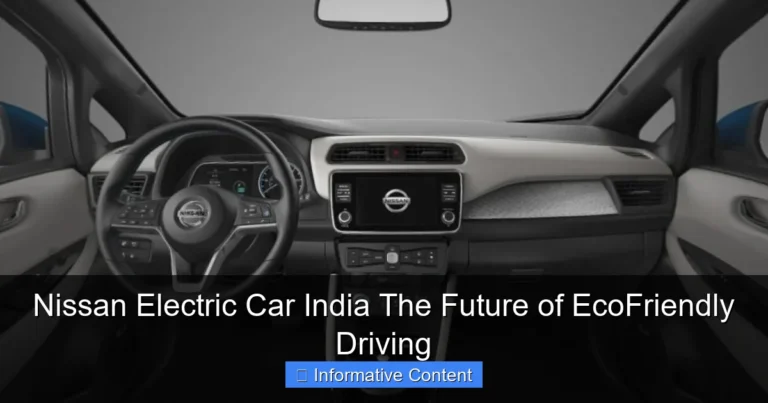
The 2020 Nissan electric car interior strikes a balance between minimalism and sophistication. The dashboard features a clean layout with soft-touch materials, available leather upholstery, and eco-friendly fabric options made from recycled bottles. Nissan emphasizes sustainability not just in propulsion but in construction—over 25% of the interior plastics are recycled, and the seats use bio-based materials.
The cabin is surprisingly spacious for a compact hatchback. Front seats offer good support and visibility, while rear passengers enjoy ample legroom—up to 33.5 inches. The hatchback design provides 23.6 cubic feet of cargo space behind the rear seats, expanding to 30 cubic feet with the seats folded. This makes the Leaf a practical choice for grocery runs, weekend getaways, or carrying bulky items like bikes or luggage.
Infotainment and Connectivity Features
The 2020 Leaf comes equipped with an 8-inch touchscreen infotainment system (upgraded from 7 inches in previous years) that runs NissanConnect. Key features include:
- Apple CarPlay and Android Auto: Full smartphone integration for navigation, music, and messaging.
- Voice Command: Hands-free control of climate, navigation, and audio systems.
- Wi-Fi Hotspot: Optional 4G LTE connectivity for up to seven devices.
- NissanConnect EV Services: Remote climate control, charging status, and vehicle locator via smartphone app.
For example, a driver in Chicago can preheat the cabin during a winter morning using the app, ensuring a warm interior and defrosted windshield before stepping outside—without wasting battery power while parked.
Advanced Driver Assistance Systems (ADAS)
Safety is a priority in the 2020 Nissan electric car, with the Nissan Safety Shield 360 suite standard on all trims. This includes:
- Automatic Emergency Braking with Pedestrian Detection
- Blind Spot Warning and Intervention
- Lane Departure Warning with Lane Keep Assist
- Rear Cross Traffic Alert
- High Beam Assist
Higher trims (SV Plus and SL Plus) add ProPILOT Assist, a semi-autonomous driving system that combines adaptive cruise control and lane centering. It’s not full self-driving, but it significantly reduces driver fatigue on long highway drives. For instance, on a 300-mile trip from San Francisco to Los Angeles, ProPILOT Assist can maintain a safe distance from the car ahead and keep the vehicle centered in the lane with minimal input.
Exterior Styling and Practical Features
Bold Design Language with Aerodynamic Efficiency
The 2020 Nissan electric car adopts a more aggressive and modern look compared to earlier models. The signature V-Motion grille (non-functional on EVs, serving as a design cue) is flanked by sharp LED headlights and daytime running lights. The sloping roofline and sculpted sides improve aerodynamics, contributing to a drag coefficient of just 0.28—among the best in its class.
The Leaf Plus features unique 17-inch alloy wheels and a rear spoiler, while the standard Leaf has 16-inch wheels. Both models include LED taillights and a rear diffuser to enhance airflow. The design isn’t just about aesthetics—it’s engineered to reduce energy consumption and extend range.
Lightweight Construction and Chassis Tuning
Nissan uses high-strength steel in the chassis to reduce weight without sacrificing rigidity. The battery pack is mounted low in the floor, lowering the center of gravity and improving cornering stability. Independent front and rear suspension systems provide a comfortable ride over bumps and potholes, while the steering is tuned for responsiveness in urban environments.
For example, drivers navigating tight city streets in Boston or Seattle will appreciate the Leaf’s tight turning radius (34.8 feet) and compact footprint (176.4 inches long), making parallel parking and U-turns much easier.
Smart Lighting and Convenience Features
All 2020 Nissan electric cars come with:
- Automatic LED headlights and taillights
- Heated side mirrors with integrated turn signals
- Keyless entry and push-button start
- Available power liftgate (SL and SL Plus trims)
The power liftgate is a small but useful feature for parents or anyone carrying groceries. It opens automatically when you wave your foot under the bumper—ideal when your hands are full.
Ownership Experience: Cost, Maintenance, and Incentives
Pricing and Trim Levels
The 2020 Nissan electric car lineup offers four trim levels:
- Leaf S (40 kWh): Starting at $31,600 (before incentives)
- Leaf SV (40 kWh): Starting at $34,190
- Leaf SL (40 kWh): Starting at $37,400
- Leaf Plus (62 kWh): SV Plus ($38,200), SL Plus ($43,900)
After the federal tax credit of up to $7,500 (subject to eligibility), the effective price drops significantly. Many states and local utilities offer additional rebates—California, for example, provides up to $2,000 through the Clean Vehicle Rebate Project (CVRP).
Lower Maintenance and Running Costs
Electric vehicles have fewer moving parts than gasoline-powered cars, leading to reduced maintenance needs:
- No oil changes or transmission fluid replacements
- Regenerative braking reduces brake pad wear by up to 50%
- Fewer scheduled services (e.g., no spark plugs or exhaust systems)
Nissan recommends a basic service every 12 months or 10,000 miles, including battery health checks, cabin air filter replacement, and tire rotations. Annual maintenance costs average $300–$500, compared to $800–$1,200 for a comparable gasoline car.
Tip: Use the MyNissan app to schedule service appointments, view maintenance history, and receive reminders.
Charging at Home: Installation Tips
Installing a Level 2 home charger is the best way to maximize convenience. A 240V charger (like the ChargePoint Home or JuiceBox) typically costs $500–$700 for the unit and $1,000–$1,500 for installation, depending on electrical panel upgrades. Many utilities offer rebates—for example, Southern California Edison provides up to $2,000 for EV charger installation.
Best practices:
- Install the charger in a dry, accessible location (garage or carport)
- Use a dedicated 40-amp circuit
- Schedule charging during off-peak hours (e.g., 10 PM–6 AM) for lower electricity rates
Environmental Impact and Sustainability
Reducing Carbon Footprint with Zero Emissions
The 2020 Nissan electric car produces zero tailpipe emissions, making it a powerful tool for reducing urban air pollution and greenhouse gas emissions. Over its lifetime, a Leaf Plus can save approximately 5 tons of CO2 compared to a gasoline-powered car, assuming 12,000 miles driven annually.
When charged with renewable energy (solar, wind, hydro), the environmental benefits are even greater. For example, a home with rooftop solar panels can power the Leaf with 100% clean energy, effectively making the vehicle carbon-neutral.
Battery Recycling and Second-Life Programs
Nissan is committed to a circular economy for batteries. The company has launched 4R Energy, a joint venture that repurposes used Leaf batteries for energy storage in homes, offices, and grid stabilization projects. For instance, a decommissioned 40-kWh battery can store solar energy for a household, reducing reliance on the grid during peak demand.
Additionally, Nissan offers a battery warranty of 8 years or 100,000 miles, guaranteeing at least 9 out of 12 battery capacity bars remain. This ensures long-term reliability and peace of mind for owners.
Community and Charging Network Expansion
Nissan has partnered with ChargePoint and EVgo to expand access to fast-charging stations. The Nissan Energy Perks program offers free charging credits at select stations, incentivizing long-distance travel. In 2020, Nissan also launched “No Charge to Charge” promotions in certain regions, providing two years of free public charging with Leaf purchases.
Example: A driver in Texas could use the ChargePoint network to charge at malls, workplaces, and highways, with costs fully covered for two years—saving hundreds of dollars annually.
Conclusion: Is the 2020 Nissan Electric Car Right for You?
The Nissan 2020 electric car lineup—especially the Leaf and Leaf Plus—represents a mature, well-rounded entry in the EV market. With competitive range, advanced safety tech, a comfortable interior, and a lower total cost of ownership, it’s an excellent choice for a wide range of drivers. The Leaf Plus, in particular, bridges the gap between affordability and long-range capability, making it viable for both city dwellers and suburban commuters.
Whether you’re drawn to the Leaf’s eco-friendly design, its smart technology features, or the financial incentives available, the 2020 model delivers on multiple fronts. It’s not the fastest or flashiest EV on the market, but it excels in practicality, reliability, and real-world usability. For those ready to embrace electric mobility without breaking the bank, the 2020 Nissan electric car is a smart, sustainable, and satisfying choice.
As the EV landscape continues to evolve, Nissan’s 2020 models serve as a benchmark for what affordable electric transportation should be: efficient, intuitive, and forward-thinking. With ongoing improvements in battery tech, charging infrastructure, and software integration, the future of Nissan’s electric vision looks brighter than ever.
| Model | Battery Capacity | Range (EPA) | Horsepower | 0–60 mph | Base MSRP |
|---|---|---|---|---|---|
| Leaf S | 40 kWh | 149 miles | 147 hp | 7.4 sec | $31,600 |
| Leaf SV | 40 kWh | 149 miles | 147 hp | 7.4 sec | $34,190 |
| Leaf SL | 40 kWh | 149 miles | 147 hp | 7.4 sec | $37,400 |
| Leaf SV Plus | 62 kWh | 226 miles | 214 hp | 6.8 sec | $38,200 |
| Leaf SL Plus | 62 kWh | 226 miles | 214 hp | 6.8 sec | $43,900 |
Frequently Asked Questions
What are the key features of the Nissan 2020 electric car?
The Nissan 2020 electric car, including the Leaf and Leaf Plus, boasts advanced features like ProPILOT Assist, e-Pedal for one-pedal driving, and a 62 kWh battery (Leaf Plus) offering up to 226 miles of range. It also includes NissanConnect EV with remote climate control and smartphone integration.
How does the Nissan 2020 electric car perform compared to competitors?
The Nissan 2020 electric car stands out with its smooth, quiet acceleration and user-friendly tech, though its range lags slightly behind rivals like the Tesla Model 3. However, its affordability and proven reliability make it a strong contender in the mid-tier EV market.
What is the charging time for the Nissan 2020 electric car?
The Nissan 2020 electric car charges to 80% in about 40-60 minutes using a DC fast charger (100 kW for Leaf Plus). A Level 2 (240V) charger takes 7.5 hours for a full charge, ideal for overnight home charging.
Does the Nissan 2020 electric car have good safety ratings?
Yes, the Nissan 2020 electric car received a 5-star overall safety rating from the NHTSA. It includes standard safety features like automatic emergency braking, blind-spot monitoring, and rear cross-traffic alert across all trims.
What is the range of the Nissan 2020 electric car?
The standard Leaf offers 149 miles, while the Leaf Plus extends to 226 miles on a single charge, thanks to its larger 62 kWh battery. Real-world range varies based on driving conditions and climate.
Is the Nissan 2020 electric car eligible for tax credits or incentives?
The Nissan 2020 electric car may qualify for a federal tax credit of up to $7,500, depending on your location and tax status. Many states also offer additional EV incentives like HOV lane access or rebates.