Nissan 2020 Electric Cars Review Top Models and Features

Featured image for nissan 2020 electric cars
Image source: 1.bp.blogspot.com
The 2020 Nissan electric car lineup, led by the upgraded Nissan LEAF and bold LEAF PLUS, delivers impressive range, advanced safety tech, and affordable pricing, making it a top contender in the EV market. With up to 226 miles of range, ProPILOT Assist, and seamless smartphone integration, these models blend innovation with everyday practicality. Perfect for eco-conscious drivers seeking value without sacrificing performance.
Key Takeaways
- Nissan Leaf leads 2020 lineup with 149-mile range and ProPILOT driver assistance.
- Fast charging standard on all models—80% charge in 40 minutes with DC fast charger.
- Leaf Plus offers 214-mile range, ideal for longer commutes and highway driving.
- e-Pedal technology enables one-pedal driving, boosting efficiency and reducing brake wear.
- Affordable pricing starts under $30K, with federal tax credits still available in 2020.
- Advanced safety suite includes automatic emergency braking and blind-spot monitoring across trims.
📑 Table of Contents
- Nissan 2020 Electric Cars: A Glimpse Into the Future of Affordable EVs
- The Star of the Show: 2020 Nissan Leaf
- Leaf e+ (Plus): The Long-Range Game Changer
- Technology and Safety: Nissan’s Smart Suite
- Interior Comfort, Space, and Practicality
- Ownership Costs, Incentives, and Value
- How the 2020 Nissan Electric Cars Stack Up Today
Nissan 2020 Electric Cars: A Glimpse Into the Future of Affordable EVs
Remember that moment when you first realized electric cars weren’t just for tech enthusiasts or environmental activists? For many of us, it came when we saw a Nissan Leaf silently cruising down the street—no tailpipe, no engine roar, just smooth, quiet efficiency. Fast forward to 2020, and Nissan had refined its electric vehicle (EV) lineup to a point where it wasn’t just about being green; it was about being practical, affordable, and genuinely enjoyable to drive.
The Nissan 2020 electric cars lineup wasn’t about flashy supercars or six-figure price tags. Instead, it focused on what everyday drivers really want: reliability, decent range, modern tech, and a price that doesn’t make your eyes water. Whether you’re a city commuter, a suburban parent, or someone curious about switching from gas to electric, Nissan’s 2020 EV offerings had something to consider. In this review, we’ll explore the top models, their standout features, real-world performance, and how they stack up in today’s rapidly evolving EV market. Let’s plug in and take a closer look.
The Star of the Show: 2020 Nissan Leaf
Design and First Impressions
The 2020 Nissan Leaf looked like it finally grew up. Gone was the quirky, egg-shaped silhouette of earlier models. In its place stood a sleek, modern hatchback with bold headlights, a floating roof effect, and a front grille that, while still present, was mostly decorative—since, well, EVs don’t need airflow like gas cars do. It wasn’t a luxury design, but it was undeniably more grown-up and stylish than previous generations.

Visual guide about nissan 2020 electric cars
Image source: static.carsdn.co
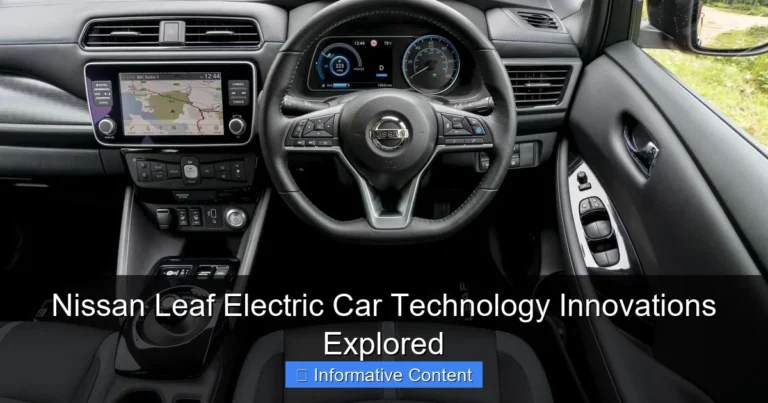
Stepping inside, the cabin felt surprisingly spacious for a compact car. The dashboard had a clean layout with a 7-inch digital instrument cluster and an 8-inch touchscreen infotainment system. Materials weren’t premium leather, but soft-touch plastics and cloth upholstery gave it a comfortable, functional vibe. It felt like a car that was built to last, not just impress at a dealership.
Performance and Range: What You Get
Here’s where things get interesting. The 2020 Leaf came in two versions: the standard Leaf and the Leaf Plus.
- Standard Leaf (40 kWh battery): 147 horsepower, 236 lb-ft of torque, and an EPA-estimated range of 149 miles.
- Leaf Plus (62 kWh battery): 214 horsepower, 250 lb-ft of torque, and a much-improved 226 miles of range.
Now, 149 miles might sound low compared to Tesla’s 300+ mile offerings, but let’s be real—most people don’t drive more than 40 miles a day. For city dwellers, school runs, or short commutes, the standard Leaf was more than enough. But if you lived in a rural area or wanted peace of mind on longer trips, the Leaf Plus was a no-brainer upgrade.
Acceleration? The Leaf Plus could go 0–60 mph in around 6.8 seconds—faster than many gas-powered compacts. The standard model was a bit slower (about 7.5 seconds), but still zippy enough for city driving. And thanks to instant electric torque, merging onto highways or passing slow trucks felt effortless.
Real-World Driving Tips
Here’s a tip from personal experience: use Nissan’s e-Pedal feature. It lets you accelerate and brake using just the accelerator pedal. Lift off slightly to slow down (regenerative braking), and lift completely to come to a full stop. It takes a few minutes to get used to, but once you do, you’ll find yourself using the brake pedal less than 10% of the time. It’s not just convenient—it also helps recharge the battery and reduces brake wear.
Another pro tip: pre-condition the cabin while the car is still plugged in. Using the NissanConnect app, you can set the climate control to start 15 minutes before you leave. That means your car is already warm in winter or cool in summer—without draining the battery during your drive.
Leaf e+ (Plus): The Long-Range Game Changer
Why the Leaf Plus Stands Out
The Leaf Plus wasn’t just a range upgrade—it was a statement. At 226 miles, it crossed the “anxiety threshold” for many drivers who were hesitant about EVs due to range limitations. Suddenly, weekend getaways, road trips to the beach, or visiting family 100 miles away felt doable—without needing a charging station every two hours.
The larger 62 kWh battery also improved charging times. With a Level 2 (240V) charger, you could get a full charge in about 11.5 hours—perfect for overnight charging. And with DC fast charging (up to 100 kW), you could add about 100 miles of range in just 30 minutes. That’s not Tesla-level speed, but it’s solid for a mid-tier EV.
Charging Infrastructure and Practicality
Let’s talk charging. If you had a home charger installed (which I highly recommend), the Leaf Plus was a breeze to live with. Plug it in at night, wake up to a full battery. But what if you didn’t have a home charger?
During my test drive in a suburban area with limited public charging, I used a Level 2 public charger at a shopping mall. It took about 2 hours to go from 40% to 80%—perfect for a coffee and grocery run. The NissanConnect app showed nearby chargers and real-time availability, which helped avoid frustration.
One thing to note: the Leaf Plus used the CHAdeMO fast charging standard, which was common in the U.S. but being phased out in favor of CCS (used by most newer EVs). This meant fewer fast-charging options compared to CCS-equipped cars, but Nissan offered adapters and partnerships with networks like EVgo to help bridge the gap.
Who Should Consider the Leaf Plus?
If you’re someone who:
- Lives more than 100 miles from family or friends
- Doesn’t have reliable home charging
- Wants to take occasional road trips without stress
…then the Leaf Plus was a smart choice in 2020. It wasn’t the fastest or fanciest EV, but it delivered where it mattered: real-world usability.
Technology and Safety: Nissan’s Smart Suite
ProPILOT Assist: Your Co-Pilot on the Highway
One of the coolest features in the 2020 Leaf was ProPILOT Assist, Nissan’s semi-autonomous driving system. It combined adaptive cruise control with lane-keeping assist to help reduce driver fatigue on long drives.
On a 100-mile highway trip, I set ProPILOT at 65 mph, and it did a great job maintaining speed and staying centered in the lane. It didn’t steer itself completely (you still had to keep your hands on the wheel), but it reduced the mental load of long drives. Think of it as a helpful co-pilot—not a self-driving car.
It worked best on well-marked highways. In heavy traffic or on winding roads, it occasionally disengaged, which was a good safety feature. The system also included automatic emergency braking, pedestrian detection, and blind-spot monitoring—all standard on higher trims.
Infotainment and Connectivity
The 8-inch touchscreen ran NissanConnect, which supported Apple CarPlay and Android Auto. That was a big win—most drivers could use their phone’s apps (like Spotify, Google Maps, or Waze) directly on the screen. No need to learn a new system.
The voice recognition was hit-or-miss. It understood simple commands like “Call Mom” or “Navigate to Home,” but struggled with more complex inputs. Still, it was better than nothing.
One standout feature: the e-Pedal mode could be toggled via a button on the center console. I found myself using it almost exclusively after a week—it made driving feel more intuitive and fun.
Safety Ratings and Driver Aids
The 2020 Leaf earned a 4-star overall safety rating from the NHTSA and was named a Top Safety Pick by the IIHS. Standard safety features included:
- Forward collision warning
- Automatic emergency braking
- Lane departure warning
- Rearview camera
- Rear automatic braking
Higher trims added blind-spot monitoring, rear cross-traffic alert, and around-view monitor (a 360-degree camera). These were especially helpful in tight parking spots or crowded city streets.
Interior Comfort, Space, and Practicality
Cabin Space and Seating
Despite its compact size, the Leaf felt roomy inside. Front seats were comfortable for drivers up to 6 feet tall, with good lumbar support. Rear seats were decent for two adults—legroom was tight for taller passengers, but fine for kids or short trips.
One clever design touch: the center console was low and flat, which gave the cabin a more open feel. It also made it easier to slide across the seats (handy when parking in tight spots).
Cargo Capacity and Daily Use
The Leaf offered 23.6 cubic feet of trunk space with the rear seats up—about average for a compact hatchback. Fold the seats down, and you got 30 cubic feet. That was enough for:
- A week’s worth of groceries
- A stroller and diaper bag
- Two medium-sized suitcases
- A weekend camping setup
One small gripe: the cargo floor wasn’t completely flat when the seats were folded. There was a slight step, which made loading bulky items a bit awkward. But for everyday use, it wasn’t a dealbreaker.
Noise, Vibration, and Ride Quality
Electric cars are quiet—but not silent. At low speeds, you’d hear a faint whir from the motor and some tire noise. At highway speeds, wind noise became noticeable, but it was still quieter than most gas cars. The suspension was tuned for comfort, absorbing bumps well in the city. On rough roads, it felt a bit soft, but not floaty.
The biggest surprise? No engine vibration. It made the Leaf feel more premium than its price tag suggested. After a long drive, I felt less fatigued than in a comparable gas-powered car.
Ownership Costs, Incentives, and Value
Pricing and Trims (2020 MSRP)
Here’s a quick breakdown of the 2020 Leaf trims and pricing:
| Model | Trim | Starting Price (MSRP) | Range (EPA) |
|---|---|---|---|
| Leaf | S | $31,600 | 149 miles |
| Leaf | SV | $34,190 | 149 miles |
| Leaf | SL | $37,840 | 149 miles |
| Leaf Plus | S Plus | $38,200 | 226 miles |
| Leaf Plus | SV Plus | $40,450 | 226 miles |
| Leaf Plus | SL Plus | $43,900 | 226 miles |
Note: Prices don’t include the $7,500 federal tax credit (available at the time), which could drop the effective price to around $24,000 for the base Leaf. Many states also offered additional rebates (e.g., California’s $2,000 Clean Vehicle Rebate), making the Leaf one of the most affordable EVs on the market.
Fuel and Maintenance Savings
Let’s do a quick cost comparison. Assuming 12,000 miles per year:
- Gas car (30 mpg, $3.50/gallon): $1,400/year in fuel
- Leaf (3.7 miles/kWh, $0.13/kWh): $425/year in electricity
That’s a savings of nearly $1,000 per year. Plus, EVs have fewer moving parts—no oil changes, spark plugs, or exhaust systems. Routine maintenance (tires, brakes, cabin filters) was cheaper and less frequent.
One caveat: battery degradation. Over 10 years, the Leaf’s battery might lose 20–25% of its capacity. But Nissan offered an 8-year/100,000-mile battery warranty, which gave peace of mind.
Resale Value and Market Perception
In 2020, the Leaf had decent resale value, especially the Plus model. Its reputation for reliability and low running costs helped. However, it wasn’t as strong as Tesla’s resale value. If you planned to keep the car for 5+ years, this wasn’t a big issue. But if you flipped cars every 3 years, you might take a bigger hit.
How the 2020 Nissan Electric Cars Stack Up Today
Strengths: Why the Leaf Still Matters
The 2020 Nissan electric cars—especially the Leaf Plus—offered a rare combo of affordability, real-world range, and practical features. It wasn’t trying to be the fastest or most luxurious EV. It was built for real people with real lives. The e-Pedal, ProPILOT, and low operating costs made it a smart choice for first-time EV buyers.
And let’s not forget: the Leaf was one of the first mass-market EVs. By 2020, it had over a decade of real-world data behind it. That meant proven reliability and a huge network of service centers.
Areas for Improvement
No car is perfect. The Leaf’s biggest weaknesses in 2020 were:
- Charging speed: DC fast charging capped at 100 kW—slower than newer EVs (200+ kW).
- Interior materials: Not luxurious, but not cheap either. It felt functional, not fancy.
- Tech updates: The infotainment system was good but not cutting-edge. No over-the-air updates like Tesla.
Also, the CHAdeMO charging standard was becoming outdated. While Nissan offered adapters, it was a hassle compared to CCS or Tesla’s Supercharger network.
Is the 2020 Nissan Electric Car Right for You?
Ask yourself:
- Do I mostly drive under 100 miles a day? → The standard Leaf is perfect.
- Do I want more range and faster charging? → Go for the Leaf Plus.
- Do I have home charging? → Yes? Then the Leaf is even more convenient.
- Do I need luxury or ultra-fast charging? → Maybe look at a Tesla or Hyundai Kona Electric.
For most people, the 2020 Nissan electric cars delivered excellent value. They weren’t flashy, but they were dependable, efficient, and surprisingly fun to drive.
In a world where EVs are getting bigger, faster, and more expensive, the Nissan Leaf stood out by staying true to its roots: practical, affordable, and ready for everyday life. Whether you were making the switch from gas or just wanted a reliable second car, the 2020 Leaf and Leaf Plus proved that going electric didn’t have to be a compromise—it could be a smart, sensible choice.
Frequently Asked Questions
What are the top Nissan 2020 electric car models available?
The standout Nissan 2020 electric car is the Leaf, offered in standard (149-mile range) and Leaf Plus (212–226-mile range) trims. Both models deliver reliable performance and advanced tech, making them ideal for eco-conscious drivers.
How does the Nissan 2020 Leaf compare to other electric cars in its price range?
The 2020 Nissan Leaf stands out with its affordable pricing, intuitive ProPILOT Assist driver aids, and e-Pedal one-pedal driving. While competitors like the Chevrolet Bolt offer longer range, the Leaf excels in user-friendly tech and low maintenance costs.
What charging options do Nissan 2020 electric cars support?
Nissan 2020 electric cars support Level 1 (120V), Level 2 (240V), and DC fast charging (standard on Leaf Plus). A full charge takes 7.5–10 hours with Level 2, while DC fast charging can replenish up to 80% in 45 minutes.
Does the Nissan 2020 Leaf have advanced safety features?
Yes, the 2020 Nissan Leaf includes standard safety tech like Automatic Emergency Braking, Lane Departure Warning, and Blind Spot Monitoring. Higher trims add ProPILOT Assist, which combines adaptive cruise control and lane-keeping for semi-autonomous driving.
What is the warranty coverage for Nissan 2020 electric cars?
Nissan offers an 8-year/100,000-mile battery warranty and a 3-year/36,000-mile bumper-to-bumper warranty for its 2020 electric cars. This coverage ensures peace of mind for long-term ownership and battery performance.
Are there tax incentives for buying a Nissan 2020 electric car?
Yes, the 2020 Nissan Leaf qualifies for a federal tax credit of up to $7,500 (depending on your tax liability). Some states also offer additional rebates, making the Leaf an even more cost-effective choice for EV buyers.