Nissan Altima 2004 Car Electric Lock Guide and Troubleshooting Tips
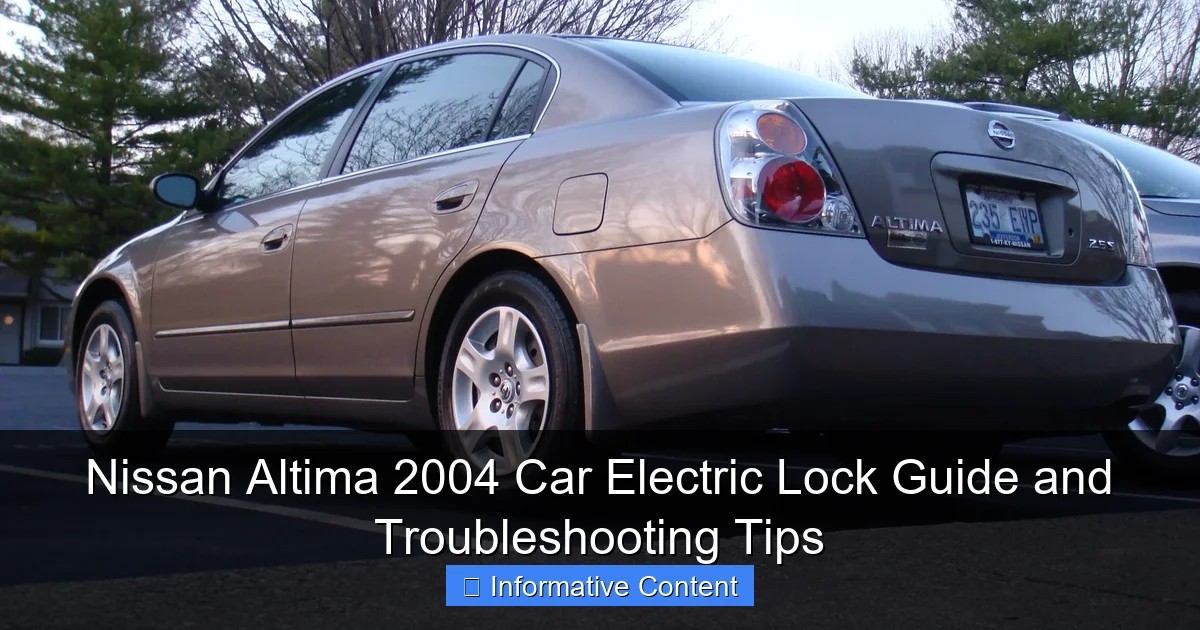
Featured image for nissan altima 2004 car electric lock
Image source: momentcar.com
The 2004 Nissan Altima’s electric lock system is reliable but prone to common issues like faulty actuators, blown fuses, or worn key fobs. This guide delivers step-by-step troubleshooting tips to diagnose and fix problems fast—from checking power sources to reprogramming remotes—so you can restore secure, keyless entry without costly dealership visits.
Key Takeaways
- Test the key fob battery first—weak power often causes lock failure.
- Check door lock actuators for wear; they’re a common failure point.
- Lubricate locks regularly to prevent jamming and ensure smooth operation.
- Inspect wiring in door jambs for breaks or frayed connections.
- Reset the system by disconnecting the battery for 10 minutes.
- Scan for error codes using an OBD2 tool for deeper diagnostics.
- Consult a pro if issues persist after basic troubleshooting.
📑 Table of Contents
- Understanding the Nissan Altima 2004 Electric Lock System
- How the Electric Lock System Works in the 2004 Nissan Altima
- Common Problems with the 2004 Altima Electric Locks
- Step-by-Step Troubleshooting Guide
- Preventative Maintenance and Long-Term Care
- Replacement and Upgrade Options
- Final Thoughts: Keeping Your Altima’s Locks Reliable
Understanding the Nissan Altima 2004 Electric Lock System
Ah, the Nissan Altima 2004. A reliable sedan that many of us have grown to love over the years. One of its standout features is the electric lock system, which makes getting in and out of your car as easy as pressing a button. But like all things, it’s not perfect. Over time, you might start noticing quirks—maybe the locks click but don’t move, or they only work from one side. If you’ve ever been stuck fiddling with your keys in the rain, you know how frustrating this can be.
Electric locks are a modern convenience we often take for granted—until they stop working. In the Altima 2004, the system relies on a combination of door lock actuators, wiring, control modules, and remote fobs. While the design is straightforward, wear and tear, weather exposure, and electrical gremlins can cause issues. The good news? Most problems are fixable, and you don’t need to be a mechanic to tackle them. In this guide, we’ll walk through how the system works, common issues, and step-by-step troubleshooting tips. Whether you’re a DIYer or just want to understand your car better, this is your go-to resource.
How the Electric Lock System Works in the 2004 Nissan Altima
Before diving into fixes, let’s get a clear picture of how your Nissan Altima 2004 electric lock system operates. Think of it as the nervous system of your doors—everything is connected, and when one part misfires, the whole system can feel off. Understanding the basics will help you diagnose problems faster and avoid unnecessary repairs.
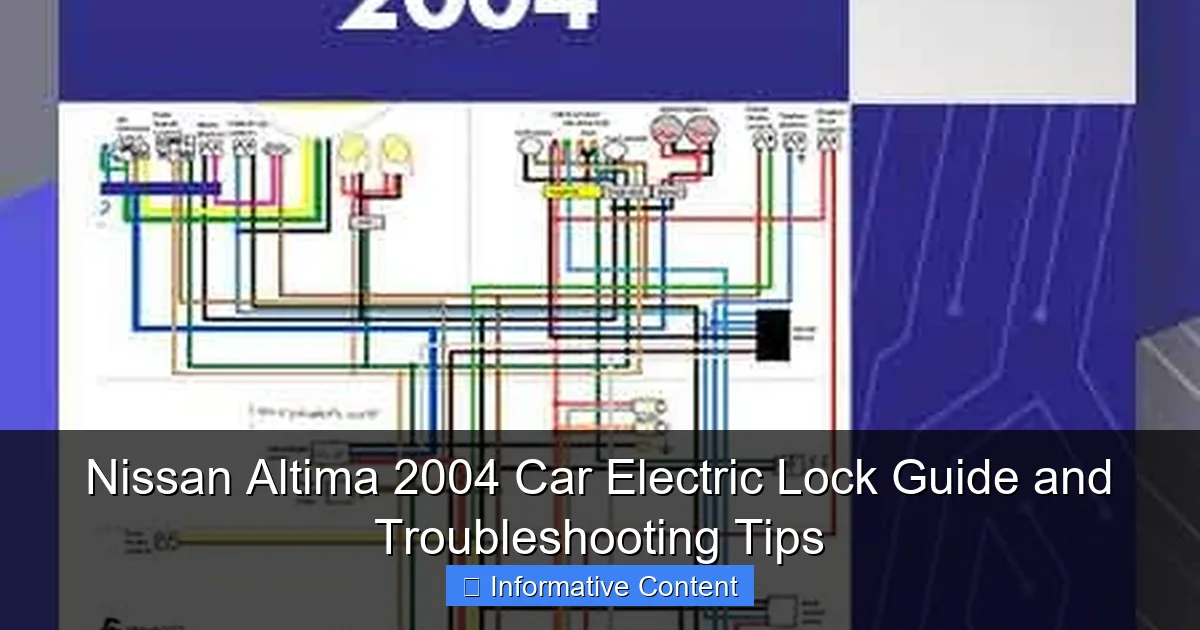
Visual guide about nissan altima 2004 car electric lock
Image source: diagramaselectricos.net
Key Components of the Electric Lock System
The 2004 Altima uses a central locking system with several key parts:
- Door lock actuators: These are small electric motors inside each door that physically move the lock mechanism up and down.
- Control module (Body Control Module or BCM): Located under the dashboard, this brain receives signals from your key fob or interior switches and sends power to the actuators.
- Wiring harness: Thin wires run through the rubber boot between the door and car frame, connecting the actuators to the BCM. These are often the first to wear out.
- Interior door switches: The buttons on your driver’s door that let you lock/unlock all doors manually.
- Key fob and receiver: The remote that lets you lock and unlock the car from a distance. It communicates wirelessly with the BCM.
When you press the lock button on your fob or inside the car, the BCM gets the signal and sends a pulse of electricity to the actuators. The motor turns, pulling the lock rod up (lock) or down (unlock). Simple, right? But when one of these parts fails, the whole system can go silent.
How the System Responds to Inputs
Let’s say you press the lock button on your fob. Here’s what happens behind the scenes:
- The fob sends a coded signal to the BCM via radio frequency.
- The BCM verifies the code and checks for any faults in the circuit.
- If all is clear, it sends 12 volts to each door actuator in sequence.
- The actuators move, locking all doors simultaneously.
- A feedback signal is sent back to confirm success—this is why you sometimes hear a “double click” when it works.
If the system doesn’t get a response from one actuator (say, the driver’s door), it may still lock the others but might not give the full confirmation. That’s when you notice one door staying unlocked while the rest click into place. This feedback loop is crucial for diagnosing issues—so pay attention to those sounds!
Common Power and Grounding Paths
Like any electrical system, the locks need both power and a good ground to work. The main power comes from the battery through a fuse (usually #17 or #21 in the fuse box, rated at 10A). The ground path runs back through the door hinges and body connections. Over time, corrosion or loose connections in these paths can cause intermittent failures.
For example, a friend of mine once spent hours troubleshooting a “dead” passenger door lock. After checking the actuator and fuses, he finally found the issue: a corroded ground wire near the door hinge. A quick clean and reconnect fixed it. Moral of the story? Always check power and ground—don’t assume the actuator is at fault.
Common Problems with the 2004 Altima Electric Locks
Now that you know how it works, let’s talk about what can go wrong. The 2004 Altima electric lock system is generally reliable, but certain issues pop up more than others—especially as the car ages. Here are the most common problems you’re likely to encounter, along with real-life examples and why they happen.
Intermittent Locking or Unlocking
This is probably the most frustrating issue. One day the locks work perfectly, the next day they only respond half the time. You press the fob, hear a click, but one door doesn’t move. Or worse, they work from the driver’s switch but not from the fob.
Why it happens: Often due to failing door wiring. The wires that run from the car body into the door pass through a rubber boot. Over years of opening and closing the door, these wires flex and eventually crack inside. The outer insulation may look fine, but the copper inside is broken. This causes intermittent signals—sometimes the current gets through, sometimes it doesn’t.
Real example: A user on a Nissan forum shared that her rear passenger door lock would only work about 30% of the time. After pulling back the rubber boot, she found three cracked wires. Replacing them with new 18-gauge automotive wire solved the problem completely.
One Door Lock Not Responding
You press the lock button, and all doors except one move. This is a classic sign of a bad actuator or wiring issue in that specific door.
Why it happens: The actuator motor wears out over time. The plastic gears inside can crack, or the motor brushes wear down, especially in cold weather. In the 2004 Altima, the driver’s door is used the most, so it’s often the first to fail. But any door can be affected.
Tip: If only one door is affected, start with that door. Don’t waste time checking the fuses or BCM first—focus on the actuator and wiring for that door. A quick test is to try manually moving the lock lever inside the door. If it moves freely, the mechanical part is fine—likely an electrical issue.
No Response from Key Fob (But Interior Switches Work)
This one’s tricky. You can lock and unlock the car from the driver’s door switch, but the fob does nothing. The car is clearly receiving power—so what’s wrong?
Why it happens: The most likely culprits are a dead fob battery, a faulty fob, or a weak signal from the fob receiver. The 2004 Altima uses a passive entry system, and the receiver is located near the rear window or behind the dashboard. If it’s loose or corroded, it won’t pick up the fob signal.
Real example: My neighbor’s Altima wouldn’t respond to the fob for weeks. He replaced the fob battery twice, thinking it was low. Finally, he noticed that the fob worked when standing near the rear window—suggesting the receiver was weak. A quick reseat of the receiver plug fixed it. Sometimes, it’s that simple.
Locks Cycle Repeatedly (Lock-Unlock-Lock)
You press the fob once, and the locks cycle multiple times—like they’re confused. This is often called “lock cycling” or “ghost locking.”
Why it happens: Usually a short circuit in the wiring, a failing BCM, or a bad ground. When the system detects a fault during locking, it tries to reset itself, causing the repeated clicks. It can also happen if the door ajar sensor is misreading a door as open when it’s actually closed.
Tip: Check the door ajar light on your dashboard. If it stays on when all doors are closed, that’s a clue. Also, inspect the wiring near the door hinges for pinched or frayed wires. A small nick in the insulation can cause a short when the door moves.
Slow or Weak Actuator Movement
The locks move, but they’re sluggish—like they’re struggling. This is common in colder climates.
Why it happens: Cold weather thickens the grease inside the actuator, making the motor work harder. Over time, the motor loses torque, or the plastic gears wear down. It can also be a sign of low battery voltage—your car’s battery might not be delivering full power to the actuators.
Real example: A mechanic in Minnesota told me he sees this every winter. Customers bring in their Altimas because the locks “feel slow.” After testing, he often finds the battery is weak (below 12 volts) or the actuator is nearing end-of-life. A battery replacement or actuator swap usually fixes it.
Step-by-Step Troubleshooting Guide
Now, let’s get hands-on. When your Nissan Altima 2004 electric lock system acts up, you don’t need to rush to the mechanic. With a few basic tools and some patience, you can diagnose and fix most issues yourself. Here’s a step-by-step guide to help you troubleshoot like a pro.
Step 1: Check the Basics First
Before tearing apart your door, start with the easy stuff:
- Replace the key fob battery: Use a CR2032 battery. It’s cheap and often the culprit.
- Test the interior door switch: If the fob doesn’t work but the driver’s door switch does, the fob or receiver is likely the issue.
- Listen for clicks: When you press lock/unlock, listen near each door. If you hear a click but the lock doesn’t move, the actuator might be seized or the linkage disconnected.
- Check the fuse: Locate the interior fuse box (driver’s side, under the dash). Find the lock fuse (usually #17 or #21, 10A). Pull it out and inspect for a broken filament.
Tip: Use a multimeter to test the fuse. Set it to continuity mode—if it beeps, the fuse is good. If not, replace it with the same rating.
Step 2: Test the Door Wiring (Rubber Boot)
This is where many 2004 Altimas fail. The rubber boot that connects the door to the car body contains the wires for locks, windows, and lights. Over time, these wires break.
- Open the door fully and pull back the rubber boot.
- Inspect the wires for cracks, fraying, or corrosion.
- Wiggle the wires gently while pressing the lock button. If the lock works only when you wiggle a certain wire, that’s your problem.
- Use a multimeter to test continuity on the lock wires (usually blue/white or green/white). Set the meter to ohms (Ω), touch one probe to the wire at the door side, and the other at the car side. A reading of 0-1 ohms is good. If it’s infinite (OL), the wire is broken.
Repair: Cut out the damaged section and splice in new 18-gauge automotive wire. Use heat-shrink tubing for a weatherproof seal. This fix costs under $10 and takes about 30 minutes.
Step 3: Test the Actuator
If the wiring is fine, the actuator is likely the issue. Here’s how to test it:
- Remove the door panel (use a trim removal tool to avoid breaking clips).
- Locate the actuator—it’s a small black box near the lock mechanism, connected to the lock rod with a plastic clip.
- Disconnect the electrical connector.
- Use jumper wires to connect the actuator directly to a 12V battery (or your car’s battery, with the car off). Connect positive to one terminal, negative to the other. The actuator should move. Reverse the wires—it should move the other way.
- If it doesn’t move, the actuator is dead and needs replacement.
Tip: You can buy a new actuator for about $30-50 online. Replacing it takes 1-2 hours. Watch a YouTube tutorial for your specific door—it’s easier than it looks.
Step 4: Check the BCM and Grounds
If multiple doors are affected or the system behaves erratically, the BCM or grounding might be the issue.
- Locate the BCM (under the dash, near the steering column).
- Inspect the wiring harness for loose or corroded connectors. Unplug and reseat them.
- Check ground points: Look for a thick black wire bolted to the car frame near the BCM and door hinges. Clean the connection with a wire brush and reattach.
- Use a multimeter to test for 12V at the actuator connector when pressing the lock button. If no voltage, the BCM or wiring is faulty.
Note: BCM replacement is rare and expensive. Only consider it if all else fails and a mechanic confirms the BCM is bad.
Step 5: Reprogram the Key Fob
If the fob isn’t working, it might need reprogramming—especially if the battery was recently replaced.
- Sit in the car with all doors closed.
- Insert the key into the ignition and turn to ON (don’t start the engine).
- Press and hold the lock and unlock buttons on the fob for 10 seconds.
- Turn the key off and remove it.
- Test the fob. If it works, great! If not, try the manual door switch to lock/unlock, then press the fob again.
Tip: Some Altimas require a specific sequence—check your owner’s manual for the exact steps. If reprogramming fails, the fob may need to be replaced or resynced at a dealership.
Preventative Maintenance and Long-Term Care
Prevention is always better than cure—especially with electrical systems. The Nissan Altima 2004 electric lock system can last for years if you take a few simple steps to keep it in top shape. Here’s how to avoid future headaches and extend the life of your locks.
Regular Inspection of Door Wiring
The rubber boot is the weakest point. Make it a habit to inspect the wires every 6 months, especially if you live in a humid or cold climate.
- Open each door and pull back the boot.
- Look for cracks, moisture, or fraying.
- Use dielectric grease on the connectors to prevent corrosion.
- If you find a cracked wire, repair it before it breaks completely.
Tip: Wrap the repaired section with electrical tape or heat-shrink for extra protection. A small investment now can save you a big repair later.
Lubricate the Lock Mechanism
Even electric locks have moving metal parts. Over time, dust and dirt can cause friction, making the actuators work harder.
- Spray a dry silicone lubricant (not WD-40) on the lock rods and hinges.
- Work the lock manually a few times to spread the lube.
- Do this every 6-12 months, or whenever the locks feel stiff.
Why dry lube? WD-40 attracts dust and can gum up the mechanism. Silicone lube stays clean and lasts longer.
Protect the Key Fob
The fob is exposed to rain, drops, and pocket lint. Treat it like a small electronic device.
- Keep it dry—avoid leaving it in wet pockets.
- Replace the battery every 1-2 years, even if it seems to work.
- Use a fob cover or case to prevent drops and scratches.
- Store a spare fob in a safe place (like a desk drawer) in case the main one fails.
Real example: A Reddit user shared that his fob stopped working after a trip to the beach—sand had gotten into the buttons. A quick rinse with distilled water and drying fixed it, but it could have been avoided with a simple case.
Battery and Electrical System Health
A weak car battery can cause all sorts of electrical gremlins—including lock issues.
- Test your battery every 6 months, especially before winter.
- Keep the battery terminals clean and tight.
- If your locks are slow or inconsistent, have the battery and alternator checked.
Tip: A battery below 12 volts can cause the BCM to behave erratically. A simple $20 battery test at an auto parts store can save you hours of troubleshooting.
Replacement and Upgrade Options
Sometimes, the best fix is a replacement—or even an upgrade. If your 2004 Altima’s electric lock system is beyond repair, or you want modern convenience, here are your options.
OEM vs. Aftermarket Actuators
When replacing a bad actuator, you have two choices:
- OEM (Original Equipment Manufacturer): These are made by Nissan and fit perfectly. They’re reliable but expensive ($80-120).
- Aftermarket: Brands like Dorman, ACDelco, and Cardone make quality replacements. They cost $30-60 and work just as well—sometimes better. Just make sure they’re rated for the 2004 Altima.
Tip: Read reviews before buying. Some aftermarket actuators have plastic gears that wear out faster. Look for ones with metal gears for longer life.
Adding Keyless Entry or Smart Locks
The 2004 Altima didn’t come with keyless entry or smart locks, but you can add them.
- Keyless entry kits: Plug-and-play kits that connect to your existing system. They let you lock/unlock with a code, like a hotel room. Brands like Viper or Compustar offer kits for around $100-150.
- Smart lock modules: Some companies make modules that connect to your OBD2 port and let you lock/unlock via a smartphone app. These are more advanced and cost $200+.
Real example: A friend installed a Viper keyless entry kit in his Altima. Now he can unlock the car with a code on the driver’s door—no fob needed. It’s been working flawlessly for 3 years.
Upgrading to Power Locks with Remote Start
If you want the full modern experience, consider a remote start system with power locks.
- These systems include a new fob, a remote start module, and integration with your existing locks.
- They let you start the car from 300+ feet away—great for warming up in winter or cooling in summer.
- Cost: $200-400 installed, or $150-250 for DIY kits.
Tip: Make sure the system is compatible with the 2004 Altima. Some kits require additional relays or wiring modifications.
Final Thoughts: Keeping Your Altima’s Locks Reliable
The Nissan Altima 2004 electric lock system is a well-designed piece of engineering, but like any 20-year-old car, it needs care. Whether you’re dealing with a dead actuator, a broken wire, or a fussy fob, the solutions are within reach. By understanding how the system works, following the troubleshooting steps, and practicing preventative maintenance, you can keep your locks working smoothly for years to come.
Remember, small fixes today can prevent big headaches tomorrow. A $10 wire repair, a $30 actuator, or a $5 fob battery can save you a $200 mechanic bill. And if you’re feeling adventurous, upgrading to keyless entry or remote start can breathe new life into your old Altima. At the end of the day, your car is more than metal and wires—it’s part of your daily routine. Treat it well, and it will take care of you.
Data Table: Common Issues and Quick Fixes
| Issue | Most Likely Cause | Quick Fix | Cost (Approx.) |
|---|---|---|---|
| Fob not working | Dead battery or weak receiver | Replace fob battery, reseat receiver plug | $5-20 |
| One door not locking | Bad actuator or broken wire | Test actuator, repair wiring | $10-50 |
| Intermittent locks | Cracked door wiring | Inspect and splice broken wires | $10-20 |
| Slow locks | Weak battery or worn actuator | Test battery, lubricate mechanism | $0-100 |
| Locks cycling repeatedly | Short circuit or bad ground | Check wiring near hinges, clean grounds | $10-30 |
Frequently Asked Questions
Why is my Nissan Altima 2004 car electric lock not responding?
If your Nissan Altima 2004 car electric lock isn’t working, check the fuse box for a blown fuse or test the key fob battery. A faulty door lock actuator or wiring issue could also cause this problem.
How do I replace the key fob battery for my 2004 Nissan Altima?
Open the key fob with a small screwdriver, remove the old CR2032 battery, and replace it with a new one. Ensure the battery is properly aligned to restore remote lock/unlock functions.
Can I manually unlock my Nissan Altima 2004 if the electric lock fails?
Yes, use the physical key hidden in your key fob to unlock the driver’s door manually. Insert the key into the keyhole (often covered by a small cap) and turn it to open.
Why do my 2004 Altima’s electric locks cycle up and down repeatedly?
This “lock cycling” issue is often caused by a failing door lock actuator or a short in the wiring. Inspect the actuator and connections, or consult a mechanic for diagnosis.
How do I reset the Nissan Altima 2004 car electric lock system?
Try disconnecting the car battery for 10–15 minutes to reset the system, then reconnect it. Test the locks afterward; if issues persist, further electrical troubleshooting may be needed.
Are aftermarket electric lock kits compatible with the 2004 Nissan Altima?
Many universal kits work with the 2004 Altima, but ensure compatibility with the model’s wiring and door design. Professional installation is recommended for safety and reliability.