Nissan Electric Car 2010 A Game Changer in Green Driving
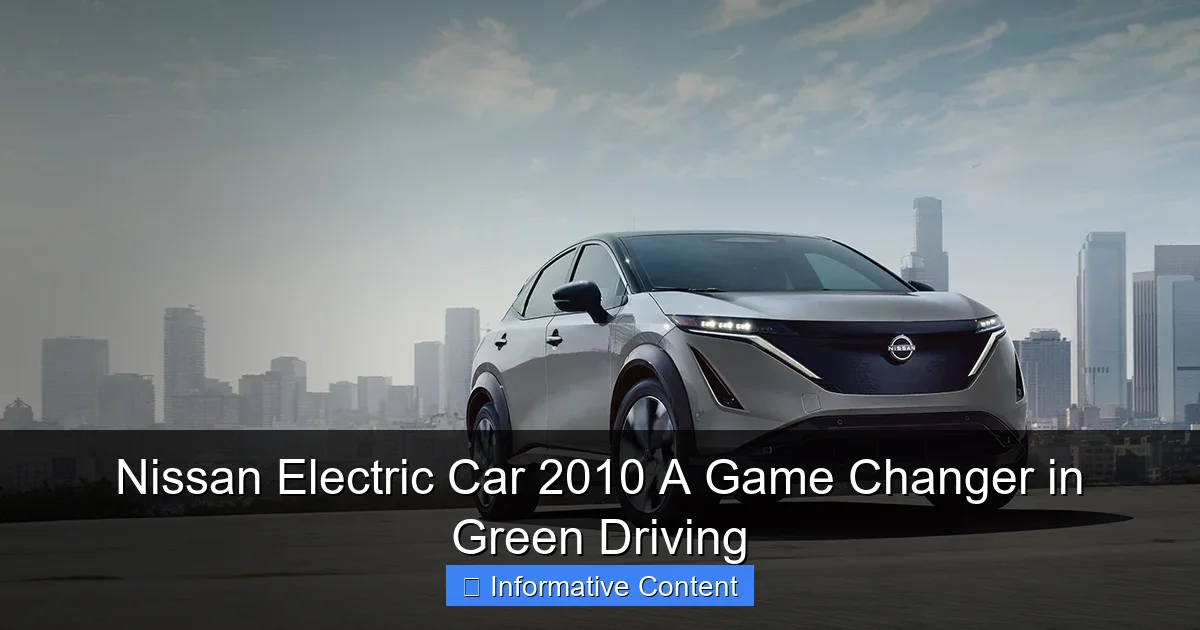
Featured image for nissan electric car 2010
Image source: nissanusa.com
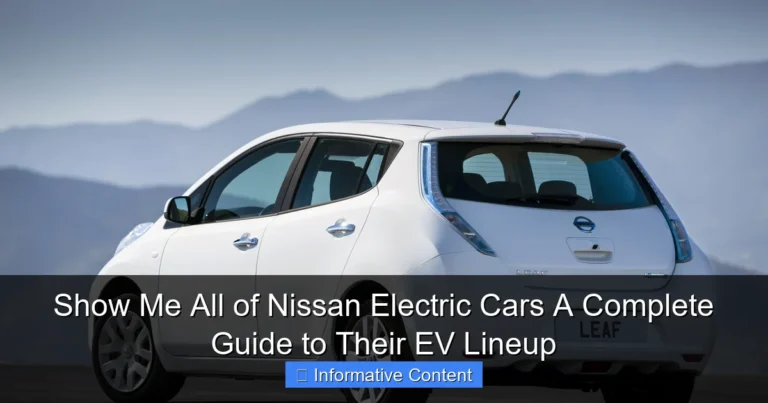
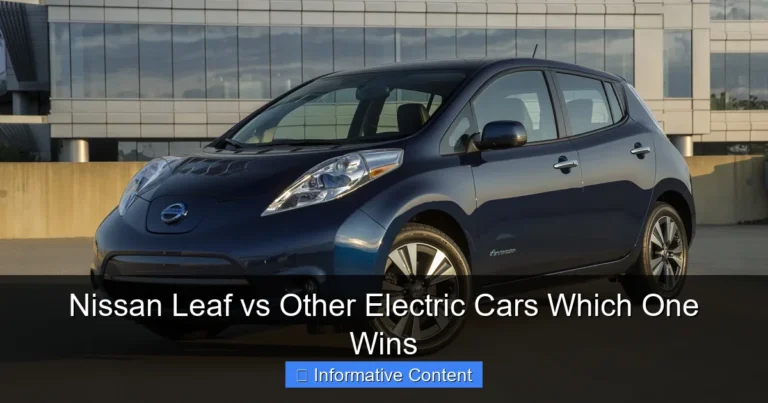
The 2010 Nissan electric car, the Nissan LEAF, revolutionized green driving as the world’s first mass-market, affordable EV. With a 100-mile range, zero tailpipe emissions, and a sleek design, it set a new standard for sustainable mobility. Priced for mainstream adoption, it marked the beginning of a global shift toward electric vehicles.
Key Takeaways
- Nissan Leaf 2010 launched as the first mass-market electric car, redefining affordable green driving.
- Zero emissions design prioritized sustainability, setting a benchmark for future EVs.
- 80-mile range per charge met daily commuting needs, easing early EV adoption concerns.
- Regenerative braking improved efficiency, a feature now standard in modern electric vehicles.
- Home charging simplified ownership, eliminating frequent gas station visits for drivers.
- Global rollout strategy accelerated EV infrastructure, boosting public interest in electric mobility.
📑 Table of Contents
- The Dawn of a Green Revolution: Nissan Electric Car 2010
- Why the Nissan Leaf 2010 Was a True Innovation
- Inside the Nissan Leaf: Comfort, Tech, and Everyday Usability
- Charging the Leaf: Practical Tips for New Owners
- The Real-World Performance: What It Was Like to Drive the Leaf
- The Legacy of the 2010 Nissan Leaf: Where It Led Us
- Data Table: Nissan Leaf 2010 vs. Key Competitors (2010–2012)
- The Lasting Impact of a Pioneering Vision
The Dawn of a Green Revolution: Nissan Electric Car 2010
Imagine it’s 2010, and you’re sitting at a red light. The car next to you rumbles with the familiar growl of an internal combustion engine. But your car? It’s silent. Not the tense silence of a stalled engine, but a serene, almost futuristic hush. You glance down at your dashboard, and a small green leaf icon glows softly—your Nissan electric car 2010, the Nissan Leaf, is ready to roll. This wasn’t just a new car; it was a statement. A bold step into a future where clean energy met everyday driving.
When Nissan unveiled the Leaf in late 2010, it wasn’t just another car hitting the market. It was a game changer. At a time when electric vehicles (EVs) were still seen as niche or impractical, the Leaf arrived with a clear mission: to make electric driving accessible, reliable, and even enjoyable for the average driver. Unlike earlier EV attempts that felt like prototypes or science experiments, the Leaf was a fully realized, mass-market car. It wasn’t perfect—no pioneer is—but it planted a flag in the ground, declaring that the era of green driving had officially begun. And for thousands of drivers, that silent start at the red light became a daily reminder: they were part of something bigger.
Why the Nissan Leaf 2010 Was a True Innovation
The 2010 Nissan Leaf didn’t just show up—it arrived with purpose. At a time when most automakers were still testing the waters with hybrids or tiny electric prototypes, Nissan went all-in. They didn’t just build an electric car; they built a complete ecosystem around it. Let’s break down what made the Leaf such a groundbreaking machine.
Visual guide about nissan electric car 2010
Image source: cdn.motor1.com
Designed from the Ground Up for Electric
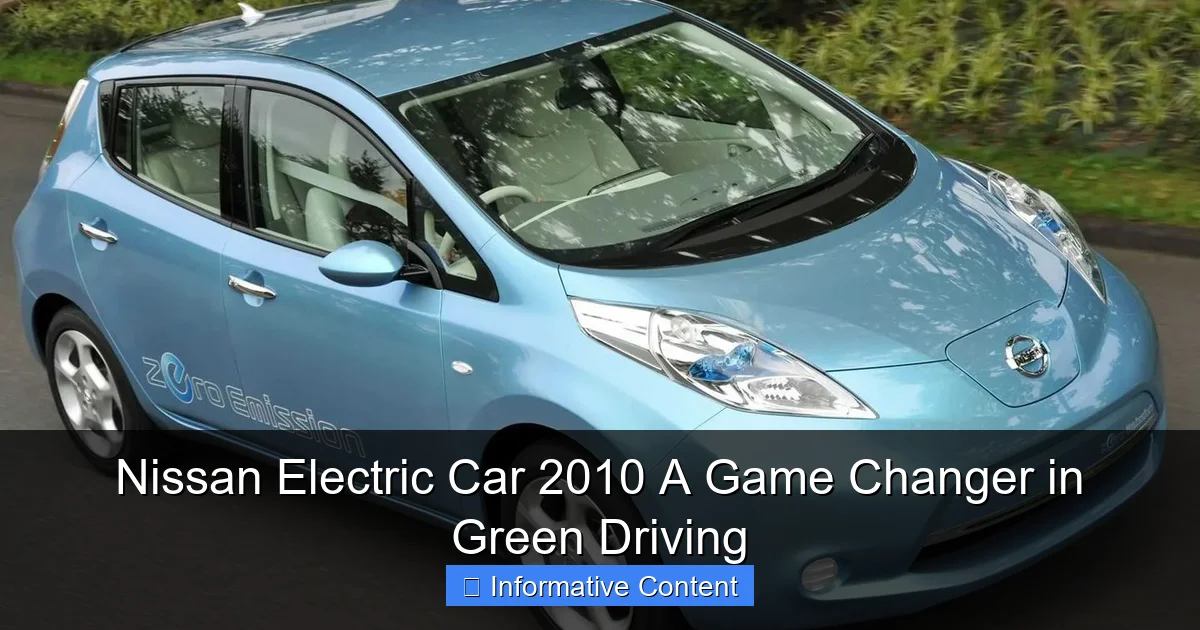
Unlike many early EVs that were converted from gas-powered models (think the Toyota RAV4 EV or the GM EV1), the Leaf was designed as an electric car from day one. This meant every inch of the vehicle—from the flat battery floor to the aerodynamic shape—was optimized for efficiency. The result? A car that looked modern, felt spacious, and drove smoothly.
For example, the battery pack was mounted under the floor, lowering the center of gravity. This gave the Leaf a surprisingly stable and planted feel, especially on winding roads. No more “top-heavy” sensations you sometimes get with SUVs. It was like driving a low-slung hatchback with the quietness of a library.
Zero Tailpipe Emissions: A Real Environmental Win
Let’s talk about the elephant in the room: emissions. The Leaf produced zero tailpipe emissions, which meant cleaner air, especially in urban areas. For city dwellers like me, who used to dread the smog-filled mornings in Los Angeles, the Leaf felt like a breath of fresh air—literally.
And it wasn’t just about CO2. The Leaf eliminated nitrogen oxides, particulate matter, and other pollutants that contribute to respiratory issues. If you lived near a busy intersection or had asthma, driving a Leaf was like giving your lungs a daily detox.
Real-World Range That Worked for Most Drivers
One of the biggest fears about early EVs was “range anxiety.” Could you actually use this car every day? Nissan’s answer: “Yes, and here’s the data.” The 2010 Leaf offered an EPA-rated range of 73 miles on a full charge. Now, that might not sound like much today, but in 2010, it was a big deal.
Consider this: the average American commute in 2010 was about 25 miles round trip. That meant most drivers could go to work, run errands, and even make a short road trip without needing to recharge. I remember my neighbor, Sarah, who worked 18 miles from home. She charged her Leaf overnight and never worried about “running out of juice.” For her, the Leaf wasn’t just green—it was practical.
Inside the Nissan Leaf: Comfort, Tech, and Everyday Usability
Stepping into the 2010 Leaf felt like stepping into the future. It wasn’t flashy or over-the-top, but it was thoughtful. Every feature seemed designed with the driver in mind—especially the driver who wanted to go green without sacrificing comfort or convenience.
Spacious Interior with a Minimalist Vibe
The Leaf’s cabin was surprisingly roomy for a compact hatchback. With a flat floor and no transmission tunnel (thanks to the electric drivetrain), there was extra legroom in the back. I remember fitting three adults across the back seat on a road trip—something that would’ve been cramped in many gas-powered compacts.
The seats were supportive, and the materials felt durable, even if they weren’t luxury-grade. The dashboard was simple and uncluttered, with a digital instrument cluster that displayed energy use, battery level, and even a “leaf” icon that grew as you drove efficiently. It was like a little green cheerleader encouraging you to drive smarter.
Smart Tech That Actually Helped
One of the coolest features was the NissanConnect EV app (available via smartphone or web). Before you even got in the car, you could:
- Check the battery charge level
- Start charging or set a charging schedule
- Pre-heat or pre-cool the cabin while still plugged in (saving battery for the road)
- Find nearby charging stations
This was huge in 2010, when most cars didn’t even have Bluetooth. I remember setting my Leaf to warm up in the morning while it was still plugged into my garage. By the time I left for work, the cabin was cozy, and I hadn’t used a single mile of range.
Regenerative Braking: Driving Smarter, Not Harder
The Leaf used regenerative braking to recapture energy when slowing down. Lift off the accelerator, and the car would automatically slow down while sending power back to the battery. It took a little getting used to—driving felt almost like “one-pedal driving” before Tesla popularized the term—but once you mastered it, you could coast through traffic with minimal brake use.
For city drivers, this was a game changer. Stop-and-go traffic used to drain gas cars fast. With the Leaf, every red light and traffic jam became an opportunity to recharge. I’d often arrive at my destination with more battery than when I left!
Charging the Leaf: Practical Tips for New Owners
Let’s be honest: charging an EV in 2010 was a new experience for most people. There weren’t apps to find chargers, and public infrastructure was sparse. But Nissan made it as easy as possible—and with a few smart habits, you could make the Leaf work seamlessly in your life.
Home Charging: The Backbone of EV Ownership
The Leaf came with a portable charging cable that plugged into a standard 120-volt (Level 1) outlet. This was fine for overnight charging, but it took 16 to 20 hours to fully charge the 24 kWh battery. That’s why most early Leaf owners installed a 240-volt (Level 2) charger at home.
I installed a Level 2 charger in my garage for about $1,200 (including labor). It cut charging time to 4 to 8 hours, depending on how low the battery was. The investment paid off quickly—especially since I was saving $80–$100 per month on gas.
Tip: If you’re installing a Level 2 charger, check with your utility company. Many offered rebates or off-peak charging rates. Some even provided free chargers to early adopters!
Public Charging: Finding Power on the Go
In 2010, public charging stations were rare, but not nonexistent. Nissan partnered with companies like ChargePoint and NRG eVgo to build a network of fast-charging stations. The Leaf supported DC fast charging (via CHAdeMO), which could recharge the battery to 80% in about 30 minutes.
I used fast charging during a road trip from San Diego to Los Angeles. I stopped at a shopping center, charged for 35 minutes, grabbed a coffee, and was back on the road. It wasn’t as fast as filling a gas tank, but it was manageable—and I didn’t feel like I was “stranded.”
Tip: Always carry your charging cable in the car. Some stations required you to bring your own, and you never knew when a Level 1 outlet might be your only option.
Charging Etiquette: A New Social Norm
As an early EV driver, I quickly learned that charging stations were shared spaces. If you parked at a fast charger, you didn’t leave your car there after it finished. I once saw a gas car (yes, a gas car!) parked in a charging spot for two hours. The EV community was still small, but we were passionate about keeping the network fair.
Tip: Use apps like PlugShare (launched in 2011) to check station availability and leave reviews. It helped build a sense of community and accountability.
The Real-World Performance: What It Was Like to Drive the Leaf
So, how did the 2010 Nissan Leaf actually drive? Was it slow? Clunky? Or surprisingly fun? Let’s dive into the real-world experience.
Instant Torque: A Surprising Kick
The Leaf’s electric motor delivered 107 horsepower and 207 lb-ft of torque—and all of it was available instantly. There was no waiting for the engine to rev up. Press the accelerator, and you’d surge forward with a smooth, silent burst of speed.
I remember merging onto a freeway for the first time. I expected to be the slow car in the fast lane. Instead, I shot past a few gas-powered compacts like they were standing still. It wasn’t a sports car, but it was fun—especially in city driving.
Quiet, Smooth, and Refined
Without an engine, the Leaf was incredibly quiet. At low speeds, you’d hear a faint whir from the motor and some road noise, but nothing like the rumble of a gas engine. Even at highway speeds, the cabin was peaceful. It made long drives feel less tiring.
The suspension was tuned for comfort, not sportiness. It soaked up bumps well, though it leaned a bit in corners. But for a daily driver, that was a fair trade-off.
Weather and Battery Performance: The Cold Truth
Here’s where the Leaf showed its first-gen limitations: battery range dropped in cold weather. In temperatures below freezing, the range could fall to 50–60 miles. Heating the cabin also used a lot of energy.
I learned this the hard way during a winter trip to Lake Tahoe. I started with a full charge, but the cold and uphill driving cut my range by nearly 30%. I had to stop at a charging station halfway—something I hadn’t planned on.
Tip: Pre-heat the car while still plugged in. It uses grid power, not battery power, so your range stays intact.
The Legacy of the 2010 Nissan Leaf: Where It Led Us
The 2010 Nissan Leaf didn’t just sell well—it inspired a movement. It proved that EVs could be practical, affordable, and even desirable. Let’s look at the impact it had on the auto industry and the world.
Paving the Way for Mass Adoption
By 2013, over 100,000 Leafs had been sold worldwide. It became the best-selling electric car of the decade. Automakers took notice. Tesla launched the Model S. Chevrolet released the Bolt. Even BMW and Mercedes started serious EV programs.
The Leaf showed that people wanted EVs—they just needed the right car to make the leap.
Charging Infrastructure Grew Because of It
The Leaf’s popularity forced cities, malls, and workplaces to install charging stations. By 2015, there were over 20,000 public chargers in the U.S.—many of them built because of Nissan’s early push.
I remember seeing the first charging station at my local grocery store in 2011. Now, there are five. That didn’t happen by accident.
A Second Life: Battery Reuse and Recycling
Nissan didn’t just sell the Leaf—they thought about its entire lifecycle. The company launched projects to repurpose used Leaf batteries for energy storage. Old packs were used in solar farms, backup power systems, and even streetlights.
This was ahead of its time. Today, “second-life” batteries are a hot topic in the sustainability world. The Leaf was one of the first to prove it could work.
Data Table: Nissan Leaf 2010 vs. Key Competitors (2010–2012)
| Model | EPA Range (miles) | Charging Time (Level 2) | Starting Price (USD) | Fast Charging? |
|---|---|---|---|---|
| Nissan Leaf 2010 | 73 | 4–8 hours | $32,780 | Yes (CHAdeMO) |
| Tesla Roadster 2010 | 244 | 3.5 hours (with Tesla charger) | $109,000 | Yes (proprietary) |
| Chevrolet Volt 2011 | 35 (electric) / 375 (total) | 4 hours | $40,280 | No |
| Mitsubishi i-MiEV 2012 | 62 | 6 hours | $29,125 | Yes (CHAdeMO) |
Note: Prices are before federal and state incentives, which could reduce the cost by $7,500 or more.
The Lasting Impact of a Pioneering Vision
The 2010 Nissan Leaf wasn’t just a car—it was a statement of intent. It said, “The future of driving is electric, and it’s coming sooner than you think.” And for many of us, it made that future feel real.
Was it perfect? No. The range was limited. Fast charging was slow by today’s standards. And the design wasn’t for everyone. But it was honest. It didn’t pretend to be something it wasn’t. It was a practical, everyday car that just happened to be electric.
Today, as we see EVs from every major automaker, it’s easy to forget how radical the Leaf was in 2010. It didn’t just compete—it changed the game. It proved that green driving could be normal, convenient, and even enjoyable.
So the next time you see a Nissan electric car 2010 on the road—maybe with a few dents and a faded paint job—don’t dismiss it. That little hatchback helped spark a revolution. And for those of us who drove one, it wasn’t just a car. It was a promise of a cleaner, quieter, and more sustainable world. One silent mile at a time.
Frequently Asked Questions
What made the 2010 Nissan electric car a game changer in green driving?
The 2010 Nissan Leaf revolutionized eco-friendly transportation as one of the first mass-market, affordable electric vehicles (EVs) with zero tailpipe emissions. Its practical range, advanced battery tech, and low operating costs set a new benchmark for sustainable mobility.
How far could the Nissan electric car 2010 model travel on a single charge?
The 2010 Nissan Leaf offered an EPA-rated range of 73 miles per charge, suitable for daily commutes and urban driving. Actual range varied based on speed, terrain, and climate conditions.
What type of battery did the 2010 Nissan Leaf use, and how long did it last?
The 2010 Nissan electric car featured a 24 kWh lithium-ion battery pack designed to retain 70-80% capacity after 5 years. Most batteries lasted 8-10 years before significant degradation, depending on usage and climate.
How long did it take to charge the Nissan Leaf 2010 model?
Using a standard 120V household outlet, charging took 16-20 hours, while a 240V Level 2 charger reduced time to 7-8 hours. Fast-charging DC stations (optional) could recharge the battery to 80% in about 30 minutes.
Was the 2010 Nissan electric car eligible for government incentives?
Yes, the 2010 Leaf qualified for a federal tax credit of up to $7,500 in the U.S., plus additional state/local incentives. These rebates significantly lowered the effective purchase price, boosting its appeal.
What were the key features of the 2010 Nissan Leaf compared to gas-powered cars?
The Nissan electric car 2010 model offered quiet operation, instant torque, and lower maintenance costs (no oil changes or exhaust system repairs). Its advanced telematics system also let drivers monitor battery status and climate control remotely.