Nissan Electric Car 2016 Review Performance and Features Unveiled
Featured image for nissan electric car 2016
The 2016 Nissan electric car lineup, led by the updated Leaf, delivers impressive efficiency with up to 107 miles of range and a refined 30 kWh battery option. Performance and affordability shine through its smooth electric motor, responsive handling, and advanced tech like NissanConnect EV telematics—all at a competitive price point. This model solidifies Nissan’s leadership in accessible, eco-friendly driving.
Key Takeaways
- 2016 Nissan Leaf offers up to 107-mile range per charge.
- Regenerative braking improves efficiency and driving dynamics.
- Quick Charge option delivers 80% charge in 30 minutes.
- Spacious interior seats five with ample cargo room.
- Standard tech includes touchscreen, Bluetooth, and backup camera.
- Low maintenance costs due to fewer moving parts.
📑 Table of Contents
- Nissan Electric Car 2016 Review: A Groundbreaking Leap in Sustainable Mobility
- Performance and Powertrain: The Heart of the 2016 Nissan Leaf
- Design and Interior: Comfort Meets Futuristic Aesthetics
- Technology and Connectivity: Pioneering Smart EV Features
- Safety and Driver Assistance: A Secure Driving Experience
- Ownership Experience: Real-World Usability and Cost of Ownership
- Conclusion: The 2016 Nissan Leaf’s Enduring Legacy
Nissan Electric Car 2016 Review: A Groundbreaking Leap in Sustainable Mobility
In 2016, the automotive world witnessed a pivotal moment in the evolution of electric vehicles (EVs), and at the forefront stood Nissan with its refreshed Nissan Leaf—the most iconic Nissan electric car 2016 model to date. As the global push toward sustainability gained momentum, Nissan doubled down on its commitment to zero-emission mobility, enhancing the Leaf with improved range, cutting-edge technology, and a more refined driving experience. The 2016 model wasn’t just an incremental update; it represented a strategic response to growing competition and consumer demand for practical, affordable EVs that didn’t compromise on performance or features.
The Nissan Leaf, first introduced in 2010, had already established itself as the world’s best-selling electric car by 2016, with over 200,000 units sold globally. But the 2016 version addressed critical limitations of earlier models—most notably, range anxiety—by introducing a higher-capacity battery option and smarter energy management systems. This review dives deep into the Nissan electric car 2016 lineup, examining its performance, technological innovations, safety features, and real-world usability. Whether you’re an eco-conscious commuter, a tech-savvy driver, or an investor eyeing the EV market, the 2016 Leaf offers valuable insights into the state of electric mobility at a pivotal moment in history.
Performance and Powertrain: The Heart of the 2016 Nissan Leaf
The 2016 Nissan Leaf marked a significant step forward in electric vehicle performance, offering a choice between two battery configurations—a 24 kWh and a new 30 kWh unit—that catered to different driving needs. This dual-option strategy was a game-changer, allowing drivers to choose between affordability and extended range without sacrificing the core benefits of electric propulsion.
Dual Battery Options: 24 kWh vs. 30 kWh
The base model retained the 24 kWh lithium-ion battery pack, delivering an EPA-estimated range of 84 miles (135 km) on a single charge. While this was sufficient for urban commuters and short-distance drivers, the real star of the 2016 lineup was the 30 kWh battery introduced in the Leaf SV and SL trims. This upgrade increased the EPA range to 107 miles (172 km), a 27% improvement that significantly reduced range anxiety for drivers with longer commutes or those living in areas with sparse charging infrastructure.
Practical Tip: If you regularly drive over 70 miles per day, the 30 kWh model is worth the extra investment. The additional 23 miles of range could mean the difference between needing a midday charge and completing your day on a single charge.
Electric Motor and Driving Dynamics
Both battery variants were powered by a permanent magnet synchronous electric motor producing 107 horsepower (80 kW) and 187 lb-ft of torque. Unlike internal combustion engines, the Leaf delivered this torque instantly, resulting in smooth, responsive acceleration from a standstill. The 0-60 mph time was approximately 10.2 seconds, which, while not sports-car fast, felt zippy in city traffic and highway merging scenarios.
The driving experience was further enhanced by Nissan’s e-Pedal technology, introduced as an optional feature in 2016. This system allowed drivers to accelerate, decelerate, and even come to a complete stop using only the accelerator pedal. When the driver lifts off, regenerative braking kicks in aggressively, slowing the car and sending energy back to the battery. This feature not only improved efficiency but also reduced wear on traditional brake components.
Charging Options and Efficiency
The 2016 Leaf supported multiple charging methods:
- Level 1 (120V AC): 20+ hours for a full charge (ideal for overnight charging at home).
- Level 2 (240V AC): 4-5 hours for the 24 kWh battery; 6-7 hours for the 30 kWh battery (recommended for daily use).
- DC Fast Charging (CHAdeMO): Up to 80% charge in 30 minutes (available on SV and SL trims with 30 kWh battery).
The 30 kWh Leaf achieved an EPA efficiency rating of 112 MPGe (miles per gallon equivalent) city / 99 MPGe highway, making it one of the most energy-efficient vehicles on the market. For context, that’s equivalent to driving 112 miles on the energy contained in one gallon of gasoline—without burning any fuel.
Design and Interior: Comfort Meets Futuristic Aesthetics
The 2016 Nissan Leaf retained its signature aerodynamic silhouette but received subtle yet impactful design updates that enhanced both aesthetics and functionality. The goal was to blend futuristic appeal with everyday practicality, a balance Nissan achieved with remarkable success.
Exterior Design: Form Follows Function
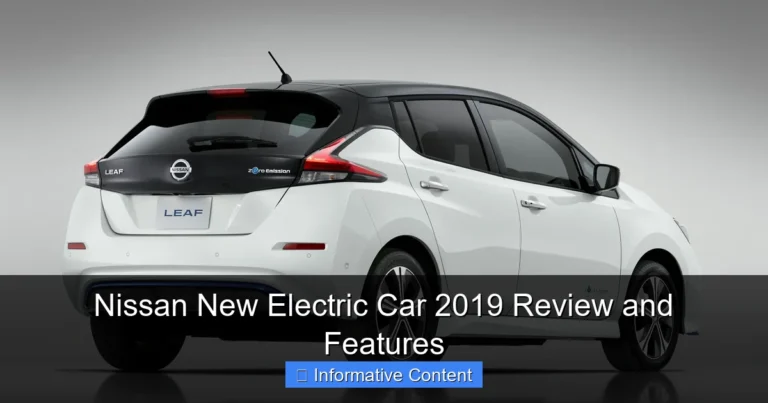
The Leaf’s exterior featured a distinctive V-Motion grille (a preview of Nissan’s future design language), LED daytime running lights, and a sloping roofline that contributed to a drag coefficient of just 0.29. This low drag coefficient improved energy efficiency, allowing the car to slice through air with minimal resistance. The headlights were redesigned with projector beams and available LED options, improving nighttime visibility while reducing power draw.
The 2016 model also introduced new wheel designs—16-inch alloys on the SV and SL trims—and optional two-tone paint schemes, giving owners a chance to personalize their EVs. The rear hatch was slightly reshaped to improve aerodynamics and cargo access.
Interior Layout and Materials
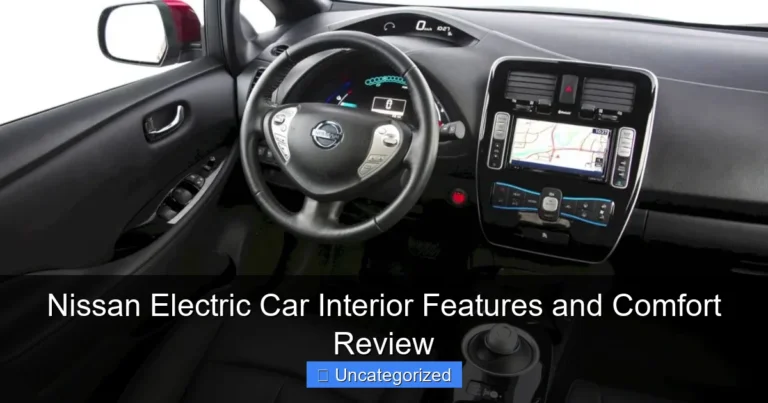
Inside, the Leaf offered a surprisingly spacious cabin for a compact EV. The interior design emphasized sustainability, with recycled materials used in the upholstery, dashboard, and floor mats. The seats were available in cloth or leather (on SL trim), and the driver’s seat was 6-way adjustable with optional heating.
The centerpiece of the dashboard was the 7-inch touchscreen display (on SV and SL models), which housed the NissanConnect infotainment system. Below it, a digital instrument cluster displayed real-time energy usage, battery state, and driving range. The layout was intuitive, with physical buttons for climate control and audio, reducing the need for screen interaction while driving.
Cargo Space and Practicality
Despite its compact size, the 2016 Leaf offered 23.6 cubic feet of cargo space behind the rear seats, expandable to 30 cubic feet with the seats folded flat. This made it competitive with other small hatchbacks like the Honda Fit and Ford Focus. The flat load floor and wide hatch opening made it easy to load groceries, strollers, or camping gear.
Practical Tip: Use the Nissan Leaf’s “Cargo Mode” feature (available via the infotainment system), which automatically adjusts the suspension and power delivery when carrying heavy loads, improving stability and efficiency.
Technology and Connectivity: Pioneering Smart EV Features
The 2016 Nissan Leaf wasn’t just an electric car—it was a connected vehicle packed with smart technology designed to enhance convenience, safety, and energy efficiency. Nissan positioned the Leaf as a tech-forward EV, and the 2016 model delivered on that promise.
NissanConnect EV: Remote Control and Monitoring
The standout tech feature was NissanConnect EV, a smartphone app and web portal that allowed owners to remotely:
- Start and stop charging
- Preheat or precool the cabin (using grid power, not battery)
- Check battery status and range
- Locate nearby charging stations
- Set charging schedules
This was revolutionary in 2016, especially for drivers in extreme climates. For example, a driver in Chicago could preheat the cabin on a -10°F morning using home electricity, ensuring the car was warm and defrosted when they left for work—without draining the battery.
Navigation and Energy Management
The built-in navigation system included eco-routing, which suggested the most energy-efficient route to a destination, factoring in elevation changes, traffic, and charging station locations. The system could also display real-time energy consumption, helping drivers adopt more efficient driving habits.
Additionally, the ECO Mode button reduced power output and adjusted climate control settings to maximize range. While it made acceleration slightly sluggish, it was ideal for city driving or when battery levels were low.
Audio and Connectivity Features
The 2016 Leaf SV and SL trims came with a premium Bose 7-speaker audio system, offering crisp sound quality even at highway speeds. Standard features included:
- Bluetooth hands-free calling and audio streaming
- USB and auxiliary input
- SiriusXM satellite radio (subscription required)
- Voice recognition for navigation and phone
For tech enthusiasts, the Leaf also supported Android Auto and Apple CarPlay (via firmware update in late 2016), allowing seamless integration with smartphones for maps, music, and messaging.
Safety and Driver Assistance: A Secure Driving Experience
Safety was a top priority for the 2016 Nissan Leaf, which earned a 5-Star Overall Safety Rating from the National Highway Traffic Safety Administration (NHTSA). The car’s rigid body structure, advanced airbag system, and suite of driver assistance features made it one of the safest compact EVs on the road.
Passive Safety Features
The Leaf’s Zone Body construction included crumple zones designed to absorb impact energy, while high-strength steel protected the battery pack and passenger cabin. Standard safety features included:
- Front, side, and side-curtain airbags
- Anti-lock Braking System (ABS) with Electronic Brake-force Distribution (EBD)
- Tire Pressure Monitoring System (TPMS)
- Vehicle Dynamic Control (VDC) with Traction Control (TCS)
The battery pack was mounted low in the chassis, lowering the center of gravity and reducing the risk of rollover. It was also surrounded by a reinforced steel cage and sealed to prevent water or debris intrusion.
Active Safety and Driver Assistance
The 2016 Leaf introduced several advanced driver assistance systems (ADAS), particularly in the SL trim:
- Forward Emergency Braking (FEB): Automatically applied brakes if a collision was imminent.
- Blind Spot Warning (BSW): Alerted drivers when a vehicle entered their blind spot.
- Lane Departure Warning (LDW): Warned of unintentional lane drift.
- Rear Cross Traffic Alert (RCTA): Detected approaching vehicles when reversing.
These features were part of Nissan’s Safety Shield 360 philosophy, which aimed to provide 360-degree protection. While not as advanced as today’s Level 2 autonomous systems, they were cutting-edge for an affordable EV in 2016.
Practical Tip: Always test-drive the FEB and BSW systems in a safe environment to understand their sensitivity. Some drivers found the alerts overly sensitive in heavy traffic, but they could be adjusted in the settings menu.
Ownership Experience: Real-World Usability and Cost of Ownership
Beyond specs and features, the true test of any electric car is how it performs in real-world conditions. The 2016 Nissan Leaf earned praise for its low operating costs, reliability, and ease of ownership—making it a smart long-term investment.
Cost of Ownership and Incentives
The 2016 Leaf started at $29,010 for the base S trim with the 24 kWh battery. The 30 kWh SV trim began at $32,680, and the top-tier SL at $35,020. After the U.S. federal tax credit of $7,500, the effective price dropped to $21,510–$27,520, making it competitive with gas-powered compacts.
Additional incentives included:
- State rebates (e.g., $2,500 in California)
- HOV lane access in many states
- Reduced registration fees
Annual energy costs averaged $600 (assuming 15,000 miles at $0.12/kWh), compared to $1,500+ for a comparable gas car.
Maintenance and Reliability
EVs require less maintenance than internal combustion vehicles, and the 2016 Leaf was no exception. With no oil changes, spark plugs, or transmission fluid, routine service was minimal:
- Brake pad replacements (every 50,000+ miles due to regenerative braking)
- Tire rotations (every 7,500 miles)
- Cabin air filter (every 20,000 miles)
- Coolant and battery system checks (every 30,000 miles)
Nissan offered an 8-year/100,000-mile battery warranty, covering capacity loss below 9 bars (out of 12). Real-world data showed most Leafs retained 80-85% battery health after 5 years, depending on climate and charging habits.
Data Table: 2016 Nissan Leaf Trim Comparison
| Feature | Leaf S (24 kWh) | Leaf SV (30 kWh) | Leaf SL (30 kWh) |
|---|---|---|---|
| Starting MSRP | $29,010 | $32,680 | $35,020 |
| EPA Range | 84 miles | 107 miles | 107 miles |
| DC Fast Charging | No | Yes | Yes |
| Infotainment | 5″ screen, AM/FM/CD | 7″ touchscreen, NissanConnect | 7″ touchscreen, NissanConnect + Bose |
| Key Features | 16″ steel wheels, manual seats | Alloy wheels, heated seats, navigation | Leather seats, LED headlights, FEB, LDW |
| MPGe (City/Highway) | 126 / 101 | 112 / 99 | 112 / 99 |
Conclusion: The 2016 Nissan Leaf’s Enduring Legacy
The Nissan electric car 2016—specifically the upgraded Leaf—was more than just a refresh; it was a statement of intent. By offering a higher-range battery, advanced connectivity, and robust safety features at an accessible price, Nissan proved that electric vehicles could be practical, desirable, and sustainable. The 2016 Leaf didn’t just compete with gas-powered cars—it redefined what a compact EV could be.
Today, the 2016 Leaf remains a compelling option on the used market, offering modern EV features at a fraction of the cost of newer models. Its combination of low running costs, minimal maintenance, and proven reliability makes it ideal for first-time EV buyers, urban commuters, and environmentally conscious drivers. While newer EVs boast longer ranges and faster charging, the 2016 Leaf’s legacy lies in its role as a pioneer—a car that helped mainstream electric mobility and set the stage for the EV revolution that followed.
For anyone considering an affordable entry into the world of electric driving, the Nissan electric car 2016 is a testament to how far EVs have come—and a reminder that innovation doesn’t always require a luxury price tag. As the automotive industry races toward a zero-emission future, the 2016 Leaf stands as a milestone: a car that proved electric vehicles aren’t just the future—they’re ready for the present.
Frequently Asked Questions
What are the key features of the 2016 Nissan electric car?
The 2016 Nissan Leaf, Nissan’s flagship electric car, features a 30 kWh battery (upgradable to 40 kWh in later models), 84–107 miles of range, and advanced tech like NissanConnect EV with smartphone integration. It also includes regenerative braking and a standard CHAdeMO fast-charging port for quick top-ups.
How does the 2016 Nissan Leaf perform compared to other electric cars?
The 2016 Nissan Leaf delivers smooth, quiet acceleration with its 107-horsepower motor, ideal for city driving. While its range is lower than newer EVs, its affordability and reliability make it a strong contender in the used EV market.
What is the charging time for the 2016 Nissan electric car?
With a Level 2 (240V) charger, the 2016 Nissan Leaf takes about 4–6 hours for a full charge. Using a DC fast charger (CHAdeMO), it can reach 80% capacity in roughly 30 minutes, making long-distance travel more feasible.
Does the 2016 Nissan Leaf have enough range for daily use?
Yes, the 2016 Nissan electric car offers 84–107 miles per charge, which suits most daily commutes and errands. However, those with longer daily drives may need to plan charging stops carefully.
What safety features does the 2016 Nissan electric car include?
The 2016 Leaf comes with standard safety features like anti-lock brakes, stability control, and six airbags. Higher trims add optional features like a rearview camera, blind-spot monitoring, and forward collision warning.
Is the 2016 Nissan Leaf a good value in the used EV market?
Absolutely. The 2016 Nissan electric car is a budget-friendly entry into EV ownership, with lower maintenance costs and proven reliability. Its depreciation also makes it a smart buy for eco-conscious drivers.