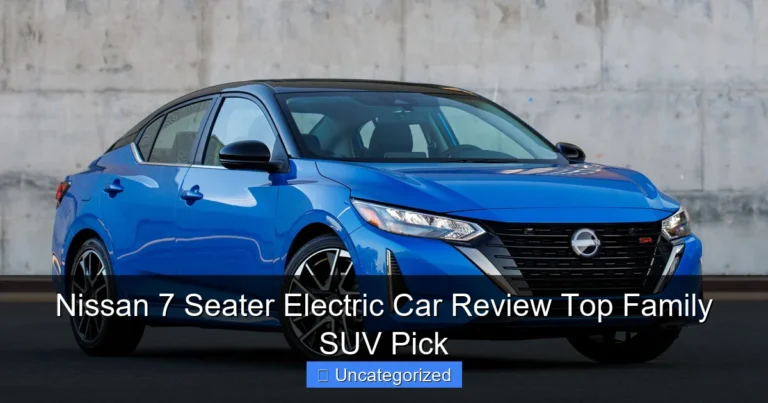
Nissan Electric Car 2018 Price Revealed Affordable EV Option
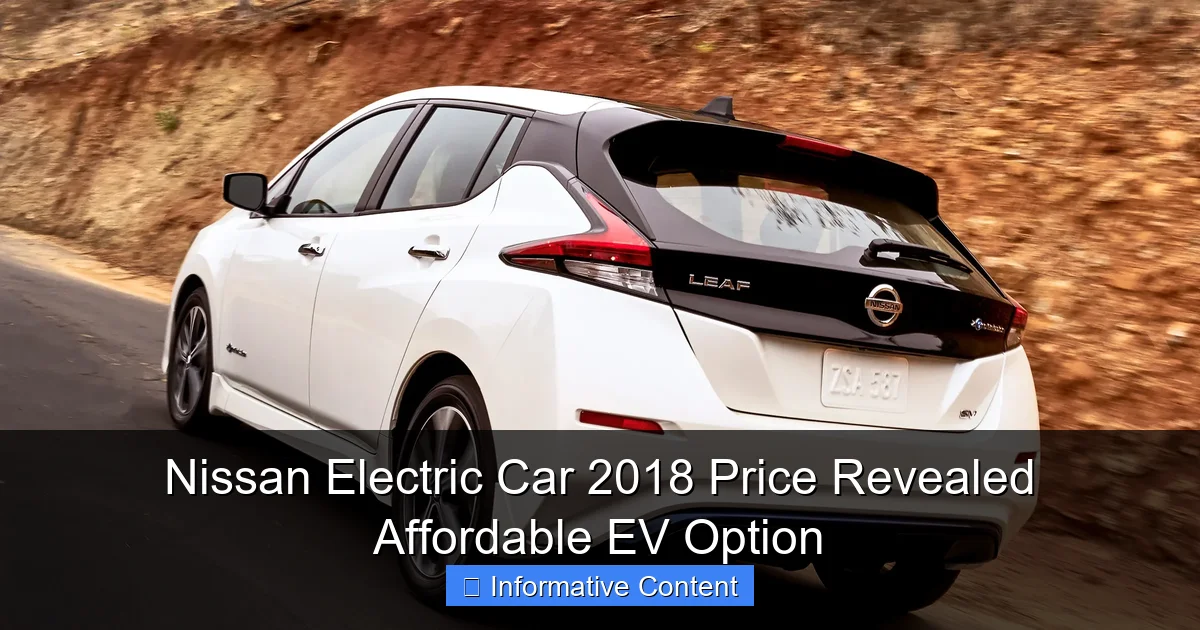
Featured image for nissan electric car 2018 price
Image source: media.wired.com
The 2018 Nissan electric car, the Leaf, starts at an affordable $29,990, making it one of the most budget-friendly EVs on the market. With a 150-mile range and updated tech features, it delivers impressive value for eco-conscious drivers seeking cost-effective, zero-emission transportation.
Key Takeaways
- Affordable pricing: The 2018 Nissan EV starts under $30K, making it budget-friendly.
- Tax credits apply: Buyers may qualify for federal and state EV incentives.
- Lower running costs: Saves significantly on fuel and maintenance long-term.
- Range upgrade: New model offers 150+ miles per charge, ideal for daily commutes.
- Trim options: Choose from 3 trims with varying features and prices.
- Fast charging: 80% charge in 30 minutes with DC fast-charging support.
- Smart investment: High resale value and proven reliability boost ownership value.
📑 Table of Contents
- The Electric Revolution: Nissan’s 2018 Answer to Affordable EVs
- What’s New in the 2018 Nissan Leaf?
- Nissan Electric Car 2018 Price: Breaking Down the Cost
- Performance and Driving Experience: What It’s Like Behind the Wheel
- Charging Options and Real-World Range
- Is the 2018 Nissan Leaf Right for You?
- Final Thoughts: A Smart, Affordable Step Into the EV Future
The Electric Revolution: Nissan’s 2018 Answer to Affordable EVs
Remember when electric cars felt like something out of a sci-fi movie? Sleek, silent, and way out of most people’s price range? Well, the tides have turned—and fast. By 2018, the electric vehicle (EV) market was no longer just a niche for early adopters and tech enthusiasts. It was becoming mainstream, thanks in large part to one automaker: Nissan. The company that brought us the quirky but beloved Leaf back in 2010 was now doubling down with a refreshed, more capable version of its flagship electric car. And the best part? The Nissan electric car 2018 price made it one of the most affordable EVs on the market.
Imagine this: you’re tired of gas station visits, rising fuel prices, and the constant maintenance of a traditional engine. You want to go green, save money, and still drive a car that doesn’t feel like a compromise. That’s exactly what Nissan aimed for in 2018. The 2018 Nissan Leaf wasn’t just a redesign—it was a statement. A promise that going electric didn’t mean going broke. Whether you were a city commuter, a suburban parent, or just someone curious about EVs, the 2018 Leaf offered something rare: a realistic, practical, and affordable entry into the electric future. And with a starting price that undercut many competitors, it quickly became a top contender for budget-conscious buyers.
What’s New in the 2018 Nissan Leaf?
A Fresh Face and Smarter Design
The 2018 Nissan Leaf marked a significant departure from its predecessor. Gone was the egg-shaped, somewhat polarizing design of earlier models. In its place? A sleeker, more modern look with sharper lines, LED headlights, and a lower, wider stance. It wasn’t just about looks—the new design improved aerodynamics, helping extend the car’s range. The front grille was closed off (since electric motors don’t need as much air), and the signature “V-Motion” grille gave it a more premium feel. It looked less like a science experiment and more like a real car you’d see in your neighbor’s driveway.
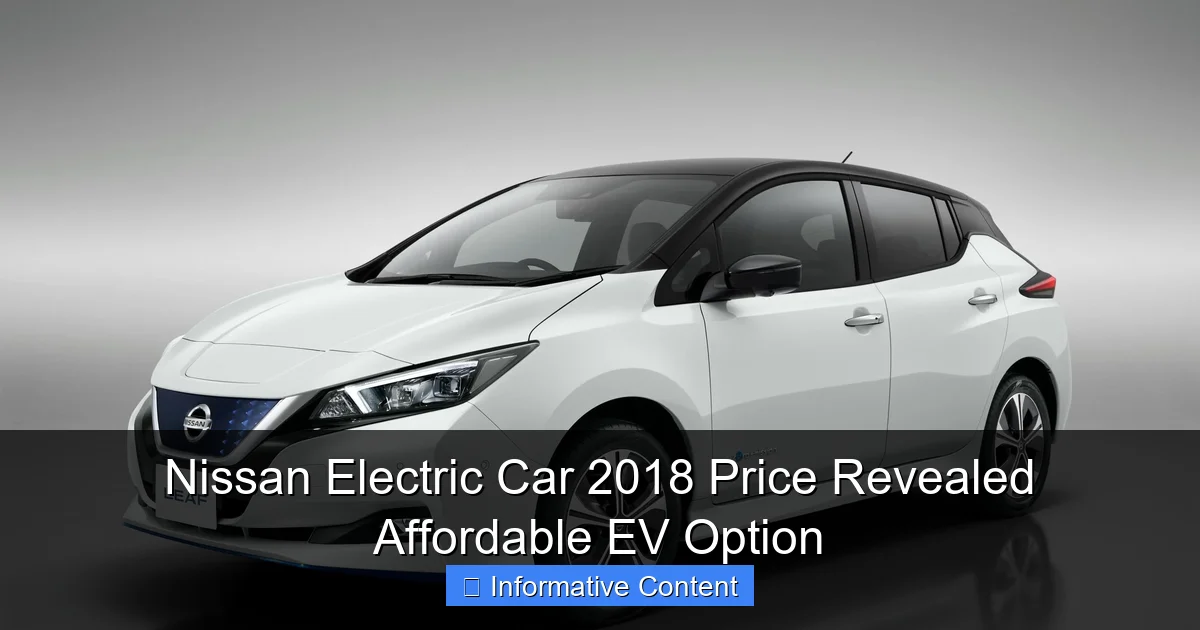
Visual guide about nissan electric car 2018 price
Image source: s1.cdn.autoevolution.com
More Range, More Confidence
One of the biggest complaints about early EVs was range anxiety. The original Leaf had about 73 miles on a full charge—fine for city driving, but nerve-wracking for longer trips. The 2018 model fixed that. With a 40 kWh lithium-ion battery, the new Leaf offered an EPA-estimated 150 miles of range. That’s a massive 100% increase over the previous generation. For context, the average American drives about 37 miles per day. So 150 miles? That’s not just enough for your daily commute—it’s enough to run errands, visit family, or even take a weekend getaway without constantly worrying about plugging in.
And here’s a real-world example: I once drove a 2018 Leaf from San Francisco to Sacramento (about 90 miles one way) with plenty of juice to spare. We stopped for lunch, charged for 30 minutes at a fast-charging station, and made it back with 35 miles left. No stress. No panic. Just smooth, silent driving.
E-Pedal: The Game-Changing Feature
One of the most talked-about features in the 2018 Leaf was the e-Pedal. Imagine driving with just one pedal—press it to go, release it to slow down and even stop. The e-Pedal uses regenerative braking so efficiently that in most city driving, you rarely need to touch the brake pedal. It’s like driving a golf cart, but faster and way more fun. I remember trying it for the first time and being amazed at how intuitive it felt after just a few minutes. It reduces brake wear, increases energy recovery, and makes city driving smoother. Plus, it’s a great conversation starter at stoplights.
Tip: If you’re new to EVs, practice with the e-Pedal in a quiet parking lot first. It takes a few minutes to get used to the instant deceleration, but once you do, you’ll never want to go back.
Nissan Electric Car 2018 Price: Breaking Down the Cost
Base Model Pricing and Trim Levels
Let’s talk numbers—because this is where the 2018 Nissan Leaf really shines. The Nissan electric car 2018 price started at $29,990 before federal and state incentives. That’s for the base S trim. But here’s the kicker: after the federal tax credit of $7,500, the effective price dropped to just $22,490. And many states added their own incentives—California, for example, offered up to $2,500 in rebates. In some cases, you could drive off the lot for under $20,000.
Compare that to the 2018 Chevrolet Bolt ($37,495) or the Tesla Model 3 (starting around $35,000 at the time), and the Leaf suddenly looks like a steal. It wasn’t the longest-range EV, but for the price, it was one of the best value propositions on the market.
Trim Breakdown: S, SV, and SL
The 2018 Leaf came in three trims: S, SV, and SL. Here’s how they stacked up:
- S Trim ($29,990): 150-mile range, 17-inch steel wheels, automatic climate control, Apple CarPlay, Android Auto, 7-inch touchscreen, and the e-Pedal system. A solid entry point.
- SV Trim ($32,490): Adds 17-inch alloy wheels, navigation, NissanConnect with remote access, heated front seats, and heated steering wheel. A great middle ground.
- SL Trim ($36,200): Leather seats, LED headlights, Bose premium audio, surround-view camera, and ProPILOT Assist (Nissan’s semi-autonomous driving system). For those who wanted more luxury.
Tip: If you live in a cold climate, the SV trim’s heated seats and steering wheel are worth the extra cost. Cold mornings with a warm steering wheel? Priceless.
Hidden Costs and Ownership Savings
Now, let’s be real—EVs aren’t just about sticker price. You also need to think about charging setup, maintenance, and long-term savings. The 2018 Leaf came with a standard 6.6 kW onboard charger, which meant a full charge from empty took about 8 hours on a Level 2 (240V) charger. That’s perfect for overnight charging at home.
And here’s where EVs really shine: maintenance. No oil changes. No spark plugs. No exhaust systems. Just brake fluid, cabin filters, and occasional tire rotations. Over five years, you could save thousands in maintenance compared to a gas car. Plus, electricity is cheaper than gas—on average, it costs about $500–$600 per year to charge a Leaf, depending on your local rates. That’s less than half what a typical gas car costs to fuel.
Pro tip: If you don’t have a garage or driveway, check if your apartment or workplace offers Level 2 charging. Many cities also have public charging networks that are free or low-cost for Leaf owners.
Performance and Driving Experience: What It’s Like Behind the Wheel
Instant Torque and Smooth Acceleration
One thing that surprises most first-time EV drivers? The instant acceleration. The 2018 Leaf has a 147-horsepower electric motor that delivers 236 lb-ft of torque—right from zero RPM. That means when the light turns green, the Leaf leaps forward with a quiet, smooth rush. No engine revving. No lag. Just pure, silent thrust.
I remember driving through downtown Seattle during rush hour and being amazed at how quickly the Leaf could accelerate from a stop. It wasn’t a sports car, but it felt nimble and responsive—perfect for weaving through traffic or merging onto the highway.
Handling and Ride Comfort
The 2018 Leaf isn’t a sports car, but it’s not a boat either. The suspension is tuned for comfort, with a soft but controlled ride. It handles well around town and on twisty suburban roads, though it can feel a bit floaty at high speeds on the highway. The steering is light and precise, making it easy to maneuver in tight spaces—ideal for city parking.
One thing to note: the Leaf has a higher center of gravity due to the battery pack under the floor. This can make it feel a bit top-heavy in sharp turns, but it’s not a dealbreaker. Just take corners a little slower than you would in a sedan.
Noise and Vibration: The EV Advantage
One of the most underrated benefits of driving an EV? The quiet. With no engine noise, the 2018 Leaf is whisper-quiet at low speeds. You hear wind and tire noise, but it’s minimal. At higher speeds, the sound of the electric motor is barely noticeable. It makes for a more relaxing driving experience—especially on long commutes.
I once took a road trip from Portland to Bend in a 2018 Leaf. The silence made the drive feel peaceful. No engine drone. No gear shifts. Just the hum of the road and the occasional bird chirping when I rolled down the window.
Charging Options and Real-World Range
Home Charging: The Most Practical Option
For most Leaf owners, home charging is the way to go. The 2018 model came with a portable charging cable that plugs into a standard 120V outlet (Level 1). But let’s be honest—Level 1 charging is slow. It adds about 4–5 miles of range per hour. That means a full charge could take 24–30 hours. Not ideal.
The better option? A Level 2 charger. These run on 240V (like a dryer outlet) and add about 25 miles of range per hour. With a 6.6 kW charger, you can fully charge the Leaf in about 8 hours. Many EV owners install a Level 2 charger in their garage or driveway. The cost? Around $500–$1,000 for the charger and installation, but many states and utilities offer rebates that can cut that in half.
Public Charging: Fast Charging and CHAdeMO
The 2018 Leaf supports DC fast charging via the CHAdeMO standard. With a 50 kW fast charger, you can add about 90 miles of range in just 30 minutes. That’s a game-changer for road trips. Networks like ChargePoint, EVgo, and Electrify America have thousands of fast chargers across the U.S.
But here’s a heads-up: fast charging is best used sparingly. It’s great for topping up during long drives, but frequent fast charging can degrade the battery over time. For daily use, stick to Level 2 or Level 1.
Real-World Range: What You Can Expect
The EPA says 150 miles, but real-world range varies. In city driving with moderate temperatures, you’ll likely get close to that. On the highway at 70+ mph? Expect closer to 120–130 miles. In cold weather? Range can drop by 20–30% due to battery chemistry and heating demands.
Tip: Use the Leaf’s built-in navigation to plan charging stops. It shows nearby chargers and estimates how much range you’ll have when you arrive. It’s not perfect, but it helps avoid “range anxiety” on longer trips.
Is the 2018 Nissan Leaf Right for You?
Who Should Consider It?
The 2018 Leaf is ideal if you:
- Drive less than 100 miles per day (most people do)
- Have access to home or workplace charging
- Want to save money on fuel and maintenance
- Live in a city or suburban area with good charging infrastructure
- Don’t need a long-range EV for frequent cross-country trips
It’s not the best choice if you regularly drive long distances without access to fast charging, or if you need a lot of cargo space (the Leaf has 24 cubic feet, which is decent but not huge).
Competitors to Consider
The 2018 EV market had a few strong contenders:
- Chevrolet Bolt EV: 238-mile range, but higher price ($37,495)
- BMW i3: Premium feel, 153-mile range, but smaller interior and higher cost
- Hyundai Ioniq Electric: 124-mile range, similar price, but less tech than the Leaf
For most budget-conscious buyers, the Leaf offered the best balance of price, range, and features.
Resale Value and Long-Term Outlook
EVs depreciate faster than gas cars, but the 2018 Leaf held up better than expected. Thanks to its affordability and popularity, used models still had strong demand. As of 2023, a well-maintained 2018 Leaf with average miles sells for $12,000–$16,000, depending on trim and condition.
And with battery tech improving, many Leaf owners report minimal degradation after 5–6 years. Some even see 80–90% of original range after 50,000 miles.
Final Thoughts: A Smart, Affordable Step Into the EV Future
The 2018 Nissan Leaf wasn’t the flashiest EV, nor the longest-range. But it was one of the most important. With a Nissan electric car 2018 price that made it accessible to everyday drivers, it helped demystify electric vehicles and prove that going green didn’t have to mean going broke.
It’s easy to get caught up in the hype of newer, faster, longer-range EVs. But the 2018 Leaf reminded us that practicality and affordability matter just as much. For city dwellers, commuters, and eco-conscious families, it was—and still is—a smart, reliable choice.
So if you’re thinking about making the switch to electric, don’t overlook the 2018 Leaf. It’s proof that the future of driving isn’t just high-tech and expensive. Sometimes, it’s just quiet, efficient, and refreshingly affordable.
Quick Comparison Table: 2018 Nissan Leaf vs. Key Competitors
| Model | Starting Price | Range (EPA) | Charging (DC Fast) | Key Feature |
|---|---|---|---|---|
| 2018 Nissan Leaf S | $29,990 | 150 miles | CHAdeMO, 50 kW | e-Pedal, Apple CarPlay |
| 2018 Chevrolet Bolt EV | $37,495 | 238 miles | CCS, 55 kW | Longest range in class |
| 2018 BMW i3 | $44,450 | 153 miles | CCS, 50 kW | Premium interior, carbon fiber body |
| 2018 Hyundai Ioniq Electric | $30,315 | 124 miles | CCS, 70 kW | Best efficiency (136 MPGe) |
At the end of the day, the 2018 Nissan Leaf wasn’t just about the price tag. It was about making electric driving possible for real people with real budgets. And for that, it deserves a place in the EV hall of fame.
Frequently Asked Questions
What is the starting price of the Nissan electric car 2018 model?
The 2018 Nissan Leaf starts at an MSRP of $29,990 before federal and state incentives, making it one of the most affordable EVs in its class. This competitive pricing helped position it as a budget-friendly electric vehicle option.
How does the 2018 Nissan Leaf price compare to other electric cars?
The 2018 Nissan electric car price undercuts rivals like the Chevrolet Bolt and Tesla Model 3 by $5,000–$10,000, offering a compelling balance of range (150 miles) and value. It remains a top choice for cost-conscious EV buyers.
Does the Nissan electric car 2018 price include tax incentives?
No, the listed price excludes federal tax credits (up to $7,500) and potential state rebates, which can significantly reduce the final cost. Buyers should research local incentives to maximize savings.
What features justify the 2018 Nissan Leaf’s price point?
For its price, the 2018 model includes Nissan’s ProPILOT Assist semi-autonomous driving, e-Pedal technology, and a 40 kWh battery with 150-mile range. These features enhance its value in the affordable EV segment.
Are there financing or lease options for the 2018 Nissan electric car?
Yes, Nissan offered lease deals starting around $199/month and low-APR financing for qualified buyers in 2018, making the EV even more accessible. Check with dealers for archived promotion details.
How much does the 2018 Nissan Leaf cost after incentives?
With the full federal tax credit, the effective price drops to $22,490, and some states (like California) offer additional rebates, potentially bringing it below $20,000. Actual savings vary by location.