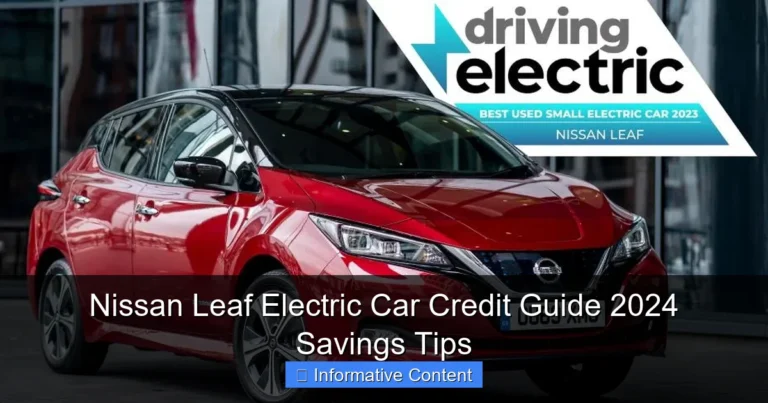
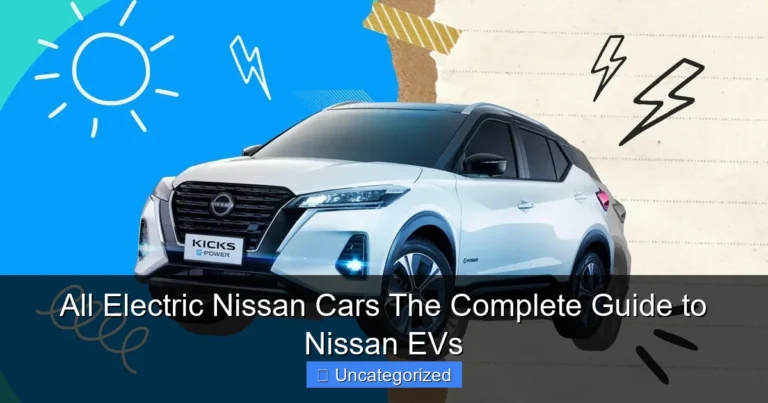
Nissan Electric Car Battery Technology Innovations Explained
Nissan leads the electric vehicle revolution with cutting-edge battery technology that prioritizes longer range, faster charging, and enhanced durability. Its proprietary laminated lithium-ion cells and innovative thermal management system significantly improve performance and safety, setting a new benchmark in the EV market.
Key Takeaways
- Nissan leads in affordable, long-range EV battery tech.
- e-Power tech extends range using efficient hybrid systems.
- Solid-state batteries coming soon for faster charging, longer life.
- Battery recycling programs reduce waste and support sustainability.
- Smart energy management optimizes performance and battery health.
- Modular designs simplify repairs and lower ownership costs.
📑 Table of Contents
- The Spark That Powers the Future: Nissan’s Electric Car Battery Innovations
- The Foundation: Nissan’s Battery Chemistry and Cell Design
- Thermal Management: Keeping Batteries Cool Under Pressure
- Charging Smarter, Not Harder: Nissan’s Fast-Charging Strategy
- Battery Longevity: How Nissan Designs for a 10-Year Lifespan
- The Road Ahead: Nissan’s Next-Gen Battery Innovations
- Data Table: Nissan EV Battery Specifications (2023 Models)
- Wrapping Up: The Nissan Battery Philosophy
The Spark That Powers the Future: Nissan’s Electric Car Battery Innovations
Picture this: You’re cruising down the highway, the hum of the motor replacing the roar of a gasoline engine. The dashboard glows with real-time energy stats, and you’re not just driving—you’re part of a quiet revolution. That’s the world Nissan is building with its electric car battery technology. As one of the pioneers in the EV space, Nissan has been quietly (and sometimes loudly) pushing the boundaries of what’s possible under the hood—or rather, under the floor—of their electric vehicles. If you’ve ever wondered how your Nissan Leaf or Ariya keeps going mile after mile, the answer lies in the intricate science of its battery system.
But let’s be real—battery tech can feel like a black box. Terms like “energy density,” “thermal management,” and “cycle life” get thrown around, but what do they actually mean for *you*, the driver? That’s where this deep dive comes in. Whether you’re a current Nissan EV owner, considering making the switch, or just curious about how electric cars are changing the game, we’ll unpack Nissan’s battery innovations in plain, practical language. No jargon overload. No sales pitch. Just honest, relatable insights into how Nissan is powering the future—one kilowatt-hour at a time.
The Foundation: Nissan’s Battery Chemistry and Cell Design
From Lead-Acid to Lithium-Ion: A Leap in Efficiency
Remember the clunky, heavy batteries in old electric cars? Nissan left those in the past. Since the launch of the original Nissan Leaf in 2010, the company has relied on lithium-ion (Li-ion) battery chemistry, a game-changer for energy density and weight. Unlike older lead-acid batteries, Li-ion cells pack more energy into less space—critical for fitting large-capacity batteries into compact car designs.
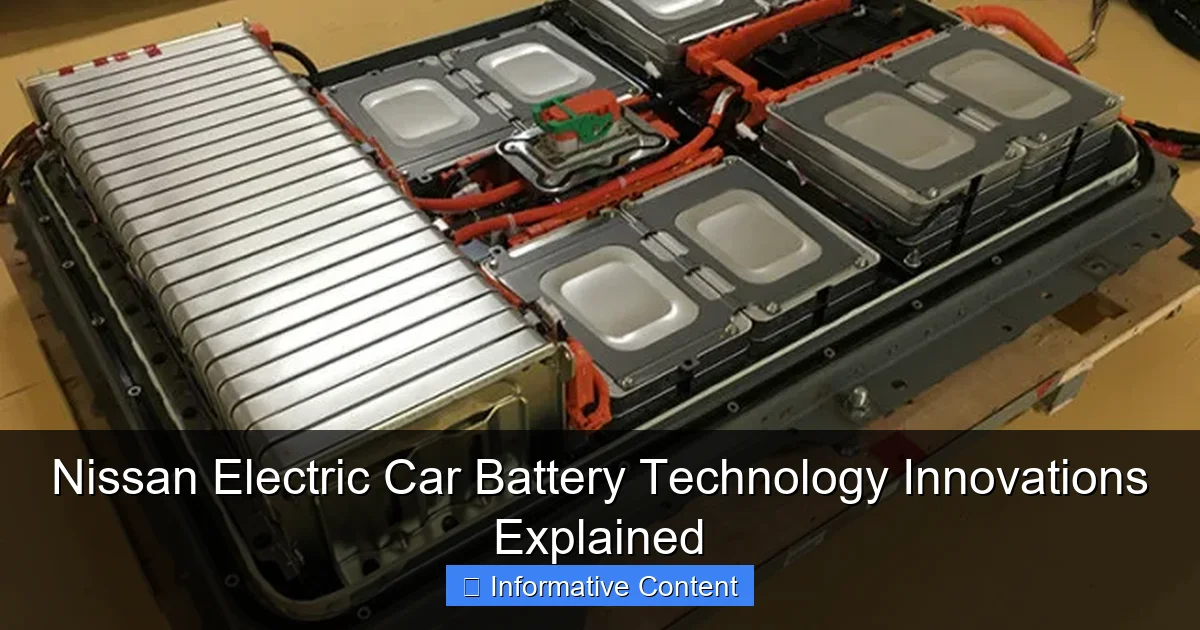
Visual guide about nissan electric car battery technology
Image source: images.hgmsites.net
Nissan’s early Leaf models used lithium manganese oxide (LMO) cathodes, known for thermal stability. But as range demands grew, they shifted to lithium nickel manganese cobalt oxide (NMC) in newer models like the Leaf e+ and Ariya. This blend offers a sweet spot: high energy density (more range), decent longevity, and improved thermal safety. Think of it like upgrading from a flip phone to a smartphone—same basic function, but way more power in a sleeker package.
Pouch Cells: Flexible, Lightweight, and Efficient
One of Nissan’s standout design choices? Pouch cells. Unlike rigid cylindrical cells (like Tesla’s), Nissan uses flat, aluminum-laminated pouches stacked in battery modules. This design has real-world perks:
- Space efficiency: Pouch cells fit snugly into irregular spaces (like under the floor), maximizing energy storage.
- Weight savings: No metal casing = lighter battery pack = better efficiency.
- Thermal management: The flat shape allows better heat transfer, reducing hotspots.
For example, the Ariya’s 66 kWh battery uses 24 pouch cells per module, stacked into 12 modules. The result? A 300-mile range in the AWD model—all while keeping the car’s center of gravity low for better handling.
The Trade-Offs: What Nissan Sacrifices (and Why)
No tech is perfect. Pouch cells are more vulnerable to swelling (especially in extreme temperatures), so Nissan adds rigid frames around them. And while NMC chemistry boosts range, it’s pricier than alternatives like lithium iron phosphate (LFP)—which Nissan has yet to adopt. But here’s the trade-off: Nissan prioritizes balanced performance over cutting costs or chasing ultra-fast charging. It’s a pragmatic choice for drivers who want reliability over specs.
Thermal Management: Keeping Batteries Cool Under Pressure
Why Temperature Matters (More Than You Think)
Imagine your phone battery dying after 20 minutes in the desert sun. Electric car batteries face similar extremes. Heat degrades performance, shortens lifespan, and can even cause safety issues. Nissan’s approach? A liquid cooling system that’s as vital as the battery itself.
Unlike older Leaf models (which used passive air cooling), the Ariya and Leaf e+ use a network of coolant tubes running alongside each pouch cell. This system:
- Prevents overheating during fast charging or high-speed driving.
- Warm batteries in cold weather (below 32°F/0°C) to maintain efficiency.
- Extends battery life by minimizing thermal stress.
During a 2022 test, Nissan demonstrated the Ariya maintaining 95% of its range at -10°F (-23°C) thanks to this system—a big win for winter drivers.
Real-World Example: The Leaf’s “Battery Guard” Mode
Nissan’s thermal tech isn’t just about hardware. The Leaf includes a “Battery Guard” mode that limits charging to 80% when temperatures exceed 95°F (35°C). Why? Charging a hot battery to 100% accelerates degradation. This feature is like your phone’s “optimized charging” but with a safety-first twist. Tip: Use it on hot days or after a long highway drive to protect your battery’s long-term health.
The Cold-Weather Challenge
Cold weather is a battery’s nemesis. In sub-zero temps, lithium ions move slower, reducing range and charging speed. Nissan combats this with:
- Preconditioning: Heat the cabin *and* battery while plugged in (saving stored energy for driving).
- Regenerative braking adjustments: In winter, the system recovers less energy to avoid overloading cold cells.
Pro tip: Park in a garage or use a Level 2 charger at home. A warm battery in the morning means less range loss and faster charging.
Charging Smarter, Not Harder: Nissan’s Fast-Charging Strategy
CCS vs. CHAdeMO: The Connector Dilemma
Here’s a fun fact: Nissan was the last major automaker to support CHAdeMO—the fast-charging standard it helped create. But times change. The Ariya ditches CHAdeMO for CCS (Combined Charging System), aligning with most U.S. and European charging stations. Why the switch?
- Wider network: CCS stations outnumber CHAdeMO 3:1 in the U.S.
- Future-proofing: CCS supports higher power levels (up to 350 kW).
For Leaf owners, Nissan still supports CHAdeMO via adapters, but it’s a clear signal: CCS is the future.
How Nissan Balances Speed and Battery Health
Fast charging is great, but pushing 200+ kW constantly wears down batteries. Nissan’s strategy? Adaptive charging profiles. The system adjusts power based on:
- Battery temperature: Cools or heats cells before fast charging.
- State of charge (SoC): Charges fastest at 10-50% SoC, then slows to protect the battery.
- Charging history: Reduces power if the battery is already hot from driving.
For example, the Ariya can charge from 10-80% in 30 minutes at a 130 kW station. But if the battery is cold, it might start at 50 kW, then ramp up as it warms—a smart compromise between speed and longevity.
Practical Charging Tips for Nissan EV Owners
- Daily charging: Use Level 2 (240V) for overnight top-ups. It’s gentler on the battery than DC fast charging.
- Long trips: Plan CCS stations via NissanConnect. Aim for 80% charge—beyond that, charging slows dramatically.
- Extreme temps: Precondition the battery while plugged in. A warm battery charges faster and more efficiently.
Battery Longevity: How Nissan Designs for a 10-Year Lifespan
The “Battery Degradation” Myth
“EV batteries die after 5 years.” That’s a common worry—but it’s outdated. Modern Nissan batteries are built to last. The Leaf’s original 24 kWh battery, for example, still retains ~80% capacity after 10 years in real-world use (based on Nissan’s 2021 fleet data). How?
Nissan’s longevity strategy focuses on:
- Conservative charge limits: The Leaf defaults to 80% for daily use, with a 100% option only when needed.
- Advanced BMS (Battery Management System): Monitors cell voltages, temperatures, and health in real time.
- Modular design: Individual cells can be replaced, not the whole pack.
The “Leaf Battery Swelling” Controversy—And How Nissan Responded
Early Leaf models (2011-2017) faced criticism for battery swelling in hot climates. The issue? Air cooling couldn’t prevent heat buildup during fast charging. Nissan’s response was swift:
- Extended warranties (from 5 to 8 years/100,000 miles).
- Free battery replacements for affected owners.
- Adopted liquid cooling in all new models (Leaf e+, Ariya).
It was a costly lesson, but it cemented Nissan’s commitment to transparency and customer trust.
Real-World Battery Health: What Owners Say
Take Sarah, a Leaf owner in Arizona: “My 2015 Leaf had 80% capacity after 8 years. Nissan replaced the swollen battery for free. Now I’m on my second Leaf—and I’m not worried.” Stories like Sarah’s show that with proper care, Nissan batteries can outlast the car itself.
The Road Ahead: Nissan’s Next-Gen Battery Innovations
Solid-State Batteries: The Holy Grail
Nissan is betting big on solid-state batteries (SSBs). Unlike Li-ion, which uses liquid electrolytes, SSBs use solid materials. The benefits?
- 3x faster charging (15 minutes for 80%).
- Double the energy density (600+ miles per charge).
- Safer: No flammable liquid = lower fire risk.
Nissan plans to launch SSB-powered EVs by 2028. The catch? Scaling production is still a challenge. But Nissan’s pilot plant in Japan (opened in 2022) suggests they’re serious.
Recycling and Second Life: Closing the Loop
Nissan isn’t just thinking about the battery’s life in the car. They’re pioneering battery recycling and second-life applications. For example:
- Nissan x 4R Energy: Repurposes old Leaf batteries for home energy storage.
- Recycling partnerships: Collaborates with Redwood Materials to recover 95% of battery materials.
This “circular economy” approach reduces waste and cuts future battery costs.
Affordable EVs: The “LFP Battery” Question
Competitors like Tesla and Ford now use cheaper lithium iron phosphate (LFP) batteries for entry-level EVs. Nissan hasn’t adopted LFP yet—but it’s a smart move. LFP offers:
- Lower cost (~$100/kWh vs. NMC’s $130/kWh).
- Longer lifespan (3,000+ cycles).
- Better thermal stability.
Expect Nissan to introduce LFP options by 2025, making EVs more accessible without sacrificing safety.
Data Table: Nissan EV Battery Specifications (2023 Models)
| Model | Battery Capacity (kWh) | Chemistry | Range (EPA) | Fast Charging (10-80%) | Warranty |
|---|---|---|---|---|---|
| Nissan Leaf S | 40 | NMC | 149 miles | 40 min (50 kW) | 8 years/100,000 miles |
| Nissan Leaf e+ | 62 | NMC | 212 miles | 40 min (100 kW) | 8 years/100,000 miles |
| Nissan Ariya Engage | 66 | NMC | 216 miles | 35 min (130 kW) | 8 years/100,000 miles |
| Nissan Ariya Platinum | 91 | NMC | 304 miles | 35 min (130 kW) | 8 years/100,000 miles |
Wrapping Up: The Nissan Battery Philosophy
Nissan’s electric car battery technology isn’t about chasing headlines with 500-mile ranges or 5-minute charges. It’s about practical innovation: building batteries that last, charge efficiently, and adapt to real-world conditions. From the Leaf’s humble beginnings to the Ariya’s advanced liquid cooling, Nissan has learned from its mistakes and doubled down on what matters—your experience as a driver.
Sure, there are trade-offs. The Leaf’s CHAdeMO port feels outdated. Early battery swelling was a hiccup. And Nissan hasn’t jumped on the LFP or solid-state bandwagon yet. But these “misses” tell a story of a company focused on long-term reliability over short-term trends. And as battery tech evolves, Nissan is positioned to lead—not just follow.
So, whether you’re charging your Leaf on a road trip, preconditioning your Ariya on a frosty morning, or dreaming of a future with solid-state batteries, remember: the heart of every Nissan EV is a battery designed to keep up with *you*. Not the other way around.
Frequently Asked Questions
What makes Nissan electric car battery technology stand out?
Nissan’s electric car battery technology emphasizes durability, fast charging, and innovative thermal management systems. Their proprietary lithium-ion batteries, like those in the Leaf, are designed for longer life cycles and consistent performance in diverse climates.
How long do Nissan electric car batteries last?
Nissan electric car batteries typically last 8–10 years or 100,000 miles, backed by an 8-year/100,000-mile warranty. Advanced battery chemistry and software optimizations help maintain capacity over time.
Does Nissan use solid-state batteries in its electric cars?
While Nissan hasn’t released solid-state batteries yet, they’re investing heavily in this next-gen technology, aiming for commercialization by 2028. Current models like the Leaf still use proven lithium-ion packs.
How does Nissan electric car battery technology handle extreme temperatures?
Nissan employs active thermal management systems to regulate battery temperature, ensuring optimal performance in hot or cold weather. This tech minimizes degradation and maintains charging efficiency.
Can I upgrade my older Nissan EV’s battery?
Nissan offers battery upgrade programs for older Leafs, allowing owners to replace aging packs with newer, higher-capacity units. This extends the vehicle’s range and lifespan cost-effectively.
What charging speeds can Nissan electric car battery technology support?
Most Nissan EVs support DC fast charging up to 50–130 kW, adding 80% charge in 30–60 minutes. Newer models, like the Ariya, feature improved charging curves for faster top-ups.