Nissan Electric Car Case Study Reveals Key Insights

Featured image for nissan electric car case study
Image source: mir-s3-cdn-cf.behance.net
Nissan’s electric car case study reveals how strategic innovation and customer-centric design propelled the Leaf to global EV leadership. It highlights key insights like battery affordability breakthroughs and infrastructure partnerships that transformed market adoption. This roadmap offers actionable lessons for automakers navigating the electric transition.
Key Takeaways
- Nissan leads in affordable EV innovation with proven market success.
- Battery longevity is achievable with proper thermal management systems.
- Charging speed improvements are critical for wider consumer adoption.
- Government incentives significantly boost EV sales and market penetration.
- Consumer trust grows through transparent real-world performance data.
- Software updates enhance vehicle performance and user experience remotely.
📑 Table of Contents
- The Rise of an Electric Pioneer: Nissan’s Bold Move
- From Concept to Car: The Birth of the Nissan Leaf
- Scaling Up: Global Expansion and Market Challenges
- Technology Evolution: Batteries, Software, and Charging
- Customer Experience: Ownership, Service, and Community
- Looking Ahead: The Ariya and Nissan’s Future
- Data Snapshot: Nissan Leaf vs. Key Competitors
- Final Thoughts: What the Nissan Case Study Teaches Us
The Rise of an Electric Pioneer: Nissan’s Bold Move
Let me take you back to a time when the idea of driving an electric car still felt like science fiction. Gas-guzzling sedans ruled the roads, and hybrids were the most adventurous thing on the market. Then, in 2010, Nissan did something unexpected: they launched the Nissan Leaf, the world’s first mass-market electric vehicle (EV). No fanfare, no over-the-top promises—just a practical, affordable, and reliable car that quietly changed the game. I remember seeing my first Leaf at a local dealership. It looked like any other compact hatchback, but under the hood, it was a revolution.
Fast forward to today, and the Nissan electric car case study has become a fascinating story of innovation, challenges, and lessons learned. From early adopters who braved range anxiety to global expansion and evolving battery tech, Nissan’s journey isn’t just about selling cars. It’s about how a legacy automaker navigated the shift to electrification while keeping one foot in the past and the other in the future. Whether you’re an EV enthusiast, a business leader studying disruption, or just curious about what it takes to go electric, Nissan’s story offers real-world insights that go far beyond the dashboard.
From Concept to Car: The Birth of the Nissan Leaf
Why Nissan Took the Leap
Back in the late 2000s, Nissan was facing a crossroads. Gas prices were volatile, environmental concerns were growing, and competitors like Toyota were already making waves with hybrids. But Nissan saw a gap: no one had built a truly affordable, all-electric car for everyday drivers. While Tesla was focusing on luxury (and high price tags), Nissan aimed for the masses. Their mission? Create an EV that didn’t require a six-figure budget or a tech genius to operate.
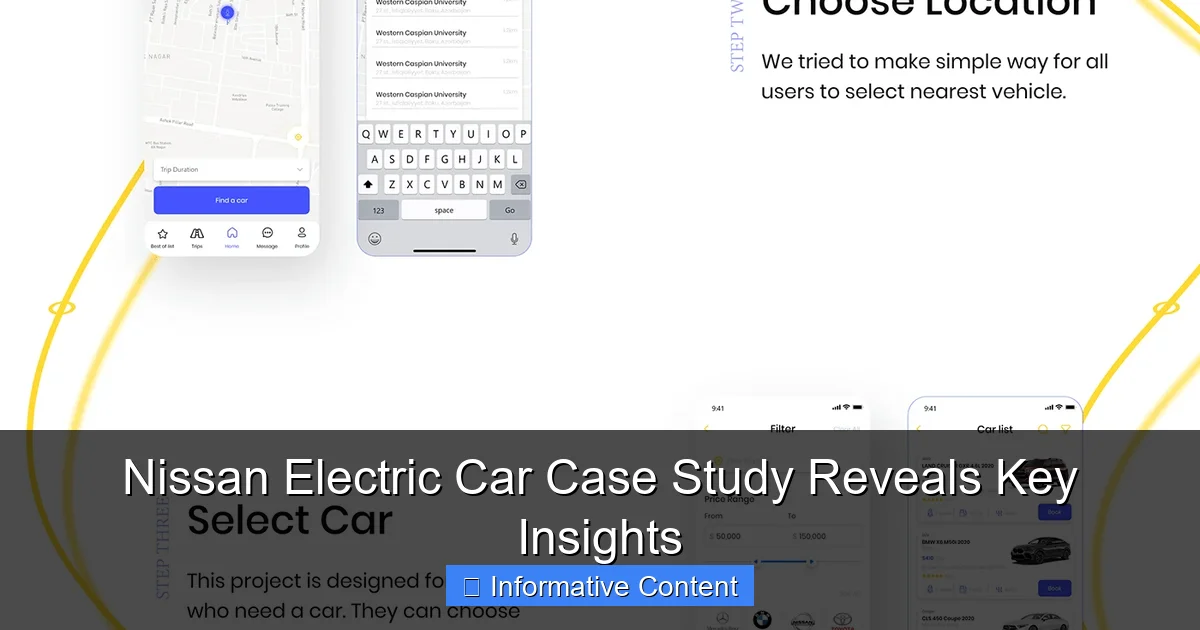
Visual guide about nissan electric car case study
Image source: mir-s3-cdn-cf.behance.net
Carlos Ghosn, then CEO of Nissan, famously declared, “The electric car is not a dream. It’s a reality.” And he backed it up with a $4 billion investment. The goal was simple: launch the Nissan Leaf as a zero-emission vehicle with a 100-mile range—enough for most daily commutes. It wasn’t about being the fastest or flashiest. It was about being accessible.
The Design and Engineering Behind the Leaf
The Leaf’s design was intentionally understated. No aggressive grille, no roaring engine. Instead, Nissan focused on aerodynamics, energy efficiency, and user-friendliness. The car had a drag coefficient of just 0.28, which helped maximize range. Under the hood (or rather, under the floor), a 24 kWh lithium-ion battery pack powered a 107-horsepower electric motor. Charging was straightforward: plug into a standard 120V outlet (Level 1) or a 240V home charger (Level 2), and you could get an 80% charge in about 30 minutes with a CHAdeMO fast charger—something rare back then.
One clever feature was the “Eco Mode,” which softened acceleration to extend range. The dashboard even showed real-time energy use, encouraging drivers to adopt efficient habits. Think of it as a gentle nudge toward eco-conscious driving. For example, my neighbor, who bought a 2013 Leaf, told me he started coasting to stops just to see the energy meter go green. Small changes, big impact.
Early Market Reception and Adoption
When the Leaf launched in December 2010, it sold out in the U.S. within weeks. Over 200,000 units were sold globally by 2014. But it wasn’t all smooth sailing. Early adopters faced challenges: sparse charging infrastructure, battery degradation in hot climates, and a learning curve for maintenance (no oil changes, but battery health monitoring was new). Still, Nissan’s decision to offer a battery lease option (in some markets) helped ease fears. For $199/month, drivers could avoid the upfront cost of the battery and get free replacements if capacity dropped below 70%.
Tip: If you’re considering an older EV, always check the battery health. A simple OBD-II scanner can tell you the state of charge and degradation level. For a 2013 Leaf, anything above 70% capacity is decent.
Scaling Up: Global Expansion and Market Challenges
Entering International Markets
Nissan didn’t stop at the U.S. and Japan. By 2011, the Leaf was available in Europe, Canada, and Australia. In Norway, where EV incentives were generous (tax breaks, free tolls, charging stations), the Leaf became a top seller. By 2015, Norway had over 20% of new car sales as EVs—and Nissan led the pack.
But expansion brought new hurdles. In colder climates like Sweden, battery performance dropped in winter. Nissan responded by introducing a heat pump in later models, which reduced energy loss for cabin heating. In hotter regions like the UAE, they added battery thermal management systems to prevent overheating. It was a lesson in adapting to local needs—not just selling a one-size-fits-all product.
Competition Heats Up: The Rise of Tesla and Others
By 2015, Tesla’s Model S was stealing headlines with its 265-mile range and sleek design. Meanwhile, Chevy launched the Bolt with a 238-mile range at a similar price. Suddenly, the Leaf’s 84-mile range (2011–2015 models) felt outdated. Nissan’s first-mover advantage was fading.
The company had to pivot. In 2016, they released the Leaf 2.0 with a 30 kWh battery, boosting range to 107 miles. Then, in 2017, the Leaf e+ arrived with a 40 kWh battery and 150-mile range. Still, it lagged behind rivals. The Nissan electric car case study here highlights a key lesson: innovation must be continuous. Being first doesn’t guarantee staying first.
Supply Chain and Production Lessons
Building EVs at scale isn’t just about design—it’s about logistics. Nissan’s Sunderland plant in the UK became the largest EV factory in Europe, producing over 100,000 Leafs annually. But supply chain disruptions (like the 2011 Japan earthquake) exposed vulnerabilities. For instance, a shortage of lithium-ion battery cells delayed shipments by months.
Nissan learned to diversify suppliers and invest in battery R&D. They partnered with NEC to co-develop battery tech and later invested in Envision AESC, a battery manufacturer. This vertical integration helped stabilize production and reduce costs over time.
Technology Evolution: Batteries, Software, and Charging
Battery Advancements and Lifespan
Battery tech is the heart of any EV, and Nissan’s journey reflects broader industry trends. Early Leafs used air-cooled batteries, which were cheaper but prone to degradation in extreme temperatures. After complaints from hot-climate owners (e.g., Phoenix drivers saw 30% capacity loss in 3 years), Nissan switched to liquid cooling in 2019.
The Leaf e+ (2019) introduced a 62 kWh battery with 226 miles of range—finally competitive with the Bolt and Tesla Model 3. But there’s a trade-off: larger batteries are heavier and more expensive. Nissan’s solution? A modular design that allows future upgrades without replacing the entire pack. For example, the 2023 Leaf offers battery health monitoring via a smartphone app, so owners can track degradation and plan replacements.
Tip: To maximize battery life, avoid frequent fast charging (use it only when necessary) and keep the charge between 20% and 80% for daily use.
Software and Connectivity Upgrades
Early Leafs had basic infotainment—Bluetooth, a small screen, and no navigation. Today’s models come with NissanConnect, a system that integrates Apple CarPlay, Android Auto, and real-time charging station maps. The 2023 Leaf even has over-the-air (OTA) updates, a feature once exclusive to Tesla.
One standout feature is e-Pedal, which lets drivers accelerate, decelerate, and stop using just one pedal (like regenerative braking on steroids). It’s perfect for city driving. I tried it in a test drive and was surprised how quickly I adapted—no more switching between gas and brake pedals in stop-and-go traffic.
Charging Infrastructure and Partnerships
Range anxiety isn’t just about the car—it’s about where you can charge. Nissan addressed this by investing in charging networks. In the U.S., they partnered with EVgo to offer free fast charging for Leaf owners (2019–2023). In Europe, they supported the “Quick Charge” network, adding over 1,000 CHAdeMO stations.
But here’s the catch: CHAdeMO is fading in popularity. Tesla’s Supercharger network and CCS (Combined Charging System) are now industry standards. Nissan’s newer EVs (like the Ariya) use CCS, but older Leafs still rely on CHAdeMO. This creates compatibility issues. For instance, a 2018 Leaf can’t use a Tesla Supercharger without an adapter.
Tip: If you own a CHAdeMO-equipped Leaf, always carry a portable adapter. They cost around $100 and can save you in emergencies.
Customer Experience: Ownership, Service, and Community
Real-World Ownership Stories
To understand Nissan’s impact, talk to owners. Take Sarah, a teacher from Portland, who bought a 2017 Leaf for her 40-mile daily commute. “It’s saved me $1,200 a year on gas,” she says. “And I love not having oil changes or exhaust fumes.” But she admits winter range drops to 80 miles, so she plans longer trips carefully.
Then there’s Raj, a rideshare driver in San Francisco, who switched from a Prius to a 2022 Leaf e+. “The lower maintenance costs are huge,” he notes. “No engine, no transmission—just brakes and tires.” But he wishes the infotainment system was faster. “The screen lags sometimes,” he says. “Not a dealbreaker, but annoying.”
Service and Maintenance Insights
EVs are simpler to maintain, but not maintenance-free. Nissan offers a 5-year/60,000-mile bumper-to-bumper warranty and an 8-year/100,000-mile battery warranty. However, some owners report issues with 12V auxiliary batteries (which power lights, locks, etc.). Unlike gas cars, EVs drain the 12V battery if left idle for weeks.
Tip: If you’re leaving your Leaf unused for a month or more, connect it to a trickle charger or drive it weekly to keep the 12V battery healthy.
Building a Community: Nissan’s EV Ecosystem
Nissan fostered a strong owner community through forums, events, and loyalty programs. The “Leaf Owners Club” in the U.S. has over 50,000 members who share tips, organize group drives, and advocate for better charging access. Nissan even created a “Leaf Ambassador” program, where owners test new features and provide feedback.
This community-driven approach helped Nissan refine its products. For example, early complaints about poor cabin heating led to the heat pump upgrade in 2019. It’s a win-win: customers feel heard, and Nissan gets real-world data.
Looking Ahead: The Ariya and Nissan’s Future
Introducing the Ariya: Nissan’s Next-Gen EV
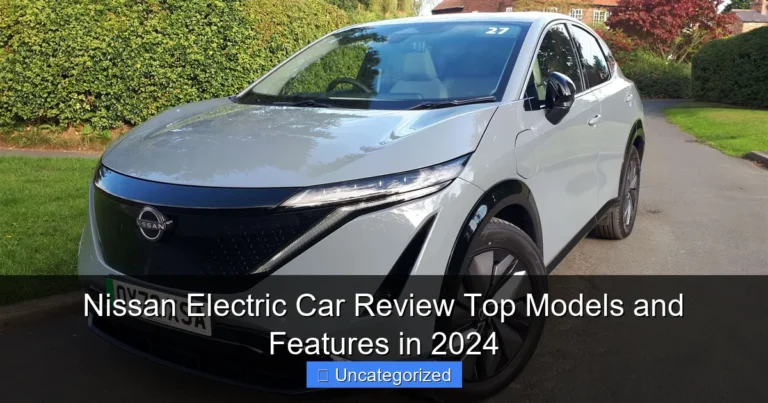
In 2022, Nissan launched the Ariya, a crossover SUV that marks a new chapter. With up to 300 miles of range, a 0–60 mph time of 5.1 seconds, and a minimalist interior, it’s Nissan’s answer to the Tesla Model Y and Ford Mustang Mach-E. The Ariya uses a new CMF-EV platform, allowing for better weight distribution and more interior space.
One innovative feature is ProPILOT Assist 2.0, a semi-autonomous driving system that works on highways. It’s not full self-driving, but it reduces driver fatigue on long trips. I test-drove an Ariya in Colorado and was impressed by the smooth ride and responsive steering. It feels like a modern EV—not just an upgraded Leaf.
Investing in the Future: Solid-State Batteries
Nissan is betting big on solid-state batteries (SSBs), which promise faster charging, longer range, and improved safety. They plan to launch SSB-powered EVs by 2028. Unlike liquid electrolytes in current batteries, SSBs use solid materials, reducing fire risk and enabling denser energy storage.
This could be a game-changer. Imagine a Nissan EV with 500 miles of range and 10-minute charging. But it’s not without challenges: SSBs are expensive and hard to manufacture at scale. Nissan’s partnership with NASA and universities is helping accelerate development.
Lessons from the Nissan Electric Car Case Study
Nissan’s journey offers three key takeaways:
- Start early, but keep evolving: First-mover advantage is valuable, but it’s not enough. Continuous innovation is critical.
- Adapt to local needs: A car that works in Norway may fail in Arizona. Customize for climate, infrastructure, and culture.
- Listen to customers: Community feedback drives real improvements. Don’t just sell cars—build relationships.
Data Snapshot: Nissan Leaf vs. Key Competitors
| Model | Year | Battery (kWh) | Range (mi) | Charging (80% in mins) | Price (USD) |
|---|---|---|---|---|---|
| Nissan Leaf S | 2023 | 40 | 149 | 40 (Level 2) | $28,040 |
| Nissan Leaf SV Plus | 2023 | 60 | 212 | 45 (Level 2) | $36,040 |
| Chevy Bolt EV | 2023 | 65 | 247 | 30 (DC Fast) | $26,500 |
| Tesla Model 3 RWD | 2023 | 60 | 272 | 15 (Supercharger) | $40,240 |
| Ford Mustang Mach-E | 2023 | 70 | 247 | 45 (DC Fast) | $42,995 |
Final Thoughts: What the Nissan Case Study Teaches Us
The Nissan electric car case study is more than a story about a car. It’s a blueprint for how traditional companies can reinvent themselves in a fast-changing world. Nissan didn’t just build an EV—they built a culture of experimentation, adaptation, and customer focus. They stumbled (remember the slow infotainment?), but they learned and improved.
For consumers, the takeaway is clear: EVs are here to stay, and Nissan offers a solid entry point. The Leaf is practical, affordable, and backed by a decade of real-world data. For businesses, the lesson is about agility. Disruption isn’t a one-time event; it’s a continuous process. And for anyone curious about the future of transport, Nissan’s journey proves that progress isn’t always flashy—it’s often quiet, persistent, and driven by real people solving real problems.
So, the next time you see a Nissan Leaf zipping silently down the road, remember: it’s not just a car. It’s a case study in courage, innovation, and the power of starting before you’re ready.
Frequently Asked Questions
What makes the Nissan electric car case study unique compared to other EV manufacturers?
The Nissan electric car case study stands out due to Nissan’s pioneering role with the Leaf, the world’s first mass-market EV, and its focus on affordability and real-world urban adoption. It also highlights challenges like charging infrastructure and battery degradation, offering practical lessons for the industry.
How has Nissan addressed range anxiety in its electric car strategy?
Nissan tackled range anxiety by improving battery technology across Leaf generations, offering longer-range options like the Leaf e+, and partnering with charging networks. The case study reveals how strategic partnerships and software updates helped boost consumer confidence.
What key insights does the Nissan electric car case study reveal about consumer adoption?
The case study shows that price, charging convenience, and education are critical for mainstream EV adoption. Nissan’s focus on leasing options and government incentives also proved effective in early markets like Japan and Europe.
How does Nissan’s approach to battery sustainability appear in the case study?
The case study details Nissan’s “second-life” battery programs, repurposing used Leaf batteries for energy storage. This circular economy strategy reduces waste and aligns with global sustainability goals.
What challenges did Nissan face in scaling its electric car production, according to the case study?
The study identifies supply chain bottlenecks for batteries and slower-than-expected charging infrastructure growth as major hurdles. It also notes competition from Tesla and legacy automakers as a pressure point.
Can the Nissan electric car case study inform future EV policy decisions?
Yes, the case study provides data on effective government subsidies, public-private charging partnerships, and consumer behavior trends. Policymakers can use these insights to design better incentives and infrastructure plans.