Nissan Electric Car Charging Tips for Faster Smoother Rides
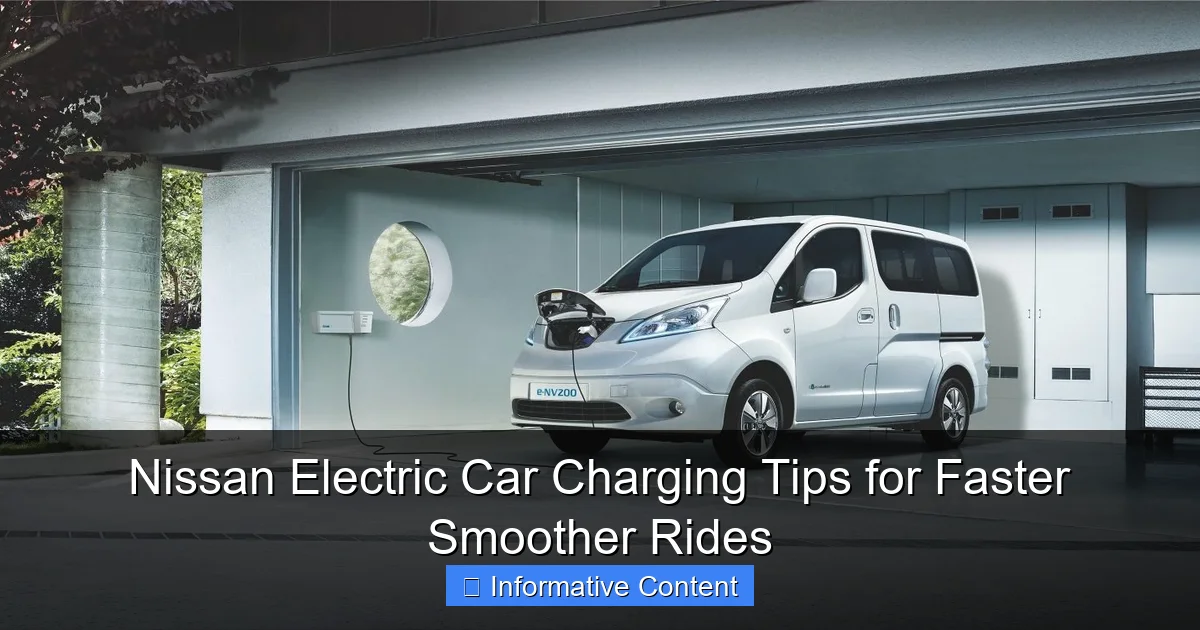
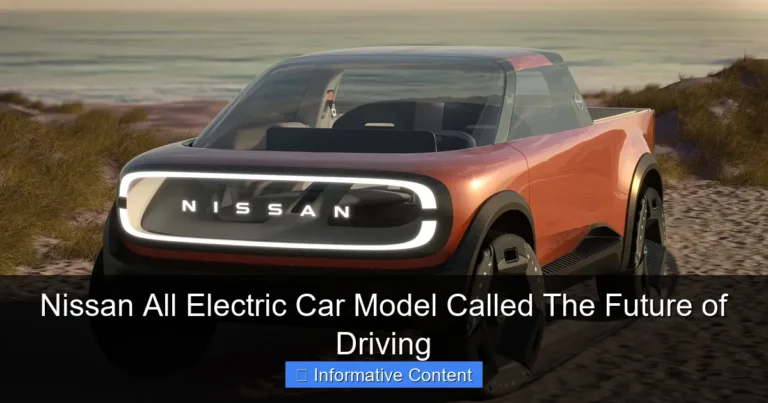
Featured image for nissan electric car charging
Image source: www-europe.nissan-cdn.net
Maximize your Nissan electric car’s charging speed by using Level 3 DC fast chargers whenever possible, especially on long trips, to cut charging time significantly. Precondition the battery while plugged in to ensure optimal charging efficiency and extend battery life, leading to smoother, more reliable performance on every journey.
Key Takeaways
- Plan charging stops: Use apps to locate fast chargers along your route.
- Precondition the battery: Warm it before charging for faster speeds.
- Use Level 3 chargers: Opt for DC fast charging when possible.
- Charge to 80%: Maximize speed and battery health by avoiding full charges.
- Schedule off-peak charging: Save money and reduce grid strain overnight.
📑 Table of Contents
- Why Charging Your Nissan Electric Car the Right Way Matters
- Understanding Your Nissan’s Charging Capabilities
- Optimizing Home Charging for Maximum Efficiency
- Mastering Public and Fast Charging
- Extending Battery Life Through Smart Charging Habits
- Planning Long Trips with Confidence
- Data Table: Nissan Charging Speeds and Compatibility
- Final Thoughts: Smoother Rides Start with Smarter Charging
Why Charging Your Nissan Electric Car the Right Way Matters
Let’s be honest—owning an electric car is exciting. You’ve traded gas station runs for silent drives, tailpipe emissions for cleaner air, and oil changes for… well, not much at all. But with that shift comes a new kind of dependency: charging. If you drive a Nissan electric car—whether it’s the Nissan LEAF, the newer Nissan ARIYA, or a future model—charging isn’t just a routine; it’s a rhythm that shapes your entire experience.
I remember the first time I took my LEAF on a weekend getaway. I’d planned everything: the route, the charging stops, even the playlist. But halfway through, I hit a snag—a slow public charger, a confusing app, and a 45-minute wait that turned my smooth ride into a stressful crawl. That moment taught me a hard truth: charging isn’t just about plugging in. It’s about planning, timing, and knowing your car’s quirks. And if you’re not careful, it can turn your eco-friendly dream into a range-anxiety nightmare.
The good news? With the right Nissan electric car charging habits, you can avoid those hiccups. Whether you’re a new EV owner or a seasoned driver, these tips will help you charge faster, more efficiently, and with far less stress. From home setup to public networks, battery health to smart charging tricks, we’ll cover everything you need to know to keep your Nissan running smoothly—and you smiling behind the wheel.
Understanding Your Nissan’s Charging Capabilities
Know Your Battery and Charging Levels
Every Nissan electric car has a specific battery capacity and charging compatibility. The LEAF (especially the 40 kWh and 62 kWh models) and the ARIYA (with 63 kWh to 87 kWh options) differ in how fast they can charge and what type of chargers they support.
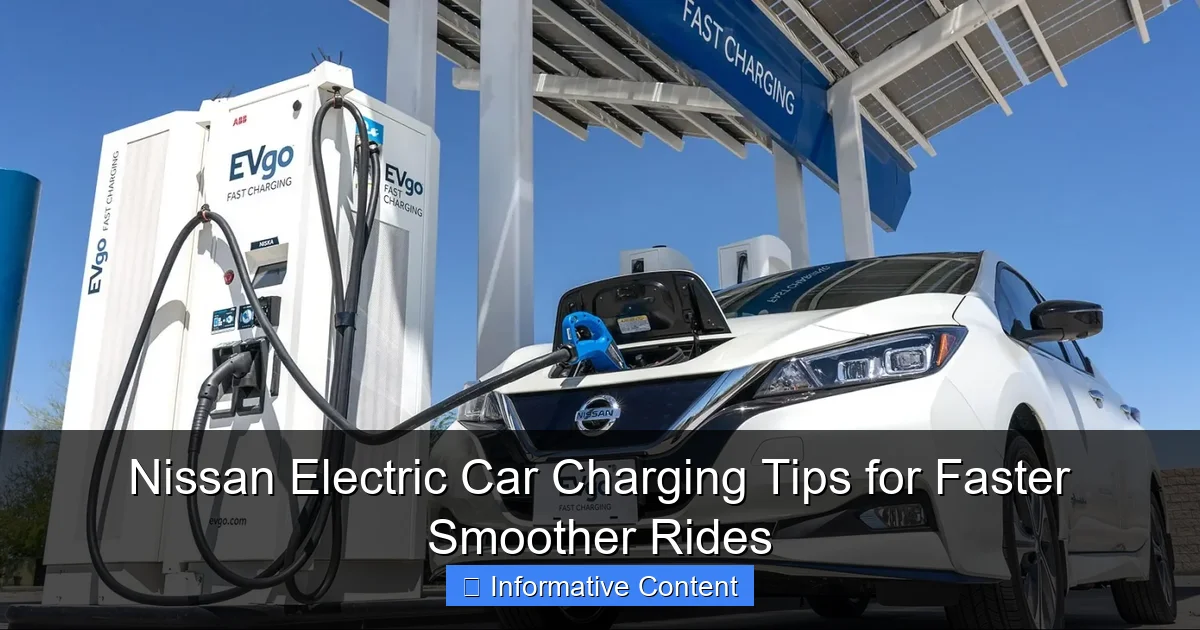
Visual guide about nissan electric car charging
Image source: electriccarspedia.com
Let’s break it down:
- Level 1 Charging (120V): This is your standard household outlet. It’s slow—about 4–5 miles of range per hour. Great for overnight top-ups, but not ideal for daily driving if you’re covering more than 40 miles a day.
- Level 2 Charging (240V): Most home chargers and public stations use this. It delivers 10–30 miles of range per hour, depending on your car and the charger. For example, the ARIYA with a 7.2 kW onboard charger can add ~25 miles per hour.
- DC Fast Charging (Level 3, 480V+): This is where the magic happens. The LEAF supports up to 50 kW (older models) or 100 kW (LEAF Plus), while the ARIYA can go up to 130 kW. That means you can get 80% charge in 30–45 minutes under ideal conditions.
Pro tip: Always check your car’s maximum charge rate. Plugging a 100 kW-capable LEAF Plus into a 150 kW charger won’t speed things up—your car will only draw what it can handle. Same with the ARIYA: it won’t benefit from a 350 kW ultra-fast charger beyond its 130 kW limit.
Charging Connector Types: CHAdeMO vs. CCS
This is where things get a bit technical—but don’t worry, it’s easier than it sounds. Nissan has used two different fast-charging standards:
- CHAdeMO: Used on the LEAF and older models. It’s been around for over a decade but is slowly being phased out in North America. Many newer fast chargers still support it, but coverage is shrinking.
- CCS (Combined Charging System): The ARIYA uses CCS, which is now the dominant standard in the U.S. and Europe. It combines AC and DC charging in one port and is supported by most modern networks like Electrify America, EVgo, and ChargePoint.
Here’s a real-world example: I once tried to charge my LEAF at a new Electrify America station. The screen said “CHAdeMO available,” but the cable was too thick to fit. I had to drive 10 minutes to the next station. Lesson learned: always check connector compatibility before heading out. Use apps like PlugShare or ChargeHub to filter by connector type.
Onboard Charger Limits: The Hidden Factor
Even if a fast charger delivers 100 kW, your car might not accept it. The onboard charger—the hardware inside your car that converts AC power to DC for the battery—has its own limits.
- The LEAF has a 6.6 kW onboard charger (AC), meaning Level 2 charging tops out at that rate.
- The ARIYA has a 7.2 kW onboard charger, slightly faster on AC.
So while a 19.2 kW home charger might seem “better,” your Nissan will only draw up to 6.6 or 7.2 kW anyway. That’s why installing a 50-amp circuit (12 kW) at home is more than sufficient for most drivers.
Optimizing Home Charging for Maximum Efficiency
Choosing the Right Home Charger
Home charging is where most Nissan EV owners spend 80% of their charging time. So getting this right is crucial. You have two main options:
- Portable Level 2 Charger (Plug-In): These use a NEMA 14-50 outlet (like a dryer plug). They’re affordable (around $300–$600) and easy to install if you already have the outlet. But they’re less secure and can overheat if used daily.
- Hardwired Wall Charger: Installed directly into your electrical panel. More expensive ($600–$1,200 with installation) but safer, faster, and often come with smart features like scheduling and usage tracking.
I went with a hardwired charger from Emporia because I wanted energy monitoring and scheduling. It lets me charge during off-peak hours (cheaper electricity) and even pauses if the grid is overloaded. Plus, it looks cleaner than a dangling cable.
Smart Charging: Save Money and Reduce Grid Load
Smart chargers aren’t just cool—they’re practical. Here’s how they help:
- Time-of-Use (TOU) Scheduling: Many utilities charge less at night (e.g., 10 PM to 6 AM). Set your charger to start at 10:15 PM, and you’ll save 30–50% on electricity.
- Load Management: If your home has high power demand (oven, AC, EV), some chargers can throttle charging to avoid tripping breakers.
- Remote Control: Use an app to start, stop, or delay charging from your phone. Great if you get home early or want to preheat the car.
Example: My utility offers a “Green Rate” plan—$0.08/kWh from 10 PM to 6 AM vs. $0.25/kWh during the day. With a 62 kWh LEAF, that’s a $10 vs. $15 charge. Over a year? That’s $180 saved—enough for a weekend trip!
Installation Tips: Safety First
Before you install a home charger, consider these:
- Electrical Panel Space: You’ll need a 40–50 amp breaker. Older homes may need a panel upgrade (cost: $1,500–$3,000).
- Distance from Panel to Charger: Longer runs need thicker wire (e.g., 6-gauge), which increases cost.
- Weatherproofing: If installing outside, get a NEMA 4-rated charger. Indoor units can be less rugged.
One friend skipped the electrician and tried a DIY install. The charger worked, but it kept tripping the breaker. Turns out, the wire gauge was too thin. He ended up paying double to fix it. Lesson: hire a licensed pro.
Mastering Public and Fast Charging
Finding the Best Charging Networks
Public charging is unavoidable for road trips or when you’re away from home. Here’s how to pick the right network:
- Electrify America: Best for fast charging (up to 350 kW). Covers major highways. But CHAdeMO support is spotty.
- EVgo: Reliable Level 2 and 50–350 kW fast chargers. Good CHAdeMO coverage for LEAF owners.
- ChargePoint: Huge network, but mostly Level 2. Great for cities and shopping centers.
- Shell Recharge / Blink: Growing fast, but reliability varies by location.
Pro tip: Use PlugShare to see real-time charger availability, user reviews, and photos. I once avoided a broken fast charger because someone posted a warning: “Cable stuck, won’t release.” Saved me 20 minutes!
Fast Charging Etiquette and Best Practices
Fast charging is fast—but only if you do it right. Follow these rules:
- Don’t Charge to 100%: Batteries charge fastest between 20–80%. Going to 100% slows things down and stresses the battery. Stop at 80% unless you need the extra range.
- Precondition the Battery: In cold weather, warm the battery via the app while driving to the charger. This keeps charging speeds high.
- Unplug Promptly: Fast chargers are in high demand. Don’t leave your car plugged in for 30 minutes after reaching 80%. Move it and let someone else use the spot.
One time, I arrived at a fast charger and found a car sitting at 95% for 15 minutes. I politely asked the driver if they were done. They were just “topping off.” I waited 25 minutes—time I’d planned for lunch. Now I always check the car’s charge level on the app before pulling up.
Dealing with Charging Failures and Errors
Charging isn’t always smooth. Common issues:
- “Session Failed” Messages: Could be a dirty connector, software glitch, or payment issue. Try restarting the session or using a different card.
- Slow Charging: Check if the charger is throttling due to grid demand or high temperatures. Move to a different stall if possible.
- Connector Won’t Release: Some fast chargers lock the cable. Wait 2 minutes after ending the session. If it’s stuck, call the network’s support line.
When my LEAF once refused to start charging at an EVgo station, I called their support. They remotely reset the charger and had me try again. Worked instantly. Always save support numbers in your phone.
Extending Battery Life Through Smart Charging Habits
Why Battery Degradation Matters
All EV batteries lose capacity over time. But how you charge affects how fast. For Nissan owners, this is critical—especially since the LEAF has been around since 2010. Some early models lost 20% capacity in 5 years.
Key factors:
- Frequent Fast Charging: DC fast charging generates heat, which degrades batteries faster. Use it only when necessary.
- Extreme Temperatures: Heat and cold accelerate degradation. Park in shade or a garage when possible.
< Consistently Charging to 100%: High states of charge increase chemical stress. Keep it between 20–80% for daily use.
Daily Charging Routines for Longevity
Here’s a simple rule: Charge like you’re feeding a plant—not a campfire. Steady, moderate charging is better than occasional deep charges.
My routine:
- Charge to 70% overnight (Level 2).
- Use fast charging only for road trips.
- Never leave the car at 100% for more than 24 hours.
- In summer, park in the garage to avoid battery overheating.
After 4 years and 50,000 miles, my LEAF’s battery shows only 8% degradation—well below the 15% average. I credit this to avoiding daily 100% charges and minimizing fast charging.
Using the Nissan App for Battery Insights
The NissanConnect EV app lets you monitor battery health, set charging limits, and even schedule climate control. Use it to:
- Set a max charge limit (e.g., 80%) to preserve battery.
- Preheat or cool the car using grid power, not battery.
- Check charging history and efficiency stats.
One winter, I used the app to preheat the car while it was still charging. That way, I didn’t drain the battery for cabin heat—and the car was warm by the time I left.
Planning Long Trips with Confidence
Route Planning Tools and Apps
Long trips used to scare me—until I discovered trip planning tools. These apps factor in your Nissan’s range, charger locations, and even elevation changes.
- A Better Routeplanner (ABRP): The gold standard. Enter your car model, battery level, and destination. It shows optimal charging stops, estimated times, and even weather impacts.
- PlugShare Trip Planner: Great for checking charger reviews along your route.
- Google Maps: Now includes EV routing, but less detailed than ABRP.
Last summer, I drove my ARIYA from Denver to Moab. ABRP suggested three fast-charging stops—each with a 15-minute break. Total charging time: 1 hour 15 minutes. Without planning? I’d have risked running out of juice in the Utah desert.
What to Pack for a Smooth Ride
Don’t leave home without:
- Portable Level 2 Charger: In case you’re at a hotel without charging.
- CHAdeMO Adapter: If you have a LEAF, carry it for backup (though rare now).
- Charging Network Cards: Some stations require physical cards (e.g., Electrify America).
- Snacks and Water: Charging stops take time. Make them enjoyable!
Real-World Example: A 300-Mile Road Trip
Let’s say you’re driving a LEAF Plus (226-mile range) from Seattle to Portland:
- Start: 90% charge (203 miles range).
- First Stop: Centralia, WA (130 miles in). Charge to 80% (180 miles range). Takes ~25 minutes at 100 kW.
- Second Stop: Longview, WA (70 miles later). Top up to 70% (158 miles range). Takes ~15 minutes.
- Arrive: 40% charge—plenty to get around Portland.
Total charging time: 40 minutes. With planning, it’s a breeze.
Data Table: Nissan Charging Speeds and Compatibility
| Model | Battery Size | Max AC Charge Rate | Max DC Fast Charge Rate | Fast Charging Connector | 0–80% DC Time (Est.) |
|---|---|---|---|---|---|
| Nissan LEAF (40 kWh) | 40 kWh | 6.6 kW | 50 kW | CHAdeMO | 40 minutes |
| Nissan LEAF Plus (62 kWh) | 62 kWh | 6.6 kW | 100 kW | CHAdeMO | 35 minutes |
| Nissan ARIYA (63 kWh) | 63 kWh | 7.2 kW | 130 kW | CCS | 30 minutes |
| Nissan ARIYA (87 kWh) | 87 kWh | 7.2 kW | 130 kW | CCS | 40 minutes |
Final Thoughts: Smoother Rides Start with Smarter Charging
Charging your Nissan electric car isn’t just a chore—it’s a skill. And like any skill, it gets easier with practice. The key is to plan ahead, charge smart, and treat your battery with care. Whether you’re plugging in at home, grabbing a quick charge on the road, or prepping for a cross-country adventure, the right habits make all the difference.
Remember: every charge is a chance to save money, extend your battery’s life, and reduce stress. No more guessing if you’ll make it to the next station. No more waiting at slow chargers. Just smooth, silent, electric freedom.
So next time you plug in, think beyond the cable. Think about timing, temperature, battery health, and even the charger’s location. Because when you master Nissan electric car charging, you’re not just powering your car—you’re powering a better driving experience. And that’s the real joy of going electric.
Frequently Asked Questions
How long does it take to charge a Nissan electric car?
Charging time for Nissan electric cars like the Leaf varies by model and charger type. A Level 2 (240V) charger typically takes 8–12 hours for a full charge, while DC fast charging can reach 80% in 30–40 minutes.
Where can I find public Nissan electric car charging stations?
Use Nissan’s NissanConnect EV app or platforms like PlugShare to locate nearby public charging stations. Many stations are compatible with Nissan EVs, especially those with CHAdeMO connectors for fast charging.
Can I use a regular outlet to charge my Nissan EV?
Yes, Nissan electric cars come with a portable Level 1 (120V) charger for standard outlets, but it’s slow—adding only 4–5 miles of range per hour. For faster charging, upgrade to a Level 2 home charger.
What’s the best way to optimize Nissan electric car charging speed?
Precondition your battery (via the app) while plugged in, and use DC fast charging for quick top-offs. Avoid charging to 100% regularly to prolong battery life and maintain faster charging rates.
Are there any tips for smoother Nissan EV charging on road trips?
Plan routes using Nissan’s charging map to avoid low-range stress. Prioritize DC fast chargers at rest stops, and carry a portable emergency charger for backup.
Does Nissan offer free charging for its electric car owners?
Nissan occasionally partners with charging networks for limited-time free charging promotions (e.g., “No Charge to Charge” for new Leaf buyers). Check Nissan’s website or your dealership for current offers.