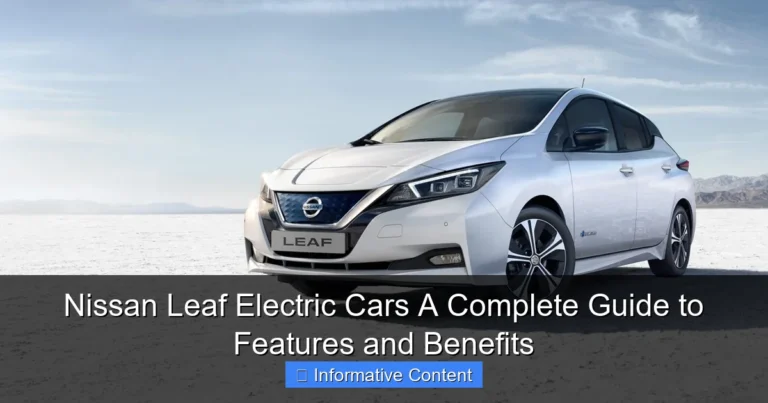
Nissan Electric Car Charging Stations Guide for 2024
Featured image for nissan electric car charging stations
Nissan electric car charging stations are now more accessible than ever in 2024, with expanded networks across North America and Europe, ensuring seamless long-distance travel. Level 2 and DC fast chargers at dealerships, workplaces, and public hubs drastically reduce charging times, while the NissanConnect EV app helps drivers locate stations, check availability, and start sessions remotely—making EV ownership smarter and more convenient.
Key Takeaways
- Plan ahead: Use Nissan’s app to locate nearby charging stations effortlessly.
- Fast charging: Prioritize Level 3 stations for quicker Nissan EV top-ups.
- Home setup: Install a Level 2 charger for convenient overnight charging.
- Public networks: Leverage partnerships like ChargePoint for wider station access.
- Cost efficiency: Charge during off-peak hours to save on electricity bills.
- Compatibility check: Confirm plug type (CCS/CHAdeMO) matches your Nissan model.
📑 Table of Contents
- Introduction: The Future of Mobility is Electric and Accessible
- Understanding Nissan Electric Car Charging Levels
- Where to Find Nissan Electric Car Charging Stations
- Nissan’s Role in Charging Infrastructure and Partnerships
- Charging Tips and Best Practices for Nissan EV Owners
- Data Table: 2024 Nissan EV Charging Comparison
- Conclusion: Charging Ahead with Confidence
Introduction: The Future of Mobility is Electric and Accessible
The electric vehicle (EV) revolution is no longer a distant dream—it’s happening now, and Nissan is at the forefront of this transformation. As one of the pioneers in mass-market electric mobility, Nissan introduced the Leaf in 2010, and over a decade later, it remains one of the best-selling EVs globally. With the 2024 Nissan Leaf and the upcoming Nissan Ariya leading the charge, drivers are increasingly asking: Where can I charge my Nissan electric car, and how easy is it? The answer lies in a rapidly expanding network of Nissan electric car charging stations, supported by public infrastructure, home solutions, and strategic partnerships.
Whether you’re a first-time EV buyer or upgrading to a newer Nissan model, understanding how, where, and when to charge your vehicle is essential. Gone are the days of range anxiety—today’s charging networks are smarter, faster, and more accessible than ever. From Level 2 home chargers to ultra-fast DC fast charging stations, Nissan owners have more options than ever before. This guide dives deep into the world of Nissan electric car charging stations in 2024, offering practical advice, real-world examples, and up-to-date data to help you charge confidently and efficiently.
Understanding Nissan Electric Car Charging Levels
Before diving into where to charge, it’s crucial to understand the different charging levels available for Nissan EVs. Each level varies in speed, infrastructure, and use case. Knowing which one fits your lifestyle can save you time, money, and stress.
Level 1 Charging: The Basics
Level 1 charging uses a standard 120-volt household outlet (the same one you plug your phone or lamp into). It’s the slowest method, adding about 2 to 5 miles of range per hour of charging. For a Nissan Leaf with a 40 kWh battery, this means a full charge could take 20 to 30 hours.
- Best for: Overnight charging at home or occasional use.
- Pros: No installation cost; uses existing outlets.
- Cons: Extremely slow; not ideal for daily use or longer commutes.
Tip: Level 1 is a good backup option, especially if you have a short daily commute or access to a garage with a standard outlet.
Level 2 Charging: The Gold Standard
Level 2 charging operates on 240 volts (similar to what powers your dryer or oven). Most Nissan owners install a Level 2 home charger, which delivers 12 to 25 miles of range per hour, depending on the vehicle and charger amperage.
- Charging time for a 40 kWh Leaf: 6–8 hours.
- Charging time for a 62 kWh Ariya: 8–10 hours.
Popular Level 2 chargers compatible with Nissan: ChargePoint Home Flex, Grizzl-E, Wallbox Pulsar Plus, and the Nissan-branded home charger.
Tip: Schedule charging during off-peak hours (e.g., 11 PM–6 AM) to save on electricity costs—many utility companies offer EV-specific time-of-use (TOU) plans.
DC Fast Charging (Level 3): Speed When You Need It
DC fast charging is the fastest public charging option, using direct current (DC) to deliver power directly to the battery. Nissan EVs use the CHAdeMO standard for DC fast charging (Leaf) and CCS1 (Combo 1) for newer models like the Ariya.
- CHAdeMO (Leaf): Up to 50 kW (older models), up to 100 kW (2023+ Leaf).
- CCS1 (Ariya): Up to 130 kW, capable of charging from 10% to 80% in 30–40 minutes.
Note: Not all fast chargers support both standards. The Leaf requires a CHAdeMO connector, while the Ariya uses CCS1. Some stations offer dual ports, but compatibility varies.
Tip: Use apps like PlugShare, ChargeHub, or NissanConnect to locate CHAdeMO or CCS1 stations along your route. Avoid relying on fast charging daily—it’s best for long trips and emergencies.
Where to Find Nissan Electric Car Charging Stations
Finding a reliable Nissan electric car charging station is easier than ever, thanks to a growing network of public and private infrastructure. Here’s a breakdown of the main types and where to locate them.
Public Charging Networks
Several major charging networks support Nissan EVs, each with unique features and coverage:
- ChargePoint: Over 200,000 charging spots in North America. Most are Level 2, but many DC fast chargers support CHAdeMO and CCS1. Offers real-time availability via app.
- EVgo: Focused on DC fast charging, with over 1,000 fast-charging stations. Many are CHAdeMO-compatible, ideal for Leaf drivers. Offers membership plans with discounted rates.
- Electrify America: A leader in high-speed CCS1 charging, with stations across the U.S. While primarily CCS1, some locations include CHAdeMO adapters. Offers free charging for Nissan Ariya buyers (2 years, 1000 kWh/year).
- FLO: Popular in Canada and the U.S., with reliable Level 2 and DC fast charging. User-friendly app and payment system.
Tip: Use PlugShare to filter stations by connector type (CHAdeMO, CCS1), speed, and user ratings. It also shows if a station is currently in use or out of service.
Workplace and Public Parking Charging
Many employers now offer EV charging as a perk. Shopping malls, airports, and city parking garages increasingly feature Level 2 chargers. For example:
- Walmart: Over 1,300 charging stations at select locations (mostly ChargePoint).
- Target: Expanding EV charging with ChargePoint and EVgo partnerships.
- City initiatives: Cities like San Francisco, Seattle, and Austin have public charging hubs in downtown areas.
Tip: Check your workplace’s sustainability policy—some companies subsidize or fully cover charging costs.
Home Charging: The Most Convenient Option
For most Nissan EV owners, home charging is the primary method. A Level 2 charger installed in your garage or driveway offers:
- Full charge every morning.
- Lower electricity rates (especially with TOU plans).
- No waiting in line or hunting for a free station.
Installation tips:
- Hire a licensed electrician to install a 240-volt circuit.
- Consider a smart charger (e.g., ChargePoint Home) for scheduling and usage tracking.
- Check for local rebates—many utilities offer up to $500 for charger installation.
Example: In California, the EV Charger Incentive Project (ECIP) provides rebates for Level 2 charger installation, including for Nissan owners.
Destination Charging: Charging Where You Go
Hotels, restaurants, and tourist attractions are joining the EV movement. Brands like Marriott, Hilton, and IKEA offer free or low-cost charging for guests. For instance:
- IKEA: Free Level 2 charging at all U.S. stores.
- Hilton: Over 1,000 properties with EV charging.
Tip: Use Google Maps to search “EV charging near me” and filter by “free” or “hotels with charging.”
Nissan’s Role in Charging Infrastructure and Partnerships
Nissan isn’t just building electric cars—it’s actively investing in the charging ecosystem to support its customers. Through partnerships, incentives, and proprietary tools, Nissan is making charging more accessible and user-friendly.
Electrify America Partnership (Ariya Buyers)
One of the most significant benefits for 2024 Nissan Ariya buyers is 2 years of free charging on Electrify America’s network (up to 1,000 kWh per year). This covers:
- DC fast charging (CCS1).
- Level 2 charging at select locations.
- No session fees or overage charges within the limit.
Real-world example: A driver taking a 600-mile road trip from Denver to Salt Lake City could use Electrify America’s fast chargers at key intervals (e.g., Grand Junction) and pay nothing—saving over $50 in charging costs.
NissanConnect EV App: Your Charging Companion
The NissanConnect EV app (available for Leaf and Ariya) integrates charging into your driving experience. Key features include:
- Real-time battery status and range.
- Remote start/stop charging.
- Charging station locator with filters for CHAdeMO/CCS1.
- Route planning with charging stops (Ariya).
- Climate control pre-conditioning (to optimize battery for fast charging).
Tip: Use the app’s “Send to Car” feature to plan a trip and have charging stops automatically added to your navigation.
Nissan’s Charging Station Installations
Nissan has partnered with local governments and businesses to install over 5,000 public charging stations globally, with a focus on CHAdeMO compatibility. In the U.S., many are located in:
- California (especially Bay Area and LA).
- Texas (Austin, Dallas, Houston).
- New York and New Jersey (urban corridors).
Notable project: Nissan’s “Zero Emission Mobility” initiative includes installing fast chargers at dealerships, enabling Leaf owners to charge while waiting for service.
Future Plans: CCS Adoption and V2G Technology
While the Leaf remains CHAdeMO-only, Nissan is transitioning to CCS1 for new models. The Ariya uses CCS1, and future vehicles will likely follow. Additionally, Nissan is pioneering Vehicle-to-Grid (V2G) technology, allowing EVs to feed power back into the grid.
- Leaf-to-Home: In Japan, Leaf owners can power their homes during outages using bidirectional charging.
- U.S. pilot programs: Nissan is testing V2G with utility companies in California and Texas.
Tip: Keep an eye on Nissan’s website for V2G rollout updates—this could revolutionize home energy use.
Charging Tips and Best Practices for Nissan EV Owners
Charging your Nissan EV isn’t just about plugging in—it’s about doing it smartly and sustainably. Follow these tips to maximize efficiency, battery life, and cost savings.
Optimize Charging Speed and Battery Health
- Don’t charge to 100% daily: Keeping the battery between 20% and 80% prolongs lifespan. Use 100% only for long trips.
- Pre-condition the battery: Before using a DC fast charger, warm up the battery (via NissanConnect or climate control). Cold batteries charge slower.
- Use scheduled charging: Set your home charger to start at 11 PM (off-peak) to reduce electricity costs.
Example: A Leaf owner in Oregon saves $120/year by charging during off-peak hours (5 cents/kWh vs. 15 cents/kWh).
Navigate Long Trips with Confidence
- Plan routes using PlugShare or ChargePoint Trip Planner.
- Book hotels with charging (use Google Maps filters).
- Carry a portable Level 2 charger (e.g., Nissan’s 240V travel charger) for emergencies.
Tip: On a 300-mile trip, aim to charge at 30% and charge to 80%—this avoids waiting at stations with long queues.
Save Money on Public Charging
- Join membership plans: EVgo offers $7/month for 25% off charging. ChargePoint has a $4.99/month plan with $0.05/kWh discount.
- Use free charging: Take advantage of Electrify America’s Ariya promotion, IKEA’s free stations, or employer perks.
- Check for local rebates: Cities like Portland and Austin offer $100–$200 for public charging use.
Maintain Your Charging Equipment
- Clean charging ports and cables regularly.
- Inspect for damage (frayed cords, bent pins).
- Update your home charger’s firmware via app.
Warning: Never use extension cords or adapters with Level 2 chargers—they can overheat and cause fires.
Data Table: 2024 Nissan EV Charging Comparison
| Vehicle Model | Battery Size | Charging Level | Connector Type | Max Charging Speed | Time to 80% (DC Fast) | Home Charging Time (Level 2) | Free Charging Offer |
|---|---|---|---|---|---|---|---|
| Nissan Leaf (40 kWh) | 40 kWh | Level 1/2/3 | CHAdeMO | 50 kW | 40 minutes | 6–8 hours | None |
| Nissan Leaf (62 kWh) | 62 kWh | Level 1/2/3 | CHAdeMO | 100 kW | 35 minutes | 8–10 hours | None |
| Nissan Ariya (63 kWh) | 63 kWh | Level 1/2/3 | CCS1 | 130 kW | 30 minutes | 8–10 hours | 2 years free on Electrify America (1,000 kWh/year) |
| Nissan Ariya (87 kWh) | 87 kWh | Level 1/2/3 | CCS1 | 130 kW | 40 minutes | 10–12 hours | 2 years free on Electrify America (1,000 kWh/year) |
Conclusion: Charging Ahead with Confidence
The landscape of Nissan electric car charging stations in 2024 is robust, diverse, and user-focused. Whether you’re charging at home with a Level 2 charger, grabbing a quick top-up at an Electrify America fast station, or relying on workplace and destination charging, Nissan owners are better supported than ever before. The transition from CHAdeMO to CCS1 in newer models like the Ariya ensures compatibility with the fastest-growing fast-charging network, while incentives like free Electrify America charging make ownership even more appealing.
By understanding the different charging levels, leveraging public and private infrastructure, and following best practices, you can eliminate range anxiety and enjoy the full benefits of electric driving. Nissan’s investments in smart charging apps, V2G technology, and global partnerships show a clear commitment to a sustainable future. As charging networks continue to expand—with over 1.5 million public chargers projected in the U.S. by 2025—Nissan EV drivers will find it easier than ever to charge on their terms.
So, whether you’re driving a Leaf through city streets or an Ariya on a cross-country adventure, one thing is certain: the future of mobility is electric, and with the right knowledge, charging is no longer a challenge—it’s a seamless part of your journey. Plug in, power up, and drive forward with confidence.
Frequently Asked Questions
How do I find Nissan electric car charging stations near me?
You can locate Nissan electric car charging stations using the NissanConnect EV app or in-car navigation system, which displays nearby Level 2 and DC fast chargers. Third-party apps like PlugShare or ChargePoint also provide real-time availability and compatibility details.
Can I use non-Nissan charging stations for my Nissan EV?
Yes, most public charging stations (including CCS, CHAdeMO, and J1772) are compatible with Nissan EVs like the Leaf or Ariya. Just ensure the connector type matches your vehicle’s inlet—older Leafs use CHAdeMO for fast charging, while newer models support CCS.
How long does it take to charge a Nissan electric car at a fast charging station?
At a DC fast charging station, Nissan EVs like the Ariya can charge from 10% to 80% in about 30–40 minutes. Level 2 stations take 4–8 hours for a full charge, depending on battery size and charger power (e.g., 7 kW vs. 11 kW).
Are Nissan electric car charging stations free to use?
Some Nissan-sponsored stations offer free charging during promotional periods, but most public stations require payment via subscription or pay-per-use. Check station networks like Electrify America or EVgo for pricing and Nissan-specific partnerships.
Can I install a Nissan-compatible charging station at home?
Absolutely! Home Level 2 chargers (240V) are ideal for overnight charging and work with all Nissan EVs. Nissan partners with providers like Wallbox or ChargePoint for professional installation and rebate assistance.
What’s the difference between Nissan’s charging networks in 2024?
In 2024, Nissan integrates with major networks like Electrify America for fast charging, while offering its own branded Level 2 stations in select areas. The NissanConnect app helps manage access, payments, and reservations across all networks.