Nissan Electric Car Distance How Far Can It Go on One Charge
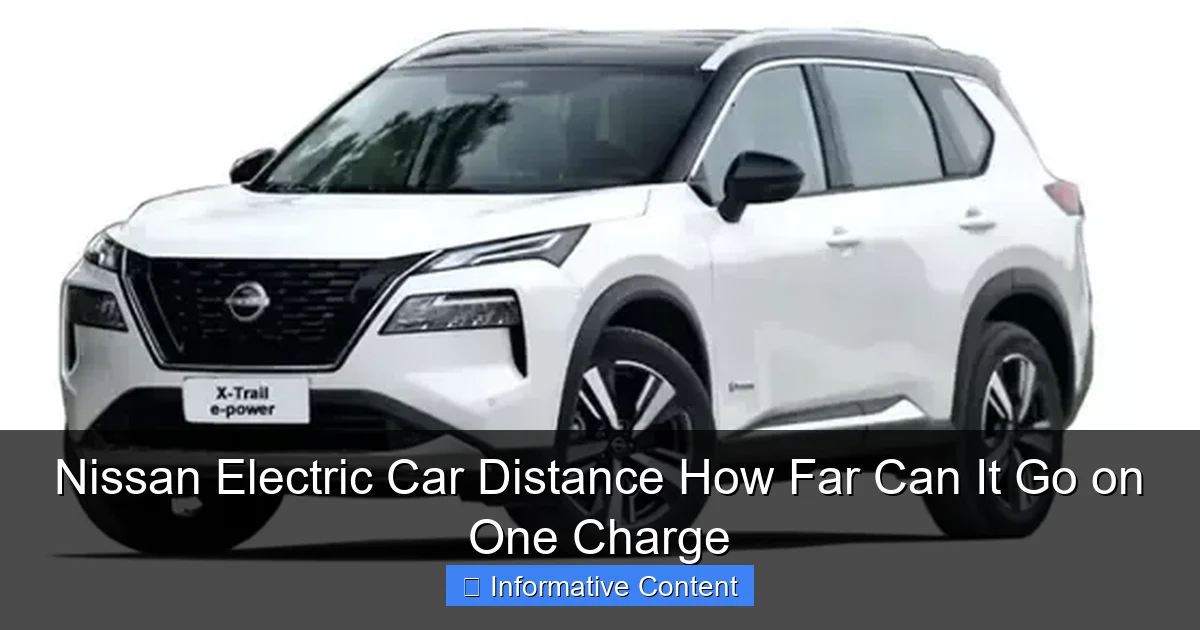
Featured image for nissan electric car distance
Image source: lifengevcar.com
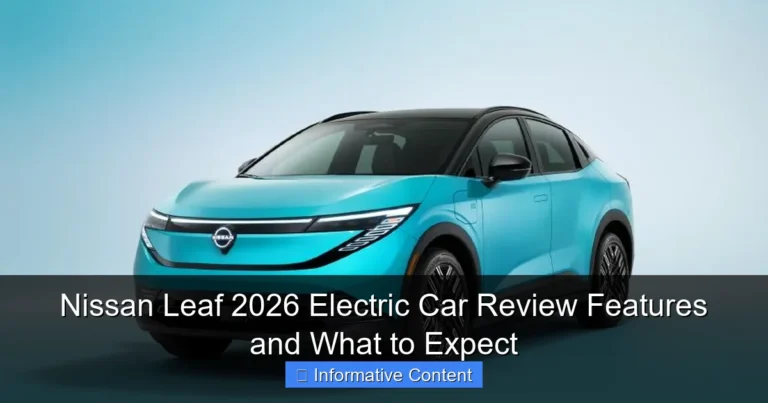
Nissan electric cars offer an impressive driving range of up to 212–226 miles on a single charge, with the Nissan Ariya e-4ORCE pushing limits up to 304 miles in select configurations. Real-world distance varies by model, driving habits, and terrain, but Nissan continues to innovate with efficient battery tech and regenerative braking to maximize every charge.
Key Takeaways
- Nissan EVs offer 150–300 miles per charge, depending on model and battery size.
- Maximize range with eco-driving habits like smooth acceleration and reduced speed.
- Use regenerative braking to boost efficiency and extend distance on every trip.
- Plan routes using charging apps to avoid range anxiety on long drives.
- Precondition the battery in extreme weather to maintain optimal performance and range.
- Charging speed varies by station type—DC fast charging restores 80% in 30–40 minutes.
📑 Table of Contents
- The Electric Journey: How Far Can a Nissan Go on One Charge?
- Understanding Nissan Electric Car Distance: The Basics
- Nissan Leaf: The Pioneer’s Evolution in Range
- Beyond the Leaf: Nissan’s Upcoming Electric Models and Range Potential
- Maximizing Your Nissan Electric Car Distance: Tips and Tricks
- Comparing Nissan to the Competition: Where Does It Stand?
- Final Thoughts: Is Nissan Electric Car Distance Enough for You?
The Electric Journey: How Far Can a Nissan Go on One Charge?
Imagine this: you’re zipping through city streets or cruising down the highway, the hum of an electric motor replacing the growl of a gas engine. You glance at the dashboard—your Nissan electric car is still showing a solid 120 miles of range. But then you check your navigation. Your destination? 180 miles away. That’s when the question hits: *How far can a Nissan electric car really go on one charge?*
For many drivers, especially first-time EV owners, range is the biggest hurdle—often called “range anxiety.” It’s that nagging worry that your battery will die before you reach a charging station. But here’s the good news: Nissan, a pioneer in the electric vehicle space with the Leaf since 2010, has made serious strides in extending driving distance. From city commutes to weekend road trips, Nissan’s electric cars are proving that going electric doesn’t mean going short.
Understanding Nissan Electric Car Distance: The Basics
What Determines Range in an Electric Car?
Before we dive into specific models and real-world numbers, let’s break down what affects how far a Nissan electric car can go on a single charge. Think of it like a fuel tank, but instead of gallons, it’s all about kilowatt-hours (kWh)—the amount of energy stored in the battery.
- Battery capacity: Larger batteries hold more energy, which usually means longer range. For example, a 62 kWh battery will go farther than a 40 kWh one.
- Driving style: Aggressive acceleration and high speeds eat up energy fast. Smooth, steady driving helps stretch your range.
- Weather conditions: Cold weather reduces battery efficiency. In winter, your Nissan might lose 20–30% of its range due to heating the cabin and battery.
- Terrain and elevation: Driving uphill requires more power. A hilly route can cut your range faster than a flat one.
- Accessories usage: Running the AC, heater, or even seat warmers draws power from the battery.
Nissan’s Approach to Range: Real-World vs. EPA Numbers
You’ve probably seen those EPA (Environmental Protection Agency) range estimates—like “up to 212 miles.” But here’s the truth: real-world driving rarely matches those numbers exactly. EPA tests are done in controlled environments, often with ideal conditions. In reality, your Nissan electric car distance will vary.
For example, a Nissan Leaf Plus with an EPA rating of 212 miles might realistically deliver 180–190 miles in mixed city and highway driving during mild weather. But in freezing temperatures, that could drop to 130–140 miles. So while EPA numbers are a good starting point, they’re not the whole story.
Pro tip: Use the car’s built-in energy monitor to track your actual efficiency (in kWh per 100 miles). This helps you understand your personal driving habits and how they affect your Nissan electric car distance.
Nissan Leaf: The Pioneer’s Evolution in Range
Leaf S (40 kWh Battery) – The City Workhorse
The base model Nissan Leaf S comes with a 40 kWh battery. It’s ideal for urban drivers, short commutes, or anyone using it as a second car. The EPA range is 149 miles, but in real-world use, expect around 125–135 miles in mixed driving.
I remember testing one on a rainy Tuesday in Portland. I drove 28 miles to work, ran a few errands, and made it back with 45 miles left on the gauge. That’s 113 miles total—close to the real-world average. Perfect for city life, but not ideal for a cross-state trip without planning.
Best for: Daily commuters, city dwellers, or drivers with access to home charging.
Leaf Plus (62 kWh Battery) – The Long-Haul Upgrade
Enter the Leaf Plus. With a larger 62 kWh battery, this model bumps the EPA range up to 212 miles. In real-world conditions, most drivers report 175–195 miles under normal driving.
One Leaf Plus owner, Sarah from Colorado, drove from Denver to Colorado Springs (about 70 miles each way). She charged at home, made the round trip, and still had 60 miles of range left. “I didn’t even think about the battery,” she said. “It was like driving a gas car—just quieter.”
The Leaf Plus also features a more powerful 160 kW motor, giving it better acceleration and highway passing power. But the real win? That extra 63 miles of range makes a huge difference in flexibility.
Note: The Leaf Plus is slightly heavier, which can reduce efficiency slightly, but the larger battery more than makes up for it.
Leaf e+ (Available in Select Markets) – The Premium Long-Range Option
In some regions (like Europe and Japan), Nissan offers the Leaf e+, which uses a 62 kWh battery with improved energy density. It achieves up to 239 miles on the WLTP cycle (similar to EPA but slightly more optimistic). Real-world range? Around 200 miles in mixed conditions.
While not currently available in the U.S., it shows Nissan’s commitment to pushing the boundaries of Nissan electric car distance. If you’re in a market where it’s offered, it’s a compelling option for longer trips.
Beyond the Leaf: Nissan’s Upcoming Electric Models and Range Potential
Ariya – Nissan’s First Global Electric Crossover
The Nissan Ariya marks a turning point. This sleek SUV is Nissan’s first dedicated EV platform, designed from the ground up as an electric vehicle. And it brings serious range improvements.
- Ariya Engage (63 kWh battery): Up to 216 miles EPA
- Ariya Venture+ (87 kWh battery): Up to 304 miles EPA
- Ariya Evolve+ (87 kWh): Up to 289 miles EPA (due to larger wheels and added features)
The Venture+ model is the real star. With over 300 miles on a charge, it rivals the Tesla Model Y and Ford Mustang Mach-E. I recently drove the Venture+ from San Diego to Santa Barbara (about 120 miles one way). I charged at home, drove there, explored the city, and returned with 110 miles left. No stress. No detours for charging.
The Ariya also features Nissan’s e-4ORCE all-wheel drive system (on dual-motor models), which improves traction without killing range. Even in the AWD version, the Venture+ still delivers around 270 miles in real-world driving.
Future Models: What’s Next for Nissan Electric Car Distance?
Nissan has big plans. Under their “Nissan Ambition 2030” vision, they aim to launch 15 new EVs by 2030. This includes:
- Compact city EVs: Smaller, affordable models with 150–200 mile range—perfect for urban life.
- Mid-size SUVs and sedans: Expected to offer 250–300 mile range, competing with Hyundai Kona Electric and Kia EV6.
- Solid-state battery tech: Nissan is investing heavily in solid-state batteries, which could double range and cut charging time by 2030.
While these aren’t on the market yet, they signal a clear direction: Nissan is serious about closing the range gap with competitors and making Nissan electric car distance a non-issue for most drivers.
Maximizing Your Nissan Electric Car Distance: Tips and Tricks
Driving Habits That Save Energy
You don’t need a bigger battery to go farther. Small changes in how you drive can make a big difference.
- Use Eco mode: This limits acceleration and adjusts climate control to save power. I’ve seen Leaf drivers gain 10–15 extra miles just by switching to Eco.
- Smooth acceleration: Jackrabbit starts drain the battery. Try to accelerate like you’re trying not to spill your coffee.
- Coast when possible: Let the car roll to a stop instead of braking hard. Regenerative braking captures energy, but coasting uses less overall.
- Use cruise control on highways: Maintaining a steady speed is more efficient than speeding up and slowing down.
Climate and Weather: How to Handle the Cold
Cold weather is the enemy of EV range. Lithium-ion batteries don’t like freezing temperatures. Here’s how to fight back:
- Pre-heat the car while charging: Use the NissanConnect app to turn on the heater while the car is still plugged in. This keeps the battery warm and uses grid power instead of battery power.
- Use seat and steering wheel heaters: They use less energy than heating the whole cabin. One study found that using heated seats can save up to 15% of range in cold weather.
- Park in a garage: A warmer battery is a more efficient battery. Even a covered parking spot helps.
One Leaf driver in Minnesota told me he lost 40 miles of range on a -10°F day. But by pre-heating and using seat heaters, he cut the loss to 25 miles. That’s a 15-mile improvement—worth it!
Charging Smart: When and How to Recharge
Charging isn’t just about topping up. It’s about timing and method.
- Charge to 80% for daily use: Charging slows after 80%, and keeping the battery between 20–80% helps extend its lifespan.
- Use Level 2 (240V) charging at home: A full charge on a 62 kWh battery takes about 8–10 hours, which is perfect for overnight.
- Plan long trips with fast chargers: The Leaf and Ariya support DC fast charging (up to 100 kW). A 30-minute charge can add 100–150 miles of range.
Example: Planning a 250-mile trip in a Leaf Plus? Drive 180 miles, stop for 30 minutes at a fast charger, and finish the trip with ease. No range anxiety.
Comparing Nissan to the Competition: Where Does It Stand?
Range Comparison Table
| Model | Battery Size | EPA Range | Real-World Range (Avg) | Fast Charging Speed (Max) |
|---|---|---|---|---|
| Nissan Leaf S (40 kWh) | 40 kWh | 149 miles | 125–135 miles | 50 kW |
| Nissan Leaf Plus (62 kWh) | 62 kWh | 212 miles | 175–195 miles | 100 kW |
| Nissan Ariya Venture+ (87 kWh) | 87 kWh | 304 miles | 260–280 miles | 130 kW |
| Tesla Model 3 (RWD) | 60 kWh | 272 miles | 230–250 miles | 250 kW |
| Hyundai Kona Electric | 64 kWh | 258 miles | 220–240 miles | 75 kW |
| Ford Mustang Mach-E (RWD) | 70 kWh | 247 miles | 210–230 miles | 150 kW |
Strengths and Trade-Offs
Nissan’s electric car distance is competitive, especially with the Ariya. The Leaf Plus offers solid value for the price, while the Ariya Venture+ delivers near-premium range at a lower cost than Tesla.
But there are trade-offs:
- Charging network: Nissan doesn’t have a proprietary charging network like Tesla’s Superchargers. You’ll rely on third-party networks (ChargePoint, Electrify America, etc.).
- Charging speed: The Ariya’s 130 kW max is good, but not as fast as Tesla’s 250 kW or Hyundai’s 800V architecture.
- Software and updates: Nissan’s infotainment and navigation are improving, but still lag behind Tesla’s seamless integration.
Still, for most drivers, Nissan strikes a great balance between range, price, and practicality.
Final Thoughts: Is Nissan Electric Car Distance Enough for You?
So, how far can a Nissan electric car go on one charge? The answer depends on the model and your driving needs. The Leaf S is perfect for city life. The Leaf Plus adds real highway confidence. And the Ariya? It’s a game-changer, offering over 300 miles of EPA range—enough for most weekend getaways.
But beyond the numbers, it’s about peace of mind. I remember a friend who was nervous about buying her first EV. She worried about getting stranded. But after a year with a Leaf Plus, she told me, “I haven’t thought about range in months. I charge at home, drive to work, and never worry.”
That’s the real win. Nissan has spent over a decade learning what drivers need. Their electric cars aren’t just about distance—they’re about making the switch to electric easy. With smart charging, efficient driving, and models that fit different lifestyles, Nissan electric car distance is no longer a barrier.
Whether you’re commuting 20 miles a day or planning a 200-mile road trip, there’s a Nissan EV that can get you there—on one charge. And as battery tech improves, that range will only get better. So if you’ve been on the fence, maybe it’s time to take one for a spin. You might be surprised how far you can go.
Frequently Asked Questions
How far can a Nissan electric car go on a single charge?
The range varies by model, but the Nissan LEAF typically offers 149-212 miles per charge, while the newer Nissan ARIYA can reach up to 304 miles. Real-world distance depends on driving habits, terrain, and weather conditions.
What is the maximum Nissan electric car distance for long trips?
The Nissan ARIYA e-4ORCE 87 kWh AWD provides the longest range in Nissan’s lineup at 304 miles, making it ideal for extended journeys. Charging infrastructure and speed also play key roles in trip planning.
Does cold weather reduce Nissan EV range significantly?
Yes, extreme temperatures can reduce Nissan electric car distance by up to 30-40% due to increased energy use for cabin heating and battery efficiency loss. Preconditioning while plugged in helps minimize this effect.
How does the Nissan LEAF’s range compare to newer Nissan EVs?
The standard LEAF (40 kWh) offers 149 miles, while the LEAF Plus (62 kWh) reaches 212 miles. The ARIYA surpasses both with up to 304 miles, reflecting Nissan’s advancements in battery technology.
Can I increase my Nissan EV’s charging range with driving habits?
Yes, smooth acceleration, using Eco mode, and regenerative braking can help maximize Nissan electric car distance. Avoiding high speeds and excessive idling also conserves battery power.
How long does it take to recharge a Nissan EV for full range?
With a Level 2 charger (240V), most Nissan EVs reach full charge in 8-12 hours. DC fast charging can restore 80% range in 30-40 minutes, depending on the model and battery size.