Nissan Electric Car in Nepal A Game Changer for Eco Friendly Commutes
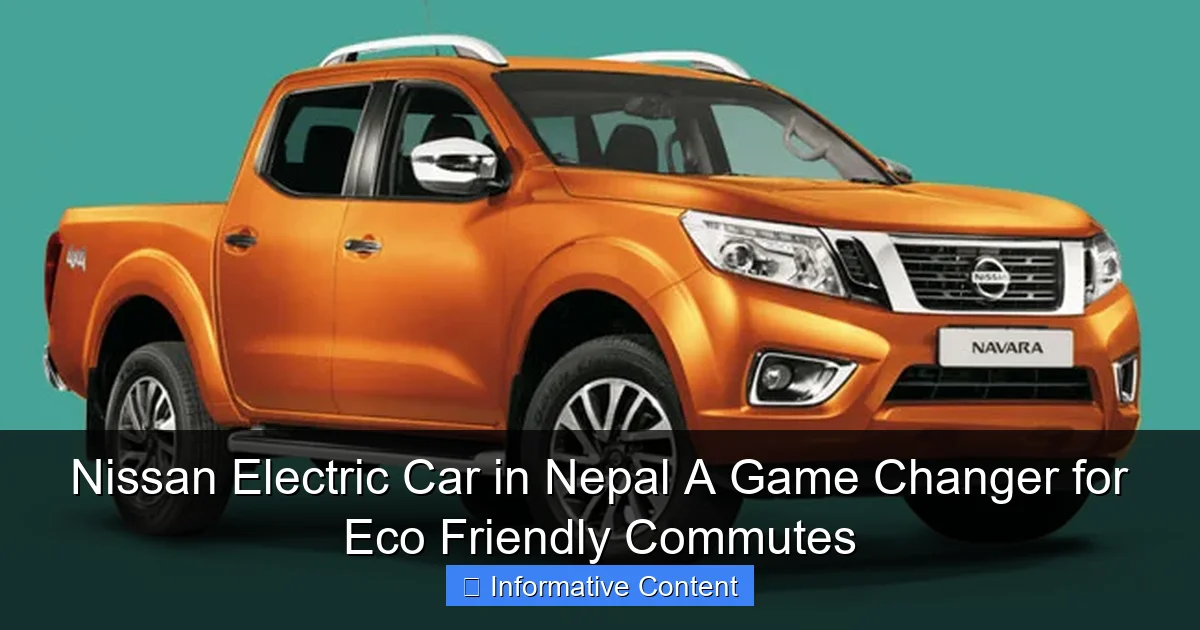
Featured image for nissan electric car in nepal
Image source: carnepal.com
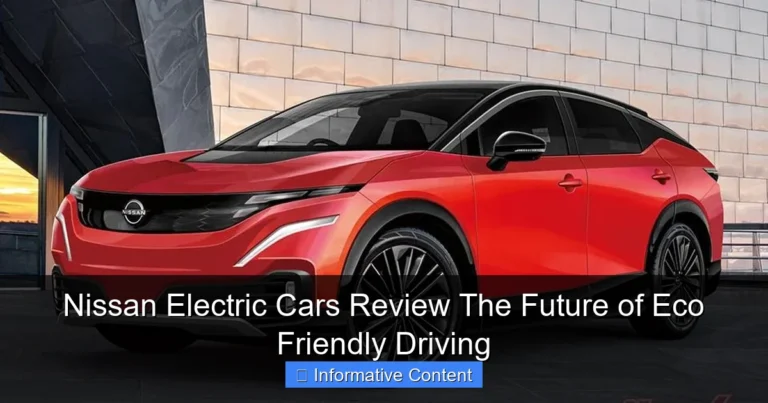
The Nissan electric car in Nepal is revolutionizing eco-friendly commutes with zero-emission driving and impressive range, perfectly suited for the country’s urban and hilly terrains. Packed with advanced features like regenerative braking and fast-charging capability, it offers a cost-effective, sustainable alternative to traditional fuel-powered vehicles, aligning with Nepal’s green energy goals.
Key Takeaways
- Nissan EVs slash emissions: Zero tailpipe pollution for cleaner Nepali cities.
- Lower running costs: Save significantly on fuel and maintenance long-term.
- Government incentives available: Tax breaks and subsidies boost affordability.
- Expanding charging network: More stations ease range anxiety nationwide.
- Ideal for urban commutes: Compact size and efficiency suit Kathmandu traffic.
- Resale value potential: Growing demand may increase future resale returns.
📑 Table of Contents
- The Electric Revolution Has Landed in Nepal: Is Nissan Leading the Charge?
- Why Nepal Is Ready for Electric Cars (And Why Nissan Makes Sense)
- Meet the Nissan Leaf: The Flagship EV in Nepal
- Charging in Nepal: Practical Tips and Infrastructure
- Cost of Ownership: Is the Nissan Leaf Worth It?
- Challenges and the Road Ahead for EVs in Nepal
- Final Thoughts: Is the Nissan Electric Car in Nepal a Game-Changer?
The Electric Revolution Has Landed in Nepal: Is Nissan Leading the Charge?
Picture this: You wake up in Kathmandu, the morning air thick with the scent of incense and the usual haze of vehicle exhaust. But instead of joining the honking chaos in your petrol-powered car, you step into a silent, smooth-riding electric vehicle. No fumes, no engine noise—just a quiet hum as you glide through the city. This isn’t a futuristic dream; it’s becoming a reality in Nepal, and Nissan electric car in Nepal is playing a pivotal role in making it happen.
Electric vehicles (EVs) are no longer a novelty reserved for Silicon Valley elites or European capitals. They’re gaining serious traction in developing nations, and Nepal is no exception. With rising fuel prices, growing environmental awareness, and government incentives, the shift to EVs is accelerating. Among the global automakers stepping into this emerging market, Nissan stands out. The Japanese giant, known for its innovation and reliability, has brought its EV expertise to Nepal with models like the Nissan Leaf, sparking conversations about cleaner commutes, lower running costs, and a greener future. Whether you’re a daily city commuter, a family looking for a practical second car, or an eco-conscious citizen, the arrival of the Nissan electric car in Nepal might just be the turning point we’ve been waiting for.
Why Nepal Is Ready for Electric Cars (And Why Nissan Makes Sense)
Let’s be real: Nepal isn’t the first country you’d expect to see a surge in electric vehicles. With rugged terrain, frequent power outages, and a developing infrastructure, some might question the feasibility. But the truth is, Nepal has unique advantages that make it surprisingly well-suited for EVs—and Nissan is smart to capitalize on them.
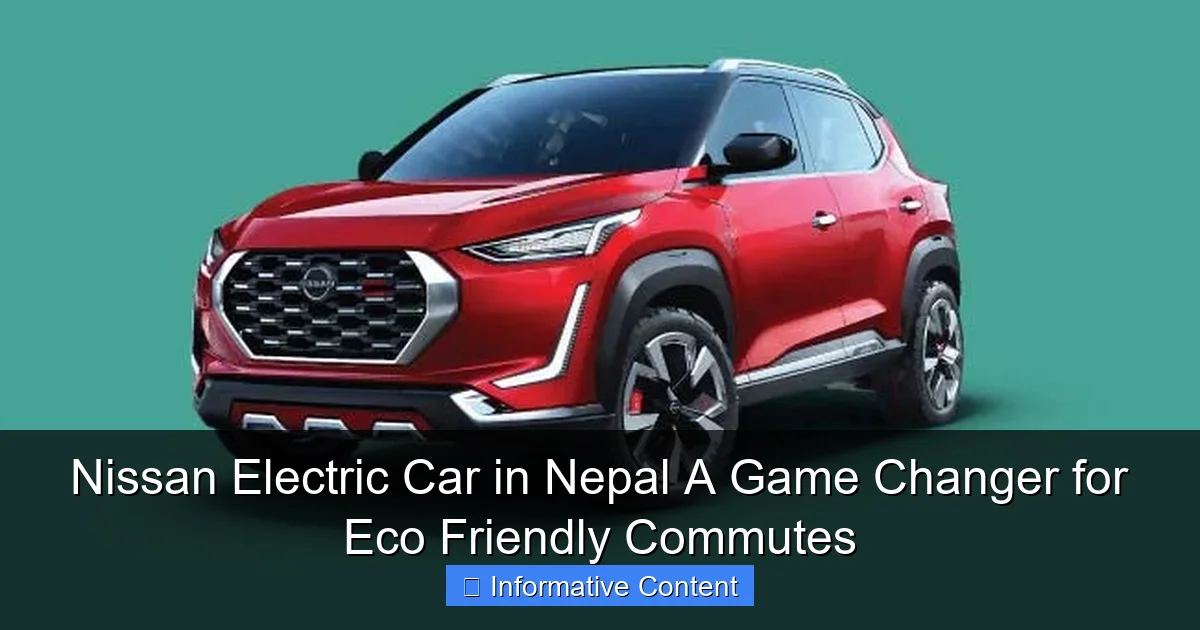
Visual guide about nissan electric car in nepal
Image source: carnepal.com
1. High Fuel Costs and Economic Pressure
Nepal imports nearly all its petroleum, and fuel prices have been on a steady climb. As of 2024, petrol costs over NPR 150 per liter in Kathmandu—a steep price for the average Nepali. In contrast, electricity is relatively affordable, especially when charged overnight during off-peak hours. A full charge of a Nissan Leaf can cost as little as NPR 150–200, giving you 250–300 km of range. That’s a game-changer for cost-conscious drivers. Imagine saving thousands of rupees every month just by switching to an electric car. For a delivery rider, a taxi driver, or a family with a long commute, those savings add up fast.
2. Government Incentives and Policy Support
The Government of Nepal has introduced several pro-EV policies to reduce pollution and dependence on imported fuel. These include:
- Zero customs duty on electric vehicles (compared to 100%+ for petrol/diesel cars)
- Reduced VAT and excise tax for EVs
- Free parking in major cities like Kathmandu and Pokhara
- Exemption from road tax for a certain period
These incentives make the Nissan electric car in Nepal much more affordable upfront. For example, the Nissan Leaf, which might cost $30,000 in Europe, can be imported for under NPR 4.5 million after taxes—a significant saving compared to a similarly sized petrol SUV that would cost over NPR 6 million after duties.
3. Environmental Awareness and Urban Air Quality
Kathmandu’s air quality is among the worst in the world. The WHO reports that air pollution causes over 4,000 premature deaths annually in the city alone. As citizens become more aware of this crisis, there’s a growing desire for sustainable solutions. Electric cars produce zero tailpipe emissions, which means cleaner air for everyone. Driving a Nissan Leaf isn’t just a personal choice—it’s a contribution to public health.
I spoke with Ramesh, a teacher from Patan, who recently switched to a Nissan Leaf. “My son has asthma,” he told me. “When I saw how much pollution our old car was adding to the air, I knew I had to change. Now, even if it’s just one car, I feel like I’m doing my part.” Stories like Ramesh’s are becoming more common, and that’s a powerful driver for EV adoption.
Meet the Nissan Leaf: The Flagship EV in Nepal
The Nissan Leaf is the undisputed star of Nissan’s electric lineup in Nepal. It’s not the flashiest EV out there, but it’s practical, reliable, and perfectly suited for Nepali roads and lifestyles. Let’s break down what makes the Leaf a compelling choice.
Key Specifications and Features
The latest model available in Nepal is the **Nissan Leaf e+ (62 kWh battery)**, which offers:
- Range: Up to 385 km (WLTP) – real-world range in Nepal is about 300 km, depending on driving style and terrain
- Charging Time:
- Level 2 (7.2 kW): 8–10 hours for a full charge
- DC Fast Charging (50 kW): 40–60 minutes for 80% charge
- Power: 214 hp, 340 Nm torque – plenty of punch for city driving and highway cruising
- Top Speed: 144 km/h – more than enough for Nepali roads
- Interior: 5-seater, touchscreen infotainment, Apple CarPlay, Android Auto, climate control, rear parking camera
- Safety: 6 airbags, ABS, ESP, lane departure warning, automatic emergency braking
One thing I love about the Leaf is its **e-Pedal** feature. It allows you to accelerate and decelerate using just the accelerator pedal—lifting off slows the car down using regenerative braking. This not only saves brake wear but also makes stop-and-go traffic in Kathmandu less tiring. It takes a bit of getting used to, but once you do, it feels intuitive.
Real-World Performance in Nepali Conditions
How does the Leaf handle Nepal’s unique challenges? Let’s look at a few real-life scenarios:
- Hilly Terrain: The Leaf has strong torque and handles hills well. On a recent test drive from Kathmandu to Nagarkot, the car climbed steep gradients without strain. The regenerative braking also helped control speed on descents, reducing brake overheating.
- Monsoon Roads: The Leaf has decent ground clearance (150 mm), which is enough for most flooded city streets. Just avoid deep puddles—EVs are water-resistant but not waterproof.
- Power Outages: While charging during blackouts is a challenge, many Leaf owners use inverters or charge during off-peak hours when the grid is stable. Some are even pairing their cars with solar panels.
One owner, Priya from Pokhara, shared her experience: “I drive 40 km a day for work. I charge at night, and my electricity bill went up by only NPR 300 a month. The car handles the hills perfectly, and I love how quiet it is. My neighbors keep asking me what kind of ‘magic car’ I drive!”
What’s Missing? A Few Limitations
No car is perfect, and the Leaf has a few areas for improvement in the Nepali context:
- No AWD Option: The Leaf is front-wheel drive only. While fine for most roads, it could struggle in extreme off-road or snowy conditions (though Nepal’s snowfall is limited).
- Fast Charging Network: DC fast chargers are still rare. There are a few in Kathmandu (like at EV stations in Thapathali and Boudha), but coverage outside the valley is sparse.
- Boot Space: The 62 kWh battery takes up some space, so the trunk is smaller than in petrol sedans. But it’s still enough for groceries or a weekend bag.
Charging in Nepal: Practical Tips and Infrastructure
One of the biggest questions about owning a Nissan electric car in Nepal is: *Where do I charge it?* The good news is, charging is easier than you think—especially if you plan ahead.
Home Charging: The Most Convenient Option
For most Nepali EV owners, home charging is the primary method. Here’s how to set it up:
- Install a Level 2 (7.2 kW) wall charger in your garage or parking spot. This is faster than using a standard socket and safer.
- Use a dedicated circuit (at least 32A) to avoid overloading your home’s electrical system.
- Charge overnight during off-peak hours (10 PM–6 AM), when electricity rates are lower and the grid is more stable.
Tip: Many dealerships offer free or discounted charger installation with purchase. Ask about this when buying your Leaf.
Public Charging Stations: Growing but Limited
As of 2024, Nepal has over 50 public charging stations, with more being added every month. Key locations include:
- Kathmandu: Thapathali, Boudha, New Baneshwor, Lazimpat
- Pokhara: Lakeside, Mahendrapul
- Bharatpur, Butwal, Dhangadhi (newly added)
These stations offer both Level 2 and DC fast charging. Apps like EV Nepal and ChargeNet let you find nearby chargers, check availability, and even pay via eSewa or Khalti.
Pro tip: Always carry a portable charging cable (included with the Leaf) in case you need to charge at a friend’s house or a commercial building.
Fast Charging: When You’re on the Go
DC fast charging is ideal for long trips. The Leaf e+ can go from 20% to 80% in about 45 minutes at a 50 kW station. But be aware:
- Fast charging is more expensive than home charging.
- Frequent fast charging can degrade battery life over time. Use it only when necessary.
- Plan your route using charging maps to avoid running out of juice.
For example, a trip from Kathmandu to Pokhara (200 km) is doable with one fast charge in Mugling or Narayanghat. Just make sure to arrive with at least 50% battery.
Cost of Ownership: Is the Nissan Leaf Worth It?
Let’s talk money. Is the Nissan electric car in Nepal a smart financial choice? The answer depends on how you drive and how long you plan to keep the car.
Upfront Cost vs. Long-Term Savings
The Nissan Leaf e+ is priced around **NPR 4.2–4.6 million** in Nepal, depending on dealer and import costs. That’s high, but remember:
- No fuel costs: Save NPR 10,000–15,000 per month on petrol.
- Lower maintenance: No oil changes, spark plugs, or exhaust systems. EVs have fewer moving parts, so service costs are 30–50% lower.
- Free parking and tolls: In many cities, EVs get perks that save hundreds of rupees daily.
- Long lifespan: With proper care, the Leaf can last 15–20 years. The battery is warrantied for 8 years/160,000 km.
Here’s a simple comparison for a 15,000 km annual drive:
| Cost Factor | Nissan Leaf (EV) | Petrol Sedan (e.g., Toyota Corolla) |
|---|---|---|
| Upfront Price | NPR 4,500,000 | NPR 6,000,000 (after taxes) |
| Annual Fuel/Electricity | NPR 20,000 | NPR 150,000 |
| Annual Maintenance | NPR 10,000 | NPR 25,000 |
| Parking/Tolls (annual) | NPR 0 (free in many places) | NPR 15,000 |
| Total 5-Year Cost | NPR 5,550,000 | NPR 7,225,000 |
As you can see, the Leaf saves over **NPR 1.6 million** in 5 years—even after the higher initial price. And that doesn’t include intangible benefits like cleaner air and quieter streets.
Resale Value and Future-Proofing
EVs are still new in Nepal, so resale data is limited. However, as more people adopt EVs, demand for used Leafs will rise. Nissan’s strong brand reputation also helps. Plus, with the government pushing for 20% EV sales by 2030, now is a great time to buy before prices potentially rise due to increased demand.
Challenges and the Road Ahead for EVs in Nepal
Despite the progress, there are still hurdles to overcome for the Nissan electric car in Nepal to become mainstream.
Infrastructure Gaps
While charging stations are growing, they’re still concentrated in urban areas. Rural and remote regions have almost no coverage. This limits long-distance travel and makes EVs less practical for some users. The government and private sector need to invest in a nationwide charging network—perhaps with solar-powered stations in off-grid areas.
Power Grid Stability
Frequent load-shedding and voltage fluctuations can disrupt charging. While inverters and solar backups help, they add cost. Upgrading the national grid and promoting decentralized energy (like rooftop solar) will be crucial.
Public Awareness and Trust
Many Nepalis still associate EVs with “short range” or “unreliable.” Education is key. Test drives, community events, and real-world testimonials (like Ramesh and Priya’s stories) can build trust. Nissan and other brands should partner with schools and NGOs to promote EV benefits.
The Role of Nissan in Shaping the Future
Nissan isn’t just selling cars—it’s helping build an ecosystem. The company has trained local mechanics in EV maintenance, partnered with charging providers, and even donated Leafs to hospitals for emergency use. These efforts go a long way in making EVs more accessible and accepted.
Final Thoughts: Is the Nissan Electric Car in Nepal a Game-Changer?
After diving into the specs, costs, and real-world experiences, one thing is clear: the Nissan electric car in Nepal is more than just a car—it’s a symbol of change. It represents a shift toward cleaner cities, lower living costs, and smarter transportation. The Nissan Leaf isn’t perfect, but it’s a solid, practical choice for Nepalis who want to reduce their carbon footprint without sacrificing comfort or reliability.
Imagine a Kathmandu where the air is breathable, the streets are quieter, and your monthly fuel bill is a fraction of what it used to be. That future is within reach, and it starts with choices like driving a Nissan Leaf. Whether you’re a first-time EV buyer or a seasoned commuter, the transition is easier than ever—thanks to government support, growing infrastructure, and cars that are built to handle Nepal’s unique challenges.
So, is it time to go electric? For many, the answer is yes. The Nissan electric car in Nepal isn’t just a vehicle; it’s a statement. A statement that says, “We care about our health, our wallets, and our planet.” And in a country as beautiful and fragile as Nepal, that’s a statement worth making.
Frequently Asked Questions
What Nissan electric car models are available in Nepal?
The Nissan Leaf is currently the primary Nissan electric car in Nepal, offered in select dealerships like CG Motors. It’s the most affordable and widely available EV option from Nissan in the Nepali market.
How does the Nissan Leaf perform in Nepal’s hilly terrain?
The Nissan Leaf’s electric motor delivers strong torque, making it well-suited for Nepal’s hills. Its 40 kWh battery provides adequate range (up to 270 km) for city commutes and intercity travel on a single charge.
Are there sufficient charging stations for Nissan electric cars in Nepal?
Yes, Nepal has over 200 public charging stations, with major networks like NOC and CG Motors strategically placed along highways and in cities. Home charging is also convenient for Nissan EV owners.
What is the price of a Nissan electric car in Nepal?
The Nissan Leaf starts at approximately NPR 55 lakhs, making it one of the most budget-friendly Nissan electric car options in Nepal. Government EV incentives can further reduce the cost.
How long does it take to charge a Nissan Leaf in Nepal?
With a standard 7kW charger, the Nissan Leaf charges fully in 6-8 hours. Fast-charging stations (50kW) can replenish the battery up to 80% in just 40 minutes.
Is the Nissan Leaf reliable for Nepal’s road conditions?
Absolutely. The Nissan Leaf’s robust suspension system handles Nepal’s rough roads well, while its regenerative braking system enhances safety on steep descents. Regular maintenance is simple and cost-effective.