Nissan Electric Car Leaf 2019 Review Features and Performance Insights

Featured image for nissan electric car leaf 2019
Image source: d2cdo4blch85n8.cloudfront.net
The 2019 Nissan Leaf solidifies its position as a top-tier affordable electric car, combining 150-mile range and zippy city performance with a comfortable, tech-forward cabin. With responsive handling, fast-charging capability, and advanced driver aids like ProPILOT Assist, it delivers exceptional value for eco-conscious drivers seeking reliability without compromise.
Key Takeaways
- Affordable EV: The 2019 Leaf offers budget-friendly electric driving with solid value.
- 150-mile range: Sufficient for daily commutes but lags behind rivals.
- Quick acceleration: Instant torque delivers responsive city driving performance.
- Spacious interior: Roomy cabin and cargo space enhance practicality.
- ProPilot Assist: Advanced driver aids improve highway safety and comfort.
- Slow DC charging: Charging speeds trail competitors—plan longer stops.
- No AWD option: Limited traction in harsh winter conditions.
📑 Table of Contents
- The Nissan Electric Car Leaf 2019: A Friendly Guide to One of the Most Popular EVs
- Design and Exterior: Sleek, Modern, and Surprisingly Spacious
- Performance and Driving Experience: Smooth, Quiet, and Surprisingly Fun
- Range, Charging, and Battery: The Practical Side of EV Ownership
- Technology and Features: Smart, Connected, and User-Friendly
- Cost of Ownership and Value: Is the Leaf Worth It?
- Conclusion: The Nissan Electric Car Leaf 2019 Is a Smart Choice for Many Drivers
The Nissan Electric Car Leaf 2019: A Friendly Guide to One of the Most Popular EVs
When it comes to electric vehicles (EVs), the Nissan Electric Car Leaf 2019 is a name that often pops up in conversations—and for good reason. As one of the pioneers in the affordable EV market, the Leaf has helped millions of drivers make the switch from gas to electricity. I remember the first time I saw a Leaf in the wild—it was parked outside a coffee shop, silently charging, and I couldn’t help but wonder: *Is this the future of driving?* Fast-forward to today, and the 2019 model is still turning heads, not just for its eco-friendliness but also for its practicality, comfort, and surprisingly fun driving dynamics.
The 2019 Leaf isn’t just a car—it’s a statement. It says, “I care about the planet, but I also want a reliable, affordable, and tech-savvy ride.” Whether you’re a first-time EV buyer or a seasoned green driver, the Leaf 2019 offers something for everyone. In this review, we’ll dive into its features, performance, and real-world usability. Think of this as a chat over a cup of coffee, where I share my honest thoughts—what I love, what could be better, and whether this Nissan electric car is worth your hard-earned cash. So, grab your favorite drink, and let’s take a closer look at what makes the 2019 Leaf tick.
Design and Exterior: Sleek, Modern, and Surprisingly Spacious
Exterior Styling: A Fresh Take on EV Aesthetics
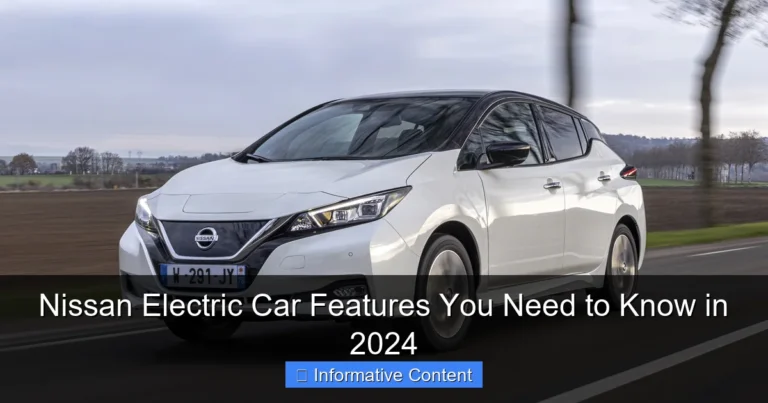
The 2019 Nissan Leaf sports a design that’s both futuristic and approachable. Unlike some EVs that go all-in on “spaceship” looks, the Leaf strikes a balance between modernity and familiarity. Up front, the V-motion grille (a signature Nissan design) is closed off since there’s no engine to cool—a small but clever nod to its electric nature. The LED headlights and daytime running lights give it a sharp, alert look, while the sculpted hood and sloping roofline add a touch of sportiness.

Visual guide about nissan electric car leaf 2019
Image source: media1.tenor.com
One thing I noticed right away: the Leaf doesn’t scream “electric car” from a mile away. It looks like a normal hatchback, which is great if you prefer subtlety over flashiness. The 17-inch alloy wheels (on higher trims) add a bit of flair, and the rear spoiler isn’t just for show—it helps with aerodynamics, boosting efficiency slightly.
Interior Space: Roomier Than You Think
Inside, the Leaf surprises with its spaciousness. The cabin is designed to maximize headroom and legroom, making it a solid choice for taller drivers or families. The seats are supportive, with the higher trims offering cloth-and-leatherette combos that feel premium without breaking the bank. I particularly appreciated the flat floor—a hallmark of EV platforms—which makes the rear seats more comfortable for three passengers compared to gas-powered rivals.
Storage is another strong point. The trunk offers 23.6 cubic feet of space (expandable to 30 with the rear seats folded), which is more than enough for groceries, strollers, or even a weekend camping trip. The front trunk (or “frunk”) is small but handy for stashing charging cables or a backpack. One minor gripe: the center console is a bit narrow, so storing larger items can be tricky.
Color and Trim Options
Nissan offers a range of colors, from classic Gun Metallic to bold Monarch Orange, so you can pick a hue that matches your personality. The Leaf comes in three main trims: S, SV, and SL. The base S trim is well-equipped, but the SV and SL add niceties like heated seats, a Bose audio system, and Nissan’s ProPILOT Assist (more on that later). If you’re on a budget, the S trim is a great starting point, but the SV is where the sweet spot lies for most buyers.
Performance and Driving Experience: Smooth, Quiet, and Surprisingly Fun
Power and Acceleration: Zippy but Not Overwhelming
The 2019 Leaf packs a 147-horsepower electric motor, which might not sound like much on paper, but it delivers a punchy driving experience. Electric motors are known for their instant torque, and the Leaf is no exception. From a stop, it accelerates smoothly and quickly, reaching 60 mph in around 7.5 seconds—not sports-car territory, but definitely quicker than most compact sedans. I found it more than adequate for city driving, merging onto highways, and even passing slower traffic.
One thing to note: the Leaf’s acceleration is linear and predictable. There’s no lag or jerky throttle response, which makes it easy to modulate in stop-and-go traffic. The e-Pedal feature (standard on all trims) deserves a shoutout. It allows you to drive using just the accelerator pedal—lifting off slows the car down significantly, and it can even bring you to a complete stop. At first, it feels weird (like driving with one pedal), but once you get the hang of it, it’s addictive and helps maximize regenerative braking.
Handling and Ride Quality: Comfort Over Sportiness
The Leaf isn’t a sports car, but it handles well for what it is. The steering is light and responsive, making it easy to maneuver in tight city streets or crowded parking lots. The suspension is tuned for comfort, soaking up bumps and potholes with ease. On the highway, it feels stable, though strong crosswinds can push it around a bit due to its tall hatchback shape.
One area where the Leaf shines is noise isolation. Electric cars are naturally quieter, but Nissan went the extra mile with sound-deadening materials. At city speeds, the cabin is whisper-quiet, and even on the highway, wind and tire noise are kept to a minimum. The only noticeable sound is a faint whir from the motor, which adds to the futuristic vibe.
Real-World Driving Tips
- Use e-Pedal in traffic: It’s great for stop-and-go driving, as it reduces brake wear and improves efficiency.
- Pre-condition the cabin: Use the NissanConnect app to heat or cool the car while it’s still plugged in—this saves battery and makes your ride more comfortable.
- Plan for hills: While the Leaf handles inclines well, steep hills can eat into range, so keep that in mind on road trips.
Range, Charging, and Battery: The Practical Side of EV Ownership
Range: How Far Can You Go?
The 2019 Leaf comes with a 40-kWh battery, delivering an EPA-estimated range of 150 miles. For context, that’s enough to cover most daily commutes with room to spare. In real-world driving, I found the range to be closer to 130-140 miles in mixed conditions (city/highway) and around 120 miles in colder weather. If you’re a city dweller with short drives, this range is more than sufficient. But for longer trips or frequent highway driving, it might feel limiting compared to newer EVs like the Tesla Model 3 or Chevrolet Bolt (which offer 200+ miles).
One thing to keep in mind: range varies based on driving habits, terrain, and weather. Aggressive acceleration, heavy use of climate control, and cold temperatures can all reduce range. The Leaf’s range estimator is pretty accurate, though—I found it usually within 5-10 miles of my actual driving range.
Charging Options: Home, Work, and On-the-Go
The Leaf supports three charging levels:
- Level 1 (120V): The slowest option, adding about 4-5 miles of range per hour. It’s fine for overnight charging if you drive less than 40 miles daily.
- Level 2 (240V): The most common option for home charging. With a dedicated 30-amp circuit, you can add 20-25 miles of range per hour. A full charge takes about 8 hours—perfect for overnight.
- DC Fast Charging (CHAdeMO): The Leaf can charge up to 80% in about 40 minutes using a 50-kW fast charger. It’s not as fast as newer EVs (like the Hyundai Kona Electric, which supports 100-kW charging), but it’s still handy for road trips.
Pro tip: If you’re considering the Leaf, invest in a Level 2 home charger. It’s a game-changer for daily use and can save you time and hassle.
Battery Longevity and Warranty
Nissan covers the Leaf’s battery with an 8-year/100,000-mile warranty, which is standard for the industry. The battery is designed to retain at least 70% of its capacity over that period, and many Leaf owners report minimal degradation after years of use. To maximize battery life, avoid frequent DC fast charging and keep the charge level between 20% and 80% when possible.
Technology and Features: Smart, Connected, and User-Friendly
Infotainment System: Simple but Effective
The 2019 Leaf’s infotainment system is centered around a 7-inch touchscreen (standard on all trims). It’s not the flashiest or fastest system out there, but it gets the job done. The menu layout is intuitive, with physical buttons for climate control and volume—a big plus for drivers who prefer tactile feedback over touchscreens.
Standard features include:
- Apple CarPlay and Android Auto (SV and SL trims)
- NissanConnect with navigation and voice recognition
- Bluetooth connectivity
- A six-speaker audio system (upgraded to a Bose system on the SL trim)
One quirk: the base S trim doesn’t have Apple CarPlay or Android Auto, which feels like a missed opportunity. If smartphone integration is important to you, opt for the SV or SL.
Safety and Driver Assistance: ProPILOT Assist and More
The Leaf comes with a solid suite of safety features, including:
- Automatic emergency braking with pedestrian detection
- Blind-spot monitoring and rear cross-traffic alert
- Lane departure warning and lane-keeping assist
- ProPILOT Assist (SV and SL trims): This semi-autonomous system combines adaptive cruise control with lane-centering, making highway driving much less stressful. It’s not full self-driving, but it’s a great step toward reducing driver fatigue.
During my test drive, ProPILOT Assist worked well on highways, keeping the car centered in its lane and adjusting speed to match traffic. Just remember: it’s a driver assistance system, not a replacement for attentive driving.
Connectivity and Apps: Stay in Control
The NissanConnect app is a handy tool for Leaf owners. It lets you:
- Check battery status and range remotely
- Start or stop charging
- Pre-condition the cabin (heat or cool it while plugged in)
- Locate nearby charging stations
The app works reliably, though it occasionally lags when connecting to the car. Still, it’s a useful feature for managing your EV on the go.
Cost of Ownership and Value: Is the Leaf Worth It?
Pricing and Incentives: A Budget-Friendly EV
The 2019 Leaf starts at around $29,990 for the base S trim, making it one of the most affordable new EVs on the market. The SV trim starts at $32,550, and the top-of-the-line SL comes in at $36,550. These prices don’t include federal or state incentives, which can significantly reduce the cost. For example, the federal tax credit for the 2019 Leaf was $7,500, bringing the effective price down to $22,490 for the base model.
Even without incentives, the Leaf offers good value for the money. It’s cheaper than rivals like the Chevrolet Bolt and Tesla Model 3, and it comes with a generous list of standard features. If you’re buying used, a 2019 Leaf can be found for $15,000-$20,000, depending on mileage and condition—an absolute steal for a well-maintained EV.
Running Costs: Cheaper Than Gas Cars
Owning an EV is generally cheaper than owning a gas car, and the Leaf is no exception. Here’s a quick breakdown:
- Fuel costs: Charging the Leaf costs about $5-7 for a full charge (based on an average electricity rate of $0.13/kWh). That’s roughly $0.03-$0.05 per mile, compared to $0.10-$0.15 per mile for a gas car.
- Maintenance: EVs have fewer moving parts, so maintenance costs are lower. No oil changes, spark plugs, or exhaust systems to worry about. Brakes also last longer due to regenerative braking.
- Insurance: The Leaf’s insurance costs are comparable to similar gas-powered cars, though rates vary by location and driving history.
One potential cost: battery replacement. While the Leaf’s battery is covered by warranty, out-of-warranty replacements can be expensive ($8,000-$10,000). However, battery prices are dropping, and remanufactured options are becoming more common.
Resale Value and Depreciation
The Leaf has historically depreciated faster than gas cars, partly due to rapid improvements in EV technology. However, the 2019 model holds its value better than earlier Leafs, thanks to its updated design and features. If you’re planning to sell in a few years, keep the car in good condition, maintain service records, and consider selling in warmer months (when EV demand is higher).
Conclusion: The Nissan Electric Car Leaf 2019 Is a Smart Choice for Many Drivers
So, is the Nissan Electric Car Leaf 2019 worth buying? In short: yes, for the right driver. If you’re looking for an affordable, reliable, and practical EV for daily commuting, city driving, or short road trips, the Leaf delivers. It’s not perfect—the range is modest, the infotainment system could be better, and the e-Pedal takes some getting used to—but its strengths far outweigh its weaknesses.
The Leaf shines in its simplicity. It’s not trying to be a luxury car or a tech showcase; it’s a no-nonsense EV that does the basics well. The smooth driving experience, comfortable interior, and user-friendly tech make it a great choice for first-time EV buyers or those transitioning from gas cars. And with its low running costs and available incentives, it’s a smart financial decision too.
Of course, it’s not for everyone. If you need 200+ miles of range, faster charging, or cutting-edge tech, you might want to look at newer models or competitors. But if you’re ready to embrace the electric revolution without breaking the bank, the 2019 Leaf is a fantastic place to start. As I walked away from my test drive, I couldn’t help but think: *This is the kind of car that makes going green feel easy, affordable, and even fun.* And really, isn’t that what we all want?
Quick Data Snapshot: 2019 Nissan Leaf
| Feature | Detail |
|---|---|
| MSRP (base S trim) | $29,990 |
| EPA Range | 150 miles |
| Motor Power | 147 hp |
| 0-60 mph | 7.5 seconds |
| Charging (Level 2) | 8 hours (0-100%) |
| Fast Charging (DC) | 40 minutes (0-80%) |
| Warranty | 3 years/36,000 miles (basic), 8 years/100,000 miles (battery) |
Frequently Asked Questions
What are the key features of the 2019 Nissan Electric Car Leaf?
The 2019 Nissan Leaf offers a 40 kWh battery, 147-hp electric motor, and an EPA-estimated 150-mile range. It also includes ProPILOT Assist (adaptive cruise control and lane-keeping), Apple CarPlay/Android Auto, and e-Pedal for one-pedal driving.
How does the 2019 Nissan Leaf perform in terms of acceleration and handling?
The Leaf delivers brisk acceleration from a stop (0-60 mph in ~7.5 seconds) thanks to instant torque, though it feels less sporty at higher speeds. Its lightweight chassis and low center of gravity provide composed, predictable handling in city and highway driving.
What is the battery life and charging time for the 2019 Nissan Electric Car Leaf?
The 40 kWh battery charges fully in 8-12 hours on a Level 2 charger (240V) or 40 minutes for an 80% charge with a 50 kW DC fast charger. Nissan estimates battery degradation at 10-15% per 50,000 miles under normal conditions.
Does the 2019 Leaf have enough range for daily commuting?
With its 150-mile range, the Leaf is well-suited for most daily commutes (average U.S. commute is 40 miles). However, drivers needing frequent long-distance travel may find the range limiting compared to newer EVs like the Tesla Model 3 or Chevrolet Bolt.
What safety features does the 2019 Nissan Leaf include?
Standard safety tech includes automatic emergency braking, blind-spot monitoring, rear cross-traffic alert, and a rearview camera. The Leaf also earned a 5-star overall NHTSA safety rating and a “Top Safety Pick” from IIHS.
How does the 2019 Nissan Leaf compare to other electric cars in its price range?
The Leaf competes well with the Chevrolet Bolt and Hyundai Kona Electric, offering more cargo space and better tech (like ProPILOT Assist) but falls short in range. Its lower price (after incentives) makes it a strong value for budget-focused EV shoppers.