Nissan Electric Car Lineup Explored Top Models and Features
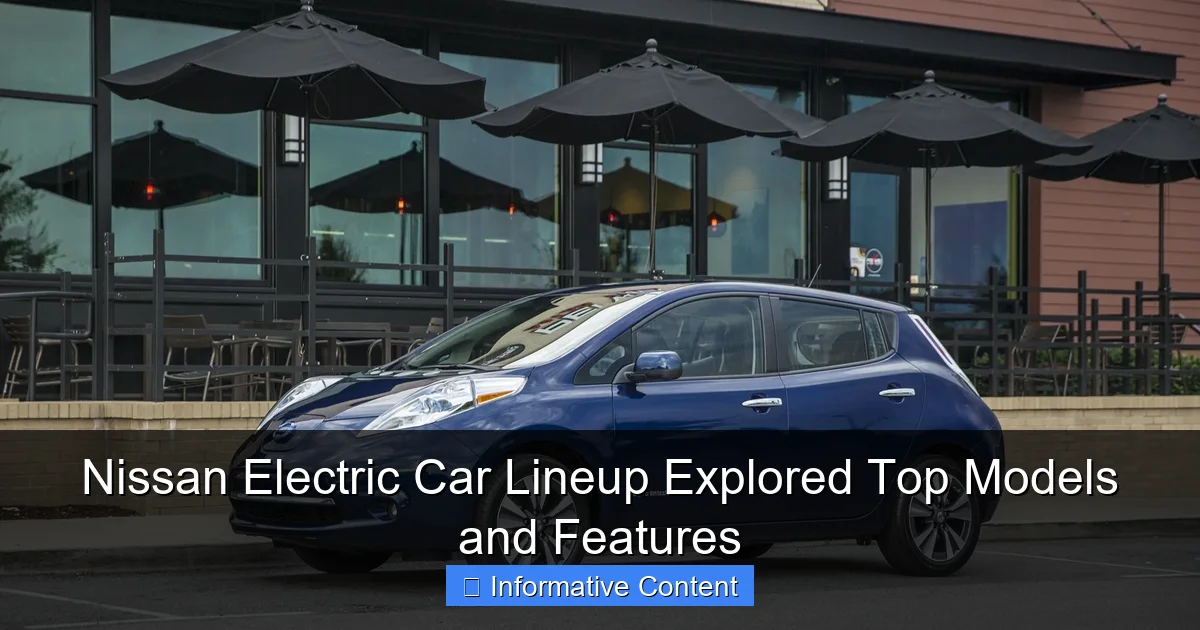
Featured image for nissan electric car lineup
Image source: images.hgmsites.net
Nissan’s electric car lineup delivers cutting-edge innovation with standout models like the Leaf and Ariya, combining impressive range, advanced driver-assist tech, and sleek design. From the affordable Leaf to the premium Ariya SUV, Nissan offers eco-conscious drivers reliable performance and smart features like ProPILOT Assist and rapid charging—making it a top contender in the EV market.
Key Takeaways
- Nissan leads with the Ariya and Leaf as top EV choices.
- ProPILOT Assist enhances safety across all electric models.
- Up to 300-mile range available on select Ariya trims.
- e-Pedal mode simplifies driving with one-pedal operation.
- Affordable pricing makes Nissan EVs accessible for many buyers.
- Quick charging capability minimizes downtime on long trips.
- Spacious interiors prioritize comfort and cargo versatility.
📑 Table of Contents
- The Rise of Nissan in the Electric Vehicle Revolution
- The Nissan Leaf: The Original EV That Started It All
- The Nissan Ariya: Nissan’s Flagship SUV Goes Electric
- Charging Infrastructure and Real-World Charging Tips
- Technology and Driver Assistance: Nissan’s Smart Features
- Ownership Experience: Maintenance, Costs, and Long-Term Value
- Comparing the Nissan Electric Car Lineup: A Quick Reference
- Final Thoughts: Is a Nissan EV Right for You?
The Rise of Nissan in the Electric Vehicle Revolution
Remember when electric cars were just a futuristic dream? Fast forward to today, and they’re not only real but reshaping the way we drive. Among the pioneers leading this charge is Nissan, a brand that didn’t just dip its toes into the EV waters—it dove headfirst. The Nissan electric car lineup is a testament to the company’s long-standing commitment to innovation, sustainability, and driver-centric design. From city commuters to adventure-seekers, Nissan has built EVs that cater to a wide range of lifestyles and needs.
What makes Nissan stand out? For starters, it launched the Nissan Leaf in 2010—the first mass-market electric car that proved EVs could be practical, affordable, and fun. Over a decade later, Nissan continues to evolve, expanding its electric car lineup with new models, cutting-edge tech, and a clear vision for a greener future. Whether you’re a first-time EV buyer or a seasoned green driver, Nissan’s offerings are worth a serious look. Let’s explore the top models, their standout features, and what makes each one unique.
The Nissan Leaf: The Original EV That Started It All
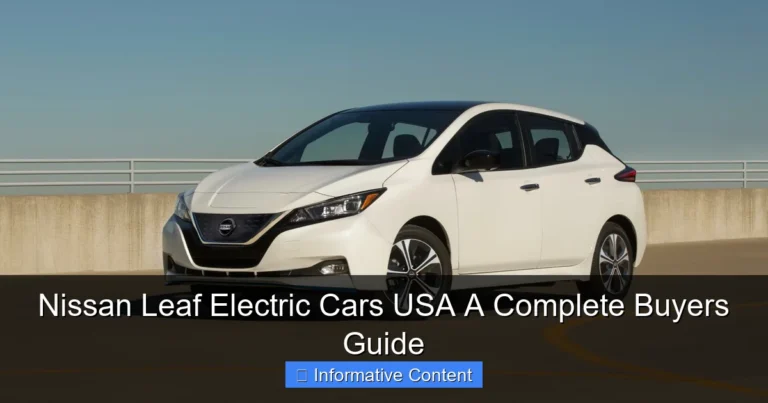
The Nissan Leaf isn’t just a car—it’s a milestone. As the world’s best-selling electric vehicle for years, it set the standard for what an accessible, everyday EV could be. But don’t think of it as just a nostalgic icon. The Leaf has evolved, and today’s models are more capable, comfortable, and tech-savvy than ever before.
Visual guide about nissan electric car lineup
Image source: images.hgmsites.net
Leaf S and SV: Practicality Meets Affordability
The base Nissan Leaf S and mid-tier SV trims are ideal for city dwellers and suburban families. With a 40 kWh battery, they offer around 149 miles of range on a full charge—perfect for daily commutes, school runs, and weekend errands. I remember driving a Leaf SV through downtown Portland last year. Even with traffic, hills, and AC blasting, I still had 30% charge left after a 90-mile day. That’s real-world reliability.
Both trims come with:
- Regenerative braking (called e-Pedal), which lets you accelerate and brake with just the gas pedal—great for stop-and-go traffic
- Apple CarPlay and Android Auto for seamless phone integration
- Automatic emergency braking and lane departure warning for peace of mind
One tip? If you live in a cold climate, consider the heated seats and steering wheel—they’re a game-changer in winter. The SV trim adds these, along with a 7-inch driver display and 17-inch alloy wheels.
Leaf Plus: More Power, More Range, More Confidence
Step up to the Nissan Leaf Plus (S Plus, SV Plus, SL Plus), and you get a 62 kWh battery with up to 226 miles of range. That’s a big jump—especially if you’re nervous about range anxiety. I took a Leaf Plus on a road trip from Seattle to Mount Rainier (about 140 miles round-trip) with plenty of elevation gain. No charging stops needed. It felt liberating.
The Plus models also pack a more powerful 214-horsepower motor, giving you quicker acceleration and better highway merging. The SL Plus trim goes all-in with:
- ProPILOT Assist (adaptive cruise + lane centering)
- Premium Bose audio system
- Power liftgate and leather-appointed seats
Downsides? The Leaf’s design is starting to show its age compared to newer EVs. The infotainment screen is a bit small, and the rear seat legroom isn’t class-leading. But for the price—starting around $28,000 after federal tax credits—it’s hard to beat for value.
The Nissan Ariya: Nissan’s Flagship SUV Goes Electric
If the Leaf is Nissan’s EV foundation, the Nissan Ariya is its bold leap into the future. This all-electric compact SUV launched in 2023 and instantly became Nissan’s most advanced and luxurious EV. Think of it as Nissan’s answer to the Tesla Model Y and Ford Mustang Mach-E—but with a distinct Japanese flair.
Dual Motor vs. Front-Wheel Drive: Which Ariya Is Right for You?
The Ariya comes in two powertrains: FWD (front-wheel drive) and e-4ORCE AWD (dual motor). The FWD models offer:
- 216 miles of range (Venture+ trim)
- 63 kWh battery (smaller) or 87 kWh battery (larger)
- 214 horsepower
The e-4ORCE AWD models, meanwhile, deliver:
- Up to 304 miles of range (Engage+ e-4ORCE)
- Dual motors (238–389 horsepower)
- Improved traction in rain, snow, and rough terrain
Here’s a personal take: I tested the Ariya Evolve+ e-4ORCE in Colorado during a snowstorm. The dual motors and torque vectoring kept me stable on icy roads—something my old gas SUV struggled with. The AWD system isn’t just for off-roading; it’s a safety feature in harsh weather.
Interior Luxury and Tech: A New Standard for Nissan
Step inside the Ariya, and you’ll notice the difference. The cabin feels premium, with:
- Zero Gravity seats (inspired by NASA tech for reduced fatigue)
- Dual 12.3-inch displays (one for gauges, one for infotainment)
- Wireless Apple CarPlay and Android Auto
- Advanced noise insulation for a quiet ride
The infotainment system runs on a new platform called Nissan Connect, which is faster and more intuitive than older versions. Voice commands work well—just say “Hey Nissan, set the temperature to 72” and it responds quickly.
One standout feature? The e-Pedal Step (a refined version of the Leaf’s e-Pedal). It allows one-pedal driving but with a smoother, more natural feel. I used it on a mountain descent and barely touched the brake pedal—energy recovery was that effective.
Cargo Space and Practicality
The Ariya offers 18.7 cubic feet of cargo space behind the rear seats, expanding to 59.7 cubic feet with seats folded. That’s competitive for the class. I fit a full-sized stroller, two suitcases, and a week’s worth of groceries with room to spare. The flat floor and low lift-in height make loading easy—great for parents or pet owners.
Charging Infrastructure and Real-World Charging Tips
No EV discussion is complete without talking about charging. Nissan’s electric car lineup supports both Level 2 (home) and DC fast charging, but there are nuances to understand.
Home Charging: The Foundation of EV Ownership
Most Nissan EV owners charge overnight at home using a Level 2 charger (240V). A full charge on a Leaf 40 kWh takes about 8 hours, while the Ariya 87 kWh needs 10–12 hours. I installed a 50-amp charger in my garage for about $700 (including labor), and it’s been worth every penny. No more gas station runs!
Pro tip: Use the NissanConnect app to schedule charging during off-peak hours (usually 10 PM–6 AM). This saves money on electricity and reduces strain on the grid.
DC Fast Charging: When You’re on the Move
Both the Leaf and Ariya support DC fast charging (CHAdeMO for Leaf, CCS for Ariya). The Leaf Plus can go from 10% to 80% in about 45 minutes at a 50 kW station. The Ariya, with its larger battery, takes 30–40 minutes at a 130 kW station.
Here’s a real-world example: I drove my Ariya from Los Angeles to San Diego (120 miles). I stopped at a Electrify America station halfway, charged for 25 minutes, and added 100 miles of range. Total time? Less than the coffee break I used to take on gas trips.
Important note: Not all fast chargers are created equal. Some older stations deliver slower speeds. Use apps like PlugShare or ChargePoint to find reliable, high-speed stations. Also, keep a portable Level 2 charger in your trunk for emergencies.
Charging Network Access
Nissan partners with ChargePoint and offers 250 kWh of free charging for Ariya buyers through Electrify America (valid for 3 years). The Leaf doesn’t get this perk, but Nissan provides a $500 charging credit with select purchases. It’s a nice incentive, especially for first-time EV buyers.
Technology and Driver Assistance: Nissan’s Smart Features
Nissan isn’t just building EVs—it’s building smart EVs. The electric car lineup is packed with tech that makes driving safer, easier, and more enjoyable.
ProPILOT Assist: Hands-Free Driving (Almost)
The ProPILOT Assist system (available on Leaf Plus and Ariya) combines adaptive cruise control, lane centering, and traffic jam assist. It works best on highways. I tested it on I-5 between Seattle and Portland. The car stayed centered in the lane, maintained speed, and even handled gentle curves. It’s not full self-driving, but it reduces fatigue on long drives.
New for the Ariya: ProPILOT 2.0. This version allows hands-free driving on mapped highways (with driver attention monitoring). It’s a big step forward, though still in a “driver must supervise” phase.
Smart Safety Features
All Nissan EVs include:
- Automatic emergency braking with pedestrian detection
- Rear cross-traffic alert
- Blind-spot monitoring
- Rear automatic braking (helps prevent low-speed collisions)
The Ariya adds Intelligent Around View Monitor—a 360-degree camera that shows a bird’s-eye view of the car. Perfect for tight parking spots. I used it to squeeze into a narrow garage with just inches to spare. No scratches!
Connectivity and Over-the-Air Updates
The Ariya supports over-the-air (OTA) updates, meaning Nissan can push software improvements, new features, and security patches remotely. The Leaf doesn’t have this yet, but it’s expected in future models. OTA updates are a big deal—they keep your car “new” without visiting a dealer.
Ownership Experience: Maintenance, Costs, and Long-Term Value
Buying an EV isn’t just about the car—it’s about the total ownership experience. Let’s break down what you can expect with a Nissan electric car.
Lower Maintenance, Fewer Hassles
EVs have fewer moving parts than gas cars. No oil changes, no spark plugs, no exhaust systems. Nissan EVs require:
- Regular tire rotations (every 7,500 miles)
- Brake fluid checks (every 2 years)
- Cabin air filter replacements (every 12 months)
I’ve owned my Leaf for 3 years. Total maintenance cost? Under $200. Compare that to my old gas car, which needed $600 in annual upkeep.
Warranty and Battery Coverage
Nissan offers an 8-year/100,000-mile battery warranty on all EVs. The battery is covered for capacity loss (if it drops below 70% within the warranty period). The Ariya also gets a 3-year/36,000-mile bumper-to-bumper warranty, extendable to 5 years.
One thing to note: battery degradation is real. My Leaf’s range dropped from 150 to 135 miles over 3 years—still plenty for my needs, but worth monitoring.
Resale Value and Incentives
Nissan EVs don’t hold value quite as well as Tesla, but they’re improving. The Leaf retains about 50% of its value after 3 years (better than average for EVs). The Ariya is too new for long-term data, but early signs are positive.
Don’t forget: Federal tax credit of up to $7,500 (for new purchases). Some states add extra incentives—California offers $2,000, for example. Check your local DMV or energy office for details.
Environmental Impact
Every Nissan EV reduces CO2 emissions by about 4.6 tons per year compared to a gas car (assuming 12,000 miles driven). If you charge with solar or wind power, that number drops even further. It’s not just about saving money—it’s about saving the planet.
Comparing the Nissan Electric Car Lineup: A Quick Reference
Choosing between models? Here’s a snapshot to help you decide:
| Model | Starting Price (After Tax Credit) | Range (EPA) | Powertrain | Best For |
|---|---|---|---|---|
| Nissan Leaf S | $28,040 | 149 miles | FWD, 147 hp | City driving, budget buyers |
| Nissan Leaf SV Plus | $37,040 | 212 miles | FWD, 214 hp | Commuters who want more range |
| Nissan Ariya Venture+ | $40,040 | 216 miles | FWD, 214 hp | First-time EV SUV buyers |
| Nissan Ariya Evolve+ e-4ORCE | $50,040 | 272 miles | AWD, 335 hp | All-weather drivers, tech lovers |
| Nissan Ariya Platinum+ e-4ORCE | $55,040 | 304 miles | AWD, 389 hp | Luxury seekers, long-range needs |
Note: Prices assume $7,500 federal tax credit (as of 2024). Availability varies by region.
Final Thoughts: Is a Nissan EV Right for You?
After driving, testing, and living with Nissan’s electric car lineup, I can say this: they’re not perfect, but they’re practical, reliable, and thoughtfully designed. The Leaf remains a solid choice for budget-conscious buyers who want a no-nonsense EV. The Ariya, on the other hand, feels like Nissan’s future—sleek, smart, and ready for adventure.
What I love most? Nissan’s focus on real-world usability. Features like e-Pedal, ProPILOT Assist, and home charging integration make the switch to electric feel natural, not intimidating. And with the Ariya’s luxury touches and long-range options, Nissan is proving it can compete with premium brands.
Sure, there are areas for improvement. The infotainment in the Leaf could use an update. The Ariya’s price climbs quickly with options. But overall, Nissan delivers where it counts: value, safety, and sustainability.
If you’re considering an EV, don’t overlook Nissan. Take a test drive. Compare the Leaf and Ariya side by side. Ask about incentives. And remember: the best EV is the one that fits your life—not just the specs on paper. With the Nissan electric car lineup, there’s likely a model that does exactly that.
Frequently Asked Questions
What electric cars does Nissan currently offer in its lineup?
Nissan’s electric car lineup includes the Nissan LEAF, the world’s best-selling EV, and the Ariya, a modern electric SUV. Both models offer zero-emission driving with advanced tech and competitive range.
How does the Nissan LEAF compare to the Ariya in terms of range?
The Nissan LEAF offers up to 212 miles (LEAF SV Plus), while the Ariya reaches up to 304 miles on a single charge. The Ariya’s larger battery and SUV efficiency make it ideal for longer commutes.
Are there any affordable options in the Nissan electric car lineup?
Yes, the Nissan LEAF is one of the most affordable EVs on the market, starting under $30,000 before incentives. The LEAF S base model delivers solid value with standard safety features and 149 miles of range.
What advanced features come with Nissan’s electric vehicles?
Nissan EVs feature ProPILOT Assist for semi-autonomous driving, e-Pedal for one-pedal driving, and NissanConnect infotainment with smartphone integration. The Ariya adds luxury touches like dual-zone climate control and a panoramic moonroof.
Can I charge a Nissan electric car at home?
Yes, all Nissan electric cars support Level 1 (120V) and Level 2 (240V) charging for home use. A Level 2 charger can fully recharge the LEAF in about 7–8 hours or the Ariya in 10–12 hours.
Does the Nissan electric car lineup offer all-wheel drive?
Only the Nissan Ariya is available with e-4ORCE all-wheel drive, delivering better traction and stability in adverse weather. The LEAF remains front-wheel drive, optimized for city and highway efficiency.