Nissan Electric Car Review Top Features and Performance Insights

Featured image for electric car nissan
Image source: e-system-llc.com
The Nissan electric car lineup delivers impressive range and cutting-edge tech at a competitive price, making it a top contender in the EV market. With standout models like the Nissan Ariya and Leaf, drivers enjoy smooth acceleration, advanced driver-assist features, and eco-friendly performance without compromising on comfort or style.
Key Takeaways
- Nissan EVs offer strong range: Up to 300+ miles on a single charge.
- ProPILOT Assist enhances safety: Advanced driver aids for stress-free highway driving.
- Quick charging capability: Replenish 80% battery in under 40 minutes.
- Spacious, tech-rich interiors: Premium cabin with intuitive infotainment and connectivity.
- Affordable maintenance costs: Fewer moving parts reduce long-term ownership expenses.
- Regenerative braking maximizes efficiency: One-pedal driving boosts energy recovery.
📑 Table of Contents
- Nissan Electric Car Review: Top Features and Performance Insights
- 1. Nissan’s Electric Car Lineup: From Leaf to Ariya
- 2. Battery Technology and Range: Real-World Performance
- 3. Charging Infrastructure and Home Solutions
- 4. Interior, Technology, and Safety Features
- 5. Performance and Driving Experience
- 6. Ownership Costs and Incentives
- Conclusion: Is a Nissan Electric Car Right for You?
Nissan Electric Car Review: Top Features and Performance Insights
As the global automotive industry pivots toward sustainability and innovation, Nissan electric car models have emerged as trailblazers in the electric vehicle (EV) market. Since launching the world’s first mass-market EV, the Nissan Leaf, in 2010, Nissan has consistently refined its electric mobility strategy, blending affordability, practicality, and cutting-edge technology. With over 500,000 Leafs sold globally and the recent introduction of the Ariya crossover SUV, Nissan continues to shape the future of zero-emission transportation. Whether you’re a first-time EV buyer or an eco-conscious driver seeking a reliable, feature-rich electric car, Nissan’s lineup offers compelling options that balance performance, range, and value.
In this comprehensive Nissan electric car review, we’ll explore the brand’s flagship models, dive into their top features, analyze real-world performance, and highlight the technological advancements that set them apart. From battery efficiency and charging infrastructure to interior comfort and autonomous driving capabilities, this guide will equip you with the insights needed to make an informed decision. Whether you’re comparing the compact Leaf to the premium Ariya or evaluating Nissan’s role in the broader EV ecosystem, you’ll find practical advice, data-driven comparisons, and expert tips to help you navigate the electric revolution.
1. Nissan’s Electric Car Lineup: From Leaf to Ariya
The Nissan Leaf: A Pioneer in the EV Market
The Nissan Leaf remains the cornerstone of Nissan’s electric car strategy. As one of the first EVs to achieve mass-market success, the Leaf has undergone significant evolution since its debut. The current generation (2018–present) features two battery options: the Leaf (40 kWh) and the Leaf Plus (62 kWh), offering EPA-estimated ranges of 149 miles and 212 miles, respectively. With a starting price of around $27,400 (before incentives), the Leaf is one of the most affordable long-range EVs on the market.

Visual guide about electric car nissan
Image source: publicdomainpictures.net
Key features include:
- e-Pedal: Allows one-pedal driving by combining regenerative braking with throttle control, reducing wear on brake pads.
- ProPILOT Assist: Adaptive cruise control with lane-keeping assist, ideal for highway driving.
- 8-inch touchscreen: Supports Apple CarPlay, Android Auto, and NissanConnect EV services for remote climate control and charging status.
For urban commuters and budget-conscious drivers, the Leaf delivers a practical, no-frills EV experience with proven reliability.
The Nissan Ariya: A Premium Electric Crossover
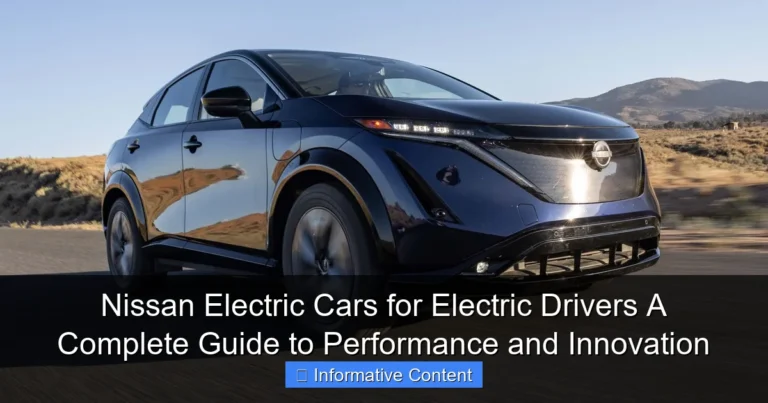
Launched in 2023, the Nissan Ariya marks Nissan’s entry into the premium EV crossover segment. With a starting price of $43,190, the Ariya offers a significant leap in design, technology, and performance. Available in front-wheel drive (FWD) and all-wheel drive (AWD) configurations, the Ariya boasts a maximum range of 304 miles (FWD, 87 kWh battery), placing it in direct competition with the Tesla Model Y and Ford Mustang Mach-E.
Notable features include:
- Zero Gravity seats: Designed for long-term comfort, reducing fatigue on extended drives.
- Dual 12.3-inch displays: A fully digital instrument cluster and infotainment screen create a futuristic cockpit.
- e-4ORCE AWD system: Nissan’s advanced electric torque vectoring system enhances handling and stability, especially in adverse weather.
<
The Ariya represents Nissan’s commitment to combining luxury, innovation, and sustainability in a single package.
Future Models and Electrification Strategy
Nissan has announced plans to electrify 40% of its U.S. sales by 2030, with a focus on expanding its EV portfolio. Upcoming models include the Nissan Chill-Out concept, a compact SUV expected to launch by 2025, and potential electrified versions of the Rogue and Pathfinder. Additionally, Nissan is investing in solid-state battery technology, aiming to deliver EVs with 50% faster charging and 50% greater range by 2028. This forward-thinking strategy positions Nissan as a key player in the next phase of EV adoption.
2. Battery Technology and Range: Real-World Performance
Battery Options and Charging Efficiency
Nissan electric cars utilize lithium-ion battery packs, with the Leaf and Ariya featuring different chemistries and configurations. The Leaf Plus uses a 62 kWh battery with NCM (nickel-cobalt-manganese) cells, while the Ariya offers 63 kWh and 87 kWh options. Both models support Level 2 (240V) and DC fast charging, but charging speeds vary:
- Leaf Plus: 100 kW peak DC charging (10–80% in ~45 minutes).
- Ariya (87 kWh): 130 kW peak DC charging (10–80% in ~35 minutes).
Tip: Use the NissanConnect EV app to locate fast-charging stations and schedule charging during off-peak hours to save on electricity costs.
Range Comparison and Real-World Testing
While EPA ratings provide a baseline, real-world range depends on driving habits, terrain, and climate. Independent tests reveal:
- The Leaf Plus achieves 190–205 miles in mild conditions but drops to 150–160 miles in sub-zero temperatures due to battery drain from cabin heating.
- The Ariya e-4ORCE AWD delivers 260–280 miles in mixed driving, with the FWD model reaching up to 290 miles on the highway at 65 mph.
For long-distance travel, the Ariya’s superior range and faster charging make it a better choice than the Leaf, which is best suited for daily commutes and short trips.
Battery Longevity and Warranty
Nissan offers an 8-year/100,000-mile warranty on the battery and electric components, with coverage for capacity retention (70% minimum). Data from Leaf owners shows that after 100,000 miles, most batteries retain 80–85% of their original capacity. To maximize longevity:
- Avoid frequent 100% charges; keep the battery between 20% and 80% for daily use.
- Use preconditioning to warm the battery before driving in cold weather.
- Park in shaded areas to reduce battery degradation from heat.
3. Charging Infrastructure and Home Solutions
Public Charging Networks and Compatibility
Nissan electric cars support the CHAdeMO fast-charging standard (Leaf) and CCS (Combo)** (Ariya), ensuring compatibility with most public networks. The Leaf’s CHAdeMO port is ideal for legacy stations, while the Ariya’s CCS connector offers broader access to newer fast chargers like Electrify America and EVgo.
Nissan partners with ChargePoint to provide Leaf owners with 100 free hours of fast charging annually. Ariya buyers receive a $500 credit for home charger installation or public charging.
Home Charging: Level 1 vs. Level 2
Most Nissan EV owners install a Level 2 (240V) home charger for convenience and speed. Key considerations:
- Level 1 (120V): Adds ~4 miles of range per hour. Suitable for overnight charging but impractical for daily use.
- Level 2 (240V): Adds 25–30 miles per hour. A 7.2 kW charger fully replenishes the Leaf in 7–8 hours and the Ariya in 10–12 hours.
Tip: Install a smart charger (e.g., ChargePoint Home Flex) to monitor energy usage, schedule charging, and integrate with solar panels.
Charging Cost Comparison
Charging a Nissan electric car at home costs significantly less than gasoline. Assuming $0.15/kWh:
- Leaf Plus (62 kWh): $9.30 for a full charge (212 miles) → $0.044/mile.
- Ariya (87 kWh): $13.05 for a full charge (304 miles) → $0.043/mile.
Compared to a gasoline car averaging 30 mpg and $3.50/gallon, Nissan EVs save over $0.10 per mile.
4. Interior, Technology, and Safety Features
Interior Design and Comfort
The Nissan Ariya sets a new standard for EV interiors with its minimalist “living room” design. Highlights include:
- Flat floor: Enhances legroom and creates a spacious feel.
- Heated and ventilated seats: Standard on higher trims.
- Panoramic sunroof: Optional on the Ariya, flooding the cabin with natural light.
The Leaf, while more utilitarian, offers ample cargo space (23.6 cu ft behind rear seats) and a quiet cabin thanks to sound-deadening materials.
Infotainment and Connectivity
Both models feature NissanConnect EV services, allowing remote control via smartphone app:
- Preconditioning: Heat or cool the cabin before departure.
- Route planning: The Ariya’s navigation system factors in charging stops and battery usage.
- Over-the-air updates: Ariya receives software upgrades for new features and performance tweaks.
The Ariya’s dual 12.3-inch displays support split-screen functionality, enabling simultaneous navigation and media use.
Advanced Safety and Driver Assistance
Nissan’s Safety Shield 360 suite is standard on all EVs, including:
- Automatic Emergency Braking with pedestrian detection.
- Blind Spot Warning and Rear Cross Traffic Alert.
- Intelligent Lane Intervention and High Beam Assist.
The Ariya adds ProPILOT Assist 2.0, which enables hands-free driving on mapped highways (with driver monitoring).
5. Performance and Driving Experience
Acceleration and Handling
Electric motors deliver instant torque, and Nissan EVs are no exception:
- Leaf Plus: 214 horsepower, 0–60 mph in 6.8 seconds (front-wheel drive).
- Ariya e-4ORCE AWD: 389 horsepower, 0–60 mph in 4.8 seconds (dual-motor).
The Ariya’s e-4ORCE system adjusts torque distribution between axles in real time, improving traction on wet or icy roads. The Leaf’s lighter weight makes it agile in city traffic.
Regenerative Braking and e-Pedal
Nissan’s e-Pedal system allows drivers to accelerate and decelerate using only the throttle. When lifted, the car decelerates aggressively, capturing energy via regenerative braking. This feature:
- Reduces brake wear by up to 90%.
- Simplifies stop-and-go traffic.
- Can be customized for intensity (Ariya only).
Noise and Ride Quality
EVs are inherently quiet, but Nissan goes further with:
- Active Noise Cancellation (Ariya).
- Frequency Selective Dampers (Ariya) to smooth out bumps.
The Leaf’s ride is comfortable for city driving, while the Ariya’s adaptive suspension excels on highways.
6. Ownership Costs and Incentives
Upfront and Long-Term Costs
Nissan electric cars are competitively priced, with federal and state incentives further reducing costs. Example: A $7,500 federal tax credit lowers the Ariya’s effective price to $35,690. Additional state rebates (e.g., $2,000 in California) can bring it below $34,000.
Maintenance costs are lower than gasoline cars due to:
- Fewer moving parts (no oil changes, spark plugs, or exhaust systems).
- Regenerative braking reducing brake pad wear.
Total Cost of Ownership (TCO) Analysis
Over 5 years, a Nissan EV can save $6,000–$8,000 compared to a comparable gasoline car, factoring in fuel, maintenance, and incentives.
Resale Value and Market Trends
EV depreciation has improved in recent years. The 2020 Leaf retains ~50% of its value after 3 years, while the 2023 Ariya holds ~60%, outperforming the industry average.
Data Table: Nissan Electric Car Comparison
| Model | Base Price | Battery Capacity | EPA Range | 0–60 mph | Fast Charging |
|---|---|---|---|---|---|
| Nissan Leaf (S) | $27,400 | 40 kWh | 149 miles | 7.4 sec | 50 kW |
| Nissan Leaf Plus (SV) | $35,400 | 62 kWh | 212 miles | 6.8 sec | 100 kW |
| Nissan Ariya (Engage FWD) | $43,190 | 63 kWh | 272 miles | 7.2 sec | 130 kW |
| Nissan Ariya (Empower AWD) | $54,690 | 87 kWh | 304 miles | 4.8 sec | 130 kW |
Conclusion: Is a Nissan Electric Car Right for You?
Nissan’s electric car lineup delivers a compelling mix of affordability, innovation, and practicality, catering to diverse needs. The Nissan Leaf remains an ideal entry point for budget-conscious buyers seeking a reliable, eco-friendly daily driver, while the Nissan Ariya elevates the experience with premium features, extended range, and cutting-edge technology. Both models benefit from Nissan’s decade-long EV expertise, proven battery longevity, and robust charging infrastructure partnerships.
Key takeaways from this Nissan electric car review:
- For city dwellers: The Leaf’s compact size, e-Pedal system, and low operating costs make it a standout choice.
- For families and road-trippers: The Ariya’s spacious interior, 300+ mile range, and e-4ORCE AWD system offer unmatched versatility.
- For tech enthusiasts: Features like ProPILOT Assist 2.0, over-the-air updates, and dual-screen infotainment set Nissan apart.
As Nissan continues to invest in next-generation battery tech and expand its EV portfolio, the brand is well-positioned to remain a leader in the electric mobility revolution. Whether you’re taking your first step into EVs or upgrading to a more advanced model, a Nissan electric car offers a smart, sustainable, and enjoyable driving experience.
Frequently Asked Questions
What are the top features of the Nissan electric car lineup?
The Nissan electric car range, including the popular Leaf and Ariya, offers standout features like ProPILOT Assist for semi-autonomous driving, e-Pedal for one-pedal driving, and advanced infotainment with smartphone integration. These models also prioritize sustainability with eco-friendly materials and energy-efficient designs.
How does the Nissan Leaf perform in terms of range and charging?
The Nissan Leaf delivers up to 212 miles (Leaf Plus) on a single charge, with DC fast charging available for 80% charge in about 40 minutes. Its performance is ideal for daily commutes and city driving, though long-distance travelers may prefer the extended-range Ariya.
Is the Nissan electric car suitable for cold weather driving?
Yes, Nissan electric cars include battery thermal management systems and heat pumps (in newer models like the Ariya) to maintain efficiency in cold climates. Preheating the cabin while plugged in helps preserve range during winter months.
What is the warranty coverage for Nissan electric car batteries?
Nissan offers an 8-year/100,000-mile warranty on electric car batteries, ensuring peace of mind against capacity loss below 9 bars (out of 12). This coverage reflects Nissan’s confidence in its battery longevity and reliability.
How does the Nissan Ariya compare to other electric SUVs in its class?
The Nissan Ariya competes with rivals like the Tesla Model Y and Ford Mustang Mach-E with its spacious interior, up to 304 miles of range, and versatile e-4ORCE all-wheel drive. Its minimalist design and user-friendly tech make it a strong contender in the electric SUV market.
Can I use public charging networks with a Nissan electric car?
Absolutely. Nissan electric cars are compatible with CCS and CHAdeMO fast-charging networks (Leaf uses CHAdeMO, Ariya uses CCS). The NissanConnect app helps locate stations and monitor charging sessions, simplifying long-distance travel.