Nissan Electric Car vs Tesla Which One Reigns Supreme
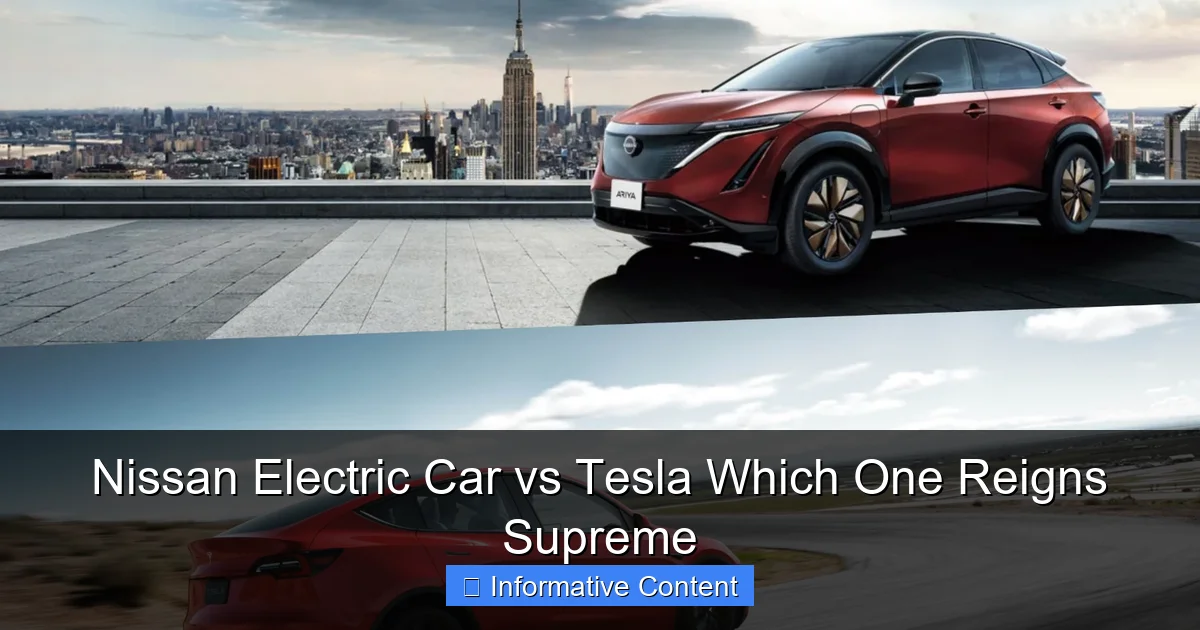
Featured image for nissan electric car vs tesla
Image source: img.sm360.ca
Tesla dominates the electric vehicle market with superior range, cutting-edge tech, and a vast Supercharger network, making it the top choice for performance and innovation. While the Nissan electric car offers a more affordable entry point and practical design, it lags behind in charging speed and software sophistication. For drivers prioritizing value and simplicity, Nissan holds appeal—but Tesla reigns supreme for those seeking the ultimate EV experience.
Key Takeaways
- Tesla leads in range: Superior battery tech ensures longer drives on a single charge.
- Nissan offers affordability: Budget-friendly options without sacrificing core EV features.
- Tesla’s charging network: Access to 45,000+ Superchargers globally for seamless travel.
- Nissan focuses on practicality: Spacious interiors and user-friendly tech for daily commuting.
- Tesla excels in performance: Faster acceleration and cutting-edge autonomous driving features.
- Nissan’s reliability: Proven track record with fewer reported software issues.
📑 Table of Contents
- The Electric Car Showdown: Nissan vs Tesla – Who Takes the Crown?
- Performance and Range: Speed, Distance, and the Daily Drive
- Price and Value: What You Pay vs. What You Get
- Charging Infrastructure: Where and How You Power Up
- Technology and Features: The Brains Behind the Brawn
- Design and Practicality: Space, Style, and Everyday Use
- Data Table: Nissan Leaf vs Tesla Model 3/Y Quick Comparison
- The Final Verdict: Which One Reigns Supreme?
The Electric Car Showdown: Nissan vs Tesla – Who Takes the Crown?
Picture this: You’re standing in a dealership, or maybe scrolling through car listings online, and you’re torn between two electric vehicles (EVs). On one side, you have the Nissan Leaf, a name that’s been around for over a decade and helped bring EVs into the mainstream. On the other, the Tesla lineup, which has become synonymous with cutting-edge tech, performance, and a cult-like following. It’s like choosing between the reliable family sedan and the futuristic spaceship.
You’re not alone in this dilemma. With gas prices fluctuating and environmental concerns growing, more people are making the switch to electric. But the real question is: which one is better for you? Is it the affordable, practical Nissan, or the flashy, high-tech Tesla? In this post, we’ll dive deep into the key differences, from performance and price to charging and ownership experience. We’ll compare their real-world usability, long-term value, and even the little things that matter—like how easy it is to find a charging station or how your kids will feel about the car’s “cool factor.” By the end, you’ll have a clear picture of which EV reigns supreme for your needs.
Performance and Range: Speed, Distance, and the Daily Drive
Acceleration and Driving Experience
Let’s start with the fun stuff—how these cars feel on the road. Tesla has built its reputation on blistering acceleration. The Tesla Model 3 Performance, for example, can go from 0 to 60 mph in just 3.1 seconds. That’s faster than many sports cars. Even the base Model 3 feels quick and responsive, with a smooth, silent ride that’s almost surreal. The steering is precise, and the low center of gravity (thanks to the heavy battery pack) makes it hug corners like it’s on rails.
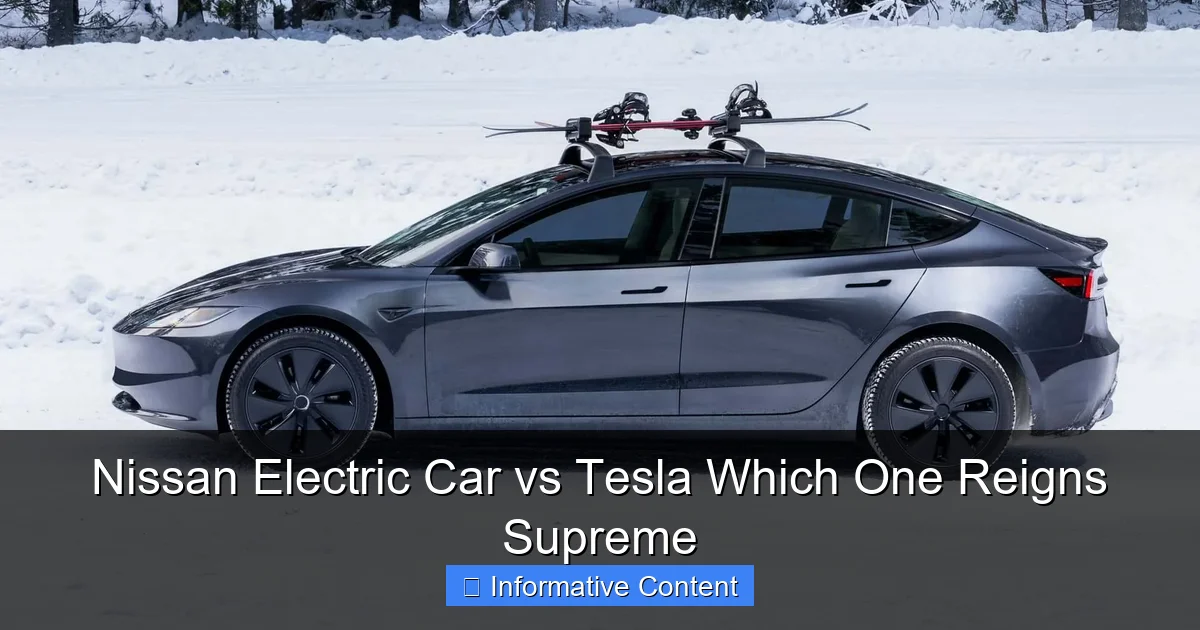
Visual guide about nissan electric car vs tesla
Image source: cdn.motor1.com
The Nissan Leaf, on the other hand, isn’t about speed. The Leaf e+ (the long-range version) hits 60 mph in around 6.5 seconds—respectable, but not thrilling. The base Leaf is even slower. But here’s the thing: most daily drives don’t need sports car performance. If you’re commuting to work, picking up the kids, or running errands, the Leaf’s acceleration is more than enough. It’s peppy in city traffic, with instant torque that makes merging onto highways a breeze. Plus, it’s quieter than a gas car, which can be a big plus if you value a peaceful drive.
Pro tip: If you love the feel of a high-performance car, Tesla wins. But if you just want a smooth, stress-free commute, the Leaf delivers without the premium price tag.
Range: How Far Can You Go?
Range anxiety is real, especially for new EV owners. Here, Tesla has a clear edge. The Model 3 Long Range can go up to 333 miles on a single charge, while the Model Y Long Range offers 330 miles. Even the standard Model 3 gets around 272 miles. That means you can easily do a round-trip between cities (like Los Angeles to San Diego) without worrying about charging.
The Nissan Leaf e+ maxes out at about 212 miles, and the base Leaf gets around 149 miles. That’s fine for city driving or short commutes, but if you’re planning a road trip or live in a rural area with sparse charging stations, the Leaf might feel limiting. For example, a friend of mine with a Leaf once had to carefully plan a 200-mile trip, including a stop at a public charger halfway through. It worked, but it added stress and time to the journey.
Real-world example: If your daily driving is under 50 miles, the Leaf’s range is plenty. But if you often drive longer distances or take weekend getaways, Tesla’s range gives you more freedom and less planning.
Price and Value: What You Pay vs. What You Get
Upfront Costs and Incentives
Let’s talk money. The Nissan Leaf is the clear winner here. The base Leaf starts at around $28,000 (before incentives), and the Leaf e+ is about $36,000. With federal tax credits (up to $7,500 for eligible buyers) and state/local incentives, you could drive one home for under $20,000. That’s a huge win for budget-conscious buyers.
Tesla’s prices are higher. The Model 3 starts at around $40,000, the Model Y at $45,000, and the Model S and Model X climb well into the $80,000+ range. Even with tax credits, Tesla is a bigger investment. But here’s the catch: Tesla’s pricing includes features that Nissan charges extra for, like advanced safety tech and over-the-air updates.
Tip: Always check for incentives! Some states offer additional rebates or HOV lane access for EVs, which can tip the scales in Nissan’s favor.
Long-Term Ownership and Maintenance
EVs are cheaper to maintain than gas cars, but there are differences here too. Tesla’s service model is unique: you schedule appointments online, and a mobile technician can often fix issues at your home or office. But if you need a major repair, you’ll likely have to visit a service center, which might be far away depending on your location. Some owners have reported long wait times for parts or service, especially in rural areas.
Nissan, being a traditional automaker, has a vast dealership network. If something goes wrong, you can usually find a mechanic nearby. Parts are also more widely available, and labor costs might be lower. Plus, the Leaf has been around longer, so there’s a wealth of DIY repair guides and third-party support.
Ownership insight: Tesla’s tech-heavy cars might have fewer mechanical issues, but Nissan’s established service network can be a lifesaver when you need quick, affordable repairs.
Charging Infrastructure: Where and How You Power Up
Home Charging and Daily Convenience
Most EV owners charge at home, and both Nissan and Tesla make this easy. You can plug into a standard outlet (Level 1) or install a Level 2 charger (240 volts) for faster charging. Tesla includes a Mobile Connector for home charging, while Nissan offers a similar setup. The big difference? Tesla’s charger is more versatile—it works with both Tesla’s proprietary connector and standard J1772 plugs (with an adapter).
Pro tip: A Level 2 charger is worth the investment if you drive more than 30 miles a day. It can fully charge a Leaf overnight (6–8 hours) and a Model 3 in 8–10 hours. Installation costs vary, but you might qualify for rebates to offset the expense.
Public Charging and Road Trips
This is where Tesla shines. The Tesla Supercharger network is the gold standard for fast charging. There are over 50,000 Superchargers worldwide, with stations strategically placed along highways and in cities. They’re reliable, easy to use (just plug in and pay via the car’s touchscreen), and can add up to 200 miles of range in 15–20 minutes.
Nissan Leafs use the CHAdeMO standard for fast charging, which is less common than Tesla’s connector. While Nissan has partnerships with networks like ChargePoint and Electrify America, finding a working CHAdeMO station can be hit or miss. In some areas, the stations are outdated, slow, or out of service. For example, a friend with a Leaf once drove 30 miles out of her way to find a CHAdeMO charger—only to discover it was broken.
Road trip reality check: If you plan to travel long distances regularly, Tesla’s Supercharger network is a game-changer. Nissan’s charging options are improving, but they’re not there yet.
Technology and Features: The Brains Behind the Brawn
Infotainment and User Experience
Tesla’s tech is unmatched. The centerpiece is the 15-inch touchscreen (17 inches in Model S/X), which controls everything: navigation, climate, music, even the glovebox. It’s like having an iPad in your car. The interface is intuitive, with over-the-air updates that add new features and fix bugs without a visit to the service center. Features like Autopilot (Tesla’s driver-assist system) and Dog Mode (keeps the car cool for pets) show how far Tesla pushes innovation.
The Nissan Leaf has a smaller touchscreen (8 inches) with a more traditional layout. It’s functional but not flashy. The latest models have Apple CarPlay and Android Auto, which is a big upgrade, but the system feels dated compared to Tesla’s. Nissan’s ProPILOT Assist (their driver-assist tech) is solid for highway driving but lacks Tesla’s advanced automation.
User experience: If you love tech and want a car that feels like the future, Tesla wins. If you prefer simplicity and don’t want to spend time learning a new interface, the Leaf is more straightforward.
Safety and Driver Assistance
Both cars have strong safety ratings, but Tesla goes further. The Model 3 and Model Y earned 5-star ratings from the NHTSA, and Tesla’s Autopilot includes features like automatic emergency braking, lane-keeping, and adaptive cruise control. The system is constantly improving through software updates, which means your car gets safer over time.
The Leaf also has advanced safety tech (like automatic emergency braking and blind-spot monitoring), but it’s more basic. ProPILOT Assist helps with lane centering and adaptive cruise, but it requires more driver input than Tesla’s Autopilot. In real-world driving, this means you’ll need to keep your hands on the wheel more often with the Leaf.
Safety tip: Always stay alert when using driver-assist systems. They’re helpful, but they’re not a substitute for attentive driving.
Design and Practicality: Space, Style, and Everyday Use
Interior Space and Comfort
Size matters—especially if you have a family or carry a lot of cargo. The Tesla Model Y is a compact SUV with a roomy interior. The rear seats are spacious, and the front trunk (frunk) plus rear trunk give you over 68 cubic feet of storage with the seats folded. The Model 3 is a sedan, so it has less cargo space but a more car-like feel.
The Nissan Leaf is a hatchback, which means it has a decent amount of cargo room (23.6 cubic feet behind the rear seats, 30 with them folded). The back seats are tight for adults but fine for kids. The Leaf’s interior is functional, with hard plastics and a simple design. It’s not luxurious, but it’s comfortable for daily use.
Family-friendly insight: If you need space for car seats, groceries, or sports gear, the Model Y or Leaf e+ (with its slightly larger battery) are better choices than the base Leaf.
Exterior Design and Brand Perception
Tesla’s design is polarizing but iconic. The Model 3 and Model Y have a minimalist look with sleek lines and no grille (since they don’t need cooling for a gas engine). Some people love the futuristic vibe; others find it too plain. The Model S and Model X are more dramatic, with falcon-wing doors and a luxury feel.
The Leaf’s design is more traditional. It looks like a compact hatchback, which is a plus if you don’t want to stand out. The latest models have updated styling with sharper lines and LED lights, but it’s still a “regular car” compared to Tesla’s sci-fi aesthetic.
Brand perception: Tesla has a “cool factor” that Nissan can’t match. Driving a Tesla often feels like being part of a tech-forward community. The Leaf is more practical—like the EV version of a Toyota Corolla.
Data Table: Nissan Leaf vs Tesla Model 3/Y Quick Comparison
| Feature | Nissan Leaf (e+) | Tesla Model 3 (Long Range) | Tesla Model Y (Long Range) |
|---|---|---|---|
| Starting Price | $36,000 | $42,000 | $45,000 |
| Range (EPA) | 212 miles | 333 miles | 330 miles |
| 0–60 mph | 6.5 seconds | 4.2 seconds | 4.8 seconds |
| Charging (DC Fast) | CHAdeMO (up to 100 kW) | Tesla Supercharger (up to 250 kW) | Tesla Supercharger (up to 250 kW) |
| Seating Capacity | 5 | 5 | 5 (7 with optional 3rd row) |
| Warranty | 3 years/36,000 miles (8 years/100,000 miles for battery) | 4 years/50,000 miles (8 years/120,000 miles for battery) | 4 years/50,000 miles (8 years/120,000 miles for battery) |
The Final Verdict: Which One Reigns Supreme?
So, which EV is the champion? It depends on what matters most to you. Let’s break it down:
- Choose the Nissan Leaf if: You want an affordable, practical EV for city driving. You don’t need long range, love the idea of low maintenance costs, and prefer a car with a “normal” feel. The Leaf is the people’s EV—reliable, unpretentious, and great for first-time EV owners.
- Choose a Tesla if: You value performance, tech, and long-distance freedom. You’re okay with a higher price tag and want access to the best charging network. Tesla is the future of driving—with cutting-edge features, over-the-air updates, and a community that feels like a movement.
Here’s the bottom line: Neither car is “better” overall. The Leaf is like a trusted, comfortable pair of shoes—great for everyday life. Tesla is like a high-performance running shoe—designed for speed, adventure, and pushing boundaries. Your choice comes down to your lifestyle, budget, and priorities.
Final tip: Test drive both! Nothing beats the real-world experience of sitting in the driver’s seat, feeling the acceleration, and seeing how the tech works for you. Whether you pick the Leaf or a Tesla, you’re making a smart move toward a cleaner, quieter, and more exciting future of transportation. And that’s something both Nissan and Tesla can agree on.
Frequently Asked Questions
What are the key differences between a Nissan electric car vs Tesla?
The main differences lie in performance, charging infrastructure, and technology. Tesla leads in range, acceleration, and its proprietary Supercharger network, while Nissan offers more affordable options like the Leaf with practical city-friendly designs.
Which has better range: Nissan electric car or Tesla?
Tesla vehicles typically offer longer ranges, with models like the Model S exceeding 400 miles, while Nissan’s Leaf ranges between 150–226 miles. This makes Tesla a better choice for long-distance drivers.
Is Tesla’s charging network better than Nissan’s?
Yes, Tesla’s Supercharger network is more extensive and faster than Nissan’s reliance on third-party stations. Tesla owners enjoy seamless long-distance travel, while Nissan drivers may face more planning challenges.
Are Nissan electric cars more affordable than Tesla?
Nissan electric cars, like the Leaf, start at a lower price point, making them more budget-friendly. Tesla models, while pricier, justify their cost with advanced tech and performance features.
Which brand offers better tech features in their electric cars?
Tesla excels with over-the-air updates, Autopilot, and a minimalist interior dominated by a large touchscreen. Nissan focuses on user-friendly tech but lacks Tesla’s cutting-edge innovation and software integration.
Can Nissan electric cars compete with Tesla’s performance?
Tesla outperforms Nissan in acceleration and top speed, thanks to its high-output motors and battery tech. Nissan prioritizes affordability and efficiency, making it ideal for daily commuting over high-speed thrills.