Nissan Electric Care Everything You Need to Know About EV Maintenance
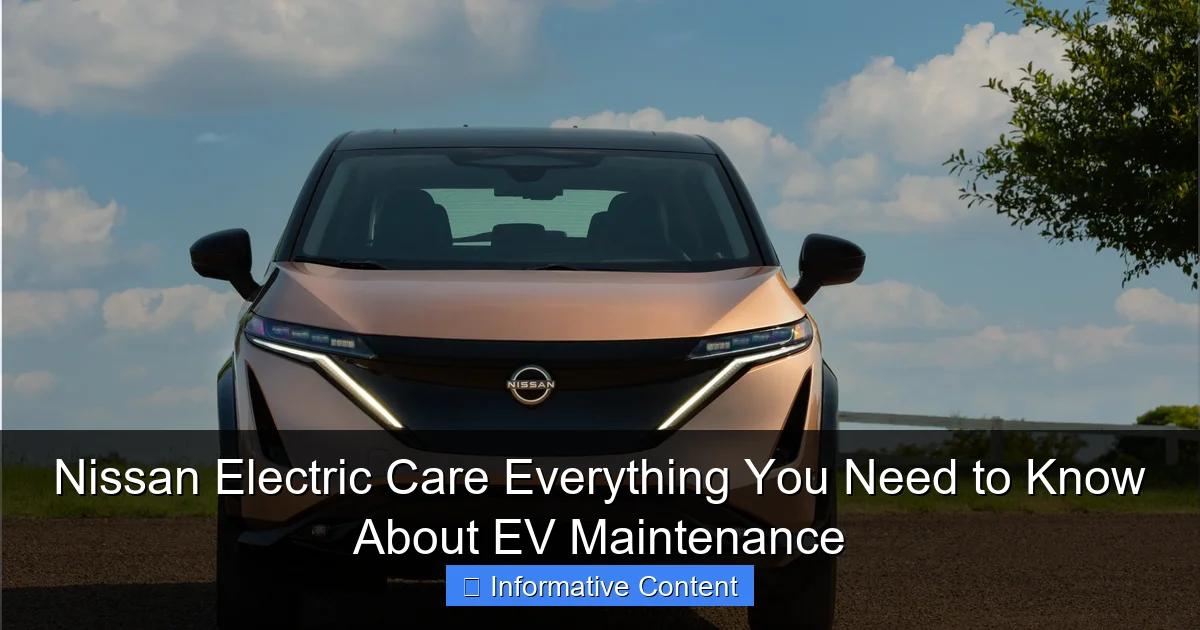
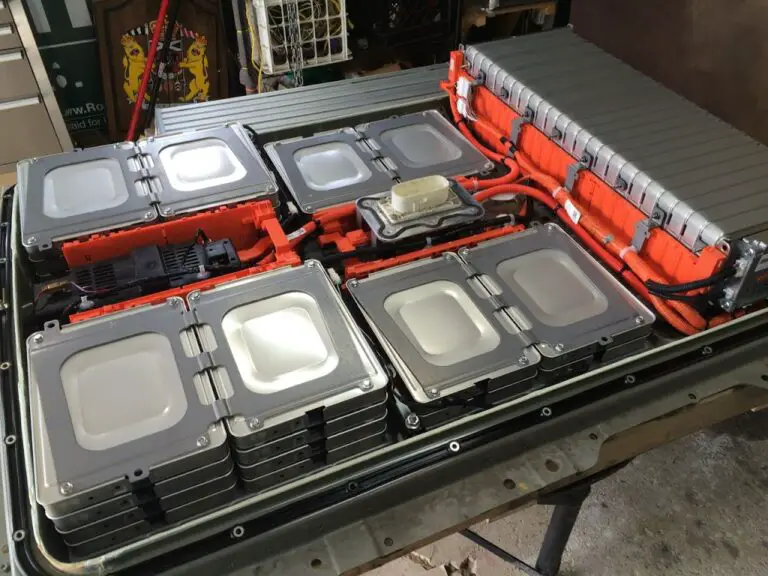
Featured image for nissan electric care
Image source: evstories.com
Nissan Electric Care simplifies EV ownership with comprehensive maintenance packages designed specifically for Nissan electric vehicles. From battery health monitoring to complimentary multi-point inspections, this program ensures peak performance, extended range, and long-term reliability—all backed by Nissan-certified technicians and seamless scheduling through the Nissan app. Say goodbye to guesswork and hello to worry-free electric driving.
Key Takeaways
- Schedule regular checkups: Ensure optimal performance with Nissan Electric Care’s routine maintenance plan.
- Monitor battery health: Use built-in diagnostics to track battery efficiency and longevity.
- Update software regularly: Keep your EV updated for improved features and safety enhancements.
- Use certified service centers: Trust only Nissan-approved centers for specialized EV expertise.
- Follow charging best practices: Extend battery life with recommended charging habits and tools.
📑 Table of Contents
- The Rise of Electric Vehicles and the Need for Nissan Electric Care
- Understanding Nissan Electric Care: What It Is and Why It Matters
- Battery Care: The Heart of Your Nissan EV
- Charging and Software: Keeping Your Nissan EV Up-to-Date
- Routine Maintenance: What’s the Same, What’s Different?
- Emergency Preparedness and Support: Peace of Mind on the Road
- Conclusion: Driving Smarter with Nissan Electric Care
The Rise of Electric Vehicles and the Need for Nissan Electric Care
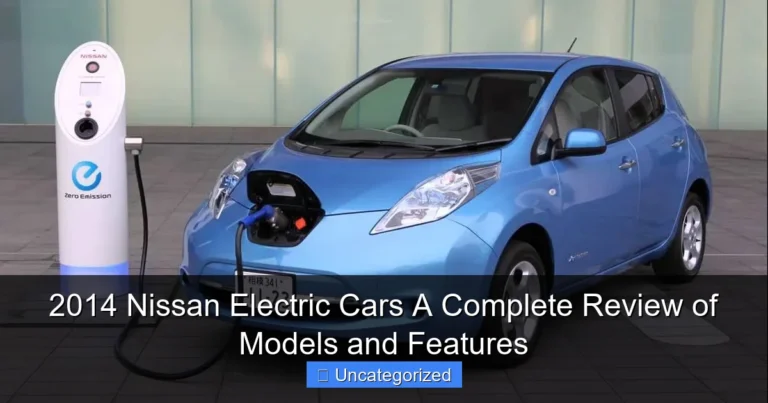
Remember the first time you saw a Nissan Leaf silently gliding down the street, its absence of engine noise almost surreal? That moment marked a turning point in automotive history. Electric vehicles (EVs) like the Leaf, Ariya, and future models from Nissan are no longer niche novelties—they’re mainstream, and with that shift comes a new kind of ownership experience. One that’s simpler in some ways, but entirely different in others. While EVs eliminate the need for oil changes and exhaust systems, they introduce new considerations: battery health, regenerative braking, charging habits, and software updates. This is where Nissan Electric Care becomes more than just a service package—it’s your guide to smarter, safer, and longer-lasting electric driving.
But here’s the thing: many new EV owners assume that “no oil changes = no maintenance.” That’s a myth. While EVs have fewer moving parts than gas-powered cars, they still require thoughtful care. Nissan Electric Care is designed to bridge that knowledge gap. Whether you’re a first-time EV buyer, a long-time Leaf owner, or considering the all-new Ariya, understanding what Nissan Electric Care offers—and what it doesn’t—can save you time, money, and stress. In this guide, we’ll walk you through everything you need to know about EV maintenance with a Nissan, from battery care to software updates, and why proactive attention today means fewer headaches tomorrow.
Understanding Nissan Electric Care: What It Is and Why It Matters
Let’s start with the basics: what exactly is Nissan Electric Care? At its core, it’s a suite of services, tools, and support systems tailored specifically for Nissan EV owners. It’s not just a warranty or a roadside assistance program (though those are part of it). Instead, it’s a holistic approach to ownership that covers everything from routine inspections to emergency support. Think of it as your EV’s personal health coach—always monitoring, advising, and stepping in when needed.
Visual guide about nissan electric care
Image source: heloumed.com
Core Components of Nissan Electric Care
Nissan Electric Care isn’t a one-size-fits-all package. It includes several key elements, each addressing a different aspect of EV ownership:
- Scheduled Maintenance Plans: Unlike traditional cars with rigid oil-change intervals, Nissan EVs use a flexible maintenance schedule based on actual usage, driving patterns, and battery health. The system tracks mileage, charging frequency, and driving behavior to recommend when services are due.
- Roadside Assistance for EVs: This isn’t your standard jump-start service. Nissan Electric Care includes EV-specific roadside help—like mobile charging units, towing to the nearest fast charger, and even temporary power delivery if you’re stranded with a low battery.
- Remote Diagnostics: Through the NissanConnect app, your car can send real-time data to service centers. If your battery shows signs of imbalance or your motor draws too much current, a technician can flag it before it becomes a problem.
- Software Updates: Just like your phone or laptop, Nissan EVs receive over-the-air (OTA) updates. These can improve battery efficiency, add new features, or fix bugs. Nissan Electric Care ensures you’re notified and guided through these updates.
- Battery Health Monitoring: This is the crown jewel. Nissan uses advanced algorithms to track your battery’s state of health (SoH), degradation rate, and thermal performance. You get annual reports and personalized tips to extend battery life.
Why It’s Not Just “Less Maintenance”
Many people assume EVs need less attention because they don’t have engines or transmissions. That’s true to an extent—fewer parts mean fewer things to break. But EVs have unique vulnerabilities. For example:
- Thermal Stress: Repeated fast charging or driving in extreme temperatures can accelerate battery degradation. Nissan Electric Care helps you understand how your habits affect long-term performance.
- Regenerative Braking Wear: While regen reduces wear on brake pads, it shifts stress to the electric motor and drivetrain. Regular inspections catch early signs of wear.
- Software Glitches: A software bug might cause your car to lose range suddenly or disable regenerative braking. OTA updates fix these, but only if you’re connected and aware.
One owner I spoke with, Sarah from Portland, told me her Leaf’s battery dropped 15% capacity in just two years—far above average. After enrolling in Nissan Electric Care, she learned she’d been fast-charging daily and parking outside in freezing winters. The service team helped her adjust her habits, and her battery degradation slowed significantly. “It was like having a mechanic in my pocket,” she said.
Battery Care: The Heart of Your Nissan EV
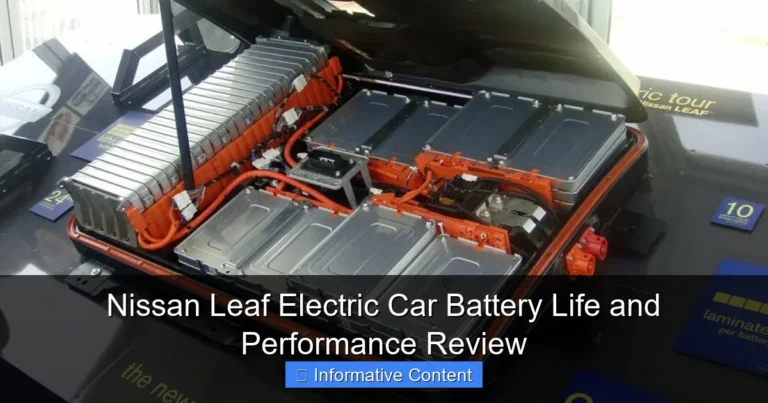
Let’s talk about the elephant in the room: the battery. It’s the most expensive component of any EV, and its health directly impacts range, performance, and resale value. Nissan Electric Care places a huge emphasis on battery maintenance, and for good reason. A well-cared-for battery can last 10–15 years or more. A neglected one might degrade twice as fast.
How Nissan Monitors and Protects Your Battery
Nissan uses a combination of hardware and software to keep tabs on your battery. Here’s how it works:
- State of Health (SoH) Tracking: Your car measures SoH by comparing its current maximum capacity to the original. Nissan Electric Care provides annual reports showing your SoH trend. A drop of more than 2% per year is a red flag.
- Thermal Management: Nissan EVs use liquid-cooled battery packs. The system constantly monitors temperature and adjusts cooling/heating as needed. If the system detects a fault (like a coolant leak), it alerts you via the app.
- Charging Profile Analysis: The car tracks how often you use Level 3 (DC fast) charging. Frequent fast charging generates more heat, which can degrade the battery. Nissan Electric Care suggests optimal charging patterns based on your usage.
Pro Tips to Maximize Battery Life
You don’t need to be a scientist to extend your battery’s life. Here are practical, real-world tips backed by Nissan’s data:
- Limit DC Fast Charging: Use it only when necessary. Aim for Level 2 (240V) charging at home. Studies show that limiting fast charging to 20% of total sessions can reduce degradation by up to 30%.
- Avoid Extreme State of Charge (SoC): Don’t keep your battery at 100% or let it drop to 0% regularly. Ideal daily range: 20%–80%. For long-term storage, charge to 50%.
- Park in the Shade: Direct sunlight can overheat the battery, even when parked. If you can’t find shade, use a sunshade or park in a garage.
- Precondition in Cold Weather: Before driving in winter, use the NissanConnect app to heat the cabin and battery while still plugged in. This reduces strain on the battery and improves range.
Here’s a real example: Mark, a Nissan Ariya owner in Colorado, noticed his range dropped by 10% during winter. After a Nissan Electric Care consultation, he started preconditioning his car while charging. Within a month, his winter range stabilized. “It’s like giving my car a warm-up before a race,” he said.
When to Seek Professional Help
Not all battery issues are DIY. If you notice:
- Sudden range loss (more than 10% in a month)
- Battery warning lights on the dashboard
- Unusual noises from the undercarriage
- Slow charging times
…it’s time to visit a Nissan EV-certified technician. Nissan Electric Care includes priority service for these cases, often with loaner EVs while yours is being repaired.
Charging and Software: Keeping Your Nissan EV Up-to-Date
Charging and software might seem like separate topics, but for Nissan EVs, they’re deeply connected. Your charging habits affect battery health, and software updates can improve charging efficiency, safety, and even unlock new features. Nissan Electric Care ensures you’re not left in the dark—literally or figuratively.
Smart Charging with Nissan Electric Care
Nissan’s charging strategy isn’t just about plugging in—it’s about *how* and *when* you charge. The system uses your schedule, electricity rates, and battery status to optimize charging. Here’s how it helps:
- Scheduled Charging: Set your car to charge during off-peak hours (e.g., 12 AM–6 AM) to save money and reduce grid strain. The NissanConnect app lets you adjust schedules remotely.
- Charging Limit Alerts: If you set a 90% charging limit, the car stops automatically. This prevents overcharging and extends battery life.
- Portable Charger Support: Nissan includes a 120V Level 1 charger with every EV. For faster charging, the Electric Care team helps you choose and install a Level 2 charger at home.
For example, Lisa in Austin used to charge her Leaf overnight, but her utility had high peak rates from 5–9 PM. After enrolling in Nissan Electric Care, she set her car to charge from 10 PM–6 AM. She saved $25 a month and reduced battery stress by avoiding daytime heat.
Over-the-Air (OTA) Software Updates
Remember when cars were “done” the moment you drove them off the lot? Not anymore. Nissan EVs receive regular OTA updates, and Nissan Electric Care makes sure you never miss one. Here’s what updates can do:
- Range Improvements: A 2022 update for the Ariya increased range by 5% by optimizing motor efficiency.
- New Features: Updates have added remote climate control, voice assistant upgrades, and enhanced regenerative braking modes.
- Bug Fixes: One update resolved a glitch where the car wouldn’t charge in sub-zero temperatures.
- Safety Enhancements: ProPILOT Assist (Nissan’s driver-assist system) gets smarter with each update, improving lane centering and emergency braking.
The process is simple: when an update is available, you’ll get a notification in the NissanConnect app. You can install it overnight while charging, and the car will restart automatically. No dealership visit needed.
What If You Ignore Updates?
It’s tempting to skip updates, especially if you’re not tech-savvy. But outdated software can cause:
- Reduced range or performance
- Unreliable charging
- Security vulnerabilities (yes, hackers can target EVs)
- Loss of warranty coverage for software-related issues
Nissan Electric Care sends reminders and even offers virtual walkthroughs for complex updates. As one owner joked, “It’s like having a tech support hotline for my car.”
Routine Maintenance: What’s the Same, What’s Different?
Let’s address the big question: “If I don’t need oil changes, what *do* I need to maintain?” The answer: fewer things, but they’re just as important. Nissan Electric Care streamlines routine maintenance, but you still need to pay attention to a few key areas.
Traditional Maintenance That Still Applies
Even without an engine, your Nissan EV has mechanical parts that wear out:
- Tires: EVs are heavier than gas cars, so tire wear is faster. Rotate every 7,500 miles. Check alignment annually.
- Brake Pads: Regenerative braking reduces wear, but pads still need inspection every 15,000 miles.
- Coolant and Fluids: The battery and motor use coolant. Replace every 5 years or 60,000 miles. Brake fluid and windshield washer fluid also need attention.
- Air Filters: Cabin air filters should be replaced annually. The battery cooling system may have filters too (check your manual).
EV-Specific Maintenance
Here’s where things get different:
- High-Voltage Cables: Inspect for damage, cracks, or corrosion every 12 months. Nissan Electric Care includes a free inspection with every service.
- Charging Port: Clean the port monthly with a dry cloth. Avoid water or metal objects (they can damage pins).
- Regenerative Braking System: The system uses sensors and actuators. If you notice reduced regen or a “brake service” alert, visit a technician.
- 12V Battery: Yes, EVs still have a 12V battery for lights, locks, and the computer. Replace every 3–4 years to avoid being stranded.
Sample Maintenance Schedule (Nissan Ariya)
Here’s a simplified schedule based on Nissan’s recommendations and Electric Care data:
| Mileage | Service | Notes |
|---|---|---|
| 7,500 | Tire rotation | Also check tire pressure and wear |
| 15,000 | Brake inspection, cabin filter | Include regen system check |
| 30,000 | Coolant check, charging port inspection | Top off if needed |
| 60,000 | Coolant replacement, brake fluid | High-voltage system inspection |
| Every 3 years | 12V battery replacement | Proactive replacement avoids failures |
Note: Always check your owner’s manual—schedules vary by model and driving conditions.
Emergency Preparedness and Support: Peace of Mind on the Road
EVs are reliable, but emergencies happen. Whether it’s a dead battery, a software crash, or a flat tire, Nissan Electric Care has your back. The goal isn’t just to fix problems—it’s to prevent them and get you back on the road fast.
Roadside Assistance for EVs
Standard roadside help doesn’t cut it for EVs. Nissan Electric Care includes:
- Mobile Charging Units: If you’re stranded, a technician can bring a portable charger to add 10–15 miles of range.
- Fast Charger Towing: If your battery dies, they’ll tow you to the nearest DC fast charger (free of charge).
- Emergency Power Delivery: In rare cases, they can provide a temporary “boost” using a mobile battery pack.
- Lockout Service: Lost your key? They’ll unlock the car without damaging it.
One owner in rural Oregon got a flat tire 50 miles from the nearest charger. Nissan Electric Care sent a tow truck to a fast charger, then arranged a mobile repair. “I was back on the road in under two hours,” he said.
Remote Diagnostics and Proactive Alerts
Nissan’s system can detect issues before they leave you stranded. For example:
- If your 12V battery voltage drops, you’ll get a warning to charge or replace it.
- If the charging port detects moisture, the app alerts you to dry it.
- If the thermal management system fails, the car limits power to prevent battery damage.
These alerts aren’t just warnings—they come with clear next steps. The app might say, “Visit a dealer within 48 hours for a free inspection.”
What to Do in a Crisis
If you’re stuck:
- Stay Calm: Most issues are fixable.
- Use the NissanConnect App: Check for error codes or alerts.
- Call Nissan Electric Care: They’re available 24/7. Have your VIN and location ready.
- Conserve Power: Turn off climate control, lower speed, and use regen braking to extend range.
Conclusion: Driving Smarter with Nissan Electric Care
Owning a Nissan EV isn’t just about switching from gas to electricity—it’s about embracing a new way of thinking about car care. Nissan Electric Care doesn’t promise a maintenance-free life. Instead, it offers something better: informed maintenance. It gives you the tools, data, and support to make smarter choices every day, from how you charge to how you drive.
Think of it this way: your EV is like a smartphone on wheels. It needs updates, care, and attention—but when you give it that, it rewards you with reliability, efficiency, and peace of mind. Whether you’re charging at home, road-tripping across the country, or just running errands, Nissan Electric Care is there, quietly working in the background to keep your car at its best.
So, if you’re a current Nissan EV owner, dive into the app, schedule that first inspection, and start building habits that protect your battery and your wallet. If you’re considering an EV, let Nissan Electric Care be part of your decision. Because when it comes to electric driving, the best maintenance plan isn’t about doing less—it’s about knowing more. And that’s the real power of going electric.
Frequently Asked Questions
What is Nissan Electric Care and why is it important?
Nissan Electric Care is a comprehensive maintenance program designed specifically for Nissan electric vehicles (EVs), covering essential services like battery health checks, software updates, and system diagnostics. Regular maintenance through this program ensures optimal performance, safety, and longevity of your EV.
How often should I schedule Nissan Electric Care for my EV?
It’s recommended to schedule Nissan Electric Care every 12 months or 10,000 miles, whichever comes first. This interval aligns with Nissan’s EV maintenance guidelines to keep your vehicle running efficiently.
Does Nissan Electric Care include battery maintenance?
Yes, the program includes thorough battery health inspections, coolant checks, and software optimizations to maintain your EV’s battery performance and lifespan. This proactive approach helps prevent unexpected issues.
Can I perform Nissan EV maintenance myself?
While basic tasks like tire pressure checks or cabin filter replacement can be DIY, advanced diagnostics and battery-related services require certified technicians. Nissan Electric Care ensures these complex tasks are handled professionally.
Is Nissan Electric Care covered under warranty?
Many services in the program are included during your EV’s warranty period, but coverage varies by model and region. Check your warranty terms or contact a Nissan dealer for specifics on included services.
What are the benefits of regular Nissan Electric Care maintenance?
Regular maintenance improves energy efficiency, extends battery life, and enhances overall safety. It also helps identify potential issues early, reducing long-term repair costs and downtime.