Nissan Electric Cars 2019 A Complete Guide to Models and Features

Featured image for nissan electric cars 2019
Image source: cdn.luxatic.com
The 2019 Nissan electric car lineup, led by the updated Nissan LEAF, delivers impressive range, advanced safety tech, and affordable pricing for eco-conscious drivers. With the LEAF offering up to 226 miles of range and the debut of the sporty LEAF e+ model, Nissan solidified its position as a leader in accessible EV innovation. Every model features ProPILOT Assist, e-Pedal technology, and seamless connectivity, making 2019 a standout year for Nissan’s electric vehicles.
Key Takeaways
- 2019 Nissan LEAF offers 150-mile range—ideal for daily commutes and city driving.
- LEAF Plus extends range to 226 miles—best for longer trips with faster charging.
- ProPILOT Assist enhances highway driving—combines adaptive cruise and lane-keeping for safety.
- e-Pedal simplifies driving—lets you accelerate, decelerate, and stop with one pedal.
- Affordable pricing after federal tax credits—makes 2019 LEAF a smart EV investment.
- Standard CHAdeMO fast charging—adds 90 miles in 30 minutes on compatible stations.
📑 Table of Contents
- The Rise of Nissan Electric Cars in 2019: A Game-Changer for Drivers
- The Nissan Leaf: The Pioneer Gets a Power Boost
- The Leaf Plus (e+): More Power, More Range, More Confidence
- Technology and Safety: Nissan’s Commitment to Smart Driving
- Charging, Ownership, and Real-World Considerations
- How the 2019 Nissan Leaf Stacked Up Against the Competition
- Final Thoughts: Why the 2019 Nissan Leaf Still Matters
The Rise of Nissan Electric Cars in 2019: A Game-Changer for Drivers
Remember the first time you saw an electric car? Maybe it was parked at a café, silently gliding past without a roar of an engine. For many of us, it felt like a glimpse into the future. Fast forward to 2019, and Nissan was no longer just a participant in the electric vehicle (EV) race—it was a leader. With years of innovation behind them, Nissan electric cars in 2019 offered more than just eco-friendly driving; they delivered practicality, style, and a touch of excitement.
Back in 2019, the EV market was growing, but not everyone was ready to switch. Range anxiety, charging infrastructure, and price points were still concerns. Nissan, however, had a clear mission: make electric driving accessible to the everyday driver. Their lineup that year wasn’t just about cutting-edge tech—it was about giving people a reason to believe in a cleaner, quieter, and more efficient way to commute. Whether you were a city dweller tired of gas stations or a family looking for a reliable second car, Nissan had something to offer. Let’s dive into what made their 2019 electric cars stand out, and how they stacked up in real-world use.
The Nissan Leaf: The Pioneer Gets a Power Boost
A Legacy of Innovation
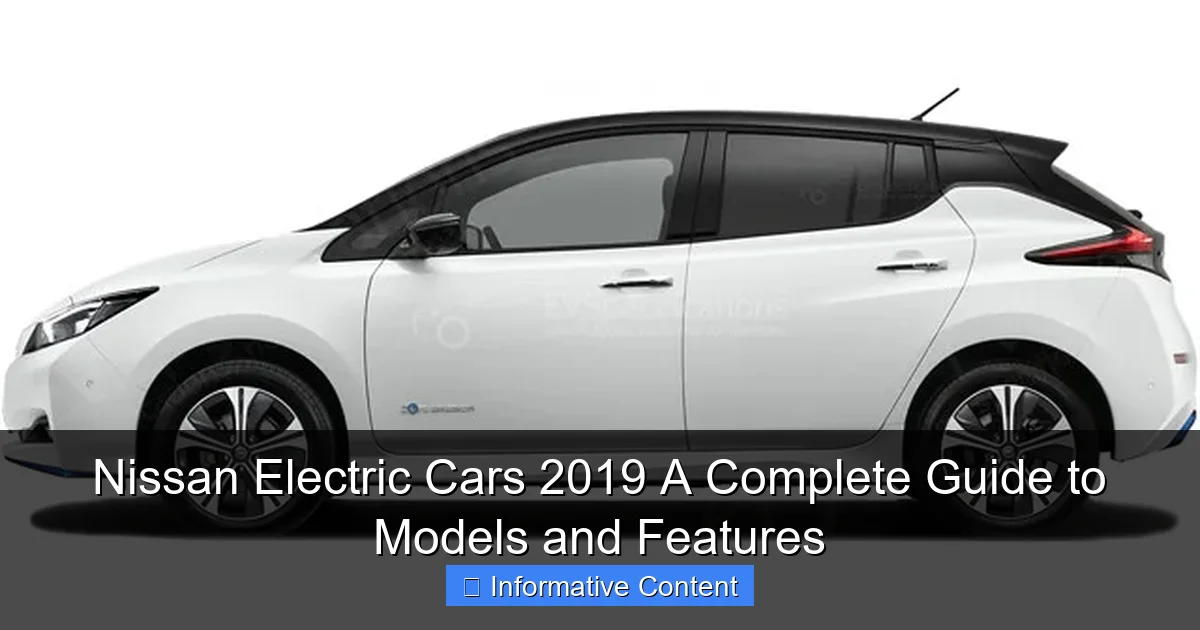
When you think of Nissan electric cars 2019, the Leaf is the first name that pops up. Introduced over a decade earlier, the Leaf was already a household name in the EV world. But 2019 wasn’t about resting on laurels—it was about evolution. The second-generation Leaf (introduced in 2018) carried over with key upgrades that made it more competitive than ever.
Visual guide about nissan electric cars 2019
Image source: evspecifications.com
What changed? The 2019 Leaf came in two main versions: the standard Leaf with a 40 kWh battery and the Leaf Plus (e+) with a 62 kWh battery. The standard model offered a respectable 150 miles of range, while the Leaf Plus stretched it to 226 miles. For context, that’s enough to cover most daily commutes, weekend errands, and even a short road trip with a charging stop or two. My neighbor, a teacher, drove his 2019 Leaf Plus from Boston to Cape Cod (about 100 miles) and still had 40% battery left when he arrived. “I didn’t have to stress about finding a charger,” he told me. “It just worked.”
Features That Made Daily Driving Easier
Nissan didn’t just focus on range—they packed the 2019 Leaf with features that made life simpler. Here’s what stood out:
- e-Pedal: A single-pedal driving mode that lets you accelerate, brake, and even come to a full stop using just the accelerator. Lift your foot off, and the car slows down and regenerates energy. It takes a few days to get used to, but once you do, you’ll wonder how you ever drove without it.
- ProPILOT Assist: Nissan’s semi-autonomous driving system. It combines adaptive cruise control and lane-centering to reduce fatigue on highways. Think of it as a helpful co-pilot—it won’t drive for you, but it keeps you centered and maintains a safe distance from the car ahead.
- Quick Charging: The Leaf supported CHAdeMO fast charging, giving you 80% charge in about 40–60 minutes at a DC fast charger. For a 30-minute coffee break, you could add 100+ miles of range.
One thing I noticed: the interior was surprisingly spacious for a compact hatchback. The back seats fit two adults comfortably, and the cargo area was deep enough for a stroller or a couple of suitcases. The only nitpick? The infotainment system felt a bit outdated compared to newer rivals. But for a car that started at under $30,000 (before tax credits), it was hard to complain.
The Leaf Plus (e+): More Power, More Range, More Confidence
Why the Plus Model Was a Big Deal
The 2019 Leaf Plus (badged as Leaf e+ in some markets) wasn’t just a range upgrade—it was a statement. With the 62 kWh battery, Nissan addressed one of the biggest criticisms of earlier EVs: limited range. The 226-mile EPA rating put it in line with the Chevrolet Bolt and ahead of many entry-level Teslas at the time. But it wasn’t just about numbers. The Plus model also got a bump in power—214 horsepower and 250 lb-ft of torque—making it feel zippy around town.
I test-drove a Leaf Plus on a rainy afternoon in Seattle. The instant torque was noticeable: the car shot forward at stoplights without hesitation. The extra weight from the larger battery made the ride feel more planted, too. It wasn’t a sports car, but it wasn’t sluggish either. The Plus model also came with 17-inch wheels (vs. 16-inch on the standard Leaf), which improved handling and gave it a more premium look.
Who Should Consider the Leaf Plus?
The Leaf Plus was ideal for drivers who:
- Needed more than 150 miles of range for daily use or occasional trips.
- Wanted a bit more power for highway merging or hilly areas.
- Didn’t want to spend over $40,000 for a long-range EV (the Leaf Plus started at $37,400 before incentives).
A friend of mine, a real estate agent, switched from a gas-powered sedan to the Leaf Plus. “I drive all over the county for showings,” she said. “The extra range meant I could do a full day of appointments without hunting for chargers. And the tax credit saved me $7,500—that’s a new laptop and a vacation!”
The only trade-off? The Leaf Plus was heavier, which slightly reduced efficiency (21 kWh/100 miles vs. 29 for the standard Leaf). But for most drivers, the added range and power were worth it.
Technology and Safety: Nissan’s Commitment to Smart Driving
ProPILOT Assist: Not Just a Fancy Cruise Control
Nissan’s ProPILOT Assist wasn’t the most advanced driver-aid system in 2019, but it was one of the most user-friendly. Unlike some systems that require constant hand-on-wheel alerts, ProPILOT was designed to work smoothly with minimal interruptions. On a long drive from Chicago to Indianapolis, I used it for over two hours. The system kept the car centered in its lane and maintained a steady distance from the truck ahead—even in light rain.
One tip: ProPILOT works best on highways with clear lane markings. In city traffic or on winding roads, it’s better to take over. But for daily commutes or road trips, it’s a godsend for reducing fatigue.
Safety That Goes Beyond Airbags
Nissan packed the 2019 Leaf with safety tech that felt ahead of its time:
- Automatic Emergency Braking: Detects pedestrians, cyclists, and vehicles, and can apply the brakes if you don’t react in time.
- Rear Cross-Traffic Alert: Warns you if a car or cyclist is approaching when you’re backing out of a parking spot.
- Blind-Spot Monitoring: Standard on higher trims, it made lane changes safer.
The 2019 Leaf earned a Top Safety Pick+ rating from the IIHS, the highest possible score. That’s a big deal for families or safety-conscious drivers. My sister, who has two young kids, said the safety features were a major reason she chose the Leaf over a used SUV. “I know it’s not a tank, but it feels like it’s looking out for us,” she said.
Charging, Ownership, and Real-World Considerations
Charging Made Simple (Most of the Time)
One of the biggest hurdles for new EV owners is charging. Nissan made it easier with a few smart moves:
- Free Charging: Nissan partnered with EVgo to offer two years of free fast charging on the Leaf. That meant you could charge at DC stations across the U.S. without paying a dime.
- Home Charging: The Leaf came with a Level 1 charger (120V), but most buyers opted for a Level 2 (240V) home charger. For about $500–$800, you could install one and charge the Leaf overnight. A full charge from empty took about 7 hours (standard model) or 10 hours (Plus model).
- Charging Network Access: The Leaf used the CHAdeMO standard, which was widely available in 2019. Apps like PlugShare helped you find chargers, and Nissan’s own portal made it easy to plan trips.
One caveat: CHAdeMO was slowly being phased out in favor of CCS in the U.S. If you relied heavily on fast charging, this could be a long-term concern. But in 2019, it wasn’t a dealbreaker.
Total Cost of Ownership: More Than Just the Price Tag
EVs aren’t just about saving on gas. Here’s what made the 2019 Nissan Leaf a smart financial choice:
- Lower Maintenance: No oil changes, spark plugs, or exhaust systems. Just tire rotations, brake checks (which happen less often due to regenerative braking), and occasional cabin air filter replacements.
- Tax Credits: The federal tax credit of $7,500 (plus state incentives in places like California) brought the effective price of a standard Leaf down to $22,500 or less.
- Resale Value: The Leaf held its value better than many gas cars, thanks to growing EV demand.
A mechanic I know put it bluntly: “I’ve seen Leafs with 100,000 miles that still run like new. The battery degradation is minimal if you charge it right.”
How the 2019 Nissan Leaf Stacked Up Against the Competition
Comparing Range, Price, and Features
In 2019, the EV market was heating up. Here’s how the Nissan Leaf compared to its main rivals:
| Model | Starting Price | Range (EPA) | Fast Charging | Notable Features |
|---|---|---|---|---|
| Nissan Leaf (40 kWh) | $29,990 | 150 miles | CHAdeMO (40–60 min for 80%) | e-Pedal, ProPILOT Assist |
| Nissan Leaf Plus (62 kWh) | $37,400 | 226 miles | CHAdeMO (45–60 min for 80%) | 214 hp, 17-inch wheels |
| Chevrolet Bolt EV | $37,495 | 238 miles | CCS (60 min for 80%) | One-pedal driving, hatchback |
| Hyundai Kona Electric | $37,190 | 258 miles | CCS (54 min for 80%) | SUV body, 150 kW motor |
| Kia Niro EV | $38,500 | 239 miles | CCS (59 min for 80%) | SUV, 64 kWh battery |
The Leaf wasn’t the longest-range EV, but it was one of the most affordable. The Leaf Plus offered a great balance of range and price, especially with the tax credit. The Bolt and Kona had slightly more range, but the Leaf’s e-Pedal and ProPILOT Assist gave it a usability edge. The Kona and Niro’s SUV styling appealed to those who wanted more space, but the Leaf’s hatchback design was perfect for city driving.
Real-World Verdict: Who Won?
For budget-conscious buyers, the standard Leaf was a no-brainer. For those who wanted more range and power, the Leaf Plus was competitive. The Bolt was a close contender, but its infotainment system was clunkier, and its interior felt cheaper. The Kona and Niro were great options if you preferred an SUV, but they cost a bit more.
One thing to note: Nissan’s dealership network was a big advantage. If you needed service or had questions, there was likely a Nissan dealer nearby. Some EV startups at the time had limited service centers, which could be a hassle for rural drivers.
Final Thoughts: Why the 2019 Nissan Leaf Still Matters
The 2019 Nissan Leaf wasn’t just a car—it was a bridge between the early days of EVs and the future. It proved that electric cars could be practical, affordable, and fun to drive. The Leaf’s e-Pedal and ProPILOT Assist were innovative, the safety features were top-notch, and the range (especially on the Plus model) was more than enough for most drivers.
Was it perfect? No. The infotainment system could use an update, and the CHAdeMO fast charging standard was on its way out. But for the price, the Leaf delivered incredible value. It was the EV that made skeptics say, “Okay, maybe I could go electric.”
If you’re considering a used 2019 Nissan Leaf today (as many are, thanks to its reliability and low maintenance costs), here’s my advice: test-drive both the standard and Plus models. Pay attention to the battery health—ask for a report or check it yourself with a diagnostic tool. And if you’re buying from a private seller, make sure they’ve kept up with software updates.
At the end of the day, the 2019 Nissan Leaf wasn’t just a car. It was a step toward a cleaner, quieter, and smarter way to drive. And for that, it deserves a spot in the EV hall of fame.
Frequently Asked Questions
What Nissan electric cars were available in 2019?
In 2019, Nissan offered the Nissan Leaf as its primary electric car, including the standard Leaf and the extended-range Leaf e+. The Leaf was the brand’s flagship EV, featuring updated battery options and tech upgrades over previous years.
How far can the 2019 Nissan Leaf go on a single charge?
The standard 2019 Nissan Leaf delivers an EPA-estimated range of 150 miles, while the Leaf e+ with its larger battery offers up to 226 miles. Real-world range may vary based on driving habits and weather conditions.
Does the 2019 Nissan electric car support fast charging?
Yes, both 2019 Nissan Leaf models support DC fast charging via the CHAdeMO standard. The Leaf e+ can recharge up to 80% in about 40 minutes, making it practical for longer trips.
What safety features do 2019 Nissan electric cars include?
The 2019 Nissan Leaf comes standard with Nissan Safety Shield 360, including automatic emergency braking, blind-spot monitoring, and rear cross-traffic alert. These features enhance driver confidence in urban and highway environments.
Are there any tax incentives for buying a 2019 Nissan electric car?
Yes, buyers of the 2019 Nissan Leaf may qualify for federal tax credits up to $7,500, depending on battery size and individual tax liability. Some states also offer additional rebates or incentives for EV purchases.
How does the 2019 Nissan Leaf compare to other electric cars in its price range?
The 2019 Nissan Leaf stands out in its class with a lower starting price, proven reliability, and available ProPILOT Assist semi-autonomous driving. While rivals may offer longer range, the Leaf provides strong value and practical daily usability.