Nissan Electric Cars Future Whats Next for the Brand
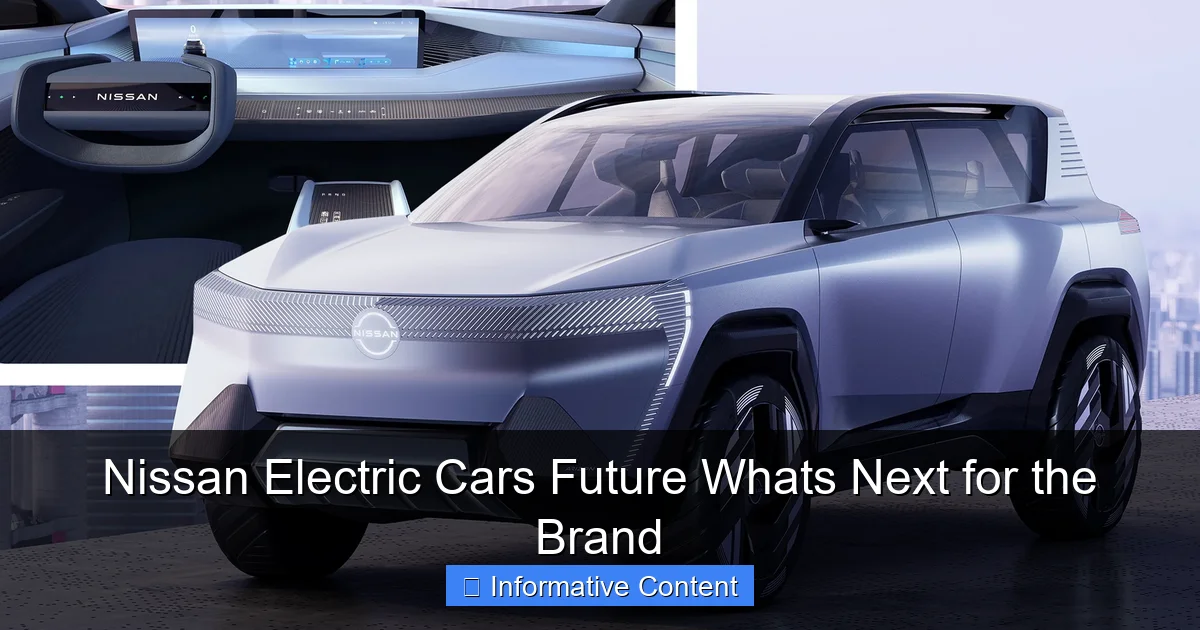
Featured image for nissan electric cars future
Image source: carscoops.com
Nissan is accelerating its electric future with a bold $17.6 billion investment to launch 19 new EVs by 2030, reinforcing its commitment to electrification and global market leadership. Featuring advanced solid-state batteries and next-gen tech like the Chill-Out and Surf-Out concepts, Nissan aims to redefine affordability, range, and innovation in the rapidly evolving EV landscape.
Key Takeaways
- Nissan leads EV innovation with plans for 19 new electric models by 2030.
- Sustainability drives strategy: carbon-neutral goals shape Nissan’s future electric lineup.
- Solid-state batteries coming: expect faster charging and longer range by 2028.
- Affordable EVs prioritized: new models target budget-conscious buyers in key markets.
- Global expansion accelerates: focus on U.S., Europe, and emerging EV markets.
- Tech integration key: Nissan boosts AI and connectivity in future electric cars.
- Charging network grows: partnerships aim to ease range anxiety for drivers.
📑 Table of Contents
- The Road Ahead: What’s Next for Nissan Electric Cars?
- Nissan’s EV Legacy: From Leaf to Reinvention
- New Models: What’s Coming in the Next 5 Years?
- Battery Tech: The Heart of Nissan’s Future
- Global Strategy: How Nissan is Tailoring EVs for Different Markets
- Challenges and Opportunities: Can Nissan Keep Up?
- Data Table: Nissan’s Upcoming EVs (2024-2030)
- Conclusion: A Future Built on Innovation and Trust
The Road Ahead: What’s Next for Nissan Electric Cars?
Remember the first time you saw an electric car and thought, “That’s it? Just a quiet little box on wheels?” I do. I also remember the first time I drove one—specifically, the Nissan Leaf back in 2013. It was a revelation. Not because it was fast (it wasn’t), but because it felt different. No engine noise, no gear shifts, and no trips to the gas station. It was like stepping into the future, even if that future was a little bumpy at first. Fast forward to today, and the world of electric vehicles (EVs) has evolved dramatically. Nissan, once a pioneer with the Leaf, now finds itself at a critical crossroads. With competitors like Tesla, Hyundai, and even legacy automakers like Ford and GM accelerating their EV strategies, the question on everyone’s mind is: What’s next for Nissan electric cars?
The answer isn’t just about new models or battery tech—it’s about reinvention. Nissan isn’t just trying to catch up; it’s aiming to redefine its place in the EV revolution. From bold new designs to cutting-edge battery innovations and a shift in global strategy, the brand is laying the groundwork for a future that’s not just electric, but intelligent, affordable, and accessible. Whether you’re an EV enthusiast, a budget-conscious buyer, or just curious about where Nissan is headed, this is your guide to understanding the next chapter in the story of Nissan electric cars.
Nissan’s EV Legacy: From Leaf to Reinvention
The Leaf: A Trailblazer with Growing Pains
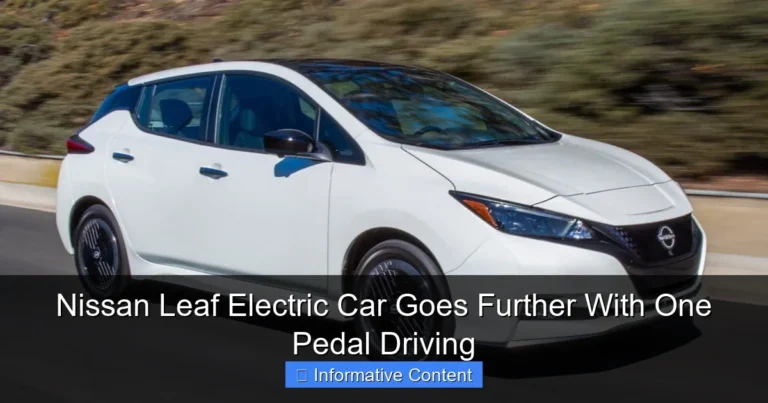
Let’s start with the obvious: the Nissan Leaf. Launched in 2010, it was the first mass-market EV from a major automaker. It wasn’t perfect—early models had limited range (just 73 miles on the 2011 version), slow charging, and a quirky interior—but it was a bold statement. Nissan bet big on electric mobility when few others did. And for a while, it paid off. By 2019, the Leaf had sold over 450,000 units worldwide, making it one of the best-selling EVs ever.
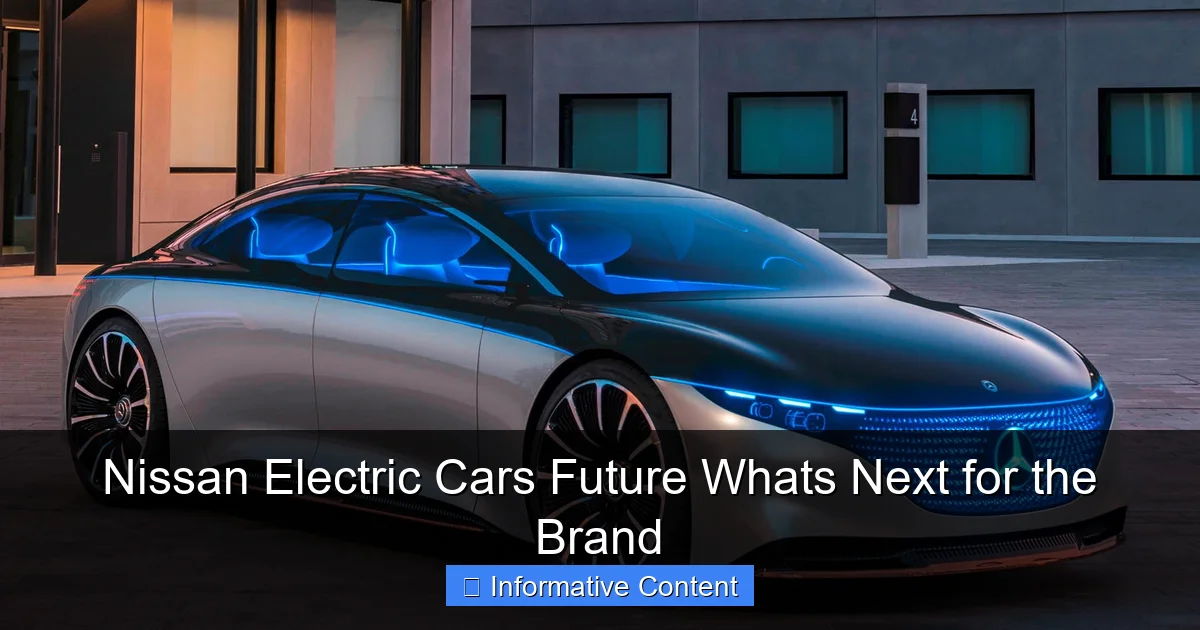
Visual guide about nissan electric cars future
Image source: electriccarcommunity.com
But the Leaf’s success came with challenges. As competitors introduced EVs with 200+ miles of range and faster charging, the Leaf began to feel outdated. The 2018 Leaf Plus improved things (226 miles), but it still lagged behind the Tesla Model 3 (263 miles) and the Hyundai Kona Electric (258 miles). The Leaf became a symbol of Nissan’s early lead—and its struggle to maintain it.
Lessons Learned: What the Leaf Taught Nissan
The Leaf’s journey wasn’t just about technology; it was about understanding what drivers really want. Nissan learned that:
- Range anxiety is real—and it’s not just about numbers. Drivers want confidence, not just specs.
- Charging speed matters more than ever. A 30-minute charge can make or break a road trip.
- Design and comfort are non-negotiable. EVs aren’t just appliances; they’re lifestyle products.
These lessons are now shaping Nissan’s future EV strategy. The brand isn’t just building cars—it’s building trust.
The Shift from “First” to “Best”
Nissan knows it can’t rely on being the “first” anymore. The new goal? Be the “best” in specific categories. That means focusing on:
- Affordability: Making EVs accessible to more people.
- Innovation: Leaping ahead in battery tech and software.
- Global reach: Tailoring EVs to different markets, from Europe to Asia.
This shift isn’t just strategic—it’s necessary. The EV market is no longer a niche; it’s a battlefield.
New Models: What’s Coming in the Next 5 Years?
The Ariya: Nissan’s Flagship EV
If the Leaf was Nissan’s “proof of concept,” the Ariya is its “we’re serious now” moment. Launched in 2022, this sleek crossover marks a major step up in design, performance, and tech. With a starting price of around $43,000 (before incentives), it competes directly with the Tesla Model Y and Ford Mustang Mach-E.
Here’s what makes the Ariya stand out:
- Range: Up to 304 miles (on the long-range FWD model).
- Charging: DC fast charging adds 170 miles in 30 minutes.
- Tech: A dual-screen dashboard, ProPILOT Assist 2.0 (semi-autonomous driving), and over-the-air updates.
The Ariya isn’t just another EV—it’s Nissan’s answer to the question, “Can you build a modern, desirable electric car?” So far, the answer is “yes.”
Affordable EVs: The “kei car” Strategy
While the Ariya targets premium buyers, Nissan isn’t forgetting the budget-conscious crowd. In Japan and parts of Asia, the brand is reviving the “kei car” (tiny, affordable EVs) concept with models like the Nissan Sakura and Nissan Dayz. These cars are:
- Compact: Perfect for city driving and tight parking spots.
- Affordable: Priced under $20,000 after subsidies.
- Efficient: 100+ miles of range with small batteries.
Nissan’s plan? Use these small EVs to dominate urban markets—and eventually bring similar models to Europe and North America. Imagine a $15,000 Nissan EV that fits in your garage and costs pennies to charge. That’s the dream.
The 2025-2030 Pipeline: Rumors and Reality
What’s beyond the Ariya and kei cars? Nissan has teased several upcoming models:
- An electric pickup truck: To compete with the Ford F-150 Lightning and Rivian R1T.
- An electric sedan: A Tesla Model 3 rival with a focus on comfort and tech.
- An electric SUV: Larger than the Ariya, targeting families and long-distance drivers.
While details are scarce, Nissan has confirmed that 15 of its 23 upcoming models will be EVs or hybrids by 2030. That’s a massive shift—and a sign that the brand is all-in on electrification.
Battery Tech: The Heart of Nissan’s Future
Solid-State Batteries: The Game Changer
If there’s one thing that could put Nissan back on top, it’s solid-state batteries. Unlike traditional lithium-ion batteries, solid-state batteries use a solid electrolyte instead of a liquid one. Why does this matter?
- Faster charging: Up to 100 miles in 5 minutes (Nissan’s goal).
- Longer lifespan: Less degradation over time.
- Higher energy density: More range in a smaller package.
Nissan plans to launch its first solid-state battery EV by 2028. If successful, this tech could give Nissan a 3-5 year lead over competitors. Imagine a Leaf-sized car with 500 miles of range and 5-minute charging. That’s not science fiction—it’s Nissan’s roadmap.
Recycling and Sustainability: Beyond the Battery
Nissan isn’t just focused on making better batteries—it’s thinking about what happens after they’re used. The brand is investing in:
- Battery recycling: Recovering lithium, nickel, and cobalt to reduce mining.
- Second-life batteries: Using old EV batteries for home energy storage.
- Carbon-neutral manufacturing: Reducing emissions at EV production plants.
For example, Nissan’s “4R Energy” program repurposes Leaf batteries for solar-powered streetlights and backup power systems. It’s a smart way to extend battery life—and reduce waste.
Charging Infrastructure: Partnering for Progress
Even the best battery is useless without a reliable charging network. Nissan is tackling this by:
- Partnering with ChargePoint and Electrify America in the U.S.
- Installing fast chargers at Nissan dealerships.
- Offering free charging for Ariya buyers (in select regions).
The goal? Make charging as convenient as refueling—and just as fast.
Global Strategy: How Nissan is Tailoring EVs for Different Markets
Japan and Asia: Small, Smart, and Affordable
In Japan, Nissan is betting big on small EVs. The Sakura and Dayz aren’t just cheap—they’re designed for narrow roads, tight parking, and high urban density. Features like:
- 360-degree cameras for easy maneuvering.
- Regenerative braking tuned for stop-and-go traffic.
- Low maintenance costs (no oil changes, fewer moving parts).
These cars are a hit with young drivers and retirees alike. Nissan’s strategy? Win the city, then expand to the suburbs.
Europe: Style, Efficiency, and Sustainability
In Europe, Nissan is focusing on style and sustainability. The Ariya, for example, has a sleek, minimalist design that appeals to European tastes. But it’s not just about looks:
- Right-hand drive models for the UK and Ireland.
- Local production (in Sunderland, UK) to reduce shipping emissions.
- EU battery passport compliance (tracking battery materials and carbon footprint).
Nissan knows that European buyers care about ethics as much as performance—and it’s designing EVs accordingly.
North America: Performance, Range, and Utility
In the U.S. and Canada, Nissan is playing to its strengths: practicality and value. The Ariya offers:
- All-wheel drive options for snowy climates.
- Large cargo space (22.8 cubic feet behind the rear seats).
- ProPILOT Assist for highway driving in traffic-heavy cities.
But the real test will be the electric pickup truck. If Nissan can deliver a rugged, capable EV truck at a competitive price, it could finally break into the American EV market in a big way.
Challenges and Opportunities: Can Nissan Keep Up?
The Competition is Fierce
Let’s be honest: Nissan isn’t the only player in the EV game. Tesla dominates with its Supercharger network and software. Hyundai and Kia are winning with stylish, affordable EVs. And legacy brands like Ford and GM are spending billions to catch up.
Nissan’s biggest challenge? Perception. Many buyers still see the Leaf as a “first-gen” EV—not a cutting-edge brand. Changing that mindset will take more than ads; it’ll take results.
Supply Chain and Scaling Up
Building EVs at scale isn’t easy. Nissan faces:
- Battery shortages: Global demand for lithium and cobalt is soaring.
- Factory retooling: Converting ICE plants to EV production takes time and money.
- Software delays: Developing new tech (like solid-state batteries) is risky.
Nissan’s solution? Partner with battery makers (like Envision AESC) and invest in modular platforms that can be used for multiple models. It’s a smart move—but it won’t fix everything overnight.
The Opportunity: A New Kind of EV Leader
Despite the challenges, Nissan has a unique opportunity. By focusing on:
- Affordability: Making EVs accessible to more people.
- Innovation: Leading in solid-state batteries and recycling.
- Global diversity: Tailoring EVs to different markets.
Nissan could become the “people’s EV brand”—not the fastest, but the most reliable, practical, and inclusive.
Data Table: Nissan’s Upcoming EVs (2024-2030)
| Model | Type | Estimated Range (miles) | Key Features | Expected Launch |
|---|---|---|---|---|
| Ariya | Crossover SUV | Up to 304 | ProPILOT Assist 2.0, dual screens, AWD option | 2022 (available) |
| Sakura | Kei car (tiny EV) | 100+ | Compact size, low price, city-focused | 2023 (Japan) |
| Solid-State Battery EV | Compact sedan | 500+ (goal) | 5-minute charging, 10-year battery warranty | 2028 |
| Electric Pickup | Pickup truck | 250-300 | Off-road capability, work-focused features | 2025-2026 |
| Next-Gen Leaf | Compact hatchback | 300+ | Affordable price, updated design, solid-state option | 2027 |
Conclusion: A Future Built on Innovation and Trust
So, what’s next for Nissan electric cars? The short answer: a lot. From the sleek Ariya to the tiny Sakura, from solid-state batteries to global market strategies, Nissan is betting on a future that’s not just electric, but smarter and more inclusive. It’s not about being the first anymore—it’s about being the best for real people.
Will Nissan succeed? That depends. If it can deliver on its promises—affordable EVs, cutting-edge tech, and a reliable charging network—it could reclaim its place as an EV leader. But if it stumbles on battery supply, software delays, or market perception, it risks falling further behind.
One thing’s for sure: the next decade will be exciting. Whether you’re a Nissan loyalist or a curious EV newcomer, keep an eye on this brand. The road ahead is electric—and Nissan is determined to be a big part of it.
Frequently Asked Questions
What does the future hold for Nissan electric cars?
Nissan is investing heavily in electrification, with plans to launch 15 new electric models by 2030. The brand aims for 40% of its U.S. sales to be fully electric by 2030, backed by advancements in battery tech and charging infrastructure.
Will Nissan release more affordable electric cars in the future?
Yes, Nissan is working on cost-effective platforms and next-gen batteries to lower prices. The upcoming “Nissan Ambition 2030” strategy includes budget-friendly EVs to compete with rivals like Tesla and Chevrolet.
Are Nissan electric cars getting longer range soon?
Nissan is developing solid-state batteries, expected by 2028, which could double current ranges (potentially over 600 miles per charge). This tech will first appear in flagship models before rolling out across the lineup.
How will Nissan compete with Tesla and other EV leaders?
Through unique innovations like e-4ORCE all-wheel drive tech and partnerships for faster charging networks. Nissan’s focus on practical, stylish designs and reliable performance aims to differentiate its future EVs in a crowded market.
What’s next for Nissan’s charging infrastructure?
Nissan is expanding its CHAdeMO fast-charging network while adopting CCS standards for broader compatibility. The brand also collaborates with third-party providers to ensure seamless long-distance travel for Nissan electric cars.
Will Nissan discontinue gas-powered cars for full electrification?
Nissan plans to phase out ICE vehicles in key markets by 2030, prioritizing EVs and hybrids. However, some regions may retain gas models longer based on infrastructure readiness and consumer demand.