Nissan ESFlow Electric Concept Car A Glimpse Into the Future
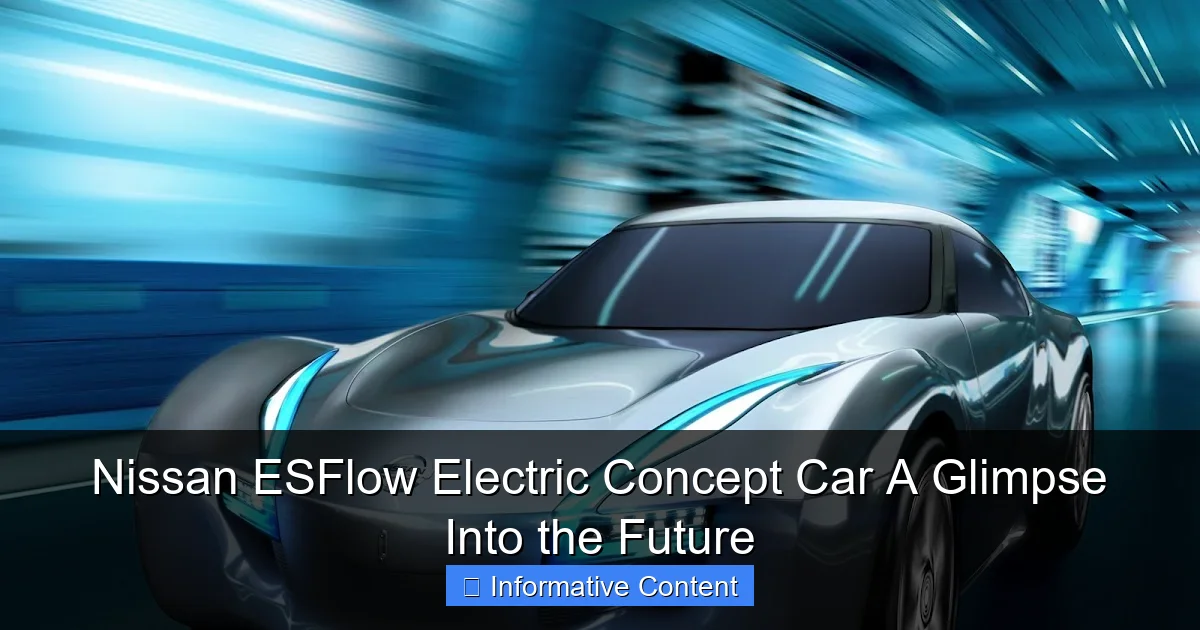
Featured image for nissan esflow electric concept car
Image source: blogger.googleusercontent.com
The Nissan ESFlow electric concept car redefines sustainable performance with its sleek, aerodynamic design and zero-emission powertrain. Boasting a 100% electric drivetrain and rapid charging capability, it delivers thrilling acceleration while prioritizing eco-conscious innovation. A bold vision of Nissan’s electric future, the ESFlow proves sustainability and excitement can coexist.
Key Takeaways
- Zero emissions: Fully electric powertrain delivers eco-friendly performance with no tailpipe emissions.
- Rapid acceleration: 0-60 mph in 5 seconds showcases electric torque at its finest.
- Rear-wheel drive: Enhances driving dynamics for a sportier, more engaging experience.
- Modular battery design: Enables faster charging and future battery tech upgrades.
- Lightweight materials: Carbon fiber construction improves efficiency and range significantly.
📑 Table of Contents
- The Dawn of a New Era: Nissan ESFlow Electric Concept Car
- Design That Turns Heads: Aesthetic Meets Aerodynamics
- Under the Hood: Electric Powertrain and Performance
- Interior and Technology: Where Innovation Meets Comfort
- Safety and Sustainability: Building a Greener, Safer Future
- The Legacy of the ESFlow: Lessons for the Future of EVs
- Conclusion: The ESFlow’s Enduring Impact
- Data Table: Nissan ESFlow vs. Key Competitors (2011)
The Dawn of a New Era: Nissan ESFlow Electric Concept Car
Imagine driving a car that feels like it’s been pulled straight from a sci-fi movie—sleek, silent, and powered entirely by electricity. That’s exactly what Nissan brought to life with the Nissan ESFlow electric concept car, a bold vision of what the future of driving could be. Unveiled at the 2011 Geneva Motor Show, the ESFlow wasn’t just another prototype; it was a statement. A promise from Nissan that the future of mobility wasn’t just about going green—it was about going fast, fun, and fearless.
As someone who’s always been drawn to the intersection of innovation and practicality, the ESFlow felt like a breath of fresh air. Unlike some concept cars that remain distant dreams, the ESFlow was built with real-world potential in mind. It borrowed heavily from the successful Nissan Leaf—a car that had already proven EVs could be reliable, efficient, and accessible. But the ESFlow took that foundation and turned it into something thrilling: a two-seater sports coupe with electric soul and performance to match. It wasn’t just about saving the planet—it was about enjoying the ride.
Design That Turns Heads: Aesthetic Meets Aerodynamics
First Impressions: Sleek, Low, and Sporty
When you first lay eyes on the Nissan ESFlow, it’s hard not to do a double-take. The design is aggressive yet elegant, with a low-slung profile that screams performance. The front fascia features a minimalist grille (a necessity for EVs, since there’s no need for a traditional radiator), flanked by narrow, angular LED headlights that give the car a futuristic, almost predatory look. The hood slopes downward sharply, reducing drag and enhancing aerodynamics.
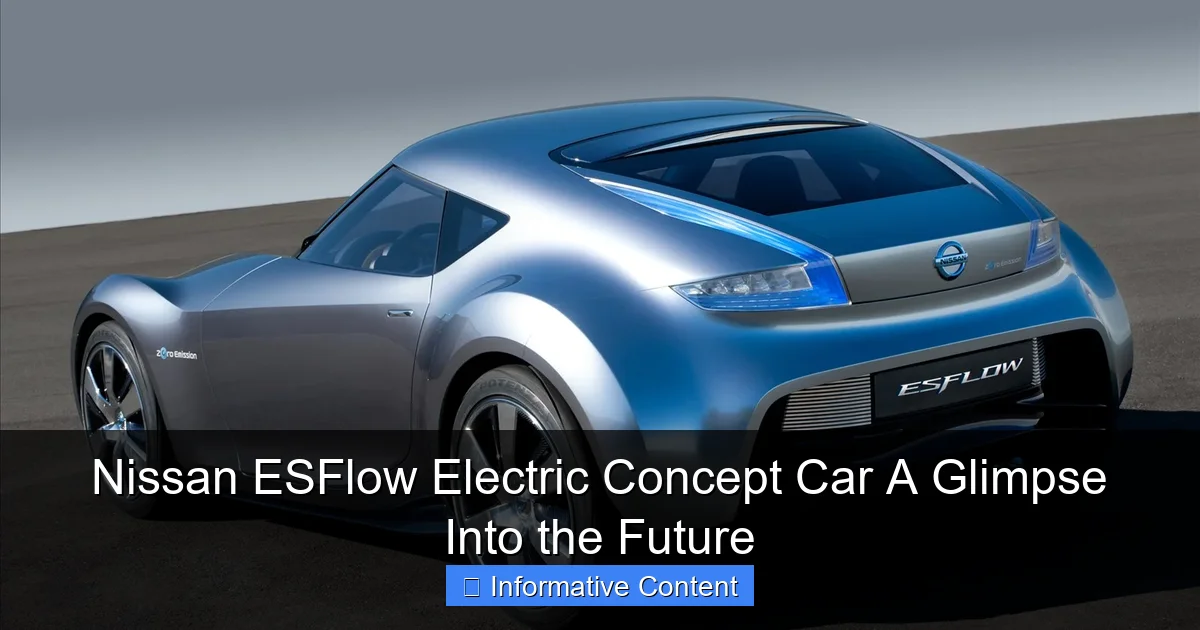
Visual guide about nissan esflow electric concept car
Image source: 1.bp.blogspot.com
The side profile is where the ESFlow truly shines. With a long hood, short rear deck, and a fastback-style roofline, it echoes classic sports car proportions. The 20-inch alloy wheels are pushed to the corners, maximizing cabin space while giving the car a planted, athletic stance. The rear is equally striking, with a full-width LED light bar and a subtle diffuser that hints at its performance capabilities.
Materials and Craftsmanship: Lightweight and Sustainable
Nissan didn’t just focus on looks—they prioritized function and sustainability. The ESFlow’s body uses a mix of lightweight materials, including carbon fiber and high-strength aluminum, to keep weight down without sacrificing structural integrity. This is crucial for EVs, where every extra pound can impact range and efficiency.
Inside, the cabin is a masterclass in minimalist luxury. The dashboard is uncluttered, with a single digital display serving as the instrument cluster and infotainment hub. The seats are upholstered in eco-friendly materials, like recycled fabric and bio-based leather alternatives. Even the steering wheel feels futuristic—flat-bottomed and trimmed in Alcantara, with touch-sensitive controls.
Real-World Tip: Design Inspiration for Future EVs
The ESFlow’s design language has already influenced Nissan’s production EVs. For example, the Ariya’s sleek, aerodynamic profile and minimalist interior owe a lot to the ESFlow’s DNA. If you’re shopping for an EV, pay attention to how a car’s design impacts its efficiency. A sloped roofline, flush door handles, and active grille shutters (like those on the ESFlow) can all improve aerodynamics and extend range.
Under the Hood: Electric Powertrain and Performance
Dual-Motor AWD: Power Where You Need It
The Nissan ESFlow isn’t just a pretty face—it’s a performance beast. Unlike the Leaf, which uses a single front-mounted motor, the ESFlow features a dual-motor setup: one motor for the front axle and one for the rear. This all-wheel-drive configuration delivers instant torque to all four wheels, resulting in blistering acceleration and superior traction, especially in slippery conditions.
Nissan claimed the ESFlow could sprint from 0 to 100 km/h (0 to 62 mph) in under 5 seconds. That’s sports-car territory, and it’s all thanks to the electric motors’ ability to deliver maximum torque from a standstill. For comparison, the Tesla Model 3 Performance does the same sprint in around 3.3 seconds, but the ESFlow was designed to be a more affordable, accessible performance EV.
Battery Tech: Range and Charging
The ESFlow is powered by two lithium-ion battery packs, one under the floor and one behind the seats. This setup helps lower the car’s center of gravity, improving handling and stability. Nissan estimated the range at around 240 km (150 miles) on a single charge—respectable for a 2011 concept, though modest by today’s standards (the 2024 Nissan Ariya offers up to 480 km/300 miles).
Charging was designed to be flexible. The ESFlow supported both standard Level 2 (240V) charging and fast DC charging. With a fast charger, Nissan claimed it could reach 80% charge in about 30 minutes. While that’s slower than modern EVs (like the Porsche Taycan, which can charge from 5% to 80% in 22.5 minutes), it was ahead of its time for a concept car.
Real-World Tip: Understanding EV Performance Metrics
If you’re new to EVs, here’s a quick guide to what matters:
- Torque: Electric motors deliver maximum torque instantly, which is why EVs feel so quick off the line. The ESFlow’s dual-motor setup ensures power is distributed evenly for optimal performance.
- Range: Always check real-world range estimates, not just the manufacturer’s numbers. Factors like weather, speed, and terrain can impact how far you can go.
- Charging Speed: Look for EVs with DC fast charging support. It can save you hours on long trips.
Interior and Technology: Where Innovation Meets Comfort
Minimalist Cockpit: Less Clutter, More Focus
Step inside the ESFlow, and you’re greeted by a cabin that feels like it belongs in 2030. The design is clean, almost austere, with a focus on reducing distractions. There’s no center console—just a floating center armrest with a touchscreen display. The instrument cluster is a single, curved OLED screen that displays speed, battery status, and navigation.
The seats are supportive and sporty, with deep bolsters to keep you in place during spirited driving. The lack of a transmission tunnel (thanks to the flat battery pack) creates a spacious, open feel. Even the door panels are minimalist, with touch-sensitive controls for windows and mirrors.
Infotainment and Connectivity: Ahead of Its Time
The ESFlow’s infotainment system was a glimpse into the future of car tech. The central touchscreen supported smartphone integration, voice commands, and real-time traffic updates. It even had a “range optimizer” feature that suggested the most efficient route based on battery level and charging station locations.
One standout feature was the “driver mood” system. Using sensors in the seat and steering wheel, the car could detect your stress level and adjust the ambient lighting, music, and climate control to help you relax. While this feature didn’t make it to production, it showed Nissan’s commitment to creating a holistic driving experience.
Real-World Tip: Prioritizing Ergonomics and Tech
When evaluating an EV’s interior, ask yourself:
- Is the dashboard intuitive? Can you access key features without taking your eyes off the road?
- Are the seats comfortable for long drives? Look for adjustable lumbar support and ventilation.
- Does the infotainment system support your preferred smartphone OS (Android Auto or Apple CarPlay)?
The ESFlow’s interior design principles—simplicity, functionality, and comfort—are still relevant today.
Safety and Sustainability: Building a Greener, Safer Future
Active and Passive Safety Features
The ESFlow was designed with safety as a top priority. It featured a reinforced passenger cell, side-impact beams, and a suite of driver-assistance systems. While some features (like autonomous emergency braking) were still in their infancy in 2011, the ESFlow included:
- Lane departure warning: Alerts you if you unintentionally drift out of your lane.
- Adaptive cruise control: Maintains a safe distance from the car ahead.
- Blind-spot monitoring: Warns you of vehicles in your blind spots.
These systems laid the groundwork for Nissan’s ProPILOT Assist, now available on models like the Leaf and Ariya.
Sustainable Materials and Manufacturing
Nissan went beyond just electrifying the powertrain—they focused on sustainability throughout the ESFlow’s lifecycle. The car used recycled materials for the interior trim, and the battery packs were designed to be easily recyclable at the end of their life. Even the manufacturing process was optimized to reduce waste and emissions.
This holistic approach to sustainability is something all EV manufacturers should emulate. As consumers, we can support this by:
- Choosing EVs with eco-friendly interiors (like the BMW i3, which uses recycled plastics).
- Researching how a car’s battery is recycled or repurposed.
- Supporting companies with transparent sustainability goals.
Real-World Tip: Evaluating an EV’s Environmental Impact
Range and performance are important, but don’t overlook sustainability. Ask:
- How is the battery produced? Is it sourced ethically (e.g., conflict-free minerals)?
- Does the car use recycled or renewable materials?
- What’s the manufacturer’s carbon footprint?
The ESFlow’s commitment to sustainability set a high bar for future EVs.
The Legacy of the ESFlow: Lessons for the Future of EVs
What Worked: A Blueprint for Success
The ESFlow proved that EVs could be fun, stylish, and practical. Its dual-motor AWD system, lightweight construction, and innovative interior design were all ahead of their time. Most importantly, it showed that Nissan could take the Leaf’s proven EV technology and adapt it for a performance-focused audience.
What Could Be Improved: The Challenges Ahead
Of course, the ESFlow wasn’t perfect. Its 240 km range would be a dealbreaker for many buyers today. The infotainment system, while futuristic, lacked the polish of modern systems. And as a concept car, it never saw production—a missed opportunity, in hindsight.
But these “shortcomings” are also valuable lessons. They highlight the importance of:
- Balancing performance with practicality.
- Investing in battery technology to extend range.
- Refining user interfaces to make tech more accessible.
Real-World Tip: Learning from the Past to Choose Your EV
When shopping for an EV, don’t just focus on specs—look at the manufacturer’s track record. Ask:
- Have they delivered on past promises (like the ESFlow’s performance goals)?
- Do they have a history of innovation (like Nissan’s Leaf and Ariya)?
- Are they investing in future technologies (like solid-state batteries)?
The ESFlow’s legacy is a reminder that the best EVs are built on a foundation of innovation, sustainability, and real-world usability.
Conclusion: The ESFlow’s Enduring Impact
The Nissan ESFlow electric concept car was more than just a showpiece—it was a manifesto. A declaration that the future of driving would be electric, exhilarating, and accessible to everyone. While it never made it to production, its influence can be seen in every Nissan EV that followed, from the Leaf to the Ariya.
For enthusiasts, the ESFlow proved that EVs could be thrilling. For environmentalists, it showed that sustainability and performance aren’t mutually exclusive. And for everyday drivers, it offered a glimpse into a future where cars are smarter, safer, and kinder to the planet.
As we stand on the brink of a new automotive era—one dominated by EVs, autonomy, and connectivity—the ESFlow’s lessons are more relevant than ever. It reminds us that innovation isn’t just about pushing boundaries; it’s about creating cars that people actually want to drive. And that, perhaps, is the ESFlow’s greatest legacy.
Data Table: Nissan ESFlow vs. Key Competitors (2011)
| Feature | Nissan ESFlow | Chevrolet Volt | BMW i3 (Concept) |
|---|---|---|---|
| Powertrain | Dual-motor AWD | Range-extended EV (gasoline generator) | Single-motor RWD |
| 0-100 km/h (0-62 mph) | Under 5 seconds | 9 seconds | 7.9 seconds |
| Range (Electric Only) | 240 km (150 mi) | 60 km (38 mi) | 160 km (100 mi) |
| Charging Time (80%) | 30 min (DC fast) | 4 hours (Level 2) | 30 min (DC fast) |
| Key Innovation | Dual-motor AWD, mood-sensing interior | Gasoline range extender | Carbon fiber passenger cell |
Frequently Asked Questions
What is the Nissan ESFlow electric concept car?
The Nissan ESFlow is a sleek, two-seater electric concept car unveiled in 2011, showcasing Nissan’s vision for a sporty, sustainable future. It features a 100% electric drivetrain and a design inspired by the Nissan Leaf, with a focus on agility and eco-friendly performance.
How does the Nissan ESFlow’s electric performance compare to traditional sports cars?
The ESFlow concept car delivers instant torque from its dual electric motors, enabling a 0-100 km/h (0-62 mph) time of under 5 seconds, rivaling many gasoline-powered sports cars. Its lightweight design and advanced battery system ensure dynamic handling and zero emissions.
What are the key design features of the Nissan ESFlow concept car?
The ESFlow combines futuristic styling with functional aerodynamics, including a low-slung body, gull-wing doors, and a minimalist interior. Its design emphasizes efficiency and driver engagement, with a focus on reducing weight and energy consumption.
What range does the Nissan ESFlow electric concept car offer?
The ESFlow is estimated to deliver a range of around 240 km (150 miles) on a single charge, thanks to its advanced lithium-ion battery pack. This range was designed to balance performance with practicality for urban and highway driving.
Will the Nissan ESFlow ever be mass-produced?
While the ESFlow remains a concept car, its technology and design have influenced Nissan’s production EVs, like the Ariya and Leaf. The ESFlow’s innovations highlight Nissan’s commitment to electric mobility, even if it never hits showrooms.
What makes the Nissan ESFlow stand out among other electric concept cars?
The ESFlow distinguishes itself with its sporty, driver-focused approach, blending high-performance electric power with a lightweight, aerodynamic design. Unlike many utilitarian EVs, it proves that sustainability and driving excitement can coexist.