Nissan Future Electric Car Revealed Whats Next for EVs
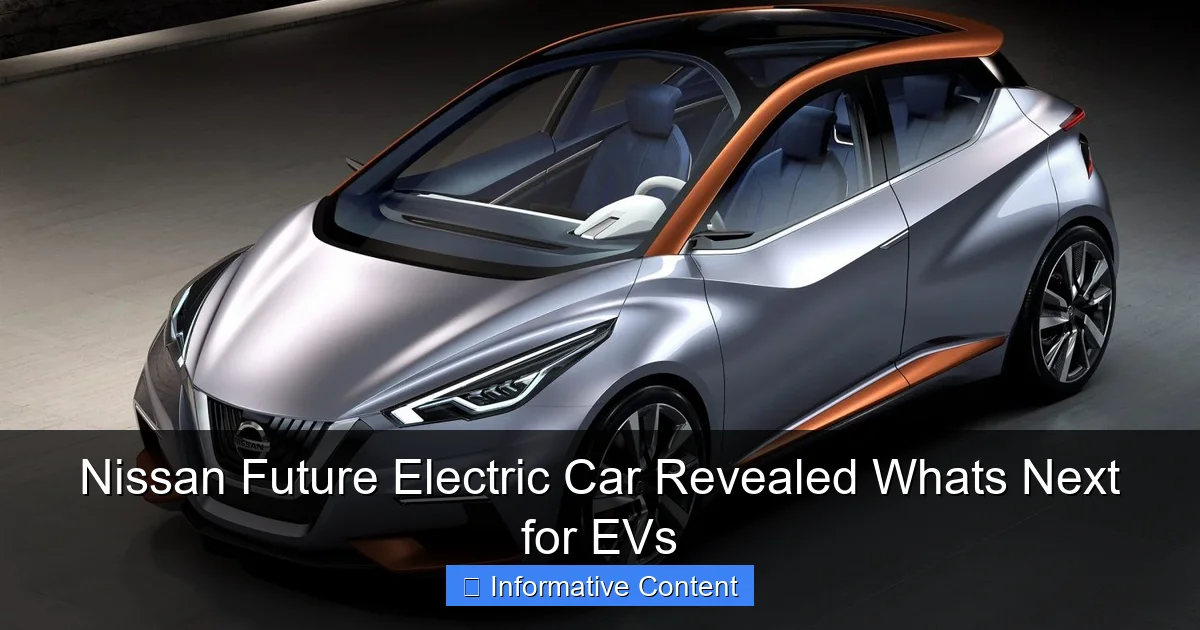
Featured image for nissan future electric car
Image source: nissan-cdn.net
Nissan has unveiled its bold vision for the future of electric mobility, introducing a next-generation electric car platform designed for performance, affordability, and sustainability. With cutting-edge solid-state batteries and a sleek, modular design, Nissan aims to redefine EVs by 2030, targeting longer range, faster charging, and a 50% reduction in production costs.
Key Takeaways
- Nissan’s new EV lineup will feature 16 models by 2030.
- Solid-state batteries promise faster charging and longer range.
- Advanced driver aids will debut in next-gen electric models.
- Affordable pricing strategy targets mass-market EV adoption.
- Global production hubs ensure faster delivery and lower costs.
- Sustainability focus includes recycled materials and carbon-neutral plants.
📑 Table of Contents
- Nissan Future Electric Car: The Road Ahead
- 1. The Vision: Nissan’s Electrification Strategy
- 2. Next-Gen Battery Tech: Solid-State and Beyond
- 3. Design and Tech: Where Form Meets Function
- 4. Charging and Infrastructure: Solving the “Where Do I Plug In?” Problem
- 5. Affordability and Ownership: Making EVs Accessible
- 6. The Competition: How Nissan Stacks Up
- The Road Ahead: What This Means for You
Nissan Future Electric Car: The Road Ahead
Remember the days when electric cars were a distant dream? Fast-forward to today, and they’re not just a reality—they’re the future. And Nissan, the brand that brought us the first mass-market EV with the Leaf, is stepping up its game. The company recently revealed bold plans for its next generation of electric vehicles, and it’s clear they’re not just keeping up with the competition—they’re aiming to lead the pack.
But what does this mean for you, the everyday driver? Whether you’re a long-time EV enthusiast or just starting to consider going electric, Nissan’s upcoming lineup promises more than just zero emissions. We’re talking about longer range, faster charging, and smarter tech—all wrapped in designs that make you look twice. In this post, we’ll explore what’s next for Nissan’s electric vehicles, from cutting-edge battery tech to real-world usability. Buckle up, because the future is charging ahead.
1. The Vision: Nissan’s Electrification Strategy
Nissan isn’t just dipping its toes into the EV waters—it’s diving in headfirst. The company’s “Nissan Ambition 2030” plan outlines a clear roadmap: by 2030, 40% of its global sales will be electric, with a goal of 100% electrification in key markets like Europe. This isn’t just about swapping gas tanks for batteries; it’s about reimagining how cars connect to our lives.
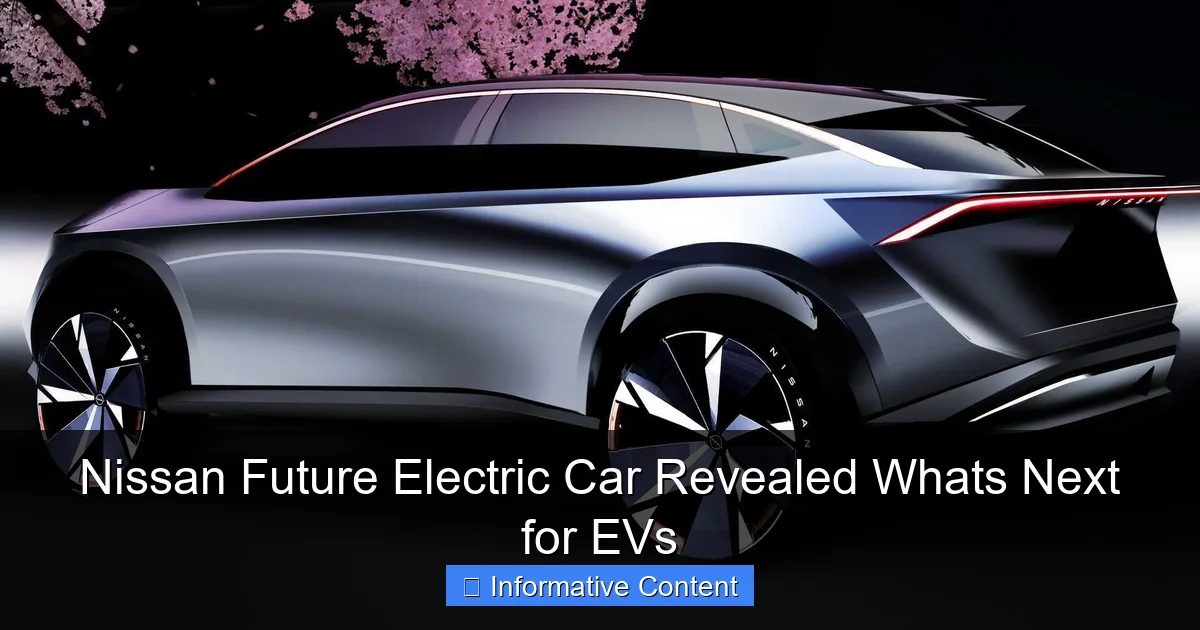
Visual guide about nissan future electric car
Image source: cdn.motor1.com
From Leaf to Legend: A Legacy of Innovation
The Nissan Leaf, launched in 2010, was a trailblazer. But the future isn’t about incremental updates—it’s about leaps. Nissan’s new strategy focuses on modular platforms (like the CMF-EV), which allow for faster development of diverse EVs, from compact hatchbacks to rugged SUVs. Think of it like a Lego set: same core pieces, endless possibilities.
For example, the upcoming Nissan Chill-Out concept (set to become the next Leaf) shares its platform with the Ariya SUV. This means cost savings for Nissan and more affordable options for you.
Investing in the Future
Nissan is pouring $17.6 billion into electrification over the next five years. This includes:
- 23 new electrified models (15 fully electric) by 2030.
- 20 GWh of battery production capacity in the U.S. and Japan to reduce reliance on third-party suppliers.
- Solid-state batteries (SSBs) by 2028—a game-changer we’ll dive into later.
As someone who’s seen EVs evolve from clunky prototypes to sleek machines, this level of commitment is refreshing. It tells you Nissan isn’t just reacting to trends—they’re shaping them.
2. Next-Gen Battery Tech: Solid-State and Beyond
Let’s talk about the elephant in the room: battery anxiety. We’ve all been there—wondering if the next charging station is too far, or if the battery will degrade after a few winters. Nissan’s answer? Solid-state batteries (SSBs).
Why Solid-State Batteries Are a Big Deal
Traditional lithium-ion batteries use liquid electrolytes. SSBs replace these with solid materials, offering:
- Double the energy density: Up to 1,000 km (621 miles) on a single charge—enough for a cross-country road trip.
- 80% charge in 15 minutes (vs. 30+ minutes for current tech).
- Longer lifespan: Less degradation over time, so your car stays “younger” longer.
- Enhanced safety: No risk of liquid electrolyte fires.
Imagine driving from New York to Chicago without a single charge stop. Or charging your car during a coffee break. That’s the promise of SSBs.
The Road to 2028: Challenges and Realism
Nissan plans to launch SSB-powered EVs by 2028. But let’s be honest: scaling this tech won’t be easy. Challenges include:
- Cost: SSBs are currently 3-4x more expensive than lithium-ion. Nissan is working on manufacturing breakthroughs to bring this down.
- Durability: Early SSBs can crack under stress. Nissan’s labs are testing materials like sulfide-based electrolytes to fix this.
Pro tip: Keep an eye on Nissan’s prototype testing in 2025. Real-world data from these trials will tell us if SSBs are truly ready for prime time.
3. Design and Tech: Where Form Meets Function
Let’s face it: no one wants an EV that looks like a toaster. Nissan’s future electric cars blend futuristic design with practical usability, proving you don’t have to sacrifice style for sustainability.
Exterior: Bold, Aerodynamic, and Smart
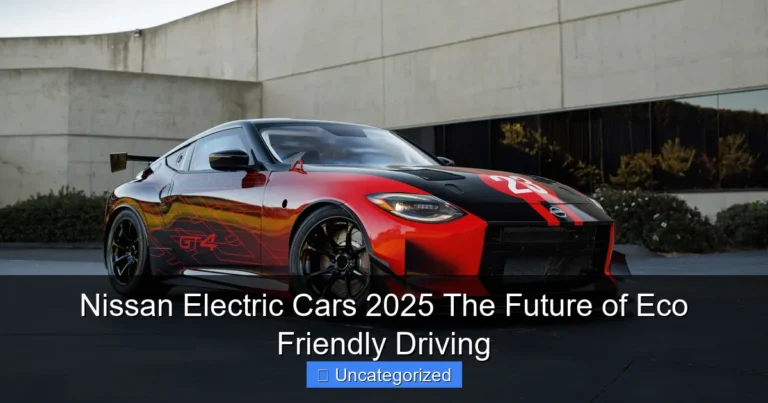
The Nissan Hyper Urban concept (a preview of their 2025 SUV) features:
- “Shield” grille: A sleek, closed-off front with integrated lighting and sensors.
- Aerodynamic wheels: Reduce drag, boosting range by up to 5%.
- Interactive lighting: Headlights that “greet” you as you approach—a small but delightful touch.
Fun fact: Nissan’s designers studied Japanese origami to create folding door handles that pop out when needed, reducing wind resistance.
Interior: Your Personal Tech Oasis
Inside, Nissan’s EVs are all about connected living. The Hyper Urban’s cabin includes:
- “ProPILOT 2.0”: Hands-free highway driving with lane changes and traffic navigation.
- Biometric sensors: Adjust seat position, temperature, and even music based on your stress levels (yes, really).
- Over-the-air updates: Your car gets smarter over time, like a smartphone.
Real-world example: A Nissan Ariya owner in Norway reported their car’s infotainment system updated overnight to add localized weather alerts—no dealership visit needed.
4. Charging and Infrastructure: Solving the “Where Do I Plug In?” Problem
EV adoption isn’t just about the car—it’s about the ecosystem. Nissan knows this, and they’re tackling charging head-on.
Home Charging Made Simple
For most drivers, home charging is key. Nissan’s “Nissan Energy” package includes:
- Wall-mounted charger: 11 kW capacity (adds ~40 miles of range per hour).
- Solar integration: Pair your charger with rooftop panels to go 100% off-grid.
- Smart scheduling: Charge during off-peak hours to save money.
Tip: If you rent, ask Nissan about their portable Level 2 charger—it works with standard outlets and delivers 25 miles of range per hour.
Public Charging: Partnerships and Speed
Nissan is expanding its “EVgo” partnership in the U.S., adding 500 fast-charging stations by 2025. These stations use 350 kW chargers, capable of:
- Adding 200 miles in 10 minutes for SSB-equipped models.
- Real-time availability updates via the NissanConnect app.
But here’s the catch: fast charging isn’t always better. For daily use, Level 2 chargers (7-11 kW) are gentler on batteries. Use fast charging only for road trips.
5. Affordability and Ownership: Making EVs Accessible
Let’s address the elephant in the room: cost. While EVs are getting cheaper, they’re still a big investment. Nissan is working to change that.
Pricing Strategy: From Budget to Premium
Nissan’s future EVs will span a wide price range:
- $25,000-$35,000: Compact EVs (think next-gen Leaf).
- $35,000-$55,000: Midsize SUVs like the Ariya.
- $60,000+: Flagship models with SSBs and luxury features.
Pro tip: Look for federal tax credits (up to $7,500 in the U.S.) and state incentives. Nissan also offers battery leasing in some markets—pay a monthly fee instead of upfront, reducing your initial cost.
Total Cost of Ownership: The Hidden Savings
EVs aren’t just cheaper to run—they’re cheaper to maintain. Here’s how:
- No oil changes: Electric motors have fewer moving parts.
- Regenerative braking: Extends brake life by up to 50%.
- Lower electricity vs. gas: At $0.15/kWh, driving 15,000 miles costs ~$600 (vs. $1,500 for gas).
Example: A Nissan Leaf owner in Texas reported spending $380/year on electricity and maintenance—half what they paid for their old sedan.
6. The Competition: How Nissan Stacks Up
Nissan isn’t the only player in the EV game. Let’s see how they compare to rivals like Tesla, Ford, and Hyundai.
Range and Charging
Here’s a quick comparison of upcoming models (estimated specs):
| Model | Battery | Range (km) | Charge Time (10-80%) | Price (USD) |
|---|---|---|---|---|
| Nissan Chill-Out (2025) | Lithium-ion | 550 | 30 min | $32,000 |
| Tesla Model 3 (2024) | Lithium-ion | 600 | 25 min | $39,000 |
| Ford Mustang Mach-E (2024) | Lithium-ion | 500 | 40 min | $45,000 |
| Hyundai Ioniq 5 (2024) | Lithium-ion | 500 | 18 min | $42,000 |
| Nissan SSB SUV (2028) | Solid-state | 1,000 | 15 min | $60,000 |
Tech and Features
Nissan’s ProPILOT 2.0 lags behind Tesla’s Full Self-Driving (FSD) but offers more affordable autonomy. Meanwhile, their biometric sensors and interactive lighting are unique in the market. The key difference? Nissan focuses on practical innovation—features you’ll actually use, not just gimmicks.
The Road Ahead: What This Means for You
So, what’s the takeaway? Nissan’s future electric cars aren’t just about replacing gas engines—they’re about enhancing your life. From SSBs that eliminate range anxiety to tech that adapts to your needs, these vehicles promise a smoother, smarter driving experience.
But let’s keep it real: the transition won’t be perfect. Charging infrastructure still has gaps, and SSBs won’t be cheap at first. The good news? Nissan’s modular platform and battery leasing options make it easier to start small and scale up. Whether you’re ready to buy now or waiting for the next big leap, the future of Nissan EVs is bright—and charged with potential.
As someone who’s driven everything from a 2011 Leaf to the latest Ariya, I can say this: the best is yet to come. The Nissan future electric car isn’t just a vehicle—it’s a promise of cleaner air, lower costs, and more freedom on the road. And honestly? I can’t wait to see what’s next.
Frequently Asked Questions
What is the Nissan future electric car lineup expected to include?
Nissan’s future electric car lineup is set to feature next-gen models like the Nissan Chill-Out and Hyper Urban concepts, focusing on sleek designs, advanced tech, and longer ranges. These EVs aim to expand Nissan’s global EV market share with affordable and premium options.
When will the new Nissan future electric car models be available?
Nissan plans to launch 19 new electric models by 2030, with the first wave, including the Chill-Out SUV, arriving as early as 2025. Exact timelines will vary by market and region.
How far can Nissan’s upcoming electric cars travel on a single charge?
The Nissan future electric car range is expected to exceed 300–400 miles per charge, thanks to new solid-state battery technology. These advancements aim to reduce charging times and boost efficiency.
Will Nissan’s future EVs support fast charging?
Yes, Nissan’s future electric cars will feature ultra-fast charging capabilities, with some models supporting 10–80% charges in under 20 minutes. This aligns with Nissan’s goal to make EVs more practical for long-distance travel.
What unique technology will Nissan’s future electric cars offer?
Expect ProPILOT 2.0 for hands-free driving, AI-powered infotainment, and vehicle-to-grid (V2G) energy sharing. Nissan’s future EVs will also integrate advanced driver-assist features for safety and convenience.
Are Nissan’s upcoming electric cars affordable?
Nissan aims to balance affordability and innovation, with some models targeting a sub-$30,000 price point. The company also plans to leverage solid-state batteries to reduce production costs in the long term.