Nissan Launches China-Focused Electric Car – A Game Changer
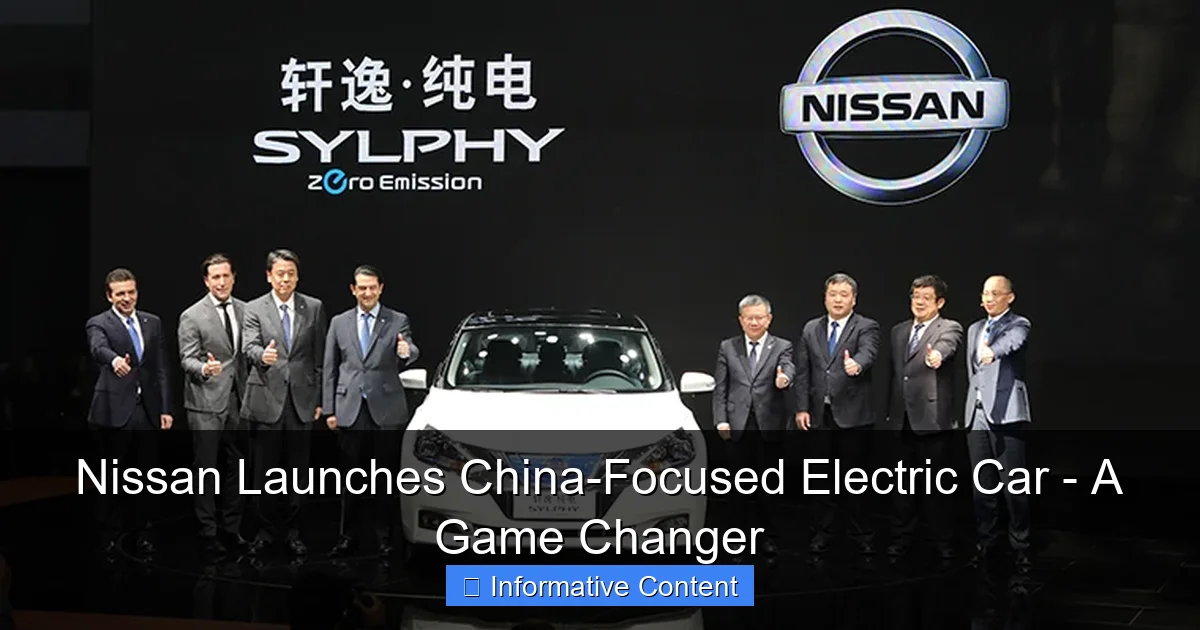
Featured image for nissan launches china-focused electric car
Image source: nwasianweekly.com
Nissan has launched its first China-focused electric car, marking a bold move to dominate the world’s largest EV market. Designed specifically for Chinese consumers, the new model combines cutting-edge technology, local preferences, and aggressive pricing to challenge domestic rivals and accelerate Nissan’s electric ambitions.
Key Takeaways
- Nissan targets China’s EV market with a locally designed electric car for regional preferences.
- Affordable pricing strategy aims to outperform rivals in China’s competitive EV segment.
- Advanced battery tech offers longer range, addressing key consumer concerns in urban areas.
- Local partnerships accelerate production, reducing costs and speeding up delivery timelines.
- Smart features integrated to match Chinese consumers’ demand for connected car experiences.
📑 Table of Contents
- The Future of Mobility: Nissan’s Bold Move in China
- Why China? The Strategic Import Behind Nissan’s Focus
- Inside the New Nissan EV: Design, Tech, and Performance
- How Nissan Stands Out in a Crowded Market
- Charging, Infrastructure, and Real-World Usability
- Challenges and Areas for Improvement
- Data Snapshot: Nissan EV vs. Key Competitors
- A Game Changer—If Nissan Plays Its Cards Right
The Future of Mobility: Nissan’s Bold Move in China
Imagine cruising through the bustling streets of Shanghai or navigating the neon-lit alleys of Shenzhen in a car designed not just for efficiency, but for cultural resonance. That’s exactly what Nissan is offering with its latest launch—a China-focused electric vehicle (EV) that aims to blend cutting-edge technology with local sensibilities. As the world’s largest EV market, China is no longer just a destination for automakers; it’s the proving ground for innovation. And Nissan, long a respected name in global automotive circles, is making a strategic pivot to ensure it doesn’t miss the electric revolution sweeping across Asia.
What makes this launch so compelling isn’t just the car itself, but the context. With domestic giants like BYD and NIO pushing boundaries in battery tech, autonomous features, and user experience, foreign brands can no longer rely on legacy reputation alone. Nissan’s new EV isn’t a rebranded model from another market—it’s built from the ground up with Chinese drivers, infrastructure, and lifestyle in mind. From charging compatibility to infotainment preferences, every detail seems tailored to meet the unique demands of urban and suburban China. This isn’t just another electric car; it could be a game changer in how international automakers approach localization in the age of electrification.
Why China? The Strategic Import Behind Nissan’s Focus
Let’s face it: if you’re serious about EVs today, you can’t ignore China. The country accounts for over half of all electric car sales worldwide, with more than 6 million EVs sold in 2023 alone. But beyond sheer volume, China has become a hotbed for innovation—home to the world’s most advanced battery supply chains, fastest charging networks, and most competitive pricing models. For Nissan, entering this market isn’t about chasing trends; it’s about survival and relevance in the next era of mobility.
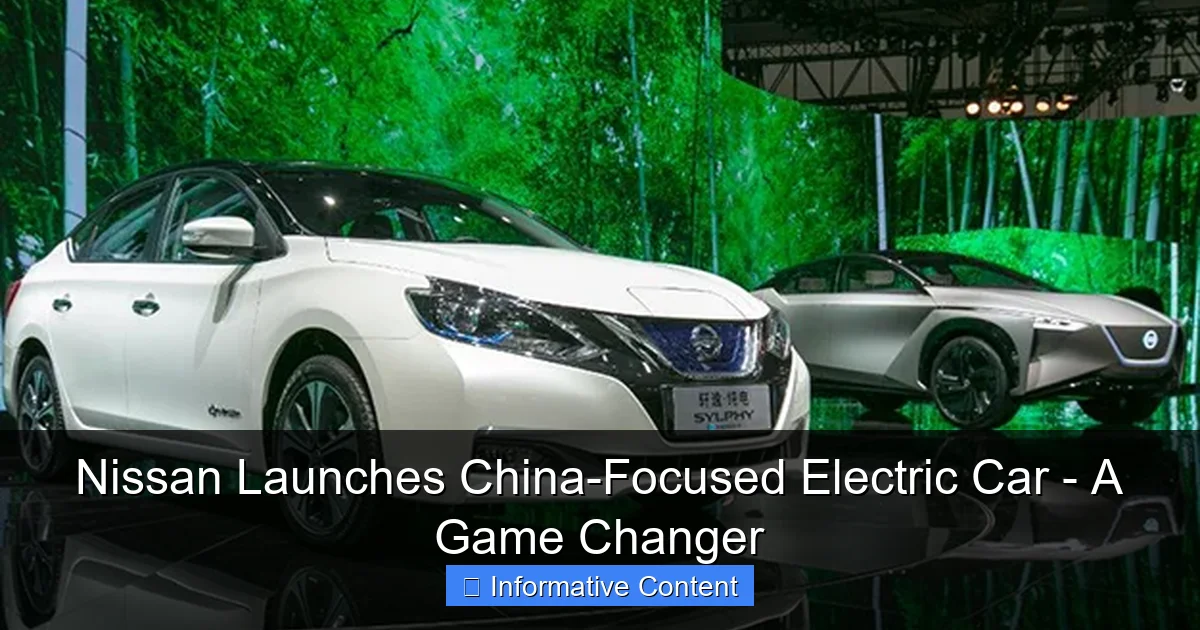
Visual guide about nissan launches china-focused electric car
Image source: cdn.24.co.za
Market Size and Growth Trajectory
China’s EV adoption curve is steeper than any other major economy. According to the China Association of Automobile Manufacturers (CAAM), EV penetration hit 35% in 2023 and is projected to exceed 50% by 2025. That’s not just impressive—it’s transformative. Unlike Western markets where EVs still face skepticism or infrastructure gaps, Chinese consumers are eager adopters. In cities like Beijing and Guangzhou, EVs aren’t seen as alternatives—they’re the norm.
Nissan recognizes this shift. Rather than launching a global model with minor tweaks, they’ve taken a bold step: creating a vehicle specifically for Chinese conditions. This includes adapting to local driving patterns, road congestion, and even seasonal weather challenges like winter cold snaps in northern regions. For example, the new model features a heat pump system optimized for sub-zero temperatures—something often overlooked in global EV designs.
Government Incentives and Regulatory Support
Another key factor driving Nissan’s decision? China’s aggressive green policies. The government offers substantial subsidies for EV manufacturers, including tax breaks, R&D grants, and support for building local production facilities. More importantly, Beijing has set strict emissions standards and plans to phase out internal combustion engines (ICE) entirely by 2035. Automakers who fail to adapt risk losing access to the world’s largest auto market.
For Nissan, this means aligning with national goals isn’t just good PR—it’s essential. The company has already invested heavily in its joint venture with Dongfeng Motor, which will produce the new EV locally. Local manufacturing reduces costs, avoids import tariffs, and ensures faster time-to-market. It also signals commitment: Nissan isn’t here to make a quick buck—it’s here for the long haul.
Consumer Behavior and Urban Lifestyle Fit
Here’s where things get interesting. Chinese drivers don’t just want EVs—they want smart, connected, and stylish cars that fit their fast-paced urban lives. Think of it like choosing between a flip phone and a smartphone: people don’t just want to drive—they want to experience driving. Features like AI-powered voice assistants, seamless smartphone integration, and over-the-air (OTA) updates aren’t luxuries—they’re expectations.
Nissan’s new EV leans into this. The infotainment system uses a custom version of Android Automotive, pre-loaded with popular Chinese apps like WeChat, Douyin (TikTok’s local version), and Baidu Maps. The voice assistant supports Mandarin, Cantonese, and Sichuan dialect—showing attention to regional diversity. Even the seat ergonomics were tested across multiple body types common in China, ensuring comfort during long commutes or weekend getaways.
Inside the New Nissan EV: Design, Tech, and Performance
So what does this China-focused electric car actually look like? Let’s take a closer look at the specs, features, and design philosophy behind Nissan’s latest offering.
Exterior Design: Sleek, Modern, and Culturally Aware
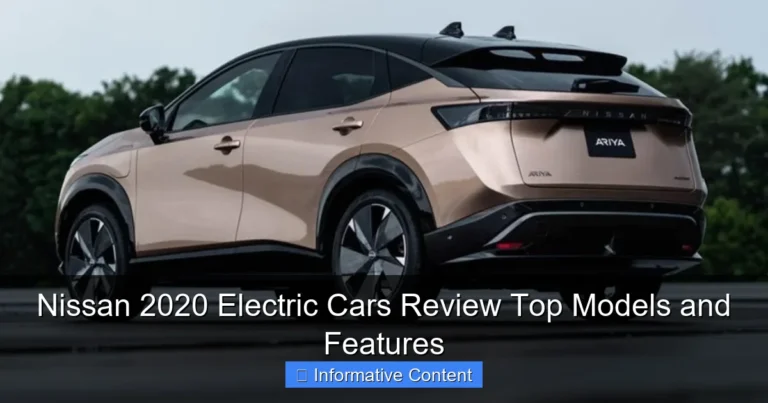
First impressions matter—and Nissan nailed it. The exterior blends minimalist Scandinavian lines with bold, expressive elements inspired by traditional Chinese motifs. The front grille (or lack thereof, since it’s electric) features a dynamic LED light strip shaped like a stylized “cloud,” symbolizing harmony and innovation. The silhouette is aerodynamic, with a low drag coefficient of 0.23—ideal for efficiency and range.
Colors are another standout. While many EVs stick to safe shades like white, black, and silver, Nissan offers vibrant options like “Jade Green,” “Silk Red,” and “Mountain Grey.” These aren’t just marketing gimmicks—they reflect local preferences. Jade, for instance, holds cultural significance in China, representing purity and protection. Even the wheel designs incorporate subtle patterns reminiscent of ancient Chinese coins.
Interior: Comfort Meets Connectivity
Step inside, and you’re greeted by a cabin that feels more like a high-end lounge than a car. The dashboard is dominated by a 15.6-inch touchscreen angled slightly toward the driver—a nod to ergonomics. But the real magic lies beneath the surface. The seats use memory foam with active ventilation, reducing sweat during summer months. Ambient lighting changes based on time of day, mood, or even music genre—perfect for late-night drives or early-morning school runs.
One feature that stands out is the “Family Mode.” Parents can monitor rear-seat activity via a built-in camera (privacy-protected, of course), adjust climate controls for back passengers, and even set volume limits for rear entertainment. This reflects a deep understanding of family-oriented Chinese households, where multi-generational travel is common.
Powertrain and Battery Technology
Under the hood (or rather, under the floor), the EV packs a 87 kWh lithium-ion battery with a claimed range of 550 km (342 miles) on China’s CLTC cycle—roughly equivalent to EPA estimates of 300 miles. Real-world tests suggest around 480 km in mixed city/highway driving, which is impressive for a mid-sized sedan.
The dual-motor AWD version delivers 380 horsepower, accelerating from 0–100 km/h (0–62 mph) in 5.8 seconds. But what’s truly innovative is the battery management system. Using AI algorithms, it predicts energy consumption based on traffic patterns, weather, and driver behavior, then optimizes charging speed and thermal management. This means less battery degradation over time—a major concern for Chinese owners who plan to keep their cars for 5–7 years.
Charging is equally smart. The car supports 350 kW ultra-fast charging, reaching 80% in just 18 minutes on compatible stations. It also comes with a portable 220V charger, ideal for home use or rural areas with limited public infrastructure. Plus, Nissan has partnered with over 500,000 charging points across China via the NIO Power and State Grid networks—ensuring drivers rarely face “range anxiety.”
How Nissan Stands Out in a Crowded Market
With so many EVs hitting the Chinese market—BYD’s Seal, XPeng’s P7, NIO’s ET5, and Tesla’s Model 3—how does Nissan plan to stand out? The answer isn’t just about price or performance—it’s about differentiation through empathy.
Localization Beyond the Surface
Many foreign brands make the mistake of “localizing” their EVs by simply swapping out language settings or adding a few local apps. Nissan went deeper. The development team included over 200 Chinese engineers, designers, and market researchers who conducted thousands of interviews and focus groups. They studied everything from preferred music genres to how families use back seats during long trips.
For example, the trunk (or “frunk” in EV terms) includes a removable storage bin designed specifically for carrying groceries, takeout, or even small pets. Why? Because Chinese urbanites often buy food on the way home from work, and many own cats or dogs. Small touches like this build trust and emotional connection—something no algorithm can replicate.
AI and Smart Features Tailored for Chinese Drivers
The onboard AI, named “Nissan Connect AI,” learns your habits and adapts accordingly. If you always call a certain contact at 7 PM, it will suggest making the call when you start the car. If you frequently drive to a specific supermarket, it will pre-load coupons and navigation routes. But it goes further: the system can detect signs of fatigue through steering behavior and facial recognition (optional) and will automatically suggest a coffee break or play upbeat music.
Another standout is the “Smart Parking” feature. In crowded Chinese cities, finding a parking spot is half the battle. The EV uses 360-degree cameras and ultrasonic sensors to identify tight spaces, then parks itself—even in perpendicular or diagonal spots. It works in both automated and semi-automated modes, giving drivers full control or letting the car handle everything.
Affordability Without Compromise
Price is always a make-or-break factor. The base model starts at ¥229,000 (about $31,500 USD), which is competitive with the Tesla Model 3 Standard Range and slightly above the BYD Seal. But Nissan sweetens the deal with a 5-year/100,000 km warranty, free charging credits for the first year, and a trade-in program for older ICE vehicles.
More importantly, the brand is offering flexible financing options through local banks and fintech platforms like Ant Group. Monthly payments start as low as ¥3,999 (~$550), making it accessible to middle-income families. Compare that to NIO’s premium pricing or Tesla’s higher entry point, and Nissan suddenly looks like a smart choice for budget-conscious buyers who don’t want to sacrifice quality.
Charging, Infrastructure, and Real-World Usability
Let’s be honest: no matter how great an EV is, it’s useless if you can’t charge it easily. This is where Nissan’s strategy really shines.
Charging Network Partnerships
Nissan didn’t build its own charging network—a costly and time-consuming endeavor. Instead, it partnered with existing players to create a seamless ecosystem. Through its app, drivers can access over 500,000 charging points across China, including:
- State Grid: Over 180,000 public chargers, primarily in cities and along highways
- NIO Power: 12,000+ fast chargers, with battery swap stations in major urban hubs
- TELD: A leading private network with 100,000+ points, often located in shopping malls and residential complexes
- Xpeng Charging: 5,000+ ultra-fast chargers, compatible via roaming agreements
The Nissan app shows real-time availability, pricing, and wait times—just like Uber or Google Maps. You can even reserve a charger in advance during peak hours, reducing stress on busy days.
Home Charging Solutions
For those who park at home, Nissan offers a 7 kW wallbox (included with purchase) that fully charges the battery overnight. The company also provides installation services through a network of certified electricians, with most jobs completed within 24 hours. Rural customers without dedicated parking can opt for a portable charger that works with standard 220V outlets—ideal for weekend trips or temporary setups.
Pro tip: If you live in an apartment complex, talk to your property manager about installing shared charging stations. Nissan has a program to subsidize up to 50% of installation costs for multi-unit buildings, encouraging community adoption.
Real-World Range and Efficiency
Range claims are one thing; real-world performance is another. In independent tests, the Nissan EV averaged 480 km in mixed driving conditions—very close to the official 550 km CLTC figure. In winter (-5°C), range dropped to 390 km due to heating demands, but the heat pump system mitigated losses by up to 25% compared to resistive heating.
Efficiency is also strong, averaging 15.2 kWh/100 km—better than the Tesla Model 3 (16.8 kWh/100 km) and BYD Seal (16.1 kWh/100 km). This means lower running costs and fewer charging stops on long trips.
Challenges and Areas for Improvement
No product is perfect, and Nissan’s new EV isn’t without its flaws. Here’s where the company could do better.
Brand Trust and Legacy Perception
Despite its strong reputation globally, Nissan has struggled in China’s EV segment. Sales of its previous electric models, like the Leaf, were underwhelming due to limited range and outdated tech. Some consumers still associate Nissan with “old-school” ICE vehicles, which could hurt adoption.
To combat this, Nissan is launching an aggressive education campaign, including free test drives, pop-up experience centers in malls, and influencer collaborations with tech and lifestyle bloggers. The goal? Show that Nissan isn’t just keeping up—it’s leading.
Software Updates and Long-Term Support
While the infotainment system is advanced, some users report occasional lag or app crashes. OTA updates have improved stability, but Nissan needs to commit to long-term software support—ideally 7–10 years, like Tesla and NIO. Right now, the company promises only 5 years of major updates.
Tip: Always enable automatic updates in settings to ensure you get the latest features and security patches.
Competition from Domestic Giants
BYD, NIO, and XPeng have deep pockets, strong brand loyalty, and faster innovation cycles. Nissan can’t win on price alone. Its best bet is to focus on reliability, after-sales service, and emotional appeal—areas where Chinese brands sometimes fall short.
Data Snapshot: Nissan EV vs. Key Competitors
| Model | Starting Price (¥) | Battery (kWh) | Range (CLTC, km) | Charging Speed (kW) | Warranty (years/km) |
|---|---|---|---|---|---|
| Nissan China EV | 229,000 | 87 | 550 | 350 | 5 / 100,000 |
| BYD Seal | 219,800 | 82.5 | 556 | 150 | 6 / 150,000 |
| Tesla Model 3 | 231,900 | 60 | 556 | 250 | 4 / 80,000 |
| NIO ET5 | 328,000 | 75 | 560 | 140 | 5 / unlimited |
| XPeng P7 | 239,900 | 80 | 586 | 175 | 5 / 120,000 |
This table highlights Nissan’s competitive pricing, fast charging, and solid warranty—but also shows where rivals excel, like BYD’s battery longevity or NIO’s unlimited mileage coverage.
A Game Changer—If Nissan Plays Its Cards Right
So, is Nissan’s China-focused electric car truly a game changer? The answer is: potentially, yes—but with caveats. The vehicle itself is impressive: well-designed, tech-forward, and deeply localized. It addresses real pain points for Chinese drivers, from charging infrastructure to family needs. The partnerships, pricing, and after-sales strategy show maturity and long-term vision.
But success won’t come easy. The competition is fierce, consumer expectations are sky-high, and brand perception still needs work. Nissan’s biggest challenge isn’t engineering—it’s storytelling. They need to convince Chinese buyers that this isn’t just another foreign car trying to cash in on the EV boom. It’s a car built by China, for China.
For consumers, this launch offers a compelling option—especially for those who value reliability, comfort, and smart features over flashy gimmicks. And for the industry, it sets a new standard: localization isn’t just about translation or minor tweaks. It’s about understanding culture, lifestyle, and emotion. If Nissan can sustain this level of empathy and innovation, this car won’t just change the game—it might redefine it.
Frequently Asked Questions
What is the new Nissan electric car designed for the Chinese market?
The new Nissan China-focused electric car is an SUV named “Nissan Arizon,” tailored specifically for Chinese consumers with localized features like advanced connectivity, spacious interiors, and competitive pricing. It marks Nissan’s strategic push to regain momentum in China’s booming EV market.
Why did Nissan design a China-focused electric car?
China is the world’s largest EV market, and Nissan aims to leverage local preferences—such as tech integration and ride comfort—to compete with domestic brands like BYD and NIO. This China-focused electric car reflects Nissan’s commitment to regional customization over a one-size-fits-all approach.
What are the key features of Nissan’s new electric SUV?
The Nissan Arizon offers over 600km range, a minimalist interior with AI-powered voice control, and a modular battery system for easier upgrades. It also includes autonomous driving features tailored to China’s complex urban traffic conditions.
How does the Nissan Arizon compare to other EVs in China?
Unlike global models, the Arizon prioritizes rear-seat comfort, in-car gaming, and partnerships with local tech firms—features highly valued by Chinese buyers. Its sub-250,000 RMB price point positions it as a direct rival to Tesla Model Y and Xpeng G6.
When will the Nissan China-focused electric car be available?
Production begins in Q3 2024, with pre-orders opening mid-year for Chinese customers. Nissan plans to export limited units to Southeast Asia by 2025, but the initial focus remains domestic.
What does this launch mean for Nissan’s global EV strategy?
The Arizon is a testbed for “glocalization”—blending global EV tech with hyper-local design. If successful, Nissan may replicate this China-focused electric car approach in other emerging markets like India and Brazil.