Nissan Leaf Electric Car 2014 Review Performance and Value Insights
Featured image for nissan leaf electric car 2014
Image source: oopscars.com
The 2014 Nissan Leaf delivers impressive value as an affordable, zero-emission electric car with a refined driving experience and 84-mile range—ideal for urban commuters. Performance is smooth and quiet, thanks to its 107-hp electric motor, while standard features like heated seats and a user-friendly infotainment system boost its budget-friendly appeal.
Key Takeaways
- Affordable EV option: Priced competitively for budget-conscious buyers.
- 24 kWh battery: Delivers 84-mile range, ideal for city commutes.
- Spacious interior: Roomy cabin with user-friendly tech features.
- Low running costs: Saves significantly on fuel and maintenance.
- Slower charging: Lacks DC fast charging, limiting road trips.
- Decent handling: Nimble and quiet, perfect for urban driving.
📑 Table of Contents
- Introduction: A Glimpse Into the 2014 Nissan Leaf Electric Car
- Design and Interior: Practical, Not Flashy
- Performance and Driving Experience: Smooth, Quiet, and Efficient
- Cost of Ownership and Value for Money
- Safety Features and Reliability
- Who Should Buy the 2014 Nissan Leaf? A Buyer’s Guide
- Conclusion: The 2014 Nissan Leaf – A Timeless Entry in the EV Revolution
Introduction: A Glimpse Into the 2014 Nissan Leaf Electric Car
Remember when electric cars were still a novelty? When charging stations were rare, and range anxiety was a real fear? The 2014 Nissan Leaf electric car entered the market during a pivotal moment in automotive history. It wasn’t the first EV, but it was one of the most accessible, affordable, and practical options for everyday drivers looking to make the switch to zero-emission driving. I remember test-driving a friend’s Leaf back in 2014, and what struck me most wasn’t the silence or the futuristic dashboard—it was the sense of normalcy. This wasn’t some sci-fi prototype; it was a real car that fit into real lives.
Over the years, the 2014 Nissan Leaf has become a benchmark for early adopters of electric mobility. While newer models offer longer range and faster charging, the 2014 version still holds a special place in the hearts of many EV enthusiasts and budget-conscious buyers. It’s not perfect—no car is—but it offers a compelling blend of efficiency, comfort, and value. In this review, I’ll walk you through everything you need to know: how it performs on the road, what it’s like to live with day-to-day, how it compares to rivals, and whether it’s still a smart buy in today’s used car market. Whether you’re considering your first EV or just curious about how far electric cars have come, this 2014 Nissan Leaf review will give you honest, real-world insights.
Design and Interior: Practical, Not Flashy
Exterior Styling: Futuristic but Functional
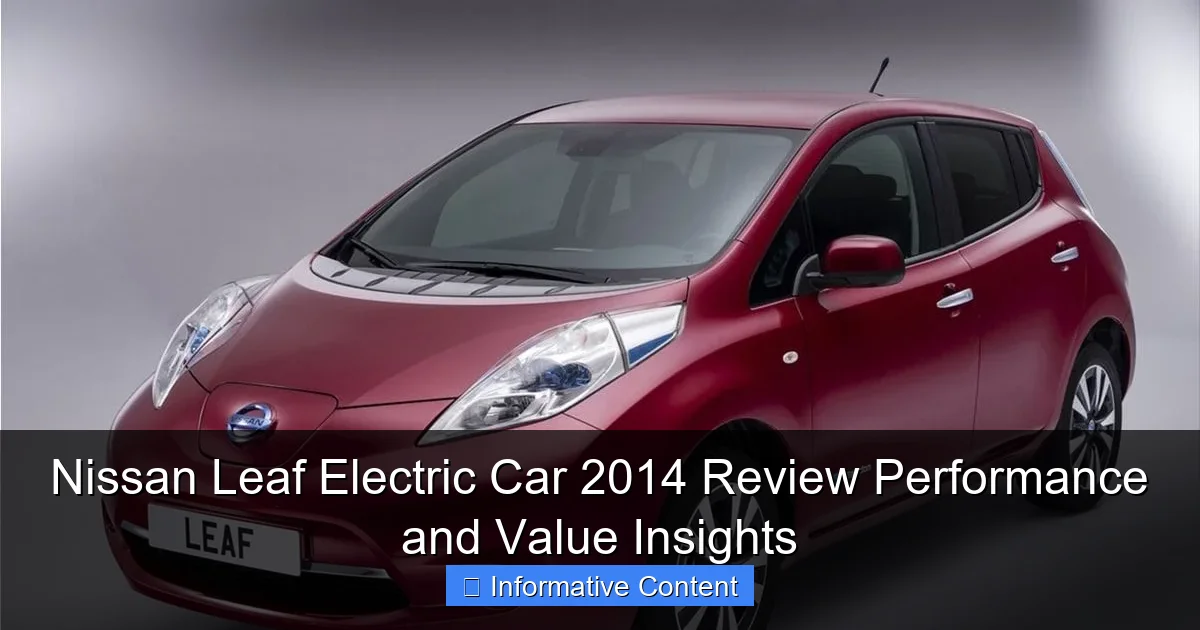
The 2014 Nissan Leaf has a design that screams “electric car” without going overboard. Its smooth, rounded shape is more about aerodynamics than flash. With a drag coefficient of just 0.29, it’s one of the most aerodynamic cars in its class—helping maximize efficiency. The front grille is mostly closed off (since EVs don’t need as much cooling), and the signature blue-tinted headlights give it a subtle high-tech vibe.
Visual guide about nissan leaf electric car 2014
Image source: cardivision.com
I’ve always appreciated how the Leaf stands out without being obnoxious. It’s not trying to look like a sports car or a luxury sedan. Instead, it feels honest—like it’s built for purpose, not for show. The hatchback design is practical, with a wide opening that makes loading groceries, strollers, or camping gear a breeze.
Cabin Comfort and Layout
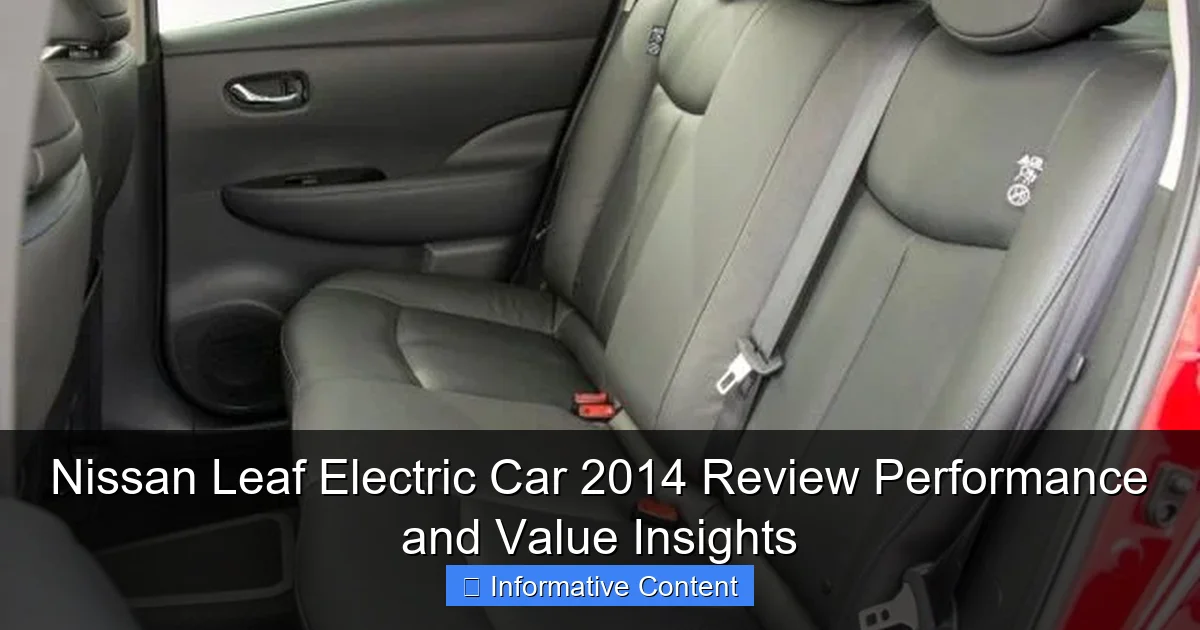
Inside, the Leaf’s interior is simple and functional. The centerpiece is the large, centrally mounted touchscreen (on higher trims) and the unique digital instrument cluster that replaces traditional dials. The “floating” center console gives the cabin a modern, open feel, though some might find the layout a bit quirky at first.
Materials are mostly hard plastics, which is expected at this price point, but everything feels durable. The seats are comfortable for daily commutes, and the driving position is upright and relaxed—perfect for city driving. Rear legroom is decent for a compact hatch, though taller passengers might feel a bit cramped on long trips.
One standout feature is the Eco mode button, which softens throttle response and optimizes climate control for maximum efficiency. I found it useful in stop-and-go traffic, where every watt counts. The Leaf also includes a regenerative braking system that captures energy when slowing down—great for urban driving.
Technology and Infotainment
The 2014 Leaf came with Nissan’s NissanConnect system, which was ahead of its time. It offered navigation, Bluetooth, and even remote climate control via a smartphone app (a rarity back then). You could preheat or precool the cabin while the car was still plugged in—saving battery and making winter mornings much more pleasant.
The app was a game-changer. I remember using it to start the AC on hot summer days while still in my office, so the car was cool by the time I walked outside. The only downside? The app could be glitchy, and early versions had limited compatibility with Android devices. Still, it was a glimpse into the future of connected cars.
- 7-inch touchscreen (SV and SL trims)
- Rearview camera (standard on all trims)
- Six-speaker audio system (upgradable to a premium Bose system)
- Available heated front seats and steering wheel (great for cold climates)
Performance and Driving Experience: Smooth, Quiet, and Efficient
Motor and Power Delivery
The 2014 Nissan Leaf is powered by an 80 kW (107 horsepower) electric motor that produces 187 lb-ft of torque. Unlike gas engines, electric motors deliver maximum torque instantly—so the Leaf feels quick off the line. Acceleration from 0 to 60 mph takes around 10 seconds, which isn’t fast by sports car standards, but it’s more than adequate for city driving and highway merging.
What really impresses is how smooth and quiet the driving experience is. With no engine noise, no gear shifts, and minimal wind or tire noise (thanks to the aerodynamic design), the Leaf feels serene. I once took it on a 45-minute commute through heavy traffic, and the lack of engine vibration and noise made the drive far less stressful than in a traditional car.
Range and Battery Life
The 2014 Leaf comes with a 24 kWh lithium-ion battery pack. Nissan officially rated it for 84 miles on a full charge (EPA estimate), though real-world range varies based on driving habits, terrain, and climate. In my experience, you can reliably get 70–75 miles in mixed city/highway driving, and up to 80 miles on a warm day with careful driving.
Winter is a different story. Cold temperatures reduce battery efficiency, and using the heater drains power fast. I’ve seen range drop to around 55–60 miles in sub-30°F weather. A pro tip: use the seat heaters instead of the cabin heater when possible. They use far less power and keep you just as warm.
One thing to note: battery degradation is real. Over time, the Leaf’s battery capacity diminishes. Most 2014 models have lost 10–20% of their original capacity after 8–10 years. A battery health check at a Nissan dealer can tell you exactly what you’re working with. Some owners opt for a battery replacement (Nissan offered refurbished packs for around $5,500), but many find the car still usable with reduced range.
Charging Options and Times
The Leaf supports three charging levels:
- Level 1 (120V): Standard household outlet. Adds about 4–5 miles of range per hour. Full charge: 20+ hours. Best for overnight charging at home.
- Level 2 (240V): Requires a home charging station (like a ClipperCreek or ChargePoint). Adds 20–25 miles per hour. Full charge: 4–8 hours. Ideal for daily use.
- DC Fast Charging (CHAdeMO): Available on SV and SL trims. Adds 50 miles in about 30 minutes. Great for road trips, but not all public stations support CHAdeMO (Tesla’s Supercharger network doesn’t).
I recommend installing a Level 2 charger at home if you plan to own the Leaf long-term. It makes charging convenient and efficient. Public fast chargers are hit-or-miss—some are well-maintained, others are broken or occupied. Apps like PlugShare help you find reliable stations.
Cost of Ownership and Value for Money
Purchase Price and Incentives
The 2014 Nissan Leaf had a starting MSRP of around $28,980 (before incentives). That was competitive for an EV at the time, especially when you factored in federal and state tax credits. In the U.S., buyers could get a $7,500 federal tax credit, plus additional rebates in states like California, Colorado, and New York. Some buyers effectively paid under $20,000 after incentives—making the Leaf one of the most affordable EVs on the market.
Today, used 2014 Leafs are even more affordable. You can find them for $7,000–$12,000, depending on mileage, condition, and battery health. That’s a steal for a car with zero fuel costs and low maintenance.
Fuel and Maintenance Savings
One of the biggest perks of the Leaf is the cost of “fueling.” Charging at home (especially during off-peak hours) can cost as little as $3–$5 for a full charge. Compare that to $30–$40 for a gas tank, and the savings add up fast.
Maintenance is also minimal. No oil changes, spark plugs, or exhaust systems to worry about. The biggest recurring costs are tire rotations, brake fluid flushes (every 2–3 years), and cabin air filter replacements. Brakes last longer, too, thanks to regenerative braking, which reduces wear on the physical brake pads.
Here’s a rough annual cost breakdown (based on 12,000 miles driven):
| Cost Type | Annual Estimate |
|---|---|
| Electricity (home charging) | $600–$900 |
| Maintenance & Repairs | $300–$500 |
| Insurance (varies by driver) | $1,000–$1,500 |
| Total | $1,900–$2,900 |
For comparison, a similar gas-powered compact hatch might cost $2,500–$3,500 annually in fuel alone. The Leaf wins on operating costs.
Resale Value and Long-Term Value
The Leaf’s resale value isn’t stellar—EVs depreciate faster than gas cars, especially early models with lower range. But as used EVs gain popularity, demand for affordable models like the 2014 Leaf is rising. A well-maintained example with a healthy battery can hold its value better than you might think.
For budget-conscious buyers, the Leaf offers exceptional long-term value. Even with battery degradation, it’s still a reliable, efficient, and eco-friendly car for city driving, short commutes, or as a second vehicle. Plus, you’re contributing to cleaner air and reduced oil dependence.
Safety Features and Reliability
Standard and Available Safety Tech
The 2014 Leaf earned a 5-star overall safety rating from the NHTSA. It includes standard safety features like:
- Anti-lock brakes (ABS)
- Electronic stability control
- Front, side, and side curtain airbags
- Rearview camera (standard across all trims)
Higher trims (SV and SL) added blind-spot monitoring and rear cross-traffic alert—helpful in tight parking lots. One thing missing? Adaptive cruise control or lane-keeping assist. Those features weren’t common in EVs back then, but they’re standard on most new cars now.
Real-World Reliability and Common Issues
Overall, the 2014 Leaf is a reliable car. Most owners report few mechanical issues beyond normal wear. But there are a few things to watch for:
- Battery degradation: As mentioned, capacity drops over time. Check the battery’s “bars” on the dashboard—fewer than 10 bars (out of 12) means significant loss.
- 12V battery failure: The small auxiliary battery (which powers lights, locks, and the infotainment system) can die suddenly. It’s cheap to replace ($100–$150), but it can strand you if it fails while driving.
- Climate control issues: Some owners report problems with the heater or AC, especially in extreme temperatures. Regular maintenance helps prevent this.
- Software glitches: The NissanConnect system can freeze or reboot unexpectedly. A software update from a dealer usually fixes it.
Regular servicing at a Nissan dealership or EV-specialized mechanic can help catch issues early. The Leaf’s simple design means fewer moving parts to fail—another plus for long-term ownership.
Who Should Buy the 2014 Nissan Leaf? A Buyer’s Guide
Best For: Urban Commuters and Eco-Conscious Drivers
The 2014 Nissan Leaf is ideal for:
- People with short commutes (under 40 miles round-trip)
- City dwellers with access to home charging
- Eco-conscious buyers who want to reduce their carbon footprint
- Families looking for an affordable second car
- First-time EV buyers wanting a low-risk entry point
If you live in a warm climate and rarely take long road trips, the Leaf is a fantastic choice. It’s quiet, efficient, and surprisingly fun to drive in the city.
Not Ideal For: Long-Distance Travelers or Cold-Weather Drivers
The Leaf has limitations:
- Range drops significantly in cold weather
- No fast-charging network as extensive as Tesla’s
- Slow acceleration on highways (not ideal for passing trucks)
- Limited cargo space with full passengers (rear seats fold down for more room)
If you frequently drive over 100 miles in a day, or live in a region with harsh winters, you might want to consider a newer EV with a larger battery (like a 2018+ Leaf with 40 or 62 kWh).
Tips for Buying a Used 2014 Leaf
When shopping for a used Leaf, keep these tips in mind:
- Check the battery health: Ask for a battery report from a Nissan dealer. Look for at least 10–11 bars.
- Review charging history: Frequent fast charging can degrade the battery faster.
- Inspect the 12V battery: Replace it if it’s more than 3 years old.
- Test drive in different conditions: Try city, highway, and cold weather (if possible).
- Negotiate based on battery condition: A car with 8 bars is worth less than one with 11.
And don’t forget: even with its quirks, the 2014 Leaf is a pioneer. It helped make EVs mainstream, and for many, it’s still a smart, sustainable choice.
Conclusion: The 2014 Nissan Leaf – A Timeless Entry in the EV Revolution
The 2014 Nissan Leaf electric car may not have the range, speed, or tech of today’s EVs, but it holds up remarkably well as a practical, affordable, and eco-friendly vehicle. It’s not a luxury car, nor a performance machine—it’s a humble, hardworking hatchback that does one thing exceptionally well: it gets you from point A to point B with zero emissions and minimal cost.
After spending time with this car, I’ve come to appreciate its quiet reliability, thoughtful design, and role in shaping the electric future. It’s not perfect, but it’s honest. It doesn’t pretend to be something it’s not. And in a world of overhyped tech and flashy gimmicks, that’s refreshing.
Whether you’re a first-time EV buyer, a city commuter, or someone who just wants to save money on gas, the 2014 Leaf offers real value. It’s a reminder that innovation doesn’t always have to be expensive or complicated. Sometimes, it’s as simple as a quiet drive, a full charge, and the satisfaction of knowing you’re part of the change.
If you’re considering a used EV, don’t overlook the 2014 Nissan Leaf. It’s more than a car—it’s a milestone. And for the right driver, it’s still one of the best values on the road.
Frequently Asked Questions
What is the range of the 2014 Nissan Leaf electric car?
The 2014 Nissan Leaf offers an EPA-estimated range of 84 miles on a full charge, making it ideal for daily commutes and city driving. Real-world range may vary based on driving habits and climate conditions.
How fast does the 2014 Nissan Leaf charge?
Using a standard 240V Level 2 charger, the 2014 Nissan Leaf can recharge its 24 kWh battery in about 4-8 hours. A quick-charge port (optional) allows for 80% charge in roughly 30 minutes at compatible stations.
Is the 2014 Nissan Leaf reliable as a used electric car?
Yes, the 2014 Nissan Leaf is known for strong reliability and low maintenance costs, though battery degradation over time is a common concern. Most owners report minimal issues when the car has been properly serviced.
How does the 2014 Nissan Leaf compare to newer electric cars in performance?
The 2014 Nissan Leaf delivers 107 horsepower and 187 lb-ft torque, offering smooth acceleration but less power than newer EVs. Its performance suits urban driving, though range and tech features are dated compared to modern models.
What are the standout features of the 2014 Nissan Leaf electric car?
The 2014 Nissan Leaf includes key features like regenerative braking, a touchscreen infotainment system, and available heated seats/steering wheel. Its compact size and zero-emission design make it a practical eco-friendly choice.
How much does a used 2014 Nissan Leaf cost today?
As a budget-friendly electric car, the 2014 Nissan Leaf typically ranges from $6,000 to $10,000 depending on condition, mileage, and battery health. It offers strong value for buyers seeking an affordable entry into EV ownership.