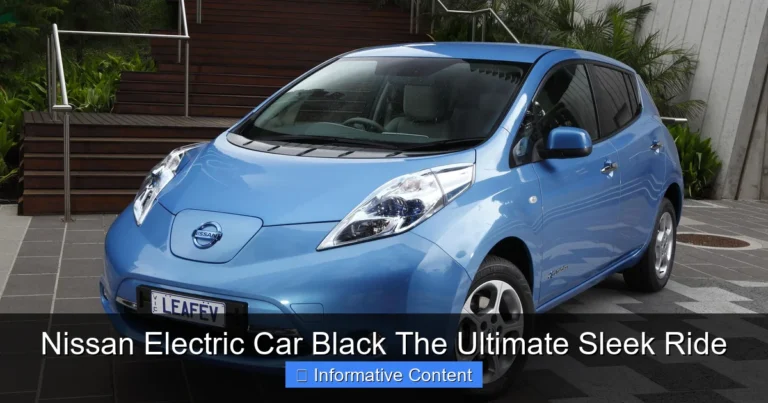
Nissan Leaf Electric Car Battery Replacement Cost and Tips
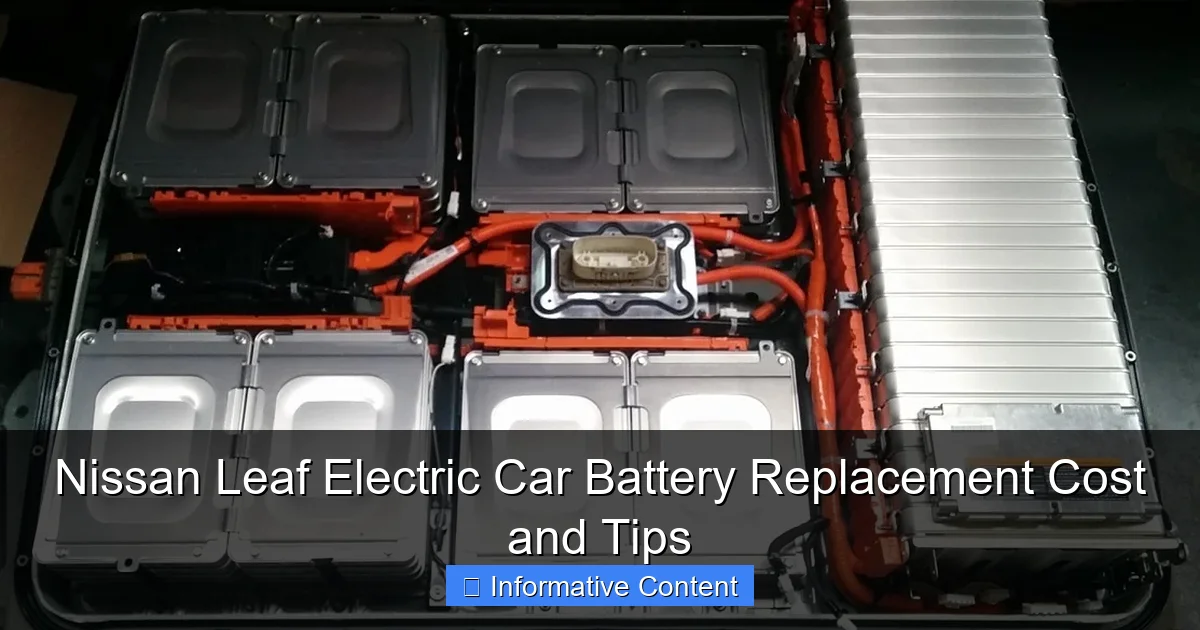
Featured image for nissan leaf electric car battery replacement
Image source: bluecars.nz
The cost to replace a Nissan Leaf electric car battery ranges from $5,000 to $15,000, depending on capacity, model year, and whether you choose OEM or aftermarket options. Maximizing battery lifespan through smart charging habits and thermal management can delay costly replacements, making proactive maintenance a smart long-term investment for Leaf owners.
Key Takeaways
- Costs range $5k–$15k: Battery prices vary by model year and capacity.
- Check warranty coverage: Some Leafs qualify for free or discounted replacements.
- Refurbished batteries save: Opt for certified refurbished units to cut costs.
- Monitor battery health: Use apps to track degradation and plan ahead.
- DIY not recommended: Always use certified technicians for safety and compliance.
- Recycle old batteries: Nissan offers recycling programs—don’t discard them.
📑 Table of Contents
- Why Battery Replacement Matters for Your Nissan Leaf
- How Much Does a Nissan Leaf Battery Replacement Cost?
- Signs You Need a Battery Replacement (Don’t Wait Too Long)
- DIY vs. Professional Replacement: What’s Right for You?
- How to Extend Your Battery’s Life (Save Money in the Long Run)
- Where to Buy a Replacement Battery (Best Sources Compared)
- Final Thoughts: Making the Right Choice for Your Leaf
Why Battery Replacement Matters for Your Nissan Leaf
Owning a Nissan Leaf is like having a trusty companion on your daily commute. It’s quiet, efficient, and kind to the planet. But just like any relationship, it requires care and attention. One of the most significant aspects of maintaining your Leaf is its battery. Over time, all electric vehicle (EV) batteries degrade, and the Leaf is no exception. You might notice reduced range, slower charging, or even dashboard warnings. That’s when the question pops up: “Do I need a Nissan Leaf electric car battery replacement?”
Let’s be honest—battery replacement isn’t cheap, and it can feel overwhelming. You’ve probably seen horror stories online about $10,000+ bills. But the reality is more nuanced. With the right knowledge, you can make smart decisions that save money and extend your Leaf’s life. Whether you’re a proud first-gen Leaf owner or driving a newer 62 kWh model, understanding your battery options is crucial. In this guide, I’ll walk you through everything you need to know: costs, signs of failure, DIY vs. professional replacement, and how to get the most value. Think of this as the honest chat you’d have with a mechanic who actually cares about your wallet.
How Much Does a Nissan Leaf Battery Replacement Cost?
Let’s tackle the elephant in the room: How much will it cost to replace my Nissan Leaf battery? The answer depends on several factors—your model year, battery size, warranty status, and where you get the work done. But I’ll break it down so you can plan ahead.
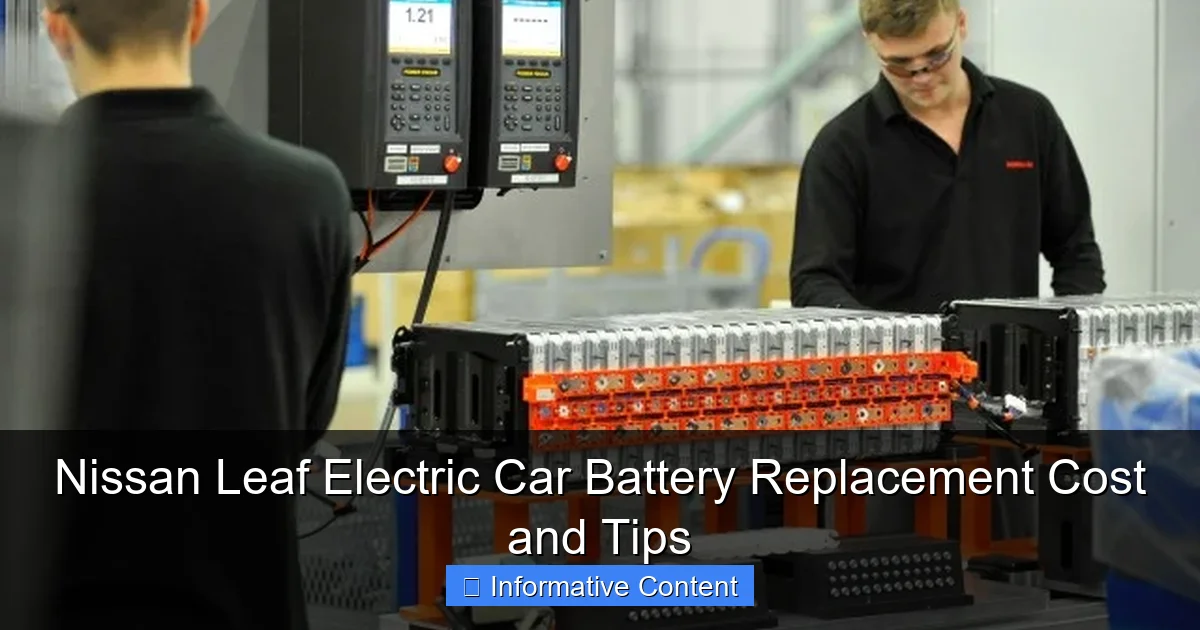
Visual guide about nissan leaf electric car battery replacement
Image source: images.hgmsites.net
New vs. Refurbished vs. Used: Price Comparison
You have three main choices when replacing your Leaf battery:
- New OEM (Original Equipment Manufacturer) Battery: This is the gold standard. It comes directly from Nissan, fits perfectly, and usually includes a warranty (often 8 years/100,000 miles, but varies by year). Expect to pay $8,000–$12,000 for a full replacement. For example, a 2018 Leaf with a 40 kWh battery might cost around $9,500 at a dealership.
- Refurbished/Rebuilt Battery: These are used batteries that have been tested, repaired, and upgraded by third-party specialists. Companies like EV Battery Solutions or Green Bean Battery offer modules with 2–3 years of warranty. Prices range from $3,000–$6,000, depending on capacity. A 2013 Leaf with a 24 kWh refurbished pack might cost $3,800.
- Used Battery (Salvage/Aftermarket): The cheapest option, but also the riskiest. You might find a used battery from a wrecked Leaf for $1,500–$3,000. However, there’s no guarantee of remaining lifespan or compatibility. I’ve seen owners spend $2,000 on a used battery only to replace it again in 2 years.
<
Labor and Installation Costs
Don’t forget labor! Battery replacement isn’t a simple swap. It requires:
- Removing the old battery (often under the car or in the trunk)
- Discharging and recycling the old pack (mandatory in many states)
- Programming the new battery to the car’s computer
- Testing for safety and performance
Labor costs vary widely:
- Dealerships: $1,500–$3,000 (higher labor rates, but OEM parts)
- Independent EV Specialists: $800–$1,500 (more affordable, but check their experience)
- DIY (if you’re handy): $0 labor, but requires tools, time, and technical know-how
Pro Tip: Some third-party battery companies offer installation as part of the package. For example, Green Bean Battery charges around $4,500 for a refurbished 24 kWh pack including labor. That’s a steal compared to a $12,000 dealership job.
Warranty and Recall Savings
Here’s a game-changer: Nissan has issued battery recalls and extended warranties for certain Leaf models. If your battery is failing prematurely, you might qualify for a free or heavily discounted replacement. For example:
- 2011–2017 Leafs with rapid capacity loss were part of a 2020–2022 recall. Nissan replaced or upgraded batteries at no cost.
- Some 2018+ models have 10-year/150,000-mile warranties in specific states (e.g., California).
Action Step: Call your local Nissan dealer and ask, “Does my VIN qualify for any battery warranty or recall?” It only takes 5 minutes and could save you thousands.
Signs You Need a Battery Replacement (Don’t Wait Too Long)
How do you know if your Leaf’s battery is on its last legs? It’s not always obvious. Some symptoms creep up slowly, while others hit hard. Here’s what to watch for—and why acting early matters.
Reduced Range: The Big Red Flag
The most common sign is shrinking range. If your 2015 Leaf (originally 84 miles) now struggles to hit 50 miles on a full charge, that’s a problem. But don’t panic—some range loss is normal. Batteries degrade about 2–5% per year. Use this rule of thumb:
- 10–20% loss: Normal wear. No need to replace yet.
- 30–50% loss: Time to start exploring options.
- 60%+ loss: Replacement is likely needed.
Real-Life Example: My friend Sarah noticed her 2013 Leaf’s range dropped from 75 miles to 40 miles over 3 years. She waited, thinking it was just cold weather. By the time the battery died completely, she had to tow it to a shop. A $4,000 refurbished battery could’ve saved her the hassle.
Charging Issues and Dashboard Warnings
Watch for these red flags:
- Slow charging: Takes hours longer than usual, especially on Level 2.
- Charging stops early: The car says “charging interrupted” at 60–80%.
- Dashboard alerts: “Battery Warning,” “EV System Off,” or “Service EV System.”
- Error codes: Use an OBD2 scanner (like the $50 FIXD) to check for codes like P3186 (battery capacity loss).
Pro Tip: Use the Leaf’s built-in “Battery Status” screen (press the “INFO” button, then “Energy”). It shows your battery’s health as a percentage. If it’s below 70%, start planning.
Physical Signs (Yes, Batteries Can “Sweat”)
Open the hatch and look under the floor. If you see:
- Swelling or bulging: The battery case is expanding—a serious safety hazard.
- Leaking fluid: Rare in Leafs, but possible. It smells like rotten eggs (sulfur).
- Rust or corrosion: Moisture got in, accelerating degradation.
Never ignore physical damage! It can lead to fires or total failure. If you see any of these, stop driving the car and call a pro.
DIY vs. Professional Replacement: What’s Right for You?
Can you replace a Nissan Leaf battery yourself? Technically, yes. But should you? That’s the real question. Let’s compare the options.
The DIY Route: Pros and Cons
Pros:
- Save $1,000+ on labor. A $4,000 job becomes $3,000 with DIY.
- Learn your car inside out. It’s empowering to fix it yourself.
- Flexibility: Choose any battery source (e.g., a used one from eBay).
Cons:
- High risk of injury. The battery weighs 600–1,000 lbs and carries 300+ volts. One wrong move can be deadly.
- Time-consuming: Expect 8–20 hours of work, depending on your skill.
- No warranty on labor. If you mess up, you pay for it.
- Recycling headaches: You’re legally responsible for disposing of the old battery properly (costs $200–$500).
Real-Life Example: A Reddit user replaced his 2012 Leaf’s battery in his garage. He spent 12 hours, used a $300 hydraulic lift, and saved $1,500. But he also spent $400 on a professional to program the new battery to the car’s computer—something he couldn’t do himself.
When to Call a Pro (Most of the Time)
For most people, professional replacement is the smarter choice. Here’s why:
- Safety first: Pros have insulated tools, training, and experience.
- Guaranteed results: Reputable shops offer 1–3 year warranties on labor.
- Proper recycling: They handle the old battery legally.
- Programming included: No need to pay extra for software updates.
How to Find a Good EV Specialist:
- Ask for recommendations in Facebook groups (e.g., “Nissan Leaf Owners”).
- Check Yelp/Google reviews for keywords like “battery replacement” or “EV specialist.”
- Look for shops with EV-specific certifications (e.g., ASE L3).
Pro Tip: Some dealerships offer battery replacement at a discount if you trade in your old Leaf. It’s worth asking!
How to Extend Your Battery’s Life (Save Money in the Long Run)
What if you don’t need a replacement yet? Great! Here are practical ways to slow down degradation and get more life from your battery.
Charge Smart: 80/20 Rule
Here’s a simple rule: Keep your battery between 20% and 80%. Why?
- Charging to 100% or draining to 0% stresses the battery.
- Frequent deep cycles (0% to 100%) accelerate wear.
- 80% is plenty for most daily driving. Save 100% for road trips.
Real-Life Example: A study by Recurrent Auto found Leafs charged to 80% lost half as much capacity over 5 years compared to those charged to 100% daily.
Temperature Matters: Park in the Shade
Heat is the enemy. If your battery gets too hot, it degrades faster. Tips:
- Park in garages, shade, or underground parking when possible.
- Avoid leaving the car in direct sunlight for hours.
- In hot climates, use a battery cooling pad ($100–$200) under the car.
- Pre-cool the cabin while plugged in (use the app) to avoid using battery power.
Pro Tip: If you live in Arizona or Texas, consider a battery thermal management system (available as an aftermarket upgrade).
Drive Gently (Yes, Really)
How you drive affects battery life:
- Accelerate smoothly: Avoid “jackrabbit starts.”
- Use regenerative braking: Let the car slow down naturally instead of using the friction brakes.
- Keep speed moderate: High speeds drain the battery faster.
Bonus: Use the Leaf’s ECO mode and B mode (stronger regen) to reduce strain.
Where to Buy a Replacement Battery (Best Sources Compared)
Not all battery suppliers are created equal. Here’s where to look—and what to watch out for.
OEM: Nissan Dealerships
Pros:
- Perfect fit and compatibility.
- Full warranty (if your car qualifies).
- Dealership handles recycling.
Cons:
- Most expensive option.
- Long wait times (weeks for parts).
Best for: Newer Leafs under warranty or if you want a “factory” replacement.
Third-Party Refurbishers (Top Picks)
These companies specialize in Leaf batteries and offer great value:
- Green Bean Battery (greenbeanbattery.com): Refurbished modules with 2-year warranty. $3,500–$5,500 installed.
- EV Battery Solutions (evbatterysolutions.com): Custom packs for older Leafs. $3,000–$4,500.
- Battery Exchange (batteryexchange.com): Used batteries with testing reports. $1,500–$3,000.
Pro Tip: Ask for a capacity test report before buying. It shows the battery’s actual health (e.g., “85% capacity remaining”).
Salvage Yards and eBay
You can find used batteries for as low as $1,000. But:
- No warranty (usually).
- Risk of hidden damage.
- You’re on your own for installation.
Best for: DIYers with mechanical skills and time to spare.
Data Table: Battery Replacement Cost Comparison (2013–2018 Leaf)
| Battery Type | Capacity (kWh) | Average Cost (Battery Only) | Labor Cost | Warranty | Best For |
|---|---|---|---|---|---|
| New OEM | 24–40 | $8,000–$12,000 | $1,500–$3,000 | 8–10 years | Peace of mind, newer models |
| Refurbished | 24–40 | $3,000–$6,000 | $800–$1,500 | 2–3 years | Cost-effective, older Leafs |
| Used (Salvage) | 24–40 | $1,500–$3,000 | $800–$1,500 | None (or 1 year) | DIYers on a budget |
Note: Costs vary by region and shop. Always get 2–3 quotes.
Final Thoughts: Making the Right Choice for Your Leaf
Replacing your Nissan Leaf electric car battery isn’t just about cost—it’s about keeping your car reliable, safe, and valuable. The good news? You have options. Whether you go with a refurbished pack, hunt for a used one, or bite the bullet on a new OEM battery, there’s a solution for your budget and needs.
Here’s my advice: Don’t wait until the battery dies. If you’re seeing signs of degradation—reduced range, charging issues, or error messages—start planning now. Call Nissan for a warranty check, get quotes from 2–3 shops, and weigh the pros and cons of each battery type. And if you’re handy, consider DIY—but only if you’re confident in your skills.
Remember, your Leaf isn’t just a car. It’s a statement about your values: clean energy, innovation, and smart choices. With the right battery, it can keep driving for years—saving you money on gas and reducing your carbon footprint. So take a deep breath, do your research, and make the call that feels right for you. Your Leaf (and your wallet) will thank you.
Frequently Asked Questions
How much does a Nissan Leaf electric car battery replacement cost?
The cost of a Nissan Leaf battery replacement typically ranges from $5,000 to $8,000, depending on the model year, battery capacity, and labor rates. Refurbished or third-party options may offer savings, but OEM batteries ensure optimal performance.
How long does the Nissan Leaf EV battery last before needing replacement?
Most Nissan Leaf batteries last between 8 to 10 years or 100,000 miles, though lifespan depends on driving habits, climate, and charging patterns. Battery degradation is gradual, with most Leafs retaining 70-80% capacity after a decade.
Can I replace my Nissan Leaf battery with a higher-capacity one?
Yes, upgrading to a higher-capacity battery (e.g., swapping a 24 kWh for a 40 kWh) is possible, but it requires compatibility checks and may involve additional costs for modifications. Consult a Nissan-certified technician for feasibility.
Are there affordable alternatives to OEM Nissan Leaf battery replacement?
Refurbished or aftermarket batteries can reduce costs by 20-40%, but warranties and longevity vary. Always verify the provider’s reputation and opt for units with at least a 1-2 year warranty for peace of mind.
Does Nissan offer a warranty for Leaf battery replacements?
Yes, Nissan provides an 8-year/100,000-mile warranty on original batteries, covering defects and excessive degradation. Replacement batteries from dealers usually include a 1-2 year warranty, but terms vary for third-party options.
What are the signs I need a Nissan Leaf electric car battery replacement?
Key indicators include a significant drop in driving range (below 70% of original capacity), frequent charging, dashboard warning lights, or slower charging times. A dealership or EV specialist can confirm degradation with a diagnostic scan.