Nissan Leaf Electric Car Charging Electricity Usage Explained
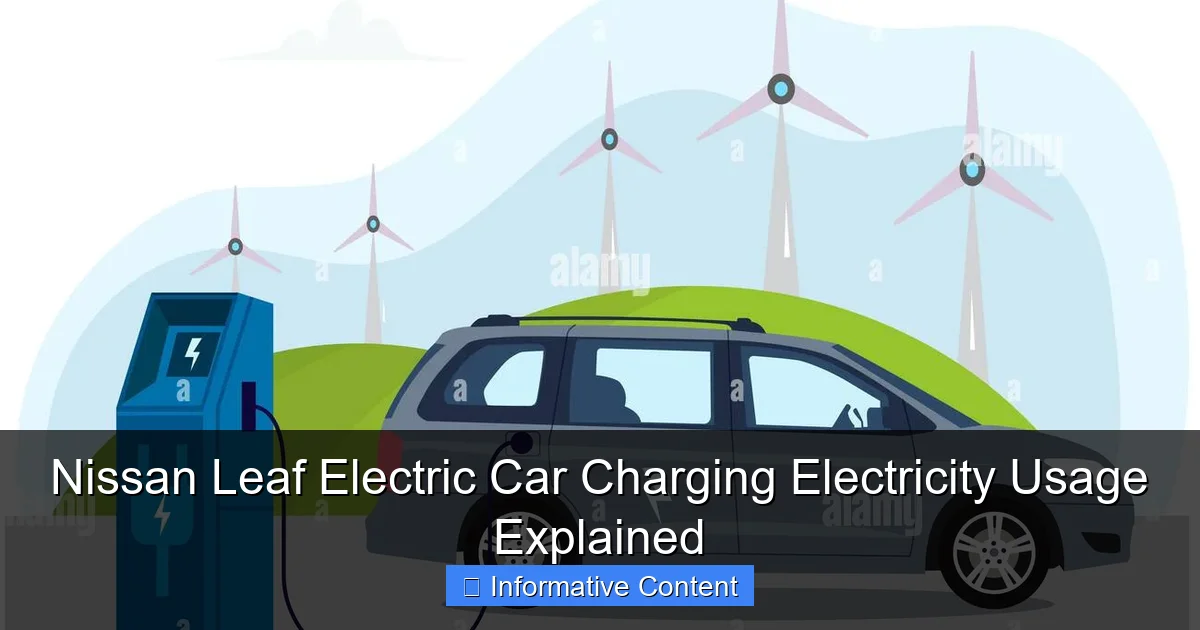
Featured image for nissan leaf electric car charging electricity usage
Image source: c8.alamy.com
Charging a Nissan Leaf costs significantly less than fueling a gas-powered car, with most owners spending just $3 to $5 per charge depending on local electricity rates and battery size. Home Level 2 chargers offer the best balance of speed and efficiency, typically replenishing the Leaf’s battery overnight while smart charging features help optimize electricity usage and reduce long-term costs.
Key Takeaways
- Charging speed varies by Level 1, 2, or DC fast charger type.
- Home charging is cost-effective with off-peak electricity rates.
- Battery capacity impacts range—choose 40 kWh or 62 kWh wisely.
- Public stations offer convenience but may cost more per kWh.
- Precondition while plugged in to save battery and optimize efficiency.
- Monitor usage via apps to track costs and charging history.
📑 Table of Contents
- Why Charging Your Nissan Leaf Matters
- How Much Electricity Does a Nissan Leaf Actually Use?
- Charging Options: Level 1 vs. Level 2 vs. DC Fast Charging
- How Much Does It Cost to Charge a Nissan Leaf?
- Maximizing Efficiency: Tips to Reduce Charging Usage
- Common Charging Myths—Debunked
- Final Thoughts: Charging Your Leaf Is Easier Than You Think
Why Charging Your Nissan Leaf Matters
Imagine this: You’re driving your Nissan Leaf through the city, the hum of the electric motor replacing the usual engine roar. You’ve just dropped off your kids at school, picked up a coffee, and now you’re heading to work. But as you glance at the dashboard, you notice the battery is down to 30%. No panic—this is where understanding your Nissan Leaf electric car charging electricity usage becomes crucial. Unlike gas-powered cars, where a quick stop at a pump gets you back on the road, electric vehicles (EVs) require a bit more planning and awareness. And that’s not a bad thing. In fact, it’s empowering. When you know how much electricity your Leaf uses, how long it takes to charge, and what it costs, you’re in control of your driving experience.
But let’s be real—charging an EV can feel like a new language at first. Terms like kilowatt-hours (kWh), Level 1 vs. Level 2, and charging efficiency might sound technical, but they’re just tools to help you save time and money. Whether you’re a first-time EV owner or considering making the switch, this guide will walk you through the ins and outs of Nissan Leaf charging electricity usage in a way that’s clear, practical, and even a little fun. Think of it as your friendly neighborhood EV coach—no jargon, no hype, just real talk from someone who’s been there, charged that.
How Much Electricity Does a Nissan Leaf Actually Use?
Understanding kWh: The EV’s Fuel Gauge
When you drive a gas car, you think in miles per gallon. With an electric car like the Nissan Leaf, the equivalent is kilowatt-hours per 100 miles (kWh/100mi). This tells you how much electricity your car uses to travel a certain distance. For example, the 2023 Nissan Leaf S has an average efficiency of about 30 kWh/100 miles. That means to drive 100 miles, it needs 30 kilowatt-hours of electricity—about the same as running your microwave for 30 hours straight (though not simultaneously, of course!).
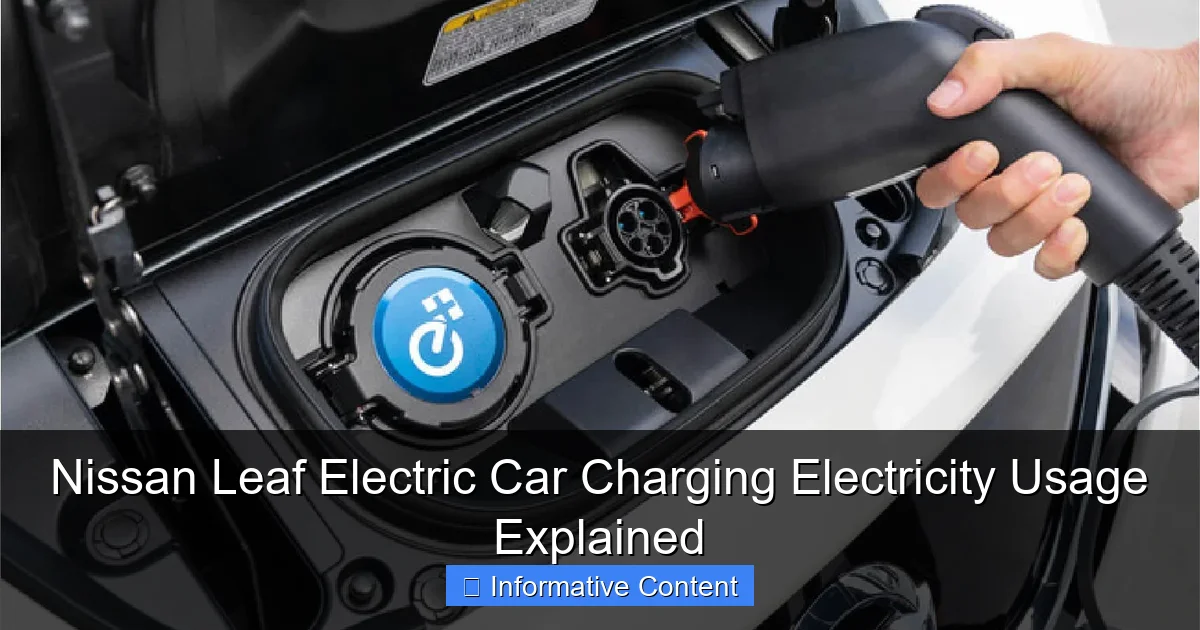
Visual guide about nissan leaf electric car charging electricity usage
Image source: chargepoint.com
But here’s the kicker: not all Leafs are the same. The Leaf comes in different models with varying battery sizes and efficiencies:
- Nissan Leaf S (40 kWh battery): ~30 kWh/100 miles
- Nissan Leaf SV (40 kWh battery): ~31 kWh/100 miles
- Nissan Leaf SL (40 kWh battery): ~32 kWh/100 miles
- Nissan Leaf Plus (62 kWh battery): ~35 kWh/100 miles (higher due to added weight and features)
So, if you’re driving a Leaf Plus and cover 50 miles in a day, you’re using roughly 17.5 kWh (35 kWh/100mi x 0.5). That’s a helpful number to know when planning your charging routine.
Real-World Electricity Usage: What to Expect
Let’s say you drive 15,000 miles per year—the U.S. average. For a standard Leaf (30 kWh/100mi), that’s:
- 15,000 miles ÷ 100 = 150 units
- 150 units x 30 kWh = 4,500 kWh per year
That’s about 12.3 kWh per day on average. Now, compare that to your home’s daily electricity use. The average U.S. household uses about 30 kWh per day, so your Leaf adds roughly 40% more electricity demand. But don’t worry—this isn’t as scary as it sounds. Many homes can handle this load, especially if you charge overnight when energy demand is low.
One Leaf owner in Portland, Oregon, told me: “I used to think charging would double my bill. But after tracking it for a month, my electric usage only went up by about 35%. And I saved over $100 on gas.” That’s the power of understanding your Nissan Leaf electric car charging electricity usage—it’s not just about cost, it’s about control.
Charging Options: Level 1 vs. Level 2 vs. DC Fast Charging
Level 1 Charging: The Slow and Steady Approach
Every Nissan Leaf comes with a Level 1 charging cord—the one that plugs into a standard 120-volt household outlet (like the one behind your couch). It’s convenient because you can use it anywhere, but it’s also the slowest option. Level 1 delivers about 1.4 kilowatts (kW) of power, which translates to roughly 4 miles of range per hour.
Let’s do the math: If your Leaf has a 40 kWh battery and you’re down to 20%, you need 32 kWh to fully charge (80% of 40 kWh). At 1.4 kW, that takes:
- 32 kWh ÷ 1.4 kW ≈ 23 hours
That’s a full day! But for short daily commutes (say, 20 miles), Level 1 can work. You plug in at night, and by morning, you’ve gained 80 miles—plenty for most people. One Leaf owner in rural Maine uses Level 1 exclusively: “I only drive 15 miles a day. I plug in when I get home, and it’s always ready by 7 a.m. It’s simple, and I don’t need to install anything.”
Level 2 Charging: The Sweet Spot for Homeowners
If you’re serious about convenience, Level 2 charging is the way to go. It uses a 240-volt outlet (like your dryer or oven) and delivers 6.6 kW to 7.2 kW of power. Most Nissan Leafs can handle up to 6.6 kW, giving you about 25 miles of range per hour.
Using the same 32 kWh example:
- 32 kWh ÷ 6.6 kW ≈ 4.8 hours
That’s under 5 hours! Most people charge overnight (8–10 hours), so you wake up with a full or nearly full battery. Installing a Level 2 charger at home typically costs $500–$1,000 (including equipment and electrician labor), but many states and utilities offer rebates. For example, California’s Clean Vehicle Rebate Project offers up to $1,000 for home EV charger installation.
Pro tip: If you rent or can’t install a 240V outlet, check if your workplace or local library offers free Level 2 charging. One Leaf owner in Austin charges at her office three days a week and at home the rest of the time. “It’s like a charging co-op,” she says. “I never pay for public charging, and I get free juice while I work.”
DC Fast Charging: For Long Trips and Emergencies
Need to charge quickly? DC fast charging (also called Level 3) is your friend. It delivers power directly to the battery at high voltage (400–800 volts) and can add 60–100 miles of range in 30 minutes. The Nissan Leaf supports up to 50 kW of DC fast charging (on most models; Leaf Plus can go up to 100 kW).
But here’s the catch: DC fast charging is expensive and can wear down your battery faster if overused. Think of it like fast food—great in a pinch, but not ideal for every meal. Most experts recommend using DC fast charging for:
- Long road trips (beyond your daily range)
- Unexpected low-battery situations
- When you’re in a hurry and need a quick top-up
One Leaf owner in Colorado shared: “I used DC fast charging once when I misjudged my range. It cost $15 to add 80 miles, but it saved me a tow truck. Now I use it maybe once a month, just to keep the battery balanced.”
How Much Does It Cost to Charge a Nissan Leaf?
Breaking Down the Numbers: Electricity Rates Matter
The cost of charging your Nissan Leaf depends on two things: how much electricity it uses and your local electricity rate. Let’s use the 4,500 kWh/year estimate from earlier and plug in some real-world rates:
| Location | Avg. Electricity Rate (cents/kWh) | Annual Charging Cost | Monthly Cost |
|---|---|---|---|
| California | 28.5¢ | $1,282.50 | $106.88 |
| Texas | 13.2¢ | $594.00 | $49.50 |
| New York | 21.0¢ | $945.00 | $78.75 |
| Florida | 12.8¢ | $576.00 | $48.00 |
| Washington | 10.5¢ | $472.50 | $39.38 |
Compare that to a gas car averaging 25 mpg and $3.50/gallon:
- 15,000 miles ÷ 25 mpg = 600 gallons
- 600 gallons x $3.50 = $2,100 per year
That’s a savings of $817–$1,627 per year with the Leaf. Even in California, where electricity is expensive, you’re still saving over $800 annually.
Smart Charging: Save Money with Off-Peak Rates
Many utilities offer time-of-use (TOU) rates, where electricity is cheaper at night. For example, Pacific Gas & Electric (PG&E) charges 11¢/kWh from 9 p.m. to 9 a.m. but 40¢/kWh during peak hours (4–9 p.m.).
If you charge your Leaf overnight using TOU rates:
- 4,500 kWh x $0.11 = $495/year
That’s 61% cheaper than charging during peak times! Most Level 2 chargers and the Nissan Leaf app let you schedule charging for off-peak hours. Just set it and forget it.
One Leaf owner in Seattle said: “I set my charger to start at 10 p.m. every night. I pay 9¢/kWh instead of 28¢. Over a year, that’s almost $900 in savings. It’s like getting a free month of electricity.”
Maximizing Efficiency: Tips to Reduce Charging Usage
Drive Smarter, Use Less Electricity
Your driving habits have a big impact on Nissan Leaf electric car charging electricity usage. Here are five easy ways to stretch your range:
- Use Eco mode: The Leaf has an Eco driving mode that softens acceleration and reduces HVAC power. It can improve efficiency by 10–15%.
- Regenerative braking: The Leaf recovers energy when you slow down. Use the “B” mode for stronger regen—great for city driving.
- Avoid rapid acceleration: Smooth, steady acceleration uses less energy than jackrabbit starts.
- Check tire pressure: Underinflated tires increase rolling resistance. Keep them at the recommended PSI (usually 35–36 psi).
- Precondition while charging: Use the app to heat or cool the cabin while plugged in. This saves battery power for driving.
One Leaf owner in Chicago told me: “I used to drive like a gas car. Then I tried Eco mode and regen braking. My range went from 120 miles to 140 miles on a full charge. That’s like getting a free 20 miles every time.”
Home Charging Setup: Optimize for Efficiency
Where and how you charge matters. Here’s how to get the most out of your setup:
- Charge in a garage: Extreme heat or cold reduces battery efficiency. A garage keeps temps stable.
- Use a smart charger: Brands like ChargePoint or JuiceBox let you monitor usage, set schedules, and track costs.
- Upgrade your panel (if needed): If you have an old electrical panel, consider upgrading to support Level 2 charging safely.
- Keep the charging cable tidy: Avoid leaving it coiled on the ground—it can overheat and reduce efficiency.
Bonus tip: If you have solar panels, charge your Leaf during sunny hours. One California owner said: “My solar system covers 90% of my Leaf’s electricity. I pay almost nothing to drive.”
Common Charging Myths—Debunked
“I’ll Overcharge and Damage the Battery”
Modern EVs like the Nissan Leaf have built-in battery management systems (BMS). When the battery reaches 100%, the BMS stops charging automatically. You can leave it plugged in all night—it won’t overcharge. In fact, keeping your battery between 20% and 80% is actually better for long-term health. Think of it like charging your phone: modern tech handles the details.
“Public Charging Is Always Expensive”
Not true! Many workplaces, malls, and city parking garages offer free Level 2 charging. Apps like PlugShare help you find them. Even paid stations are often cheaper than gas. For example, a 30-minute DC fast charge adding 60 miles might cost $12—equivalent to $3.60/gallon for a 25 mpg car.
“Cold Weather Kills My Range”
Yes, cold weather reduces range—by about 30–40% in sub-freezing temps. But you can minimize the impact:
- Preheat the cabin while plugged in
- Use seat heaters instead of cabin heat
- Drive slower and use Eco mode
One Leaf owner in Minnesota said: “Winter range drops to 80 miles, but I just plan better. I charge every night, and I use the app to warm the car while it’s plugged in. It’s not a problem—just different.”
Final Thoughts: Charging Your Leaf Is Easier Than You Think
When you first get a Nissan Leaf, charging can feel like a new routine. But after a few weeks, it becomes second nature—like charging your phone. The key is understanding your Nissan Leaf electric car charging electricity usage: how much power it needs, how long it takes to charge, and how much it costs.
Start with Level 1 if you have a short commute. Upgrade to Level 2 for convenience. Use DC fast charging sparingly. Take advantage of off-peak rates. Drive efficiently. And don’t believe the myths—your Leaf is designed to make charging safe, affordable, and hassle-free.
At the end of the day, owning an EV isn’t just about saving money. It’s about being part of a cleaner, quieter, more sustainable future. And when you know how your Leaf uses electricity, you’re not just a driver—you’re a smart, informed energy user. And that’s a pretty good feeling.
Frequently Asked Questions
How much electricity does a Nissan Leaf use to charge?
The Nissan Leaf consumes approximately 30–35 kWh per 100 miles, depending on the model and driving conditions. Charging efficiency varies slightly based on battery size and charging speed.
How long does it take to fully charge a Nissan Leaf using a Level 2 charger?
A Level 2 charger (240V) can fully charge a Nissan Leaf in 7–12 hours, depending on the battery capacity (40 kWh or 62 kWh). This is ideal for overnight charging at home.
Can I use a standard household outlet to charge my Nissan Leaf?
Yes, the Nissan Leaf can be charged using a standard 120V outlet (Level 1), but it’s much slower—taking 20+ hours for a full charge. This method is best for occasional or emergency charging.
How much does it cost to charge a Nissan Leaf at home?
Charging a Nissan Leaf at home costs roughly $3–$6 per full charge, based on the U.S. average electricity rate of $0.12–$0.15/kWh. Exact costs depend on your local electricity rates and battery size.
Does the Nissan Leaf support fast charging, and how does it affect electricity usage?
Yes, the Nissan Leaf supports DC fast charging (CHAdeMO), which can charge the battery to 80% in ~40 minutes. While convenient, frequent fast charging may slightly reduce long-term battery efficiency.
How can I monitor my Nissan Leaf’s electricity usage and charging habits?
Use the NissanConnect EV app or in-car telematics to track real-time electricity usage, charging history, and energy consumption patterns. These tools help optimize charging schedules and costs.