Nissan Leaf Electric Car Lease A Smart Green Choice
Leasing a Nissan Leaf is a smart, eco-friendly move that combines zero-emission driving with affordable monthly payments and minimal maintenance costs. With flexible lease terms and instant access to tax incentives and charging perks, it’s an ideal entry point into sustainable mobility without the long-term commitment of ownership.
Key Takeaways
- Lease affordability: Lower monthly payments vs. buying, ideal for budget-conscious drivers.
- Eco-friendly choice: Zero emissions reduce your carbon footprint effortlessly.
- Tax incentives: Potential savings with federal and state EV lease programs.
- Low maintenance: Fewer moving parts mean reduced service costs over time.
- Tech upgrades: Stay current with new models every few lease years.
- Range confidence: 150+ miles per charge suits daily commutes and errands.
📑 Table of Contents
- Nissan Leaf Electric Car Lease: A Smart Green Choice
- Why Lease a Nissan Leaf? Top Benefits Explained
- Understanding Nissan Leaf Lease Terms and Options
- 2024 Nissan Leaf Models and Lease Pricing Comparison
- Charging and Maintenance: What to Expect with a Leased Leaf
- Is a Nissan Leaf Lease Right for You? Key Considerations
- Conclusion: Embrace the Green Revolution with a Nissan Leaf Lease
Nissan Leaf Electric Car Lease: A Smart Green Choice
Imagine driving a car that not only saves you money on fuel but also significantly reduces your carbon footprint. The Nissan Leaf has emerged as a frontrunner in the electric vehicle (EV) market, offering a compelling blend of affordability, innovation, and environmental responsibility. As more drivers seek sustainable transportation options, leasing the Nissan Leaf presents an attractive alternative to traditional car ownership—particularly for those who want to embrace green technology without the long-term commitment of purchasing.
Electric car leasing is rapidly gaining popularity, and the Nissan Leaf sits at the heart of this shift. With over 500,000 units sold worldwide, it’s one of the best-selling EVs of all time. Leasing a Leaf allows you to enjoy the perks of electric driving—zero tailpipe emissions, lower maintenance costs, and quiet operation—while benefiting from fixed monthly payments, manufacturer-backed warranties, and the flexibility to upgrade to newer models every few years. Whether you’re a city commuter, a suburban family, or an eco-conscious professional, a Nissan Leaf lease could be the smart, green choice you’ve been looking for.
Why Lease a Nissan Leaf? Top Benefits Explained
Leasing a Nissan Leaf isn’t just about driving an electric car—it’s about making a strategic financial and environmental decision. Unlike buying, leasing offers a lower barrier to entry, predictable costs, and access to cutting-edge technology without the long-term depreciation risk. Here’s why a Nissan Leaf lease stands out in today’s EV landscape.
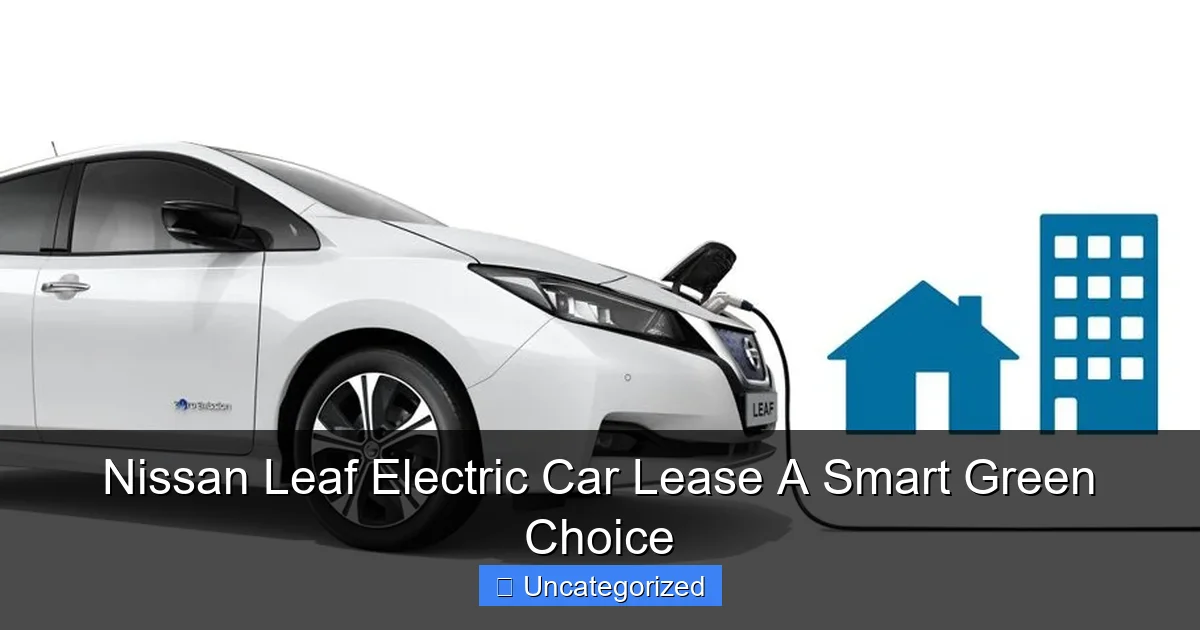
Visual guide about nissan leaf electric car lease
Image source: i.i-sgcm.com
Lower Monthly Payments Than Buying
One of the most compelling reasons to lease a Nissan Leaf is the affordability factor. Monthly lease payments are typically 30–50% lower than loan payments for the same vehicle. For example, while the 2024 Nissan Leaf SV Plus might cost around $40,000 to purchase, a 36-month lease could start as low as $249 per month with $2,500 due at signing (based on current national offers). This makes the Leaf accessible to a broader range of drivers, especially those who want to avoid a large upfront investment.
Additionally, many lease deals include incentives such as:
- Manufacturer rebates (up to $7,500 federal tax credit applied at lease inception in some states)
- Low or zero percent lease interest rates
- Complimentary charging credits (e.g., Nissan offers $100–$200 in charging vouchers)
No Long-Term Depreciation Worries
Electric vehicles, like all cars, depreciate over time—but with a lease, that risk falls on the leasing company, not you. The Nissan Leaf, while reliable, still experiences typical EV depreciation (around 40–50% over three years). By leasing, you sidestep the headache of reselling a used EV, which can be challenging due to fluctuating battery values and evolving technology.
Instead, after your 24–36 month lease term, you simply return the vehicle. This is ideal for drivers who want to stay current with advancements in EV tech, such as longer range, faster charging, or improved battery longevity—features that are constantly evolving.
Access to Incentives and Tax Credits
One of the best-kept secrets of EV leasing is that you can benefit from the federal EV tax credit even if you don’t purchase the car. In many states, leasing companies pass through the full $7,500 credit to reduce your monthly payments or upfront costs. For instance, a $7,500 credit could lower a $350/month lease to under $200/month—effectively making it a no-brainer for budget-conscious drivers.
State-level incentives also apply. For example:
- California: Additional $2,000 Clean Vehicle Rebate (CVRP)
- New York: Up to $2,000 Drive Clean Rebate
- Massachusetts: MOR-EV program offering $3,500 for low-income applicants
These incentives are often applied directly to your lease, reducing your effective cost without requiring you to file for tax credits.
Understanding Nissan Leaf Lease Terms and Options
Not all leases are created equal. To get the best deal on a Nissan Leaf, it’s essential to understand the key components of a lease agreement. From mileage limits to lease-end options, knowing the details can save you thousands and prevent unexpected fees.
Lease Duration: 24, 30, or 36 Months?
Nissan typically offers lease terms of 24, 30, or 36 months. The most common is 36 months, which strikes a balance between lower monthly payments and manageable contract length. However, shorter leases (24 months) may offer better rates for drivers who want to upgrade more frequently or avoid long-term commitments.
Tip: If you’re unsure about long-term EV ownership, a 24-month lease lets you test the waters and reassess in two years when battery technology may have improved further.
Mileage Allowance: 10,000 vs. 12,000 vs. 15,000 Miles/Year
All leases include a mileage cap, and exceeding it results in per-mile fees—typically $0.25 per mile over the limit. Nissan Leaf leases usually come with:
- 10,000 miles/year (30,000 total for 36-month lease)
- 12,000 miles/year (36,000 total)
- 15,000 miles/year (45,000 total) — available for an additional monthly fee
For the average American driver (who drives about 13,500 miles/year), the 12,000-mile option is often ideal. If you work from home or have a short commute, 10,000 miles may suffice. But if you frequently travel or have a long daily drive, consider the 15,000-mile plan—or budget for overage fees.
Money Factor and Residual Value: The Hidden Math
Two critical (but often overlooked) lease terms are the money factor and residual value:
- Money factor: Similar to an interest rate, but expressed as a decimal (e.g., 0.0025). Multiply by 2,400 to get the equivalent annual percentage rate (APR). A money factor of 0.0025 = 6% APR.
< Residual value: The estimated value of the car at lease-end. A higher residual means lower monthly payments. For the 2024 Leaf, residuals range from 50–60% depending on trim and term.
Pro tip: Always ask your dealer for the money factor and residual value in writing. Use online lease calculators (like Edmunds or LeaseGuide) to compare offers from multiple dealerships.
Lease-End Options: Buy, Return, or Renew
When your lease ends, you have three choices:
- Return the car: Most common. Just schedule a pickup with the leasing company. Ensure the vehicle is in good condition (minor wear is okay).
- Buy the car: You can purchase the Leaf at its residual value. This is a good option if the car has held its value well or if you’ve grown attached to it.
- Lease a new model: Many dealers offer loyalty incentives for lessees who renew with the same brand.
Be aware: Returning a car with excessive wear (dents, scratches, interior damage) can result in charges. Nissan’s “wear and tear” guidelines are generally fair, but it pays to document the car’s condition before returning it.
2024 Nissan Leaf Models and Lease Pricing Comparison
The 2024 Nissan Leaf lineup includes three main trims: the base S, mid-tier SV, and premium SV Plus. Each offers different ranges, features, and lease terms. Choosing the right model depends on your budget, driving needs, and tech preferences.
Trim Levels and Key Differences
Here’s a breakdown of the 2024 Leaf trims and what you get:
| Feature | Leaf S (40 kWh) | Leaf SV (40 kWh) | Leaf SV Plus (62 kWh) |
|---|---|---|---|
| Battery Size | 40 kWh | 40 kWh | 62 kWh |
| Range (EPA) | 149 miles | 149 miles | 212 miles |
| Horsepower | 147 hp | 147 hp | 214 hp |
| Charging (DC Fast) | Up to 40 kW | Up to 40 kW | Up to 100 kW |
| Key Features | 8″ touchscreen, Apple CarPlay, LED lights | Heated seats/steering wheel, ProPILOT Assist, 360° camera | Premium audio, leather seats, 17″ wheels, e-Pedal |
| Typical Lease Price (36 mo.) | $199–$249/month | $249–$299/month | $299–$349/month |
Which Model Is Right for You?
- Leaf S: Best for city drivers with short commutes (under 50 miles/day). Affordable, but limited range and fewer features.
- Leaf SV: The sweet spot. Adds comfort and safety features (like ProPILOT Assist, which enables semi-autonomous driving) without a huge price jump.
- Leaf SV Plus: Ideal for longer trips or drivers who want maximum range and power. The 212-mile range covers most daily needs and weekend getaways.
Real-world example: Sarah, a teacher in Portland, leases the Leaf SV Plus for $319/month. She drives 40 miles daily and uses DC fast charging at school once a week. The extra range gives her peace of mind on rainy days when battery efficiency drops.
Lease Deals and Promotions (2024)
Nissan frequently runs lease specials. As of mid-2024, national offers include:
- Leaf S: $229/month, $2,499 due at signing (36 months, 10,000 mi/yr)
- Leaf SV: $269/month, $2,999 due at signing (includes $100 charging credit)
- Leaf SV Plus: $329/month, $3,499 due at signing (0.9% APR equivalent money factor)
Note: Deals vary by region. Always check Nissan’s website or contact local dealers for the latest offers. Some states (like California) have additional incentives that can reduce payments further.
Charging and Maintenance: What to Expect with a Leased Leaf
One of the biggest advantages of leasing a Nissan Leaf is the low cost of ownership. With no engine, oil changes, or transmission repairs, EV maintenance is significantly simpler and cheaper than gas cars. Here’s what you need to know about charging, upkeep, and maximizing your Leaf’s lifespan.
Home Charging: Level 1 vs. Level 2
Most Leaf owners charge at home. You have two options:
- Level 1 (120V): Uses a standard outlet. Adds ~4 miles of range per hour. Takes 24+ hours to fully charge the 40 kWh battery.
- Level 2 (240V): Requires a home charger (cost: $500–$1,000). Adds ~25 miles of range per hour. Fully charges in 7–8 hours (40 kWh) or 10–11 hours (62 kWh).
Recommendation: Invest in a Level 2 charger if possible. It’s more convenient and reduces strain on the battery. Many states offer rebates (e.g., California’s $500 rebate for home chargers).
Tip: Use a timer to charge during off-peak hours (e.g., 10 PM–6 AM) to save on electricity costs.
Public Charging and Nissan’s Network
Nissan Leaf leases include access to NissanConnect EV, a mobile app that helps you locate charging stations. The Leaf is compatible with:
- CCS Combo DC fast chargers (SV Plus only)
- CHAdeMO (older Leaf models)
- J1772 Level 2 stations
Nissan partners with networks like ChargePoint and EVgo. Many dealers offer free charging for the first 6–12 months. For example, a 30-minute fast charge can add 80–100 miles of range to the SV Plus.
Pro tip: Download apps like PlugShare or ChargeHub to find real-time station availability and avoid “charging deserts” on road trips.
Maintenance and Repairs: What’s Covered?
Leasing a Leaf means most maintenance is covered under warranty:
- Battery and EV components: 8 years/100,000 miles (whichever comes first)
- Standard warranty: 3 years/36,000 miles
- Free scheduled maintenance: Some lease deals include 2–3 years of free service (oil changes, tire rotations, etc.—though EVs need fewer of these)
Common maintenance tasks for a leased Leaf:
- Tire rotations (every 7,500–10,000 miles)
- Brake fluid checks (every 2 years)
- HVAC filter replacement (every 12–18 months)
- 12V battery replacement (every 3–5 years)
Total annual maintenance cost: $200–$400 (vs. $600–$1,000 for gas cars).
Is a Nissan Leaf Lease Right for You? Key Considerations
While the Nissan Leaf lease offers many advantages, it’s not the perfect fit for everyone. Before signing, ask yourself these critical questions to ensure it aligns with your lifestyle, budget, and driving needs.
Your Driving Habits and Range Needs
The Leaf S and SV have a 149-mile range—great for city driving but limiting for long trips. If you:
- Drive <50 miles/day → Leaf S or SV is ideal
- Drive 50–100 miles/day → Leaf SV Plus recommended
- Frequently travel 150+ miles → Consider a longer-range EV (e.g., Tesla Model 3, Hyundai Ioniq 6)
Example: Mark, a delivery driver in Chicago, switched from a gas car to a Leaf SV. His 70-mile daily route fits perfectly, and he saves $150/month on fuel.
Home Charging Access
Leasing a Leaf only makes sense if you can charge reliably. Ask:
- Do you have access to a 240V outlet at home?
- If not, can you install a Level 2 charger?
- Do you live in an apartment? Some complexes offer shared chargers.
Without home charging, public stations become a necessity—and that can be inconvenient or costly over time.
Lease vs. Buy: Which Saves More?
Compare a 3-year lease to buying:
- Lease: Lower payments, no resale hassle, but you don’t own the car.
- Buy: Higher payments, but you build equity and can keep the car long-term.
For many, leasing is cheaper short-term. But if you plan to keep a car 5+ years, buying may be better. Use a cost calculator to compare total ownership costs.
Future-Proofing and Technology
The EV market is evolving fast. By leasing, you can upgrade every 3 years to newer models with:
- Longer ranges (e.g., 300+ miles)
- Faster charging (800V architecture)
- Advanced driver aids (hands-free driving)
This is a major advantage over buying, where you’re locked into older tech.
Conclusion: Embrace the Green Revolution with a Nissan Leaf Lease
The Nissan Leaf electric car lease is more than just a way to drive—it’s a statement of values. By choosing a Leaf, you’re reducing emissions, saving on fuel and maintenance, and supporting the transition to sustainable transportation. With flexible terms, attractive incentives, and low ownership costs, leasing makes it easier than ever to go green without breaking the bank.
Whether you’re drawn by the Leaf’s affordability, its proven reliability, or its role in combating climate change, one thing is clear: this isn’t just a car—it’s a smart, forward-thinking choice. From city streets to suburban neighborhoods, the Leaf fits seamlessly into modern life. And with leasing, you get all the benefits of electric driving with none of the long-term risks.
As EV technology continues to advance, leasing offers the perfect balance of innovation and value. So why wait? Visit your local Nissan dealer today, explore the latest lease offers, and take the first step toward a cleaner, quieter, and more sustainable future. The road to a greener tomorrow starts with a single charge—and the Nissan Leaf is ready to take you there.
Frequently Asked Questions
What are the benefits of choosing a Nissan Leaf electric car lease?
Leasing a Nissan Leaf offers lower upfront costs, fixed monthly payments, and the latest EV technology without long-term ownership. It’s a smart green choice for eco-conscious drivers who want to reduce emissions and enjoy lower maintenance costs.
Can I lease a Nissan Leaf with no down payment?
Yes, many dealerships and leasing companies offer Nissan Leaf electric car lease deals with $0 down payment options. These promotions often include incentives like tax credits, making the lease even more affordable.
How does the mileage limit work on a Nissan Leaf lease?
Most Nissan Leaf leases include an annual mileage allowance (typically 10,000–15,000 miles). Exceeding this limit may result in fees, so it’s important to estimate your driving needs before signing the lease agreement.
Are there tax incentives for a Nissan Leaf electric car lease?
Yes, lessees may qualify for federal or state EV tax credits, depending on the leasing company’s policies. Some states also offer additional rebates or reduced registration fees for electric vehicles like the Nissan Leaf.
What happens at the end of a Nissan Leaf lease?
At the end of your lease, you can return the car, lease a new Nissan Leaf, or purchase the vehicle at a predetermined residual value. The process is hassle-free, with no long-term commitment.
Is maintenance included in a Nissan Leaf electric car lease?
Many Nissan Leaf leases include complimentary maintenance packages covering routine services like tire rotations and inspections. Electric vehicles have fewer moving parts, which often means lower maintenance costs overall.