Nissan Leaf Electric Car Price in Sri Lanka Revealed
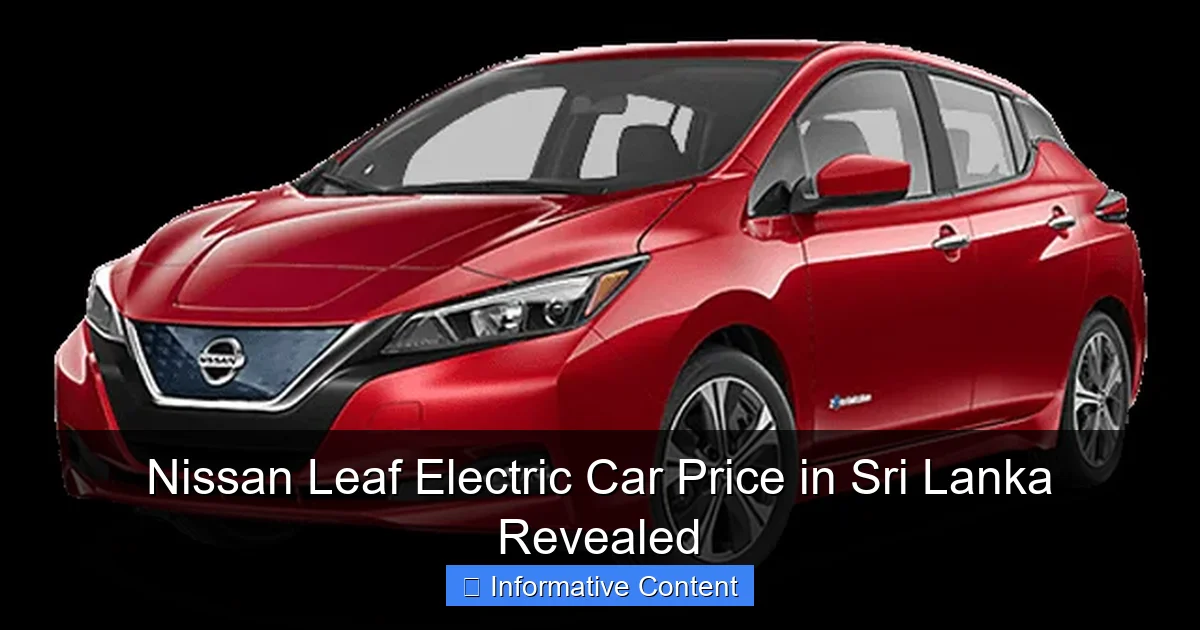
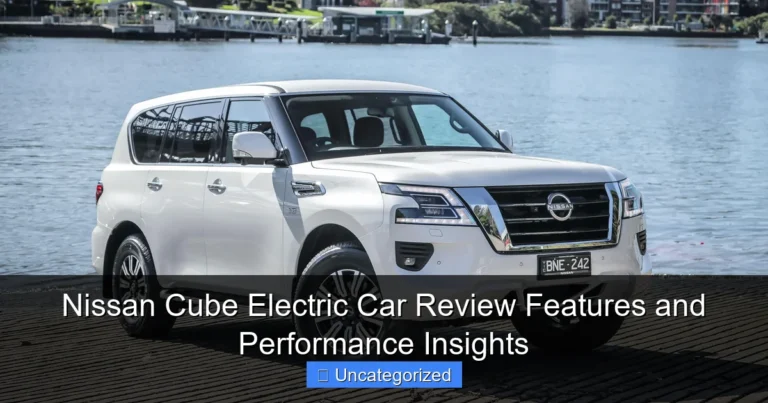
Featured image for nissan leaf electric car price in sri lanka
Image source: pricelanka.lk
The Nissan Leaf electric car is now available in Sri Lanka, with prices starting at LKR 8.5 million, making it one of the most affordable long-range EVs in the market. Equipped with a 40 kWh battery and 270 km range per charge, it offers a compelling option for eco-conscious drivers seeking value and sustainability.
Key Takeaways
- Price starts at LKR 8.5M: Competitive for Sri Lanka’s EV market with import duties.
- Lower running costs: Saves up to 70% on fuel versus petrol cars.
- Government incentives apply: Check for tax breaks on EV purchases.
- Charging infrastructure growing: Expanding network makes daily use easier.
- Resale value rising: Strong demand boosts long-term investment potential.
- Variants affect pricing: Higher trims add LKR 1M+ for advanced features.
📑 Table of Contents
- Why the Nissan Leaf Is Turning Heads in Sri Lanka
- Understanding the Nissan Leaf Electric Car Price in Sri Lanka
- Is the Nissan Leaf Worth the Price? Pros and Cons
- Charging and Running Costs: The Real Savings
- Where to Buy and What to Look For
- Alternatives to the Nissan Leaf: What Else Can You Buy?
- Data Table: Nissan Leaf Models and Prices in Sri Lanka (2024)
- Final Thoughts: Is the Nissan Leaf Right for You?
Why the Nissan Leaf Is Turning Heads in Sri Lanka
Picture this: You’re driving down Galle Road in Colombo, the sun glinting off the Indian Ocean, and the only sound you hear is the soft hum of your car’s electric motor. No engine roar, no exhaust fumes—just smooth, quiet progress. That’s the experience many Sri Lankans are discovering with the Nissan Leaf electric car, and it’s changing the way we think about urban mobility.
The Nissan Leaf has become a symbol of affordable electric transportation in many parts of the world, and Sri Lanka is no exception. With rising fuel prices, increasing environmental awareness, and government incentives for EVs, more drivers are asking: What is the Nissan Leaf electric car price in Sri Lanka, and is it worth it? Whether you’re a city commuter tired of traffic and petrol costs, or a tech-savvy eco-enthusiast, the Leaf offers a compelling case. But like any major purchase, it pays to dig deeper than just the price tag.
Understanding the Nissan Leaf Electric Car Price in Sri Lanka
Current Market Pricing (2024)
As of mid-2024, the Nissan Leaf electric car price in Sri Lanka ranges from LKR 7.5 million to LKR 9.2 million, depending on the model, battery capacity, import status (new vs. used), and dealer markups. This price point places the Leaf in the mid-to-upper tier of electric vehicles available locally, but it’s still significantly more accessible than luxury EVs like the Tesla Model 3 or the Hyundai Ioniq 5.
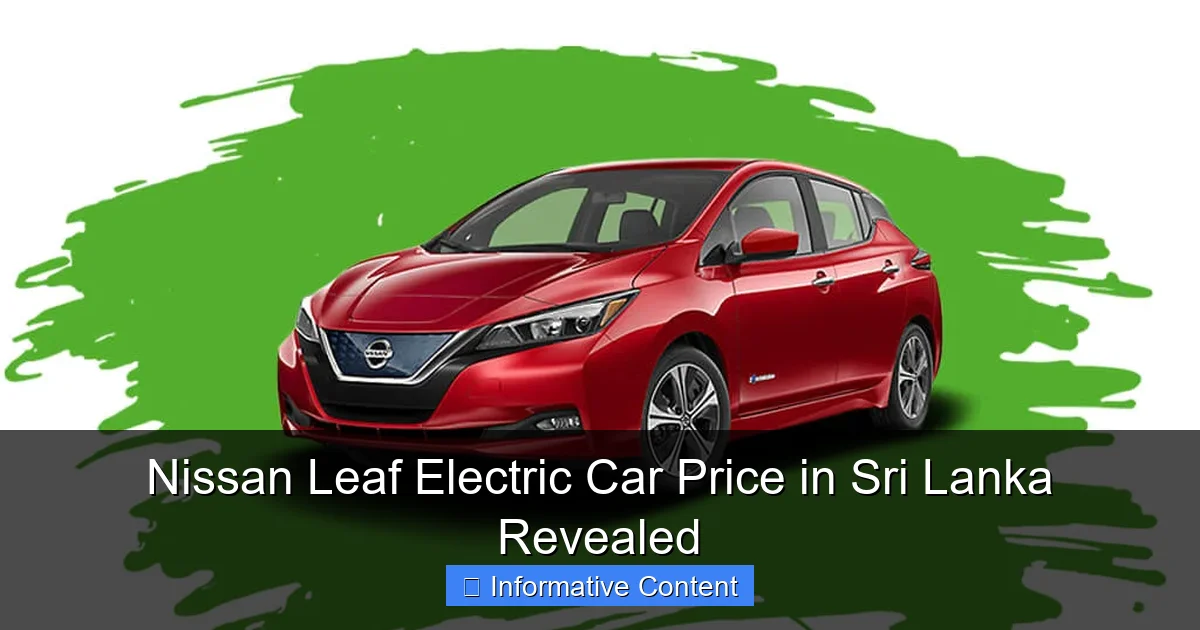
Visual guide about nissan leaf electric car price in sri lanka
Image source: pricelanka.lk
Here’s a quick breakdown of what you’re likely to see:
- Used Nissan Leaf (2018–2020 models): LKR 7.5M – LKR 8.5M
- New Nissan Leaf (2023–2024 models): LKR 8.8M – LKR 9.2M
- Reconditioned imports (Japan): LKR 7.8M – LKR 8.7M
These prices are inclusive of customs duties, VAT, and dealer fees—though some private sellers may offer lower prices for direct purchases. For example, a friend of mine recently bought a 2019 Leaf with 35,000 km from a private seller in Negombo for LKR 7.6 million. He saved about LKR 500,000 compared to a dealership, but had to handle the registration and warranty transfer himself.
What Affects the Price?
Several factors influence the Nissan Leaf electric car price in Sri Lanka:
- Battery Health: A key concern. A degraded battery can reduce range by 20–30%. Always ask for a battery health report (SOH – State of Health). Aim for 80% or higher.
- Model Year and Trim: The 2023+ Leaf e+ has a larger 62 kWh battery and 385 km range (WLTP), while older models have 40 kWh and ~270 km range. The e+ costs about LKR 1.2M more.
- Import Source: Most Leafs come from Japan. Reconditioned units from reputable dealers (like SBT Japan or BE FORWARD) often come with warranties, but private imports may lack support.
- Government Incentives: Sri Lanka has reduced import duties on EVs. As of 2023, EVs under 1,000 kg pay only 10% duty (vs. 100%+ for ICE cars). This helps keep Leaf prices competitive.
- Dealer vs. Private Sale: Dealerships offer peace of mind with warranties and financing, but charge a premium. Private sales are cheaper but riskier.
Tip: Always get an independent battery test before buying. A local mechanic familiar with EVs (like those at Lanka EV or Green Lanka Motors) can run a diagnostic for around LKR 5,000.
Is the Nissan Leaf Worth the Price? Pros and Cons
Pros: Why Sri Lankans Are Choosing the Leaf
Let’s be honest—the Nissan Leaf electric car price in Sri Lanka is a big investment. But for many, the benefits outweigh the cost. Here’s why:
- Low Running Costs: Charging a Leaf costs about LKR 3–4 per km (vs. LKR 15–20 for petrol cars). If you drive 20,000 km/year, you’ll save over LKR 200,000 annually on fuel.
- Zero Tailpipe Emissions: Great for reducing air pollution in cities like Colombo and Kandy. Plus, you’ll feel good knowing you’re not contributing to smog.
- Quiet and Smooth Driving: No engine noise, instant torque, and regenerative braking make city driving a breeze. No more gear shifts or engine vibrations.
- Government Support: EVs are exempt from the annual motor vehicle tax (LKR 10,000–50,000 for ICE cars). Some local councils offer free parking or charging perks.
- Proven Reliability: The Leaf has been around since 2010. Millions of units sold globally. It’s not flashy, but it’s dependable.
- Resale Value: While EVs depreciate, Leafs hold value better than many ICE cars in Sri Lanka. A 3-year-old Leaf might lose 25–30% vs. 40%+ for a petrol sedan.
My neighbor, a schoolteacher in Kandy, switched to a 2020 Leaf last year. “I used to spend LKR 25,000 a month on petrol,” she told me. “Now I pay LKR 8,000 for electricity. The savings covered the car in under 4 years.”
Cons: Where the Leaf Falls Short
No car is perfect. Here are the real drawbacks of the Leaf in Sri Lanka:
- Range Anxiety: Even the 62 kWh model has a real-world range of ~300 km in Sri Lanka’s hot climate. That’s fine for Colombo–Kandy trips, but risky for long drives (e.g., Colombo–Jaffna).
- Limited Charging Infrastructure: Public fast chargers are scarce outside major cities. You’ll need to rely on home charging. Not everyone has a driveway or apartment charging access.
- Battery Degradation in Heat: Sri Lanka’s tropical climate can accelerate battery wear. A poorly maintained Leaf might lose 10% capacity in 3 years.
- Higher Upfront Cost: LKR 8 million is still a lot. You could buy a brand-new hybrid (like a Toyota Prius) for less.
- Service and Parts: Fewer mechanics know how to service EVs. Spare parts (like battery modules) are expensive and may take weeks to arrive.
- Resale Market Uncertainty: The EV market is still young. Will buyers pay a fair price for your Leaf in 5 years? Hard to say.
Tip: If you live in a high-rise apartment, talk to your management about installing a Level 2 charger. Some buildings offer EV charging as a service (LKR 5,000–10,000/month).
Charging and Running Costs: The Real Savings
Charging at Home: The Smart Choice
The biggest savings come from charging at home. Here’s how it works:
- Standard Charging: The Leaf comes with a 7 kW onboard charger. It takes 6–7 hours to charge from 20% to 80% using a home wall box (LKR 350,000–500,000 to install).
- Cost per Charge: A full charge (40 kWh) costs ~LKR 1,200 at Sri Lanka’s domestic electricity rate (LKR 30/kWh). That’s LKR 4 per km (vs. LKR 18 for a petrol car).
- Time of Use: Charge at night (10 PM–6 AM) for lower rates. Some utility plans offer EV discounts (e.g., CEB’s “EV Tariff”).
Example: If you drive 1,500 km/month, your monthly charging cost is ~LKR 6,000. A petrol car would cost LKR 27,000—a LKR 21,000 monthly saving!
Public Charging: Limited but Growing
Public fast chargers are rare but increasing:
- Fast Charging (50 kW DC): Available at Lanka EV stations (Colombo, Kandy, Galle). Adds 200 km range in 40 minutes. Costs LKR 1,500–2,000 per session.
- AC Charging: Some malls (e.g., One Galle Face) have Level 2 chargers (free or LKR 500/hour).
- Hotel Charging: A few eco-hotels (e.g., Jetwing, Cinnamon) offer free charging for guests.
Tip: Download the “Lanka EV” app to find charging stations. Always carry a CHAdeMO adapter—most public chargers in Sri Lanka use this standard.
Maintenance Costs: Lower, but Not Zero
EVs have fewer moving parts, so maintenance is cheaper:
- No Oil Changes: No engine = no oil. Save LKR 8,000/year.
- Regenerative Braking: Reduces brake wear. Pads last 50,000+ km (vs. 25,000 for ICE cars).
- Annual Service: LKR 15,000–25,000 (vs. LKR 30,000+ for petrol cars).
- Battery Replacement: A 40 kWh battery costs ~LKR 3.5 million. But most Leafs retain 70% capacity after 8 years. Replacement is rare unless the battery fails.
Tip: Use “Eco” mode to extend battery life. Avoid fast charging daily—stick to 80% charge unless you need the range.
Where to Buy and What to Look For
Authorized Dealers vs. Private Sellers
Authorized dealers (e.g., Nissan Lanka, Lanka EV, Green Lanka Motors) offer:
- Warranties (1–3 years)
- Financing options (e.g., 70% loan at 12% interest)
- After-sales support
- Certified battery health checks
Private sellers are cheaper but riskier. You might get a lemon. Always:
- Check the battery SOH (ask for a LeafSpy report)
- Verify service history
- Test drive in traffic and hills (to check battery drain)
- Get a pre-purchase inspection (LKR 5,000–10,000)
Example: A dealer in Colombo sells a 2022 Leaf for LKR 8.2 million with a 2-year warranty. A private seller in Matara offers the same model for LKR 7.7 million—but no warranty.
Import Options: Reconditioned from Japan
Many Leafs come from Japan via importers like:
- SBT Japan
- BE FORWARD
- Auto Terminal
Pros:
- Lower prices (LKR 7.5M–8.5M)
- Higher spec models (e.g., e+ with 62 kWh battery)
- Warranties (some offer 6–12 months)
Cons:
- Shipping delays (4–8 weeks)
- No test drive before purchase
- Risk of battery issues (check auction grade—aim for 4.5/5 or higher)
Tip: Use a local agent to handle customs and registration. They charge LKR 50,000–100,000 but save you headaches.
Alternatives to the Nissan Leaf: What Else Can You Buy?
Cheaper Options
- Renault Zoe (2020): LKR 6.8M–7.5M. Smaller (245 km range), but great for city driving.
- MG ZS EV (2021): LKR 7.2M–8.0M. Larger SUV, 320 km range, better charging network.
More Premium Options
- Hyundai Kona Electric (2022): LKR 9.5M–11M. 484 km range, faster charging.
- Tesla Model 3 (used): LKR 12M+. 500+ km range, but limited service centers.
Hybrid Alternatives
- Toyota Prius (2023): LKR 6.5M. 20 km electric range, but cheaper to buy and maintain.
- Honda Vezel Hybrid: LKR 7.0M. Popular, reliable, but still uses petrol.
Data Table: Nissan Leaf Models and Prices in Sri Lanka (2024)
| Model | Year | Battery (kWh) | Range (km) | Price (LKR) | Best For |
|---|---|---|---|---|---|
| Nissan Leaf | 2018–2020 | 40 | 270 | 7.5M – 8.5M | City commuting, budget buyers |
| Nissan Leaf e+ | 2021–2022 | 62 | 385 | 8.5M – 9.0M | Longer trips, tech lovers |
| Nissan Leaf (New) | 2023–2024 | 40 | 270 | 8.8M – 9.2M | Warranty seekers, new car feel |
| Nissan Leaf e+ (New) | 2023–2024 | 62 | 385 | 9.5M+ | Range anxiety sufferers |
Final Thoughts: Is the Nissan Leaf Right for You?
The Nissan Leaf electric car price in Sri Lanka might seem high at first glance, but when you factor in fuel savings, lower maintenance, and environmental benefits, it starts to make sense. For city dwellers, daily commuters, and eco-conscious families, the Leaf is a practical, proven choice.
But it’s not for everyone. If you frequently drive long distances or live in an area with no home charging, a hybrid might be a better fit. And if you’re on a tight budget, a used Leaf or a smaller EV like the Renault Zoe could be smarter.
Ultimately, the Leaf represents a shift—not just in how we drive, but in how we think about transportation. It’s quiet, clean, and surprisingly fun. And as charging infrastructure improves and prices drop, EVs like the Leaf will become the norm, not the exception.
So, is it worth it? If you’re ready to embrace the electric future, yes, the Nissan Leaf is worth considering. Just do your homework, test drive one, and calculate your long-term savings. Your wallet—and the planet—will thank you.
Frequently Asked Questions
What is the Nissan Leaf electric car price in Sri Lanka?
The Nissan Leaf electric car price in Sri Lanka typically ranges between LKR 8.5 million to LKR 12 million, depending on the model year, battery capacity, and import taxes. Prices may vary across dealers due to fluctuating import costs and government EV policies.
Is the Nissan Leaf affordable for the average buyer in Sri Lanka?
While the Nissan Leaf is priced as a premium EV in Sri Lanka, it offers long-term savings on fuel and maintenance. However, high import duties and limited subsidies make it less accessible compared to internal combustion engine vehicles.
Are there any tax benefits or incentives for buying a Nissan Leaf in Sri Lanka?
Sri Lanka has introduced reduced import taxes on electric vehicles, including the Nissan Leaf, to promote green mobility. Buyers should check with the Ministry of Finance for the latest EV incentives and duty structures.
Where can I find the best deal on a Nissan Leaf in Sri Lanka?
Authorized dealerships like Nissan Lanka and trusted importers such as Sathosa Motors offer competitive pricing and warranty options. Always compare quotes and verify vehicle history before purchasing.
Does the Nissan Leaf price in Sri Lanka include charging equipment?
Most dealers do not include home charging stations in the base price, but they can arrange installation for an additional fee. Portable chargers may be provided as part of promotional packages.
How does the Nissan Leaf’s price compare to other EVs in Sri Lanka?
The Nissan Leaf is competitively priced among entry-to-mid-level EVs, though newer models like the BYD Atto 3 may offer similar features at a lower cost. The Leaf’s established reputation and widespread service network add value.