Nissan Leaf Electric Car Price Revealed Is It Worth It

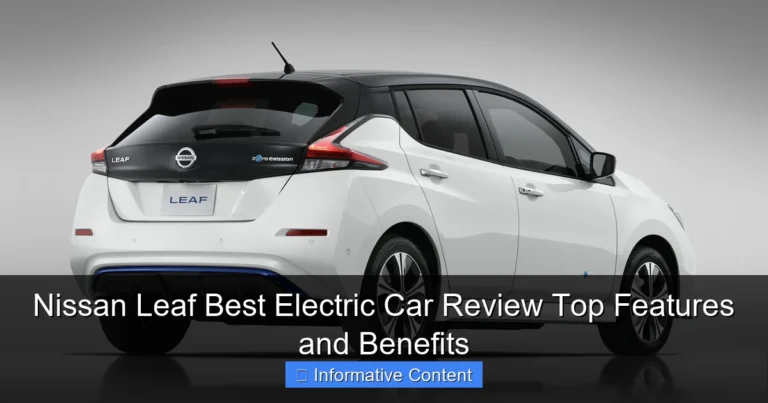
Featured image for nissan leaf electric car price
Image source: carsguide-res.cloudinary.com
The Nissan Leaf electric car starts at an affordable $27,400, making it one of the most budget-friendly EVs on the market with a proven track record for reliability. With up to 149 miles of range and a host of standard tech features, it delivers solid value for eco-conscious drivers seeking cost-effective, zero-emission commuting.
Key Takeaways
- Affordable entry price: Starts under $30K, making it a budget-friendly EV option.
- Tax credits apply: Eligible for up to $7,500 federal incentive—ask your dealer.
- Low running costs: Saves hundreds yearly on fuel and maintenance vs. gas cars.
- Range varies by model: Choose 149–212 miles; match to your daily driving needs.
- Resale value lags: Weaker than rivals—factor this into long-term ownership costs.
- Charging convenience: Standard Level 2 support; plan home or public charging access.
📑 Table of Contents
- The Electric Revolution: Is the Nissan Leaf Worth the Investment?
- Understanding the Nissan Leaf Electric Car Price: Trims, Options, and MSRP
- How the Nissan Leaf Compares to Other EVs in Price and Value
- Hidden Costs and Savings: Total Cost of Ownership Analysis
- Performance, Range, and Real-World Driving Experience
- Is the Nissan Leaf Right for You? Who Should (and Shouldn’t) Buy It
The Electric Revolution: Is the Nissan Leaf Worth the Investment?
The electric vehicle (EV) market has exploded in recent years, with automakers racing to electrify their lineups and consumers seeking cleaner, more cost-effective transportation solutions. Among the early pioneers of the mass-market EV movement, the Nissan Leaf stands out as one of the most recognizable and accessible electric cars on the road today. First introduced in 2010, the Leaf helped pave the way for the modern EV era, offering a practical, affordable, and environmentally friendly alternative to traditional gasoline-powered vehicles. Now, over a decade later, the Nissan Leaf electric car price remains a key factor for budget-conscious buyers looking to make the switch to electric without breaking the bank.
But with so many new EVs flooding the market—from Tesla’s cutting-edge models to the latest offerings from Hyundai, Kia, and Ford—does the Nissan Leaf still hold up? Is it worth the investment, especially when considering its price point, features, and long-term value? In this comprehensive guide, we’ll dive deep into the Nissan Leaf electric car price, analyzing everything from base MSRP and available trims to tax incentives, charging costs, and total ownership expenses. Whether you’re a first-time EV buyer or a seasoned green commuter, this article will help you determine if the Nissan Leaf is the right electric car for your lifestyle and budget.
Understanding the Nissan Leaf Electric Car Price: Trims, Options, and MSRP
Current Trim Levels and Pricing (2024 Model Year)
The 2024 Nissan Leaf comes in two primary trim levels: the Leaf S and the Leaf SV Plus. These trims offer different battery capacities, features, and price points, allowing buyers to choose based on their driving needs and budget. As of 2024, the starting manufacturer’s suggested retail price (MSRP) for the base model is competitive within the compact EV segment.

Visual guide about nissan leaf electric car price
Image source: s3.us-east-2.amazonaws.com
- Nissan Leaf S (40 kWh battery): Starting at $28,140 (before incentives)
- Nissan Leaf SV Plus (62 kWh battery): Starting at $36,190 (before incentives)
The Leaf S is ideal for urban commuters and city dwellers who typically drive short distances. With its 40 kWh battery, it delivers an EPA-estimated range of 149 miles on a full charge. The Leaf SV Plus, on the other hand, is better suited for those who need more range and enhanced features. Its 62 kWh battery provides an EPA-estimated 212 miles—a significant improvement that makes longer trips more feasible.
What’s Included in Each Trim?
While both trims share the Leaf’s signature hatchback design and electric powertrain, the SV Plus adds several premium features that justify the higher Nissan Leaf electric car price. Here’s a breakdown of key differences:
- Leaf S: Standard features include 16-inch steel wheels, automatic climate control, an 8-inch touchscreen, Apple CarPlay, Android Auto, and Nissan’s Safety Shield 360 suite (automatic emergency braking, blind-spot monitoring, rear cross-traffic alert, and more).
- Leaf SV Plus: Upgrades include 17-inch alloy wheels, LED headlights, heated front seats, a 7-inch digital instrument cluster, a premium audio system, ProPILOT Assist (semi-autonomous driving), and a larger infotainment screen with navigation.
For drivers who value comfort, safety, and tech, the SV Plus offers a compelling upgrade. However, for those prioritizing affordability and simplicity, the Leaf S remains a solid entry point into the EV world.
Optional Packages and Add-Ons
Nissan offers a few optional packages for the Leaf, though they’re more limited compared to higher-end EVs. The SV Plus Premium Package ($2,000) adds a panoramic moonroof, a 360-degree camera, and a hands-free power liftgate. While these features enhance convenience, they do increase the Nissan Leaf electric car price—so consider whether they align with your daily needs.
Pro Tip: Always check for dealer-installed options or add-ons during negotiations. Some dealerships may include floor mats, charging cables, or window tinting at no extra cost to sweeten the deal.
How the Nissan Leaf Compares to Other EVs in Price and Value
Price Comparison with Key Competitors
To truly understand whether the Nissan Leaf electric car price is worth it, we need to compare it with similar EVs in the compact hatchback segment. Below is a comparison of the base models of the most popular alternatives:
| Model | Starting MSRP | Range (EPA) | Key Features |
|---|---|---|---|
| Nissan Leaf S | $28,140 | 149 miles | Apple CarPlay, Safety Shield 360, 8-inch screen |
| Chevrolet Bolt EV | $26,500 | 259 miles | 10.2-inch screen, Super Cruise (optional), spacious interior |
| Hyundai Kona Electric | $32,675 | 258 miles | Heated seats, 10.25-inch display, advanced safety tech |
| Kia Niro EV | $39,600 | 253 miles | Dual-zone climate, 10.25-inch screen, Highway Driving Assist |
| Volkswagen ID.4 (RWD) | $38,995 | 275 miles | SUV styling, spacious cargo, ID.Cockpit digital display |
Value for Money: Where the Leaf Shines (and Falls Short)
The Nissan Leaf S offers one of the lowest entry prices among new EVs, making it an attractive option for first-time buyers. However, when comparing range, the Leaf S’s 149 miles is significantly less than competitors like the Bolt EV (259 miles) and Kona Electric (258 miles). This means the Leaf S is best suited for drivers with predictable, short commutes or access to reliable public charging.
The Leaf SV Plus closes the gap with 212 miles of range, but even then, it’s outperformed by the Bolt, Kona, and ID.4. That said, the Nissan Leaf electric car price includes several value-added features:
- Standard Safety Suite: Unlike some rivals that charge extra for advanced safety, the Leaf includes Safety Shield 360 across all trims.
- Proven Reliability: With over a decade on the road, the Leaf has a track record of durability and low maintenance costs.
- E-Pedal Technology: One-pedal driving allows drivers to accelerate, decelerate, and stop using just the accelerator, reducing brake wear and improving efficiency.
While the Leaf may not win in raw range or tech flashiness, its low upfront cost, strong safety package, and proven ownership experience make it a smart choice for pragmatic buyers.
Real-World Example: City Commuter vs. Suburban Driver
Consider two scenarios:
- City Commuter (Sarah): Drives 20 miles daily in a dense urban area with access to workplace and public charging. She values affordability and simplicity. The Leaf S at $28,140 is perfect—her daily range needs are well within its 149-mile capacity, and she saves thousands compared to pricier EVs.
- Suburban Family (James): Drives 60 miles daily, including highway stretches, and takes weekend trips to the countryside. He needs at least 200 miles of range. The Leaf SV Plus (212 miles) fits, but he might prefer the Bolt EV (259 miles) for extra peace of mind on longer drives.
These examples show that the Nissan Leaf electric car price delivers the most value when matched to the right driver profile.
Hidden Costs and Savings: Total Cost of Ownership Analysis
Upfront Costs Beyond the Sticker Price
When evaluating the Nissan Leaf electric car price, it’s essential to look beyond the MSRP. Several additional costs and savings come into play over the vehicle’s lifetime.
- Destination Fee: Typically $1,095, added to all trims.
- Taxes and Registration: Varies by state, but can add $1,000–$3,000.
- Home Charger Installation: A Level 2 charger costs $500–$1,200, plus $500–$2,000 for professional installation (depending on electrical panel upgrades).
- Insurance: EVs are often more expensive to insure due to higher repair costs. Expect a 10–20% premium over a similar gas car.
However, there are also significant savings that offset these costs:
- Federal Tax Credit: The 2024 Nissan Leaf qualifies for a $7,500 federal tax credit if you meet income and purchase requirements (e.g., final assembly in North America, battery component thresholds). This effectively reduces the Leaf S to $21,735 and the SV Plus to $29,785.
- State and Local Incentives: Many states (e.g., California, Colorado, New York) offer additional rebates of $1,000–$5,000. Some cities provide free parking or HOV lane access.
- Fuel Savings: Charging at home costs roughly $0.12–$0.15 per kWh. For a Leaf S, that’s about $3.60–$6.00 to fully charge (vs. $25–$40 for a 12-gallon gas car). Over 10,000 miles, you could save $800–$1,200 annually.
- Maintenance Savings: No oil changes, spark plugs, or transmission fluid. Regenerative braking reduces brake wear. Nissan estimates EV owners save 40% on maintenance over five years.
Long-Term Ownership: Depreciation and Resale Value
One area where the Leaf has historically underperformed is resale value. Older models (pre-2018) suffered from rapid depreciation due to battery degradation concerns and limited range. However, newer models (2020+) with improved battery chemistry and longer range hold value better.
According to Kelley Blue Book, a 2022 Leaf S retains about 52% of its value after three years, while the SV Plus holds 58%—comparable to the Bolt EV and slightly below the Kona Electric (60%). This means a $28,000 Leaf S could resell for around $14,500 after three years, while the SV Plus might fetch $21,000.
Tip: To maximize resale value, keep your Leaf well-maintained, avoid deep discharges, and consider a battery health check before selling.
Charging Cost Comparison: Home vs. Public
Charging is one of the biggest cost variables. Here’s a breakdown for a 10,000-mile annual drive:
- Home Charging (Level 2): $0.13/kWh → $650/year
- Public Charging (DC Fast): $0.30–$0.50/kWh → $1,500–$2,500/year
Using public fast chargers frequently can erase much of your fuel savings. For the best value, invest in a home charger and charge during off-peak hours.
Performance, Range, and Real-World Driving Experience
Acceleration and Driving Dynamics
The Nissan Leaf delivers instant torque, a hallmark of electric motors. The base Leaf S produces 147 horsepower and 236 lb-ft of torque, while the SV Plus bumps that to 214 horsepower and 250 lb-ft. This results in a 0–60 mph time of around 7.4 seconds (S) and 6.8 seconds (SV Plus)—quick enough for confident highway merging and city driving.
The ride is smooth and quiet, with well-tuned suspension for urban environments. However, the Leaf isn’t a performance car. It prioritizes comfort over sportiness, with light steering and a focus on efficiency.
Range Realities: What You Can Expect
While the EPA estimates 149 miles (S) and 212 miles (SV Plus), real-world range varies based on:
- Temperature: Cold weather can reduce range by 30–40%. Use the Leaf’s pre-conditioning feature to warm the cabin while plugged in.
- Driving Style: Aggressive acceleration and high speeds drain the battery faster. Eco mode and E-Pedal help extend range.
- Terrain: Hilly areas reduce efficiency. The SV Plus handles hills better due to its larger battery.
For example, a 70-mile round-trip commute in winter might require 90–100 miles of range due to heating and cold-weather losses. In this case, the Leaf S would need a midday top-up, while the SV Plus could make it round-trip with margin to spare.
Charging Speed and Infrastructure Compatibility
The Leaf supports both Level 2 (AC) and DC fast charging (CHAdeMO). The SV Plus can charge from 10% to 80% in about 40 minutes on a 50 kW DC fast charger. The Leaf S is slightly slower due to its smaller battery.
However, the Leaf uses the CHAdeMO standard, which is less common than CCS in the U.S. This means fewer fast-charging stations are compatible. Nissan has partnered with EVgo to provide access to over 800 CHAdeMO stations, but drivers may need to plan longer trips carefully.
Pro Tip: Use apps like PlugShare or ChargePoint to locate CHAdeMO-compatible stations and check real-time availability.
Is the Nissan Leaf Right for You? Who Should (and Shouldn’t) Buy It
Ideal Buyers: The Perfect Fit
The Nissan Leaf is an excellent choice for:
- Urban and Suburban Commuters: If your daily drive is under 100 miles, the Leaf S offers unbeatable value.
- First-Time EV Owners: The Leaf’s simplicity, low entry price, and strong safety features make it a low-risk introduction to electric driving.
- Environmentally Conscious Drivers: With zero tailpipe emissions, the Leaf helps reduce your carbon footprint.
- Budget-Focused Shoppers: After federal and state incentives, the Leaf can be one of the most affordable new EVs on the market.
Who Should Look Elsewhere?
The Leaf may not be the best fit for:
- Long-Distance Travelers: The SV Plus’s 212-mile range and CHAdeMO limitations make cross-country trips challenging. Consider the Tesla Model 3 (272–333 miles) or Ford Mustang Mach-E (224–305 miles).
- Tech Enthusiasts: The Leaf’s infotainment system is functional but not cutting-edge. Rivals like the Hyundai Kona and Volkswagen ID.4 offer more modern interfaces and over-the-air updates.
- Families Needing Space: The Leaf’s cargo space (23.6 cu ft) is adequate but smaller than SUVs like the ID.4 (30.3 cu ft).
Final Verdict: Is the Nissan Leaf Worth It?
After analyzing the Nissan Leaf electric car price, features, ownership costs, and real-world performance, the answer is a resounding “yes”—for the right buyer.
The Leaf delivers exceptional value for drivers with short commutes, access to charging, and a focus on affordability. With federal incentives, it becomes one of the most budget-friendly EVs available. Its proven reliability, standard safety tech, and ease of use make it a standout in the entry-level segment.
While it may lack the range, tech, and charging convenience of newer competitors, the Leaf’s low total cost of ownership and eco-friendly benefits make it a smart, practical choice. For many, the Nissan Leaf isn’t just worth it—it’s the perfect first step into the electric future.
Frequently Asked Questions
What is the starting price of the Nissan Leaf electric car?
The 2024 Nissan Leaf starts at $28,140 for the base S trim, making it one of the most affordable new electric vehicles in the U.S. market. This Nissan Leaf electric car price excludes federal and state incentives, which can further reduce the cost.
Does the Nissan Leaf electric car price include tax incentives?
The listed price doesn’t include federal tax credits (up to $7,500) or local rebates, which vary by state. Always check current incentives to calculate the true out-of-pocket cost of a Nissan Leaf.
How does the Nissan Leaf’s price compare to other EVs?
The Leaf remains competitively priced against rivals like the Chevy Bolt and Hyundai Kona Electric, especially in base trims. Its lower Nissan Leaf electric car price makes it a strong choice for budget-conscious EV buyers.
Is the Nissan Leaf worth it for the price?
Yes, if you prioritize affordability and city driving (149-212 miles range). However, tech-savvy buyers may find pricier EVs offer faster charging and more range for longer trips.
What features justify the higher trims’ cost?
Mid-tier SV Plus ($36,190) and top SL Plus ($38,690) trims add features like ProPILOT Assist, upgraded audio, and larger batteries. These justify the higher price for buyers needing more range (up to 212 miles) and luxury.
Are there financing/lease options to lower the effective price?
Nissan often offers 0% APR financing or lease deals under $300/month, effectively reducing the long-term Nissan Leaf electric car price. Check local dealer promotions for limited-time offers.