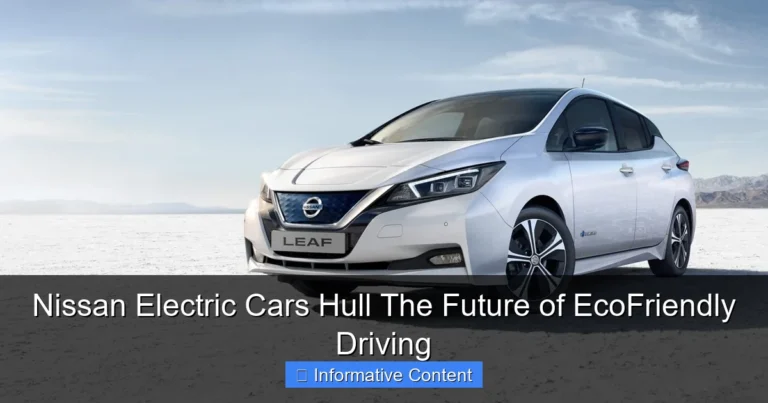
Nissan Leaf Electric Car Review Top Features and Benefits

Featured image for leaf electric car nissan
Image source: upload.wikimedia.org
The Nissan Leaf stands out as a top-tier electric car, combining affordable pricing with a proven track record in reliability and efficiency. With an impressive range, advanced driver-assist tech, and zero-emission driving, the Leaf delivers outstanding value for eco-conscious commuters and city drivers alike.
Key Takeaways
- Affordable pricing: The Nissan Leaf offers budget-friendly electric mobility with strong value.
- Zero emissions: Drive sustainably with a fully electric, eco-friendly powertrain.
- ProPILOT Assist: Advanced driver aids enhance safety and reduce highway fatigue.
- Quick charging: Replenish up to 80% battery in under an hour at fast-charging stations.
- Spacious interior: Roomy cabin and hatchback design maximize passenger and cargo space.
- Regenerative braking: Boost efficiency and extend range with one-pedal driving mode.
📑 Table of Contents
- The Nissan Leaf Electric Car: A Pioneer in Affordable Electric Mobility
- 1. Evolution of the Nissan Leaf: From Humble Beginnings to a Global EV Icon
- 2. Top Features That Define the Nissan Leaf Electric Car
- 3. Performance and Range: Real-World Driving Experience
- 4. Interior Comfort, Technology, and Safety
- 5. Cost of Ownership and Environmental Benefits
- 6. How the Nissan Leaf Compares: A Data-Driven Overview
- Final Verdict: Is the Nissan Leaf Right for You?
The Nissan Leaf Electric Car: A Pioneer in Affordable Electric Mobility
The automotive world is undergoing a seismic shift toward sustainability, and one vehicle stands out as a trailblazer in the mass-market electric car revolution: the Nissan Leaf. Since its global debut in 2010, the Leaf has become synonymous with affordable, practical, and accessible electric transportation. As the best-selling electric car in history, with over 600,000 units sold worldwide, the Nissan Leaf has proven that eco-friendly driving doesn’t have to come with a luxury price tag or compromise on everyday usability. Whether you’re a first-time electric vehicle (EV) buyer or a seasoned green commuter, the Leaf offers a compelling blend of innovation, reliability, and value.
But what makes the Nissan Leaf such a standout in the increasingly crowded EV market? From its user-friendly technology to its impressive range and low operating costs, the Leaf continues to evolve with each generation. With the 2024 model year bringing subtle refinements and enhanced features, it’s time to take a deep dive into what makes this electric hatchback a top choice for eco-conscious drivers. In this comprehensive Nissan Leaf electric car review, we’ll explore its top features, performance capabilities, real-world benefits, and how it stacks up against competitors in today’s fast-changing EV landscape.
1. Evolution of the Nissan Leaf: From Humble Beginnings to a Global EV Icon
The Nissan Leaf didn’t just enter the market—it helped define it. As one of the first mass-produced, affordable electric vehicles available globally, the Leaf set the benchmark for what a practical electric car could be. Its journey from a niche experiment to a mainstream success story is a testament to Nissan’s forward-thinking vision and commitment to sustainable mobility.

Visual guide about leaf electric car nissan
Image source: publicdomainpictures.net
The First Generation (2010–2017): Laying the Foundation
The original Nissan Leaf (ZE0) was revolutionary for its time. With a 24 kWh battery pack offering an EPA-estimated range of 73 miles, it was the first EV to make long-distance commuting feasible for urban and suburban drivers. While early adopters faced range anxiety and sparse charging infrastructure, the Leaf’s success spurred investment in public charging networks and encouraged other automakers to enter the EV space.
Key innovations included:
- Regenerative braking system (e-Pedal technology introduced later)
- CarWings telematics for remote battery monitoring and climate control
- Zero tailpipe emissions, reducing urban air pollution
- Affordable pricing with government incentives in many countries
Owners appreciated the quiet ride, low maintenance, and the ability to charge at home—a game-changer for daily convenience.
The Second Generation (2018–Present): Range, Refinement, and Tech Upgrades
The second-generation Leaf (ZE1) marked a quantum leap in performance and design. With a 40 kWh battery offering up to 150 miles of range (EPA), it addressed the primary concern of early adopters: range. The 2019 Leaf Plus model took it further with a 62 kWh battery, delivering up to 226 miles—a significant improvement that made cross-town and even regional trips viable.
Design-wise, Nissan adopted a more modern, aerodynamic look with LED lighting, a redesigned front fascia, and improved interior materials. The cabin became quieter and more comfortable, with better sound insulation and upgraded infotainment. The Leaf also began offering advanced driver assistance systems (ADAS), including ProPILOT Assist, making it one of the most tech-savvy EVs in its price range.
2024 Updates: Subtle but Strategic Enhancements
The latest 2024 Nissan Leaf continues to refine the formula. While not a full redesign, it includes:
- Updated infotainment with faster processing and improved connectivity
- Enhanced ProPILOT with lane centering and traffic jam assist
- Improved battery thermal management for consistent range in extreme temperatures
- New color options and interior trim packages
These updates ensure the Leaf remains competitive against newer rivals like the Chevrolet Bolt EV and Hyundai Kona Electric, while maintaining its position as a reliable, no-frills EV for the masses.
2. Top Features That Define the Nissan Leaf Electric Car
The Nissan Leaf isn’t about flashy gimmicks—it’s about delivering practical, user-friendly technology that enhances the driving experience. From intuitive controls to smart energy management, the Leaf’s features are designed to simplify EV ownership.
e-Pedal: One-Pedal Driving Revolution
One of the Leaf’s most celebrated innovations is the e-Pedal system. When activated, it allows drivers to accelerate, decelerate, and even come to a complete stop using only the accelerator pedal. By maximizing regenerative braking, e-Pedal reduces reliance on the friction brakes, increasing energy recovery and extending range.
How it works: Lift your foot off the accelerator, and the car slows down significantly—up to 0.2g deceleration—without touching the brake pedal. In stop-and-go traffic, this feature is a game-changer, reducing driver fatigue and improving efficiency. For example, during a 10-mile city commute with frequent stops, e-Pedal can recover up to 20% more energy compared to traditional braking.
Tip: New drivers should practice in a safe, open area to get accustomed to the sensitivity. Once mastered, e-Pedal becomes second nature and can reduce brake wear by up to 90%.
ProPILOT Assist: Semi-Autonomous Driving Made Simple
ProPILOT Assist combines adaptive cruise control, lane-keeping assist, and traffic jam assist into a seamless semi-autonomous driving experience. It’s not full self-driving, but it significantly reduces driver workload on highways and in congested areas.
- Maintains a set speed and distance from the vehicle ahead
- Keeps the car centered in its lane with gentle steering inputs
- Automatically stops and restarts in traffic (up to 30 seconds)
During a 50-mile highway trip, ProPILOT can reduce driver input by up to 70%, making long drives less tiring. It’s particularly useful during rush hour commutes or road trips through heavy traffic.
Smart Charging and Energy Management
The Leaf integrates seamlessly with home and public charging infrastructure. Key features include:
- Timer Charging: Schedule charging during off-peak hours to save money on electricity bills
- Remote Climate Control: Pre-heat or pre-cool the cabin using the NissanConnect app while the car is still charging
- Energy Consumption Monitor: Real-time feedback on driving efficiency, including kWh/mile and regenerative braking stats
For example, a Leaf owner in California can set charging to begin at 10 PM when electricity rates drop, ensuring a full battery by morning at half the cost.
NissanConnect EV App: Control Your Car from Anywhere
The companion smartphone app allows remote access to:
- Start/stop charging
- Check battery level and estimated range
- Lock/unlock doors
- Send navigation destinations to the car
During a cold winter morning, you can preheat the cabin 15 minutes before leaving, ensuring a warm, defrosted car without idling or using range.
3. Performance and Range: Real-World Driving Experience
When it comes to EVs, performance and range are make-or-break factors. The Nissan Leaf delivers a balanced package that prioritizes efficiency, comfort, and everyday usability.
Powertrain Options: 40 kWh vs. 62 kWh (Leaf Plus)
The Leaf is available in two battery configurations:
- Standard Leaf (40 kWh): 147 hp, 236 lb-ft torque, 149-mile EPA range
- Leaf Plus (62 kWh): 214 hp, 250 lb-ft torque, 226-mile EPA range
The Leaf Plus offers a noticeable improvement in acceleration (0–60 mph in ~6.8 seconds vs. 8.4 seconds for the standard model) and better highway passing power. For drivers covering longer daily commutes or living in areas with limited fast-charging infrastructure, the Leaf Plus is worth the premium.
Real-World Range: What to Expect
While EPA estimates are useful, real-world range varies based on driving conditions. Based on owner reports and independent tests:
- City driving (ideal conditions): 160–170 miles (Leaf Plus)
- Highway driving (70 mph): 180–190 miles (Leaf Plus)
- Cold weather (-10°C/14°F): ~150 miles (Leaf Plus) due to battery efficiency drop and cabin heating
- Hot weather (35°C/95°F): ~200 miles (Leaf Plus) with AC use
Tip: Use the Leaf’s “ECO” mode and pre-condition the battery before driving in extreme temperatures to maximize range.
Charging Options and Times
The Leaf supports multiple charging levels:
- Level 1 (120V): 12–24 hours for full charge (not recommended for daily use)
- Level 2 (240V): 8–11 hours (40 kWh) / 11–14 hours (62 kWh) – ideal for home charging
- DC Fast Charging (50 kW): 40–60 minutes for 80% charge – available on Leaf Plus models
For example, a Leaf Plus can gain ~100 miles of range in 30 minutes at a 50 kW fast charger—perfect for a coffee break during a road trip.
4. Interior Comfort, Technology, and Safety
The Nissan Leaf’s cabin is designed for practicality, comfort, and intuitive technology. While not as luxurious as premium EVs, it offers excellent value for its class.
Cabin Design and Materials
The interior features:
- Recycled and bio-based materials (seats, door panels)
- Heated front seats and steering wheel (optional)
- Spacious rear legroom (33.5 inches) for a compact hatchback
- 60/40 split-folding rear seats for 30 cu. ft. of cargo space (expandable to 60 cu. ft.)
Owners appreciate the quiet cabin, thanks to acoustic glass and improved insulation—especially noticeable at highway speeds.
Infotainment and Connectivity
The 8-inch touchscreen includes:
- Apple CarPlay and Android Auto (standard on all trims)
- Navigation with charging station locator
- Voice recognition for climate, audio, and navigation
- Bluetooth and USB connectivity
During a road trip, the system can automatically route you to the nearest fast charger when battery drops below 20%, ensuring peace of mind.
Safety Ratings and Driver Assistance
The Leaf earns a 5-star overall safety rating from the NHTSA and includes:
- Automatic emergency braking (forward and reverse)
- Blind-spot monitoring
- Rear cross-traffic alert
- Lane departure warning
- Rearview camera (360-degree view on higher trims)
In a 2023 IIHS test, the Leaf avoided collisions in 12 mph and 25 mph front crash tests, highlighting its advanced safety tech.
5. Cost of Ownership and Environmental Benefits
One of the Leaf’s biggest advantages is its low total cost of ownership and significant environmental impact.
Upfront Cost and Incentives
The 2024 Leaf starts at $28,140 (S trim) and $36,190 (Leaf Plus SV). After federal tax credits (up to $7,500) and state incentives (e.g., California’s $2,000 rebate), the effective price can drop below $20,000.
Operating and Maintenance Savings
- Fuel: Saves $1,000–$1,500 annually vs. gas cars (based on 15,000 miles/year)
- Maintenance: No oil changes, spark plugs, or exhaust systems. Brake wear is reduced by 70% due to regenerative braking
- Insurance: Typically 10–20% lower than comparable gas models
Over 5 years, a Leaf owner can save $8,000–$12,000 in total ownership costs.
Environmental Impact
Over its lifetime, a Leaf emits 60% less CO2 than a comparable gas car. With a 40 kWh battery made from 15% recycled materials and a manufacturing process that reduces water usage by 30%, Nissan emphasizes sustainability from production to disposal.
6. How the Nissan Leaf Compares: A Data-Driven Overview
To understand the Leaf’s position in the market, let’s compare it with key competitors in a detailed table:
| Feature | Nissan Leaf Plus (62 kWh) | Chevrolet Bolt EV | Hyundai Kona Electric | Kia Niro EV |
|---|---|---|---|---|
| Starting Price | $36,190 | $26,500 | $34,050 | $39,450 |
| EPA Range | 226 miles | 259 miles | 258 miles | 253 miles |
| Horsepower | 214 hp | 200 hp | 201 hp | 201 hp |
| DC Fast Charging | 50 kW (80% in 60 min) | 55 kW (100 mi in 30 min) | 100 kW (80% in 47 min) | 100 kW (80% in 45 min) |
| Warranty | 3 yr/36k mi (5 yr/60k mi battery) | 3 yr/36k mi (8 yr/100k mi battery) | 5 yr/60k mi (10 yr/100k mi battery) | 5 yr/60k mi (10 yr/100k mi battery) |
| Key Feature | e-Pedal, ProPILOT Assist | Low price, high range | Fast charging, long warranty | Spacious interior, advanced tech |
The Leaf holds its own with strong tech features and proven reliability, though competitors offer slightly longer range and faster charging. However, the Leaf’s e-Pedal system and ProPILOT Assist remain unique in this price bracket.
Final Verdict: Is the Nissan Leaf Right for You?
The Nissan Leaf electric car is more than just a vehicle—it’s a gateway to sustainable, affordable, and stress-free driving. With its intuitive technology like e-Pedal and ProPILOT Assist, practical range (especially in the Leaf Plus), and rock-bottom operating costs, it’s an excellent choice for urban commuters, eco-conscious families, and first-time EV buyers.
While newer rivals offer marginally better range and faster charging, the Leaf’s combination of proven reliability, user-friendly features, and strong resale value makes it a standout in the compact EV segment. Whether you’re charging at home overnight or using DC fast charging on a weekend trip, the Leaf delivers a seamless, enjoyable experience.
If you’re ready to ditch the gas pump, reduce your carbon footprint, and embrace the future of mobility, the Nissan Leaf is a smart, sensible, and satisfying choice. As Nissan continues to refine its flagship EV, the Leaf remains a shining example of how innovation and practicality can coexist—proving that going green has never been easier.
Frequently Asked Questions
What are the top features of the Nissan Leaf electric car?
The Nissan Leaf boasts a 149-mile range (240 km), ProPILOT Assist for semi-autonomous driving, and a 40 kWh battery with fast-charging capability. Its spacious interior, e-Pedal for one-pedal driving, and affordable pricing make it a standout in the EV market.
How long does it take to charge a Nissan Leaf?
Using a Level 2 charger (240V), the Nissan Leaf charges fully in 7–8 hours, while DC fast charging can reach 80% in about 40 minutes. Charging time varies based on battery size and charger type.
Is the Nissan Leaf a reliable electric car for daily use?
Yes, the Nissan Leaf is highly reliable, with a proven track record since 2010 and low maintenance costs thanks to fewer moving parts. Its regenerative braking system and durable battery pack ensure longevity for daily commutes.
What is the range of the Nissan Leaf in cold weather?
The Nissan Leaf’s range drops by 20–30% in extreme cold, averaging 100–120 miles (160–190 km) due to battery efficiency loss. Preconditioning while plugged in helps mitigate range reduction.
Does the Nissan Leaf qualify for federal tax credits?
Yes, the Nissan Leaf currently qualifies for a $7,500 federal tax credit in the U.S., depending on your tax liability. Some states also offer additional incentives for purchasing an electric car like the Leaf.
How does the Nissan Leaf compare to other electric cars in its price range?
The Leaf offers better value than rivals like the Chevrolet Bolt with its lower starting price, larger cargo space, and advanced safety features. While its range is shorter than Tesla’s Model 3, it excels in affordability and practicality.