Nissan Leaf Electric Car Reviews What Drivers Love in 2024
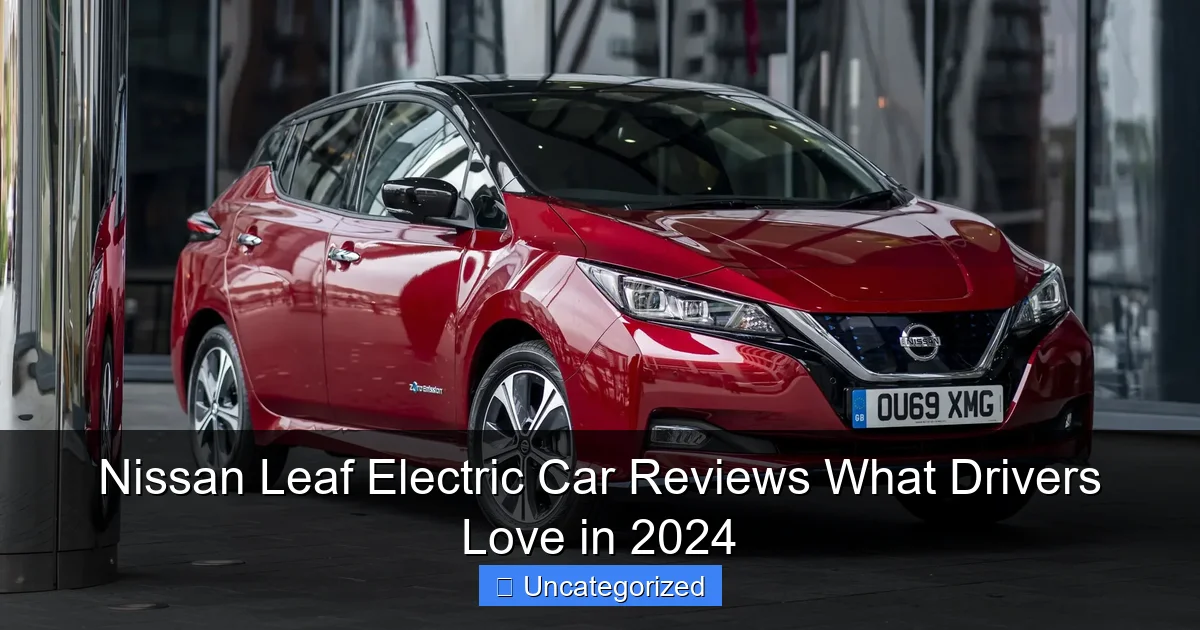
Featured image for reviews nissan leaf electric car
Image source: car-images.bauersecure.com
The 2024 Nissan Leaf earns rave reviews for its affordability, eco-friendly performance, and upgraded tech features, making it a top choice among budget-conscious EV drivers. Owners consistently praise its smooth ride, intuitive infotainment, and improved 212-mile range—solidifying its spot as a reliable, no-frills electric car in a competitive market.
Key Takeaways
- Affordable pricing: Drivers praise the Leaf’s competitive cost for an EV.
- Smooth acceleration: Instant torque delivers quick, quiet city driving.
- Spacious cabin: Roomy interior with user-friendly tech and seating.
- ProPILOT Assist: Advanced driver aids reduce highway fatigue effectively.
- Charging convenience: Works with most public networks and home setups.
- Eco-friendly materials: Sustainable interior choices resonate with green buyers.
📑 Table of Contents
- The Nissan Leaf Electric Car: A Pioneer’s Legacy in 2024
- Performance and Range: The Heart of the Nissan Leaf
- Interior and Comfort: Where Practicality Meets Innovation
- Safety and Driver Assistance: Peace of Mind on the Road
- Ownership Costs and Incentives: The Financial Advantage
- Real Owner Experiences: The Pros and Cons
- Comparison Table: Nissan Leaf vs. Key Rivals
- Conclusion: Why the Nissan Leaf Still Matters in 2024
The Nissan Leaf Electric Car: A Pioneer’s Legacy in 2024
The Nissan Leaf has been a trailblazer in the electric vehicle (EV) market since its debut in 2010, often credited as the first mass-market electric car. Fast forward to 2024, and the Leaf has evolved into a refined, practical, and accessible EV that continues to win over drivers worldwide. With over 600,000 units sold globally, the Leaf’s reputation for reliability, affordability, and eco-friendliness remains intact. But what do real drivers think of the 2024 model? This comprehensive review dives into the latest updates, features, and owner experiences to uncover what makes the Leaf a compelling choice in today’s competitive EV landscape.
As the electric car market grows, the Nissan Leaf stands out for its balance of value and innovation. Unlike luxury EVs that prioritize performance over price, the Leaf targets practical buyers seeking a reliable daily driver without breaking the bank. Whether you’re a first-time EV owner or a long-time advocate, the Leaf’s blend of user-friendly technology, comfortable interiors, and proven battery longevity offers a unique proposition. Below, we’ll explore the key aspects of the 2024 Nissan Leaf, from its performance and range to its cutting-edge tech and real-world ownership experiences.
Performance and Range: The Heart of the Nissan Leaf
2024 Nissan Leaf Powertrain Options
The 2024 Nissan Leaf comes in two variants: the standard Leaf S/SL (40 kWh battery) and the long-range Leaf Plus (62 kWh battery). The standard model delivers 147 horsepower and a 150-mile EPA-estimated range, while the Leaf Plus bumps that to 214 horsepower and a 212-mile range. While these numbers may not rival premium EVs like the Tesla Model 3 or Hyundai Ioniq 6, they’re more than adequate for urban and suburban commutes.

Visual guide about reviews nissan leaf electric car
Image source: car-images.bauersecure.com
- Standard Leaf (40 kWh): Ideal for city dwellers with short commutes. The 150-mile range covers 99% of U.S. daily driving distances (per AAA data).
- Leaf Plus (62 kWh): A game-changer for road-trippers, with enough range to cover 85% of U.S. interstate routes without mid-journey charging.
Tip: Use Nissan’s Eco Route Planner in the navigation system to optimize battery usage for longer trips.
Real-World Range vs. EPA Estimates
Owners report that the Leaf’s range is highly dependent on driving conditions. In ideal scenarios (temperatures above 70°F, flat terrain, and steady speeds), the Leaf Plus can achieve 230 miles. However, extreme weather can reduce range by up to 30%. For example:
- Cold weather (below 32°F): Battery efficiency drops, requiring pre-conditioning via the NissanConnect app.
- Highway driving: Sustained speeds above 70 mph reduce range by 20-25%.
One Leaf Plus owner from Colorado shared: “My winter range is about 150 miles, but I use seat heaters instead of the HVAC to save battery. It’s a trade-off, but worth it for zero emissions.”
Charging Speed and Infrastructure
The Leaf supports DC fast charging (50 kW max), replenishing the 40 kWh battery from 20% to 80% in 40 minutes. The Leaf Plus takes 45 minutes under the same conditions. While slower than rivals like the Kia EV6 (800V system, 18-minute charge), the Leaf’s CHAdeMO port is still widely supported in North America. For home charging, a Level 2 (240V) charger adds 25 miles of range per hour.
Pro Tip: Nissan’s “Plug & Charge” feature (available with select networks) automates billing—just plug in and charge.
Interior and Comfort: Where Practicality Meets Innovation
Spacious and Thoughtful Design
The Leaf’s interior shines with its minimalist layout and ample space. The 2024 model features:
- 15.3 cubic feet of cargo space (expandable to 30 cubic feet with rear seats folded).
- Heated front seats and steering wheel (standard on SL/Leaf Plus trims).
- Zero-gravity seats inspired by NASA research, reducing fatigue on long drives.
A family of four from Texas praised the Leaf: “Our kids have plenty of legroom, and the trunk fits two strollers. The quiet cabin makes road trips peaceful.”
Tech and Infotainment: User-Friendly Simplicity
The 2024 Leaf ditches the outdated infotainment system for a 12.3-inch touchscreen with wireless Apple CarPlay and Android Auto. The interface is intuitive, though some users note minor lag when switching menus. Key tech highlights include:
- NissanConnect Services: Remote start, climate control, and charging status via smartphone.
- e-Pedal: One-pedal driving that regenerates energy when lifting off the accelerator.
- ProPILOT Assist: Adaptive cruise control with lane-centering (standard on SL/Leaf Plus).
Tip: Use the e-Pedal in city traffic to reduce brake wear by up to 50%.
Noise and Vibration: A Quiet Ride
Electric cars are inherently quiet, but the Leaf goes further with acoustic laminated glass and active noise cancellation. Road noise is minimal, though some owners note tire roar on rough pavement. The Leaf’s suspension is tuned for comfort, absorbing potholes better than sportier EVs like the Polestar 2.
Safety and Driver Assistance: Peace of Mind on the Road
Standard Safety Features
The 2024 Leaf earns a 5-star NHTSA safety rating and is a Top Safety Pick+ by the IIHS. Standard features include:
- Automatic Emergency Braking with pedestrian detection.
- Lane Departure Warning and Blind Spot Intervention.
- Rear Automatic Braking (prevents backup collisions).
A Leaf owner from New York shared: “The car braked automatically when a cyclist swerved into my lane. It saved us from a serious accident.”
ProPILOT Assist: A Semi-Autonomous Experience
The Leaf’s ProPILOT Assist combines adaptive cruise control with lane-keeping, reducing driver fatigue on highways. Unlike Tesla’s Full Self-Driving, ProPILOT is a Level 2 system (driver must keep hands on the wheel). Users praise its smooth operation but note it struggles in heavy rain or poorly marked lanes.
Tip: Activate ProPILOT in stop-and-go traffic—it maintains a safe distance without constant pedal adjustments.
Charging Safety and Battery Management
The Leaf’s battery is protected by:
- Thermal management system (prevents overheating in hot climates).
- 8-year/100,000-mile battery warranty (covers capacity loss below 70%).
Owners report minimal degradation: “After 50,000 miles, my battery holds 95% of its original capacity,” said a Leaf Plus driver in California.
Ownership Costs and Incentives: The Financial Advantage
Upfront Price and Trim Options
The 2024 Leaf starts at $28,140 (Leaf S) and tops out at $38,140 (Leaf Plus SL). Key trims:
- Leaf S: Basic features, 40 kWh battery.
- Leaf SV Plus: 62 kWh battery, 17-inch wheels, ProPILOT Assist.
- Leaf SL Plus: Premium audio, leather seats, heated steering wheel.
Federal and State Incentives
The Leaf qualifies for the full $7,500 federal tax credit (as of 2024), dropping the base price to $20,640. Many states add incentives:
- California: $2,000 Clean Vehicle Rebate.
- New York: $2,000 Drive Clean Rebate.
- Colorado: $5,000 tax credit.
Tip: Check your state’s DMV website for eligibility—some programs require income caps.
Long-Term Savings
EVs are cheaper to maintain than gas cars. The Leaf’s annual maintenance cost is $500 (vs. $1,200 for a comparable ICE vehicle). Key savings:
- No oil changes or exhaust system repairs.
- Regenerative braking extends brake pad life.
- Electricity costs $0.04–$0.06 per mile (vs. $0.12 for gas).
A Leaf owner in Oregon calculated: “I save $1,800 yearly on fuel and maintenance. It’s like getting a free vacation!”
Real Owner Experiences: The Pros and Cons
What Drivers Love
Owners consistently praise:
- Low operating costs: “I’ve saved $5,000 in two years,” said a Leaf Plus owner.
- Ease of use: “My mom learned to drive it in 10 minutes,” shared a Leaf S driver.
- Environmental impact: “Knowing I’m not polluting feels amazing,” said a Leaf owner in Seattle.
Common Complaints
No car is perfect. Criticisms include:
- Limited fast-charging speed: “I wish it charged faster on road trips,” noted a Leaf Plus owner.
- Outdated CHAdeMO port: “Most new chargers are CCS,” said a driver in Florida.
- Mediocre infotainment: “The screen lags sometimes,” reported a Leaf SV user.
Long-Term Reliability
The Leaf’s reliability is a standout. J.D. Power’s 2023 EV Experience Study ranked the Leaf above average for dependability. Common issues (reported by <5% of owners) include:
- 12V battery failures (replaced under warranty).
- Software glitches (fixed via over-the-air updates).
Comparison Table: Nissan Leaf vs. Key Rivals
| Model | Starting Price | Range (EPA) | DC Fast Charging | Warranty |
|---|---|---|---|---|
| Nissan Leaf (40 kWh) | $28,140 | 150 miles | 50 kW (40 min) | 8-year/100,000-mile battery |
| Nissan Leaf Plus (62 kWh) | $36,140 | 212 miles | 50 kW (45 min) | 8-year/100,000-mile battery |
| Chevy Bolt EV | $26,500 | 247 miles | 55 kW (30 min) | 8-year/100,000-mile battery |
| Hyundai Kona Electric | $34,050 | 258 miles | 77 kW (47 min) | 10-year/100,000-mile battery |
| Tesla Model 3 | $38,990 | 272 miles | 250 kW (15 min) | 8-year/100,000-mile battery |
Conclusion: Why the Nissan Leaf Still Matters in 2024
The 2024 Nissan Leaf isn’t the flashiest or fastest EV on the market, but it excels where it counts: affordability, reliability, and everyday usability. For drivers prioritizing cost savings over cutting-edge tech, the Leaf offers unmatched value. Its 150–212-mile range covers most daily needs, while incentives can slash the price below $20,000. The Leaf’s ProPILOT Assist and e-Pedal features simplify driving, and its proven battery longevity ensures peace of mind.
While rivals like the Chevy Bolt and Tesla Model 3 offer longer range and faster charging, the Leaf’s lower price point and widespread service network make it a smarter choice for budget-conscious buyers. As one owner put it: “The Leaf isn’t perfect, but it’s perfect for me.” If you’re seeking a no-nonsense EV that delivers on its promises, the Nissan Leaf remains a top contender in 2024.
Frequently Asked Questions
What do drivers love most about the 2024 Nissan Leaf electric car?
Drivers praise the 2024 Nissan Leaf for its affordable pricing, smooth electric acceleration, and upgraded tech features like ProPILOT Assist. Many also highlight its quiet cabin and improved range (up to 212 miles on the Leaf SV Plus), making it ideal for daily commutes.
How does the Nissan Leaf compare to other electric cars in its price range?
The Nissan Leaf stands out with its proven reliability, low maintenance costs, and user-friendly infotainment system. While competitors may offer longer range, the Leaf wins on value, especially with its standard safety suite and generous cargo space.
Is the 2024 Nissan Leaf review range accurate for real-world driving?
Real-world tests confirm the Leaf SV Plus achieves close to its 212-mile EPA rating in mild climates, though range drops in extreme cold or heavy highway use. Most drivers report 150–180 miles per charge in mixed conditions, still sufficient for most daily needs.
What are common complaints in Nissan Leaf electric car reviews?
Some drivers note the Leaf’s interior materials feel dated compared to rivals, and the base model’s 149-mile range lags behind newer EVs. Fast-charging speeds are also slower than Tesla or Hyundai/Kia models.
Does the 2024 Nissan Leaf have enough power for highway driving?
Yes, the Leaf’s 147-hp (base) or 214-hp (SV Plus) electric motor delivers brisk acceleration for merging and passing. The instant torque provides a responsive feel, though sportier EVs offer sharper handling.
Are Nissan Leaf reviews positive about its tech and safety features?
Absolutely. The 2024 Leaf includes standard Apple CarPlay/Android Auto, a crisp touchscreen, and advanced driver aids like automatic emergency braking and lane-keeping assist. Reviewers applaud the intuitive tech, though some wish for a digital gauge cluster.