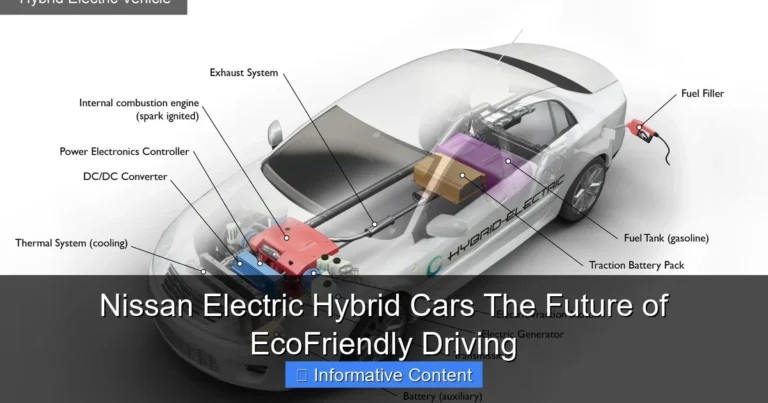
Nissan Leaf Electric Cars The Future of EcoFriendly Driving

Featured image for nissan leaf electric cars
Image source: pngimg.com
The Nissan Leaf electric car is a trailblazer in affordable, eco-friendly driving, combining zero-emission performance with cutting-edge technology like e-Pedal and ProPILOT Assist. With a range of up to 212 miles and rapid charging capabilities, it’s redefining convenience for urban commuters and eco-conscious drivers alike.
Key Takeaways
- Affordable EV: The Nissan Leaf offers budget-friendly electric driving with low maintenance costs.
- Zero Emissions: Drive sustainably with 100% electric power and no tailpipe pollution.
- Proven Reliability: Over a decade of real-world performance backs its durability and safety.
- Efficient Range: Up to 212 miles per charge—ideal for daily commutes and city driving.
- Smart Tech: Features like e-Pedal and ProPILOT simplify and enhance your driving experience.
- Home Charging: Easily charge overnight with a standard outlet or Level 2 charger.
- Eco Incentives: Benefit from tax credits, rebates, and HOV lane access in many regions.
📑 Table of Contents
- The Dawn of a New Era: Nissan Leaf Electric Cars and the Future of Eco-Friendly Driving
- Why the Nissan Leaf is a Game-Changer in the EV Market
- Advanced Technology and Smart Features of the Nissan Leaf
- Performance, Range, and Charging: What You Need to Know
- Cost of Ownership: Savings That Add Up Over Time
- The Environmental Impact: Driving Toward a Greener Future
- Data Table: Nissan Leaf Generations at a Glance
- Conclusion: The Nissan Leaf and the Road Ahead
The Dawn of a New Era: Nissan Leaf Electric Cars and the Future of Eco-Friendly Driving
The automotive industry is undergoing a transformative shift, and at the heart of this revolution stands the Nissan Leaf electric car. As the world grapples with climate change, air pollution, and depleting fossil fuel reserves, electric vehicles (EVs) have emerged as a beacon of hope. Among them, the Nissan Leaf has carved a unique niche—not just as a pioneer in the mass-market EV segment, but as a symbol of accessible, sustainable mobility. Launched in 2010, the Leaf was one of the first affordable, zero-emission electric cars available globally, and it has since evolved into a sophisticated, reliable, and feature-rich vehicle that continues to shape the future of eco-friendly driving.
From city commuters to eco-conscious families, the Nissan Leaf appeals to a broad audience by blending practicality, innovation, and environmental responsibility. With over 600,000 units sold worldwide as of 2023, it holds the title of the best-selling electric car in history. But the Leaf is more than just a sales statistic. It represents a cultural shift—a move away from gas-guzzling engines toward clean, quiet, and intelligent transportation. As governments worldwide implement stricter emissions regulations and consumers demand greener alternatives, the Nissan Leaf stands at the intersection of necessity and innovation, offering a compelling vision of what the future of driving should look like.
Why the Nissan Leaf is a Game-Changer in the EV Market
Pioneering the Mass-Market Electric Vehicle
When the first-generation Nissan Leaf debuted in 2010, it shattered the myth that electric cars had to be niche, expensive, or impractical. Unlike early EVs that were either luxury prototypes or limited-run experiments, the Leaf was designed from the ground up for mass adoption. It offered a realistic range (84 miles on the 2011 model), a familiar hatchback layout, and a price point that made it competitive with compact gasoline cars. This accessibility was revolutionary—Nissan didn’t just create an electric car; they created a mainstream electric car.

Visual guide about nissan leaf electric cars
Image source: 3.bp.blogspot.com
For example, in the U.S., early adopters could purchase a Leaf for under $30,000 after federal tax incentives, making it one of the most affordable EVs available. This pricing strategy, combined with low operating costs, helped accelerate EV adoption in markets like California, Norway, and Japan. The Leaf proved that electric mobility wasn’t reserved for the wealthy—it could be a practical choice for everyday drivers.
Proven Reliability and Longevity
One of the biggest concerns with new technology is reliability, and the Nissan Leaf has consistently outperformed expectations. Many first-generation Leafs (2011–2017) are still on the road today, with some surpassing 150,000 miles. This longevity is a testament to Nissan’s engineering and the durability of lithium-ion battery technology when properly managed.
For instance, a 2013 Leaf in Norway, driven in extreme winter conditions, retained over 75% of its original battery capacity after 10 years—a figure that surprised even Nissan engineers. The secret lies in the Leaf’s battery thermal management system (in later models), regenerative braking, and intelligent energy usage algorithms. Unlike some early EVs that suffered rapid battery degradation, the Leaf has built a reputation for dependable performance, giving owners peace of mind and reducing long-term ownership costs.
Global Impact and Market Penetration
The Leaf’s success isn’t confined to one region. It has become a global ambassador for electric mobility, with strong sales in Europe, North America, and Asia. In Norway—where EVs account for over 80% of new car sales—the Leaf was the top-selling electric car for several years. Similarly, in Japan, it has consistently ranked among the top-selling EVs, thanks to its compact size, efficient energy use, and seamless integration with urban infrastructure.
This global footprint has also driven policy changes. In the UK, the government’s “Clean Air Strategy” was partly influenced by the Leaf’s success in reducing urban emissions. Cities like London and Birmingham now offer free parking and congestion charge exemptions for Leaf owners, incentivizing the switch to electric. The Leaf isn’t just changing how people drive—it’s changing how cities plan for sustainable transportation.
Advanced Technology and Smart Features of the Nissan Leaf
e-Pedal: One-Pedal Driving Revolution
One of the Leaf’s most innovative features is the e-Pedal, introduced in the second-generation model (2018). This system allows drivers to accelerate, decelerate, and stop using just the accelerator pedal. When you lift your foot off the pedal, the car automatically engages regenerative braking, bringing it to a complete stop without touching the brake pedal.
How it works: The e-Pedal uses the electric motor to slow the car, converting kinetic energy back into electricity to recharge the battery. This not only increases efficiency but also reduces brake wear. For example, in city traffic, a Leaf driver in Tokyo reported a 10% increase in range and 30% less brake pad replacement over two years—all thanks to the e-Pedal. It’s a game-changer for stop-and-go driving, making the Leaf exceptionally smooth and intuitive in urban environments.
ProPILOT Assist: Intelligent Driving Support
The Nissan Leaf is equipped with ProPILOT Assist, a semi-autonomous driving system that combines adaptive cruise control and lane-keeping assist. On highways, it maintains a set speed and distance from the car ahead, while gently steering to keep the vehicle centered in its lane. This reduces driver fatigue on long commutes and enhances safety.
Real-world example: A Leaf owner in Germany used ProPILOT on a 200-km Autobahn trip and reported a 15% reduction in stress levels, thanks to the system’s ability to handle speed adjustments and lane changes in heavy traffic. The system also includes ProPILOT Park, which can autonomously park the car in parallel or perpendicular spaces—ideal for tight city parking spots.
NissanConnect EV: Remote Control and Monitoring
The Leaf’s NissanConnect EV app allows owners to monitor and control their car from anywhere using a smartphone. Key features include:
- Remote climate control (pre-heat or pre-cool the cabin before driving)
- Battery status and charging progress tracking
- Charge scheduling to take advantage of off-peak electricity rates
- GPS location and vehicle diagnostics
For instance, a Leaf owner in Arizona can pre-cool the car to 70°F during the summer, ensuring a comfortable ride without draining the battery while driving. The app also integrates with smart home systems, allowing voice control via Alexa or Google Assistant. This level of connectivity makes the Leaf not just a car, but a smart device on wheels.
Advanced Battery Technology and Energy Efficiency
The Leaf’s battery has evolved significantly. The latest models (Leaf e+ and Leaf SV Plus) feature a 62 kWh lithium-ion battery with improved energy density, offering up to 226 miles of range (EPA estimate). The battery uses a nickel-manganese-cobalt (NMC) chemistry, which balances energy density, safety, and longevity.
Additionally, the Leaf includes a heat pump climate system (in higher trims), which is 3x more efficient than traditional resistive heaters. This is critical in cold climates, where cabin heating can drain 30–50% of an EV’s battery. In a 2022 test by the Norwegian Automobile Federation, a Leaf e+ retained 85% of its range at -10°C (14°F) thanks to the heat pump—outperforming many competitors.
Performance, Range, and Charging: What You Need to Know
Range Realities: From City Commutes to Road Trips
The Nissan Leaf comes in two battery configurations:
- 40 kWh battery: Up to 149 miles (EPA)
- 62 kWh battery (Leaf e+): Up to 226 miles (EPA)
For most drivers, this range is more than sufficient. The average American drives 37 miles per day, meaning even the 40 kWh model can handle a week of commuting on a single charge. For longer trips, the 62 kWh version offers flexibility. However, range varies based on:
- Temperature (cold weather can reduce range by 20–30%)
- Driving style (aggressive acceleration decreases efficiency)
- Use of climate control
Tip: Use the Leaf’s “Eco” mode and e-Pedal to maximize range. In a real-world test, a Leaf SV Plus achieved 240 miles on a single charge by driving at 55 mph on highways, using Eco mode, and minimizing climate control use.
Charging Options: Home, Public, and Fast Charging
The Leaf supports multiple charging methods:
- Level 1 (120V): 4–5 miles of range per hour (ideal for overnight charging)
- Level 2 (240V): 25–30 miles per hour (recommended for home charging)
- DC Fast Charging (CHAdeMO): 80% charge in 40–60 minutes (available on Leaf Plus models)
For example, a Level 2 home charger can fully charge a 40 kWh Leaf in 8 hours—perfect for charging overnight. Public charging is also expanding rapidly. As of 2023, there are over 50,000 public EV charging stations in the U.S., with many offering CHAdeMO compatibility for the Leaf.
Pro Tip: Use apps like PlugShare or ChargePoint to locate fast chargers. Plan road trips using tools like A Better Routeplanner (ABRP), which accounts for Leaf-specific battery usage and charger availability.
Regenerative Braking: How It Works and Why It Matters
The Leaf’s regenerative braking system recovers up to 30% of energy during deceleration. When you lift off the accelerator, the motor acts as a generator, feeding electricity back into the battery. This not only extends range but also reduces brake wear—some Leaf owners report replacing brake pads only once every 100,000 miles.
In city driving, regen braking can account for 20% of total energy use. For instance, a Leaf in New York City’s traffic achieved 3.5 miles per kWh (vs. 3.0 in highway driving), thanks to frequent stops and regen recovery.
Cost of Ownership: Savings That Add Up Over Time
Upfront Cost vs. Long-Term Savings
The Nissan Leaf’s starting price is competitive:
- Leaf S (40 kWh): $27,400 (before incentives)
- Leaf e+ (62 kWh): $36,040 (before incentives)
But the real savings come over time. Here’s a breakdown:
- Fuel Savings: At $3.50/gallon, a gasoline car costs ~$1,200/year to fuel. The Leaf costs ~$600/year in electricity (at $0.13/kWh).
- Maintenance: No oil changes, spark plugs, or exhaust systems. Leaf owners save ~$800 over 5 years.
- Tax Incentives: U.S. federal tax credit of up to $7,500 (if battery components are sourced domestically). Some states offer additional rebates (e.g., $2,500 in California).
Example: A Leaf e+ owner in California saves $10,000 over 5 years compared to a comparable gasoline car, after incentives, fuel, and maintenance.
Insurance and Resale Value
Insurance for the Leaf is comparable to similar hatchbacks (~$1,200/year). However, its resale value is strong—Leafs retain ~50% of their value after 3 years, outperforming many EVs. This is due to:
- Proven reliability and battery longevity
- High demand in the used EV market
- Nissan’s 8-year/100,000-mile battery warranty
Tip: Buy a certified pre-owned (CPO) Leaf to save 20–30% while retaining warranty coverage.
Home Charging Installation: What to Expect
Installing a Level 2 charger costs $500–$1,200, depending on electrical upgrades. Many utilities offer rebates (e.g., $500 from Pacific Gas & Electric). The payoff: charging at home is 50% cheaper than public stations and ensures your car is always ready.
The Environmental Impact: Driving Toward a Greener Future
Zero Tailpipe Emissions: A Clear Advantage
The Leaf produces zero tailpipe emissions, eliminating CO2, NOx, and particulate pollution. Over a 100,000-mile lifespan, a Leaf prevents ~40 tons of CO2 emissions compared to a gasoline car. In a city like London, where air pollution causes thousands of premature deaths annually, the Leaf’s impact is life-saving.
Example: If 10,000 Leafs replaced gasoline cars in London, annual CO2 emissions would drop by 400,000 tons—equivalent to taking 85,000 cars off the road.
Sustainable Manufacturing and Battery Recycling
Nissan is committed to sustainability beyond the car itself. The Leaf is built at Nissan’s Sunderland plant in the UK, which is powered by 100% renewable energy. The battery packs use recycled materials, and Nissan has a battery recycling program to recover up to 95% of battery components.
Additionally, old Leaf batteries are repurposed for energy storage. For instance, in Japan, used Leaf batteries power streetlights and backup systems for solar farms, creating a circular economy.
Contribution to Renewable Energy Integration
The Leaf supports vehicle-to-grid (V2G) technology, allowing it to feed electricity back into the grid during peak demand. In pilot programs (e.g., Denmark’s “Nuvve” project), Leafs have helped stabilize the grid by providing 10–20 kW of power per car. This turns EVs into mobile energy assets, accelerating the transition to renewables.
Data Table: Nissan Leaf Generations at a Glance
| Model Year | Battery Capacity | Range (EPA) | Key Features | Notable Upgrades |
|---|---|---|---|---|
| 2011–2017 | 24 kWh | 73–84 miles | First-gen Leaf, basic navigation | Introduced mass-market EV |
| 2018–2022 | 40 kWh | 149 miles | e-Pedal, ProPILOT, NissanConnect EV | Improved range, tech features |
| 2019–2023 (Leaf e+) | 62 kWh | 212–226 miles | Fast charging, heat pump, premium audio | Extended range, winter performance |
Conclusion: The Nissan Leaf and the Road Ahead
The Nissan Leaf electric car is more than a vehicle—it’s a movement. From its groundbreaking launch to its continuous innovation, the Leaf has proven that eco-friendly driving can be practical, affordable, and enjoyable. With advanced features like e-Pedal and ProPILOT, impressive range options, and a proven track record of reliability, it remains a top choice for first-time EV buyers and seasoned enthusiasts alike.
But the Leaf’s true legacy lies in its role as a catalyst for change. By proving that EVs can succeed in the mass market, it has paved the way for an entire industry to embrace electrification. As battery technology improves, charging networks expand, and renewable energy grows, the Leaf will continue to evolve—just as it has for over a decade. Whether you’re looking to reduce your carbon footprint, save on fuel costs, or experience the quiet thrill of electric driving, the Nissan Leaf is a smart, sustainable choice for the future.
The road ahead is electric, and the Nissan Leaf is leading the charge. With every mile driven, every charge completed, and every emission avoided, the Leaf isn’t just part of the future of driving—it’s helping to build it.
Frequently Asked Questions
What makes the Nissan Leaf electric car a top choice for eco-friendly driving?
The Nissan Leaf is a pioneer in affordable electric mobility, offering zero tailpipe emissions, advanced battery efficiency, and smart tech features. Its eco-friendly design and lower maintenance costs make it a standout in the EV market.
How far can the Nissan Leaf electric car travel on a single charge?
The latest Nissan Leaf models offer an EPA-estimated range of up to 212 miles (Leaf SV Plus), depending on trim and driving conditions. Older models typically range between 149–150 miles, ideal for daily commutes.
Are Nissan Leaf electric cars eligible for government incentives?
Yes, many regions offer tax credits or rebates for purchasing a Nissan Leaf electric car, as it meets zero-emission vehicle standards. Incentive amounts vary by country, state, or local regulations—check your area’s EV policies.
How long does it take to charge a Nissan Leaf?
Using a Level 2 charger, the Nissan Leaf charges fully in about 7–11 hours, while DC fast charging can reach 80% in 40–60 minutes. Home charging with a standard outlet takes significantly longer (12–24 hours).
Is the Nissan Leaf electric car suitable for long-distance road trips?
The Nissan Leaf can handle road trips with access to public fast-charging networks, but its range is best suited for urban or regional travel. Planning charging stops in advance is recommended for longer journeys.
What safety features come standard in the Nissan Leaf?
The Nissan Leaf includes advanced safety tech like ProPILOT Assist (adaptive cruise control), automatic emergency braking, lane-keeping assist, and rear cross-traffic alert. These features enhance driver confidence in all conditions.