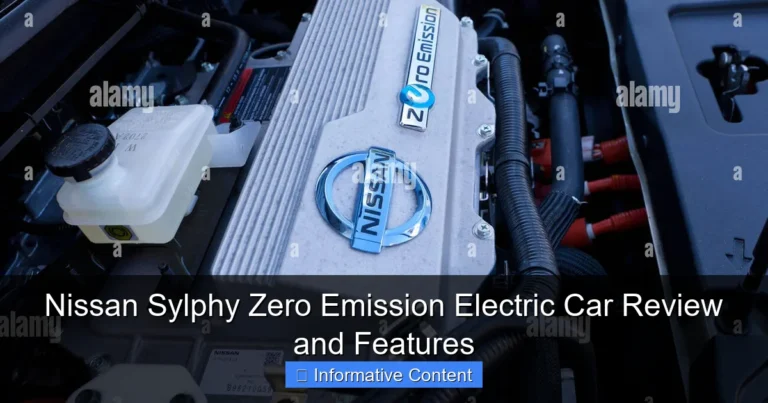
Nissan Leaf Electric Cars UK A Complete Guide to EcoFriendly Driving

Featured image for nissan leaf electric cars uk
The Nissan Leaf is the UK’s best-selling electric car, offering an affordable, eco-friendly driving experience with zero tailpipe emissions and impressive real-world range. Packed with smart tech, generous interior space, and access to the UK’s growing EV charging network, the Leaf makes sustainable driving practical, cost-effective, and perfect for city commutes or longer journeys.
Key Takeaways
- Affordable pricing: Nissan Leaf offers competitive UK pricing with government grants.
- Zero emissions: Drive eco-friendly with 100% electric, no tailpipe pollution.
- Impressive range: Up to 239 miles on a single charge, ideal for daily commutes.
- Fast charging: 80% charge in 40 minutes using rapid public chargers.
- Smart tech: ProPILOT driver assist and e-Pedal simplify urban driving.
- Strong resale: High UK demand ensures excellent long-term value retention.
📑 Table of Contents
- The Dawn of Eco-Friendly Driving: Introducing the Nissan Leaf in the UK
- Evolution and Generations of the Nissan Leaf in the UK
- Performance, Range, and Charging in the UK Context
- Cost of Ownership and Incentives for UK Buyers
- Interior, Technology, and Practicality for UK Life
- Comparing the Nissan Leaf to Competitors and Making the Switch
- Data Table: Nissan Leaf UK Model Comparison (2023/2024)
- Embracing the Future: The Nissan Leaf as Your UK EV Choice
The Dawn of Eco-Friendly Driving: Introducing the Nissan Leaf in the UK
The UK’s electric vehicle (EV) revolution is in full swing, and at the heart of this sustainable transformation stands the Nissan Leaf, a pioneering force in the affordable electric car market. Since its UK debut in 2011, the Nissan Leaf has become synonymous with accessible, eco-friendly driving, offering a compelling blend of zero-emission performance, practicality, and innovative technology. For environmentally conscious drivers seeking to reduce their carbon footprint without sacrificing comfort or style, the Nissan Leaf presents a compelling case. This comprehensive guide explores everything you need to know about the Nissan Leaf in the UK, from its evolution and performance to charging infrastructure, running costs, and why it remains a top contender in the competitive EV landscape.
As the UK government pushes towards its ambitious 2030 target of banning the sale of new petrol and diesel cars, the demand for reliable and affordable electric vehicles has surged. The Nissan Leaf, with its proven track record, has emerged as a trusted choice for both first-time EV buyers and experienced drivers looking to transition to sustainable mobility. Whether you’re a city dweller navigating congested streets or a suburban family needing a versatile daily driver, the Nissan Leaf offers a range of models and features designed to meet diverse needs. This guide delves deep into the specifics of the Nissan Leaf in the UK market, providing you with the essential information to make an informed decision about embracing the future of driving.
Evolution and Generations of the Nissan Leaf in the UK
The Nissan Leaf’s journey in the UK is a story of continuous improvement and technological advancement, reflecting the rapid evolution of electric vehicle technology over the past decade. Understanding the different generations is crucial for buyers navigating the new and used markets.
The First Generation (2011-2017): Pioneering the EV Market
The original Nissan Leaf (ZE0) launched in the UK in 2011, marking a significant milestone as one of the first mass-produced electric cars. It was powered by a 24 kWh lithium-ion battery, offering a real-world range of approximately 80-100 miles, which was competitive for its time. While early adopters faced range anxiety, the Leaf quickly gained popularity for its smooth, quiet electric motor, spacious interior, and surprisingly agile handling. Key features included:
- Regenerative Braking: Introduced “B” mode for enhanced energy recovery during deceleration.
- E-Pedal: A revolutionary feature allowing drivers to accelerate and decelerate using just the accelerator pedal (later refined in later models).
- Charging: Standard 3.3 kW on-board charger, requiring 8-12 hours for a full charge from a domestic socket.
- UK Adaptation: Nissan worked with UK charging network providers to ensure compatibility and offered home charger installation support.
For UK buyers in the early 2010s, the Leaf was a bold statement of environmental responsibility, despite its limited range. It established Nissan as a leader in the EV space and laid the foundation for future improvements.
The Second Generation (2018-2022): The “Leaf e+” Revolution
The second-generation Leaf (ZE1), launched in the UK in 2018, represented a quantum leap forward. It addressed the primary limitation of the first generation: range. The introduction of the **Leaf e+** model with a larger **62 kWh battery** significantly increased the official WLTP range to up to **239 miles** (real-world: 180-200 miles), a game-changer for UK drivers. The base model retained a 40 kWh battery with a WLTP range of 168 miles (real-world: 120-140 miles).
- Enhanced E-Pedal: Improved one-pedal driving experience with more precise control.
- ProPILOT Driver Assist: Introduced semi-autonomous driving features like adaptive cruise control and lane-keeping assist, enhancing safety and reducing driver fatigue on UK motorways.
- Faster Charging: The 62 kWh e+ model could accept DC fast charging at up to 100 kW, reducing charge time from 20-80% to around 30-40 minutes at compatible stations – a major improvement for UK road trips.
- Updated Design: A more modern, aerodynamic exterior and a significantly upgraded interior with better materials and a larger touchscreen infotainment system (8-inch).
- UK-Specific Features: Improved heating efficiency for colder UK winters and enhanced connectivity for navigation and remote climate control via the NissanConnect app.
This generation solidified the Leaf’s position as a practical, long-range EV suitable for UK commutes and even longer journeys. The Leaf e+ became a popular choice for those seeking maximum range without the premium price of some competitors.
The Third Generation (2022-Present): Refinement and Focus
While Nissan hasn’t launched a completely new platform, the current Leaf (still ZE1 but with continuous updates) focuses on refining the proven formula. The 2022 refresh brought subtle styling updates, improved interior materials, and enhanced ProPILOT Assist with features like ProPILOT Park (automated parking assistance). The core battery options remain the 40 kWh (Leaf) and 62 kWh (Leaf e+), with the e+ offering the best range. Key ongoing developments for UK users include:
- Software Updates: Over-the-air updates improving battery management, navigation, and ProPILOT functionality.
- Focus on Value: Nissan has positioned the Leaf as a value-packed EV, often offering competitive pricing and attractive finance deals in the UK market.
- Used Market Growth: The large number of first and second-gen Leafs on the used market offers excellent value for budget-conscious buyers.
Currently, the Nissan Leaf remains a strong contender in the UK’s compact electric car segment, balancing innovation, practicality, and affordability.
Performance, Range, and Charging in the UK Context
For UK drivers, real-world performance, achievable range, and charging convenience are paramount. The Nissan Leaf delivers on these fronts, but understanding the nuances is key to maximizing its potential.
Power and Driving Experience
The Nissan Leaf offers a smooth, quiet, and surprisingly responsive driving experience, typical of electric vehicles. Both the 40 kWh and 62 kWh models use a single electric motor driving the front wheels.
- 40 kWh Leaf: Produces 148 bhp and 320 Nm of torque, achieving 0-60 mph in around 7.9 seconds. This is more than adequate for UK city driving and motorway merging.
- 62 kWh Leaf e+: Offers 214 bhp and 340 Nm of torque, reducing 0-60 mph time to approximately 6.9 seconds. This provides a noticeable boost in acceleration, especially useful for overtaking on UK A-roads.
The instant torque delivery provides strong initial acceleration, making the Leaf feel nippy in urban environments. The E-Pedal technology allows for one-pedal driving in many situations, regenerating energy and reducing brake wear. The ride is comfortable on most UK roads, though larger potholes can be felt due to the low-profile tires. Steering is light and precise, ideal for city maneuvering. Pro Tip: Use B mode (regenerative braking) on downhill sections of UK motorways or country lanes to maximize energy recovery and reduce reliance on friction brakes.
Real-World Range in the UK: Factors Affecting Efficiency
Official WLTP figures are a starting point, but real-world range varies significantly based on several UK-specific factors:
- Temperature: Cold UK winters (below 5°C) can reduce battery efficiency by 20-30% due to increased energy needed for heating and reduced battery chemistry performance. Pre-heating the cabin while plugged in (using the NissanConnect app) mitigates this.
- Heating/Cooling: Using the heater in winter or AC in summer consumes significant energy. Use seat heaters (if available) instead of cabin heat for personal comfort with less range impact.
- Terrain & Speed: Hilly areas (like the Peak District or Lake District) and sustained high speeds on motorways consume more energy than flat, urban driving. Driving at 50-60 mph is significantly more efficient than 70+ mph.
- Payload & Aerodynamics: Carrying heavy loads or using roof boxes increases drag and energy consumption.
- Driving Style: Smooth, anticipatory driving maximizes regenerative braking and minimizes energy use.
Realistic Range Estimates (UK):
- 40 kWh Leaf: 100-130 miles (summer), 70-90 miles (winter).
- 62 kWh Leaf e+: 160-190 miles (summer), 110-140 miles (winter).
Example: A 60-mile daily commute in summer is easily achievable for the Leaf e+, but a 120-mile round trip in winter might require planning a top-up charge or using a faster charger.
Charging Infrastructure and Options for UK Drivers
Charging is the cornerstone of EV ownership. The Nissan Leaf supports three main charging methods, crucial for UK drivers:
- Home Charging (7 kW AC): The most convenient and cost-effective option. A 7 kW home charger (like a Pod Point or EO Mini Pro) can fully charge a 40 kWh Leaf in ~6 hours and a 62 kWh Leaf in ~9 hours. This is ideal for overnight charging. *Tip: Use a smart charger to schedule charging during off-peak electricity tariff hours (e.g., 12-7 am) for significant savings.*
- Public AC Charging (7-22 kW): Widely available at supermarkets, workplaces, and public car parks via networks like Pod Point, ChargePlace Scotland, and GeniePoint. Charging is slower than DC but useful for topping up during errands.
- Public DC Fast Charging (50-100 kW): Essential for longer journeys. The Leaf e+ can accept up to 100 kW, charging from 20-80% in ~30-40 minutes. Networks like Ionity, Gridserve, InstaVolt, and Osprey have rapidly expanded across UK motorways (M1, M6, M25, etc.) and major cities. *Tip: Use apps like Zap-Map or PlugShare to locate nearby fast chargers, check availability, and pay seamlessly.*
The Leaf uses a **Type 2 (AC) connector** for home and public AC charging and a **CCS (Combined Charging System) connector** for DC fast charging, which is the UK standard.
Cost of Ownership and Incentives for UK Buyers
One of the most compelling reasons to choose a Nissan Leaf in the UK is its favorable total cost of ownership compared to petrol or diesel cars, especially when considering government incentives and lower running costs.
Upfront Purchase Price and Finance Options
Nissan offers the Leaf in various trims (e.g., Acenta, N-Connecta, Tekna, e+ Tekna) with differing levels of equipment and pricing. As of late 2023/early 2024:
- 40 kWh Leaf (Acenta): Starting around £28,000 (before grants).
- 62 kWh Leaf e+ (Tekna): Starting around £36,000 (before grants).
Nissan frequently offers competitive finance deals, including PCP (Personal Contract Purchase) and HP (Hire Purchase), often with low deposit requirements and attractive APR rates. They also offer part-exchange options for existing vehicles. Tip: Check the official Nissan UK website and compare deals from multiple dealers for the best offer.
Government Incentives and Grants
The UK government provides significant financial support for EV buyers:
- Plug-in Car Grant (PICG): While the main grant for new cars was discontinued in 2022, the **Electric Vehicle Chargepoint Grant (EVCG)** is still available. It offers up to £350 towards the cost of installing a home charger (7 kW or 22 kW), including VAT and installation. This is a major saving for new Leaf owners.
- Workplace Charging Scheme (WCS): Employers can receive up to £350 per socket (max 40 sockets) to install chargers at workplaces, potentially providing free or subsidized charging for employees.
- Local Incentives: Some UK councils offer additional grants, parking permits, or congestion charge exemptions (e.g., London’s Ultra Low Emission Zone – ULEZ).
- Company Car Tax (Benefit-in-Kind – BIK): EVs attract a very low BIK rate (2% in 2024/25, rising to 3% in 2025/26), making the Leaf extremely attractive as a company car compared to petrol/diesel vehicles with much higher tax rates.
Example: The EVCG can reduce the effective cost of a new Leaf by the full £350, making the 40 kWh model potentially cost under £27,700 after the grant.
Running Costs: Fuel, Maintenance, and Insurance
The Leaf’s running costs are significantly lower than ICE vehicles:
- Electricity Cost: Charging at home (off-peak tariff ~7p/kWh) costs approximately £2.80 for a 40 kWh Leaf and £4.35 for a 62 kWh Leaf to achieve their respective real-world ranges. This is roughly 1/3 to 1/4 the cost of petrol for the same distance.
- Maintenance: EVs have far fewer moving parts. No oil changes, spark plugs, timing belts, or exhaust systems. Servicing is simpler and less frequent (typically every 18,000 miles or 2 years). Nissan offers service plans for peace of mind. Regenerative braking reduces brake pad wear significantly.
- Road Tax (VED): Zero annual Vehicle Excise Duty (road tax) for the first year and subsequent years for all EVs registered after April 2017. This saves £180+ per year compared to a typical petrol car.
- Insurance: Insurance costs for the Leaf are generally comparable to similar-sized petrol cars (e.g., VW Golf, Ford Focus). Factors like driver age, location, and no-claims bonus are more significant than the EV factor. Shop around for the best quote.
- Parking and Congestion Charges: Many UK cities offer reduced or free parking for EVs. The Leaf is exempt from the London ULEZ charge (currently £12.50 per day).
Estimated Annual Running Cost (40 kWh Leaf, 10,000 miles):
- Electricity: ~£700
- Maintenance: ~£200
- Road Tax: £0
- Insurance: ~£500 (varies widely)
- Total: ~£1,400 (excluding depreciation). Compare this to ~£2,500+ for a similar petrol car (fuel, tax, maintenance).
Interior, Technology, and Practicality for UK Life
The Nissan Leaf is designed to be a practical, comfortable, and technologically advanced daily driver, perfectly suited to the demands of UK life.
Interior Space and Comfort
The Leaf offers a surprisingly spacious interior for its compact footprint (4.49m long). It comfortably seats four adults, with good headroom and legroom in the front. Rear seat space is adequate for average-sized adults, though taller passengers might find it snug on long journeys.
- Cargo Space: 435 liters with rear seats up, expanding to 1,176 liters with seats folded. This is competitive with the VW ID.3 and larger than the Renault Zoe. The flat load floor and wide opening make loading shopping, pushchairs, or luggage easy.
- Materials and Build Quality: The interior uses a mix of soft-touch plastics and durable fabrics. Higher trims (Tekna) offer leather upholstery and heated front seats, enhancing comfort, especially in colder UK weather.
- Visibility: Good all-round visibility, with large side windows and a rear-view camera (standard on most trims) aiding parking and maneuvering in tight UK spaces.
Technology and Infotainment
The Leaf features a modern infotainment system centered around a touchscreen display.
- Infotainment System (NissanConnect EV): An 8-inch or 9-inch touchscreen (depending on trim) with navigation, DAB radio, Bluetooth, USB connectivity, and Apple CarPlay & Android Auto (standard on most trims). The system is intuitive and responsive. Navigation includes EV-specific features like showing nearby chargers, estimated range on arrival, and route planning with charging stops.
- NissanConnect App: A crucial tool for UK Leaf owners. It allows remote control of climate pre-conditioning (crucial for warming the cabin and battery in winter), checking charging status, starting/stopping charging, locating the car, and sending destinations to the car’s navigation. *Tip: Use the app to pre-heat the cabin while plugged in at home to save battery range.*
- ProPILOT Driver Assistance:** Standard on higher trims, ProPILOT includes adaptive cruise control, lane-keeping assist, and automatic emergency braking. ProPILOT Park (available on Tekna) offers automated parking. These features enhance safety and reduce driver stress, especially on busy UK motorways.
- Digital Instrument Cluster:** A clear, configurable digital display showing speed, battery level, range, energy consumption, and driving mode.
Practical Features for UK Drivers
Nissan has incorporated several features specifically beneficial for UK conditions:
- Heated Front Seats & Steering Wheel (Tekna): Essential for comfort during UK winters.
- Heated Door Mirrors & Rear Window:** Improve visibility in rain and fog.
- Automatic Headlights & Wipers:** Convenient in the UK’s variable weather.
- Keyless Entry & Start:** Easy access and start.
- Spare Wheel Option:** While many EVs use a repair kit, Nissan offers a space-saver spare wheel as an option, providing peace of mind on long journeys.
- Boot Power Outlet (12V):** Useful for powering cool boxes or other accessories.
Comparing the Nissan Leaf to Competitors and Making the Switch
The UK electric car market is highly competitive. Understanding how the Nissan Leaf stacks up against its rivals is essential for making an informed choice.
Key Competitors in the UK Market
The Leaf primarily competes in the compact electric hatchback segment. Key rivals include:
- Renault Zoe: Often cheaper, with a similar range (up to 245 miles WLTP), but generally considered to have a less refined driving experience and interior. The Zoe lacks the Leaf’s ProPILOT driver assist system.
- Volkswagen ID.3: A strong competitor with similar pricing, range (up to 265 miles WLTP), and interior space. The ID.3 offers a more modern, minimalist interior and potentially better driving dynamics. However, some find the touch-sensitive controls less intuitive than the Leaf’s physical buttons. The ID.3 also has a larger boot (385L vs 435L).
- MG4 EV: A value-focused option with a long range (up to 270 miles WLTP) and a lower starting price. However, the interior quality and brand perception may not match Nissan’s established reputation. The MG4 offers a rear-wheel-drive layout for better handling.
- Kia e-Niro / Niro EV:** Offers a crossover body style, slightly more ground clearance, and a longer range (up to 285 miles WLTP) for a higher price. Better suited for those wanting SUV practicality.
Why Choose the Nissan Leaf? The Advantages
The Leaf holds several distinct advantages:
- Proven Reliability & Longevity: With over a decade of production and hundreds of thousands on UK roads, the Leaf has a proven track record for battery longevity and mechanical reliability. Many first-gen Leafs are still on the road with significant battery health.
- Strong Used Market Value: High demand for Leafs in the used market means good resale value and excellent value for money for second-hand buyers.
- E-Pedal Driving Experience: The Leaf’s E-Pedal technology is arguably the most refined and intuitive one-pedal driving system in its class, offering a unique and efficient driving experience.
- Established Brand & Dealer Network: Nissan has a large, trusted dealer network across the UK for sales, service, and support.
- Focus on Practicality & Value: Nissan positions the Leaf as a no-nonsense, practical EV offering excellent value for the features and range provided.
ProPILOT Driver Assist: Offers a comprehensive suite of semi-autonomous driving features not always standard on competitors at similar price points.
Tips for Making the Switch to a Nissan Leaf
Transitioning from a petrol/diesel car to an electric Leaf requires some adjustment:
- Assess Your Daily Range Needs: Use the real-world range estimates provided earlier. If your daily commute is under 100 miles, the 40 kWh Leaf is likely sufficient. For longer commutes or regular longer trips, the 62 kWh e+ is strongly recommended.
- Plan Your Charging Strategy: Determine if you can install a home charger. If not, ensure reliable access to public charging (workplace, nearby car parks). Familiarize yourself with the Zap-Map app.
- Test Drive Different Models: Drive both the 40 kWh and 62 kWh models, as well as different trims, to experience the range, performance, and feature differences firsthand.
- Understand Regenerative Braking: Practice using E-Pedal and B mode to get comfortable with one-pedal driving.
- Factor in the Grants:** Ensure you apply for the Electric Vehicle Chargepoint Grant for your home charger.
- Consider a Service Plan:** Nissan offers service plans that can help manage maintenance costs predictably.
- Embrace the Quietness:** Enjoy the near-silent operation, but be extra aware of pedestrians in urban areas.
Data Table: Nissan Leaf UK Model Comparison (2023/2024)
| Model | Battery Capacity | WLTP Range (Miles) | Real-World Range (UK, Miles) | 0-60 mph (Seconds) | Max DC Fast Charge (kW) | Starting Price (UK, £) | Key Standard Features |
|---|---|---|---|---|---|---|---|
| Nissan Leaf (Acenta) | 40 kWh | 168 | 100-130 (summer) 70-90 (winter) |
7.9 | 50 | ~28,000 | 8″ Touchscreen, DAB, Bluetooth, Apple CarPlay/Android Auto, Rear Camera, Climate Control, LED Headlights |
| Nissan Leaf (N-Connecta) | 40 kWh | 168 | 100-130 (summer) 70-90 (winter) |
7.9 | 50 | ~30,000 | All Acenta features + Satellite Navigation, NissanConnect App, Heated Front Seats, Keyless Entry |
| Nissan Leaf (Tekna) | 40 kWh | 168 | 100-130 (summer) 70-90 (winter) |
7.9 | 50 | ~33,000 | All N-Connecta features + ProPILOT Driver Assist, Leather Upholstery, Heated Steering Wheel, 9″ Touchscreen, 360-Degree Camera |
| Nissan Leaf e+ (Tekna) | 62 kWh | 239 | 160-190 (summer) 110-140 (winter) |
6.9 | 100 | ~36,000 | All Leaf Tekna features + Larger Battery, Faster DC Charging, Enhanced Performance |
Note: Prices are approximate starting prices before the Electric Vehicle Chargepoint Grant (£350). Real-world range estimates account for typical UK driving conditions, temperature, and usage. Features may vary slightly depending on exact model year and options.
Embracing the Future: The Nissan Leaf as Your UK EV Choice
The Nissan Leaf stands as a testament to the maturity and practicality of electric vehicles in the UK. From its pioneering beginnings to its current status as a refined, reliable, and technologically advanced compact EV, the Leaf has consistently delivered on the promise of accessible, eco-friendly driving. It addresses the core concerns of UK drivers: **realistic range** (especially the e+ model), **comprehensive charging infrastructure compatibility**, **significantly lower running costs**, and **practical interior space** for daily life and family needs. The availability of the **Electric Vehicle Chargepoint Grant** further enhances its financial appeal, making the transition to electric ownership more attainable than ever.
While newer competitors offer flashy features or slightly longer ranges, the Nissan Leaf differentiates itself through its **proven reliability, strong residual values, intuitive E-Pedal technology, and comprehensive ProPILOT driver assistance**. Its extensive dealer network across the UK ensures peace of mind for service and support. Whether you’re a city commuter looking for a nimble, zero-emission car to navigate traffic and avoid congestion charges, a suburban family needing a versatile second car for school runs and shopping, or a driver seeking to make a responsible environmental choice without compromising on comfort or practicality, the Nissan Leaf offers a compelling package. It’s not just about saving money on fuel; it’s about experiencing the smooth, quiet, and responsive nature of electric driving, contributing to cleaner air in UK cities, and being part of a sustainable transportation future. For those ready to embrace eco-friendly driving in the UK, the Nissan Leaf isn’t just a car; it’s a smart, responsible, and enjoyable step into the future of mobility. The road to a greener UK is being paved with electric cars, and the Nissan Leaf is a trusted, capable, and accessible vehicle to lead the way.
Frequently Asked Questions
What is the range of the Nissan Leaf electric car in the UK?
The Nissan Leaf offers a real-world range of 168 miles (Acenta trim) to 239 miles (e+ Tekna) on a full charge, depending on the battery size and driving conditions. UK weather and hilly terrain may slightly reduce these estimates.
How much does it cost to charge a Nissan Leaf in the UK?
Charging a Nissan Leaf at home (using a 7kW charger) costs roughly £10-£15 for a full charge, based on UK electricity rates. Public rapid chargers may cost more but are ideal for longer trips.
Are there government incentives for buying a Nissan Leaf in the UK?
Yes, while the Plug-in Car Grant (PICG) has ended, the Nissan Leaf still benefits from lower running costs, including zero road tax (VED) and exemption from London’s ULEZ charges. Check local schemes for additional savings.
How long does it take to charge a Nissan Leaf electric car?
With a 7kW home charger, a full charge takes 7-10 hours (40kWh battery). Using a 50kW rapid charger (public), you can reach 80% in 60-90 minutes, making the Nissan Leaf practical for UK commuters and road trips.
Is the Nissan Leaf reliable for UK weather and roads?
Yes, the Nissan Leaf is well-suited for UK conditions, with features like regenerative braking for slippery roads and efficient battery heating. Its compact size and low centre of gravity make it ideal for city driving and rural routes.
What are the best Nissan Leaf trims available in the UK?
The UK offers three main trims: Acenta (best value), N-Connecta (added tech), and e+ Tekna (longest range and luxury). The Nissan Leaf electric car lineup caters to all budgets, with the e+ models offering more power and range.