
Picking the Best Car for Electric Conversion: 5 Essential Tools & Insights for Your DIY Project
Dreaming of a quieter, greener ride without shelling out for a brand-new electric vehicle? An electric car conversion project might be just the ticket! Transforming a gas-powered classic or a reliable daily driver into an EV is an increasingly popular endeavor for DIY enthusiasts and eco-conscious gearheads alike. It’s a fantastic way to give an older vehicle a new lease on life, reduce your carbon footprint, and gain a unique understanding of electric vehicle technology.
But where do you start? While the core of your project will be choosing the actual “best car for electric conversion” – a vehicle that’s ripe for an electric heart transplant – the journey also involves a ton of planning, the right parts, and a solid understanding of automotive systems. Beyond just the donor car, you’ll need various tools, components, and crucial knowledge to make your EV dreams a reality. We’ll dive into what makes a great donor car and then explore some essential accessories and knowledge products that can support your journey.
The Quest for the Best Car for Electric Conversion: What to Look For
Before you even think about wrenches and wires, selecting the right donor vehicle is paramount. What exactly makes the best car for electric conversion? It’s often a combination of factors that simplify the swap and ensure a successful, enjoyable result.
Here are some key characteristics to consider:
- Lightweight: Less weight means less energy needed to move the vehicle, translating to better range and efficiency for your new EV. Think small sedans, compact hatchbacks, or even some classic two-seaters.
- Simple Mechanicals: Older cars without complex computer systems, intricate wiring harnesses, or integrated subframes are generally easier to convert. The less you have to “un-engineer,” the better.
- Ample Space: You’ll need room for batteries, an electric motor, a motor controller, and charging components. Look for vehicles with spacious engine bays, trunk areas, or even under-floor compartments that can be repurposed.
- Strong Chassis & Suspension: Electric powertrains deliver instant torque, and batteries add significant weight. Your chosen car needs a sturdy chassis and capable suspension to handle the new demands.
- Good Aerodynamics: While often overlooked, a streamlined shape can significantly improve efficiency, especially at highway speeds.
- Availability of Parts: Even though you’re removing the internal combustion engine, you’ll still need access to replacement parts for brakes, suspension, interior, and bodywork.
Popular choices for conversions often include classic Volkswagen Beetles, Porsche 914s, Honda Civics, Ford Rangers, and even older BMW E30s. These vehicles often tick many of the boxes above, making the conversion process more manageable.
Beyond the Engine: 5 Essential Tools & Insights for Your Electric Car Conversion Journey
Once you’ve got your sights set on the ideal donor vehicle, the real work begins! While we’re talking about the “best car for electric conversion,” remember that the journey also involves numerous smaller upgrades, preparations, and a foundational understanding of automotive electronics. Here are some interesting products that can support various aspects of your DIY automotive project, from interior creature comforts to specialized electrical work.
1. JDMSPEED New Universal Electric Power Window Lift Regulator Kit
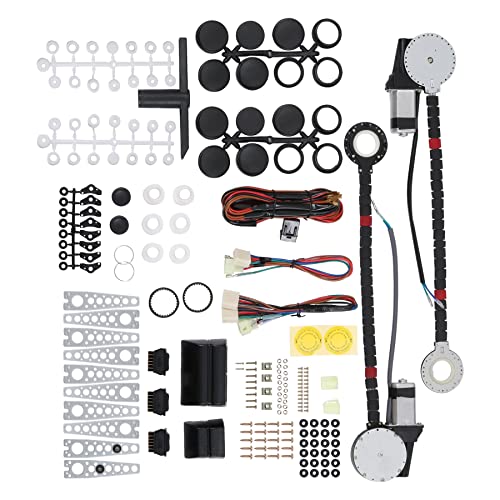
During an extensive vehicle overhaul like an EV conversion, you might find yourself wanting to upgrade other aspects of the car. This universal power window kit is a fantastic addition if your donor vehicle has manual windows and you’d like to modernize them. It’s about bringing convenience and a touch of modern luxury to your classic conversion project, ensuring your ride isn’t just eco-friendly but comfortable too. What makes it stand out is its universal design, aiming for a fit in many different vehicle types.
Key Features:
– An upgraded conversion assembly for your window
– Made of top-notch materials for long-lasting performance
– 100% NEW and Made with the Highest Quality Components Available
– Universal Power Window Switch
– Universal hardware for easy installation and quiet operation
Pros:
– Universal fit offers broad compatibility
– High-quality materials promise durability
– Can enhance the overall value and usability of your converted vehicle
– Quiet operation for a refined feel
Cons:
– Installation may require some drilling or custom fitting
– Not a core EV conversion component, but a comfort upgrade
– May not fit all vehicles perfectly despite being “universal”
User Impressions: Users appreciate the robust build quality and the quiet operation once installed. Many highlight that while the “universal” aspect means some DIY finesse is needed, the end result is a significant upgrade from manual windows. It’s often seen as a worthy side project during a full vehicle restoration.
2. Brock Universal Electric Power Window Regulator Spal Type

Similar to the JDMSPEED offering, the Brock Universal Electric Power Window Regulator provides another excellent option for converting manual windows to power. This kit is specifically designed for 2-door vehicles, making it a strong contender for many classic cars or pickups that often serve as donor vehicles for EV projects. It’s a complete conversion kit, meaning you get everything you need right out of the box, simplifying the process of adding this creature comfort to your revamped ride. Its comprehensive nature and explicit 2-door focus make it a convenient choice.
Key Features:
– An upgraded electric window motor kit to convert your manual windows into power windows
– Complete Conversion Kit with wiring, switches, hardware and instructions for a DIY window upgrade
– Designed to ONLY fit 2-Door vehicles with Manual windows and glass weight of under 6 1/2 lbs
– For MOST 2-Door Vehicles including Pickups, SUV’s, Cars and Van in all Years, Makes and Models
– Protected by 1 year limited warranty
Pros:
– Complete kit reduces guesswork and additional purchases
– Specifically designed for 2-door vehicles, a common donor type
– Clear instructions aid DIY installation
– Backed by a 1-year warranty for peace of mind
Cons:
– Limited to 2-door vehicles only
– Glass weight limitation might exclude some heavier applications
– Still a secondary upgrade, not directly related to the EV powertrain itself
User Impressions: Reviewers often praise the completeness of the kit, making it relatively straightforward for a DIY project. The clear instructions are a big plus, though some mention that professional installation might be needed for the best results depending on the vehicle’s specific door design. The motor’s quietness and smooth operation are frequently highlighted.
3. JRRXM 2PCS High Speed 24V RS555 35000RPM Fast Steel Motor Gearbox (for Ride-On Toys)

Now, let’s be clear: this product isn’t for converting your full-sized car to electric! However, for the truly dedicated DIY enthusiast, projects often extend beyond just one car. This high-speed motor gearbox is a fantastic upgrade for children’s electric ride-on toys like Power Wheels. If you’re a parent with a knack for tinkering, or just want to supercharge your kid’s playtime, these motors offer a significant performance boost. They exemplify the spirit of electric modification and the joy of upgrading something with electric power, even if on a smaller scale!
Key Features:
– Includes 2PCS 18Volt&20Volt&24Volt RS555 35000RPM Fast Drive Motor Steel Gears Motor Gearbox for Power Wheels Kids Ride on Toys Electric Car Motor gearbox Upgrade, plus free connectors, hitch, tire grip, fixing, coupler, Tires Adapter for Power Wheels Rubber Tire Upgrade, and 2 Motor Cables.
– Upgrade Materials: Shell and Gear made of composite materials from South Korea, steel middle gear for 2x service life, pure copper winding coils for improved torque, speed, and life. Max power 200W at 24V, increased cooling fan.
– Specification Introduction: 24V 35000rpm 6 Plum Blossom Universal Motor Gearbox, Gearbox Diameter 185mm/7.2in, Aperture 12mm/0.47in, Motor Diameter 37mm/1.47in, Coupler Height 28mm/1.1in, Base Length 78mm/3in.
– Performance at Different Voltages: Universal voltage, 12V (11000rpm), 18V (20000rpm), 20V (28000rpm), 24V (35000rpm). Motor Gearbox Output Speed Ratio 1:100.
– Note: Free one-button installation of the motor cable. Compare size before purchasing. Professional pre-sales and after-sales team available.
Pros:
– Significantly upgrades children’s ride-on toy performance
– High-quality, durable materials for extended life
– Versatile across multiple voltages
– Comes with many useful accessories for a complete upgrade
Cons:
– Not for full-size vehicle EV conversion
– Requires basic electrical understanding for installation on toys
– Specific to certain toy models, though “universal” within that niche
User Impressions: Parents and hobbyists rave about the dramatic increase in speed and power for their kids’ ride-on cars. The improved durability with the steel gears is a major plus, and the inclusion of extra accessories like tire grips is frequently praised. Users emphasize that it’s a game-changer for toy performance.
4. Automotive Wiring and Electrical Systems (Workbench Series)

When undertaking an electric car conversion, a deep understanding of automotive wiring and electrical systems isn’t just helpful, it’s absolutely essential. This book, part of the Workbench Series, offers an invaluable resource for anyone looking to tackle complex electrical tasks, from designing a new circuit to troubleshooting existing issues. It bridges the gap between basic knowledge and the advanced concepts required for a full EV swap, making it a critical tool for any aspiring or experienced DIY EV builder. It stands out by providing foundational knowledge crucial for safety and functionality in your EV project.
Key Features:
– Focuses on automotive diagnostic tools and wiring principles
– Part of a respected ‘Workbench Series’ for practical application
– Likely covers topics such as circuit design, schematics, troubleshooting, and safety
– Essential for understanding high-voltage systems in EV conversions (though typically focuses on 12V systems, principles apply)
Pros:
– Provides fundamental knowledge critical for safe and effective EV conversion
– Helps in understanding complex wiring diagrams and troubleshooting
– Can prevent costly mistakes and enhance project success
– A valuable reference for any automotive enthusiast
Cons:
– Not specifically about EV high-voltage systems, though the principles are foundational
– Requires dedication to read and understand technical concepts
– A book, so its utility depends on the learner’s commitment
User Impressions: Automotive enthusiasts and DIY mechanics consistently praise the Workbench Series for its clear, practical explanations. Readers find this book particularly helpful for demystifying vehicle electronics, making it easier to diagnose problems and confidently implement modifications. It’s often described as a must-have for anyone serious about automotive electrical work.
5. 6V 12V 24V Children Electric Car DIY Wires Harness Kit

Just like the high-speed motors, this wiring harness kit is designed for children’s electric cars, not full-sized EV conversions. However, it’s a perfect example of how essential good wiring and integrated systems are, even on a smaller scale. For those who enjoy tinkering with any electric vehicle – whether it’s a personal EV project or fixing up a toy – this kit provides a comprehensive solution for repairing or upgrading the electrical system of a kid’s ride-on car. It showcases the modularity and component integration that you’ll also find (on a much larger scale) in a full EV conversion.
Key Features:
– DIY 6 Volt 12Volt 24Volt customized wire harness children electric car DIY modified wires and switch kit kids trax replacement parts tractor accessories for power wheels model kits
– Complete set of accessories: wires, pedal, high and low switch, forward stop reverse switch, overload protector, charging cable, key switch
– Children’s electric car conversion of accessories (with basic wiring skills), need to prepare batteries and gearbox
– Product easy to install, repair, and replace
– The package includes: 1 full set.
Pros:
– Comprehensive kit for repairing or upgrading children’s ride-on toys
– Includes all necessary switches and wires for a complete system
– Teaches basic wiring and electrical system understanding
– Easy to install for those with basic DIY skills
Cons:
– Not for full-size vehicle EV conversion
– Requires basic wiring knowledge
– Batteries and gearbox for the toy are not included
User Impressions: Parents who’ve used this kit for repairing or modifying Power Wheels are often thrilled by how complete and user-friendly it is. The inclusion of all the necessary switches and the overload protector makes it a safe and effective way to get a broken toy running again or to add new functionality. It’s considered a highly valuable repair part by the toy car DIY community.
Frequently Asked Questions (FAQ) About Electric Car Conversions
Q1: How much does an electric car conversion typically cost?
A1: The cost can vary wildly, anywhere from $5,000 to $30,000 or more, depending on the donor car, the range and power desired, and whether you do the work yourself or pay for professional labor. Batteries are often the most expensive component.
Q2: What’s the average range for a DIY converted electric car?
A2: Range is highly dependent on the size of your battery pack and the efficiency of your motor and vehicle. Most DIY conversions aim for 50-100 miles on a single charge, which is suitable for daily commuting. More advanced builds can achieve 150+ miles.
Q3: Is it legal to convert a car to electric?
A3: Generally, yes, it is legal. However, regulations vary by state or country regarding inspections, emissions, and registration requirements for modified vehicles. Always check with your local Department of Motor Vehicles (DMV) or equivalent authority before starting your project.
Q4: How long does an electric car conversion take?
A4: For a dedicated hobbyist, a conversion can take anywhere from a few months to over a year, working part-time. Professional shops might complete a conversion in 4-8 weeks. It’s a significant project that requires patience and attention to detail.
Q5: What are the main components needed for an EV conversion?
A5: Key components include an electric motor, a motor controller (inverter), a battery pack (and Battery Management System – BMS), a charger, a DC-DC converter (to power the 12V accessories), and various high-voltage cables and safety components.
Q6: Can I use my car’s original transmission with an electric motor?
A6: Yes, it’s possible. Many converters retain the original manual transmission, often locking it into a single gear (like 2nd or 3rd) for simplicity. Some highly efficient conversions will even remove the transmission entirely, direct-driving the differential for maximum simplicity and reduced weight.
Q7: What safety precautions should I take during an EV conversion?
A7: Working with high-voltage electricity is inherently dangerous. Always disconnect power sources, use insulated tools, wear appropriate personal protective equipment (PPE) like rubber gloves and safety glasses, and follow all manufacturer guidelines for components. It’s also wise to have a fire extinguisher nearby.
Final Spark: Your EV Journey Awaits!
Embarking on an electric car conversion is a challenging but incredibly rewarding journey. Choosing the best car for electric conversion is a critical first step, setting the foundation for your project. But remember, the details matter – from making sure your windows go up and down effortlessly, to mastering the intricacies of automotive wiring, every piece contributes to the final masterpiece. With the right planning, the proper tools, and a thirst for knowledge, you can turn your garage into a hub of innovation and drive into a greener future, one electrifying mile at a time!


