Subaru Toyota Electric Car Partnership Drives Future Innovation

Featured image for subaru toyota electric car partnership
Image source: motoringresearch.com
The Subaru Toyota electric car partnership is revolutionizing sustainable mobility by combining Subaru’s all-wheel-drive expertise with Toyota’s industry-leading EV technology. This strategic collaboration accelerates innovation, delivering high-performance, eco-friendly vehicles like the Solterra and bZ4X while expanding both brands’ footprints in the competitive electric market. Together, they’re shaping the future of electric driving with reliability, advanced safety, and cutting-edge design.
Key Takeaways
- Joint development accelerates: Subaru and Toyota co-create EVs, cutting costs and speeding innovation.
- Shared platform strategy: Modular EV platform boosts efficiency and scalability across both brands.
- Sustainability focus: Partnership prioritizes eco-friendly tech and carbon-neutral production methods.
- Expanded market reach: Combined R&D strengthens global EV competitiveness against rivals.
- Brand synergy: Subaru’s AWD expertise complements Toyota’s hybrid and battery leadership.
📑 Table of Contents
- Subaru Toyota Electric Car Partnership Drives Future Innovation
- The Genesis of the Subaru Toyota Electric Car Partnership
- Technology and Platform Synergy: The e-TNGA Revolution
- Market Impact and Consumer Benefits
- Challenges and Criticisms: Navigating the Road Ahead
- The Road Ahead: Future Models and Global Expansion
- Conclusion: A Partnership Built for the Long Haul
Subaru Toyota Electric Car Partnership Drives Future Innovation
The automotive industry is undergoing one of its most transformative periods in history, with electric vehicles (EVs) at the forefront of this revolution. As global emissions regulations tighten and consumer demand for sustainable transportation grows, automakers are racing to innovate and adapt. Among the most strategic and impactful moves in recent years is the Subaru Toyota electric car partnership, a collaboration that merges Subaru’s engineering excellence in all-wheel-drive (AWD) systems and rugged reliability with Toyota’s global leadership in hybrid technology, electrification, and mass-market scalability. This alliance is not just about building electric cars—it’s about redefining what’s possible in the EV space by combining complementary strengths, sharing R&D costs, and accelerating time-to-market.
Launched in earnest in 2019 and significantly expanded in 2022, the Subaru Toyota electric car partnership aims to co-develop next-generation battery electric vehicles (BEVs), hybrid models, and next-gen platforms. With Toyota investing heavily in solid-state batteries and Subaru leveraging its expertise in compact SUVs and off-road performance, the synergy between these two Japanese giants is creating a new blueprint for sustainable mobility. From the jointly developed e-TNGA platform to the upcoming Subaru Solterra and Toyota bZ4X twins, the partnership is already delivering tangible results. This blog post explores the origins, strategic goals, technological breakthroughs, and future implications of the Subaru Toyota electric car partnership, offering insights into how this collaboration is shaping the future of electric transportation.
The Genesis of the Subaru Toyota Electric Car Partnership
Why a Partnership Was Inevitable
For years, Subaru operated as a niche automaker with a loyal customer base, known for its symmetrical all-wheel-drive systems, boxer engines, and safety-first philosophy. However, as the EV market began to accelerate, Subaru faced a critical challenge: limited financial and technological resources to independently develop a full lineup of competitive electric vehicles. With only a small global market share and a focus on compact SUVs and crossovers, Subaru needed a strategic ally to survive the electric transition.

Visual guide about subaru toyota electric car partnership
Image source: cdn.motor1.com
Enter Toyota—the world’s largest automaker by volume and a pioneer in hybrid technology since the launch of the Prius in 1997. Toyota had already invested billions into electrification, hydrogen fuel cells, and battery development. Yet, even with its vast resources, Toyota recognized the value of Subaru’s AWD expertise, brand loyalty, and unique customer base, particularly in North America and Japan. The Subaru Toyota electric car partnership was born out of mutual need: Subaru needed Toyota’s electrification scale, and Toyota needed Subaru’s niche engineering and brand differentiation.
Key Milestones in the Alliance
The partnership officially began in 2019 when Toyota acquired a 20% stake in Subaru Corporation (then Fuji Heavy Industries), solidifying their long-standing relationship. This move was followed by several key developments:
- 2020: Announcement of joint development of a dedicated BEV platform based on Toyota’s e-TNGA architecture.
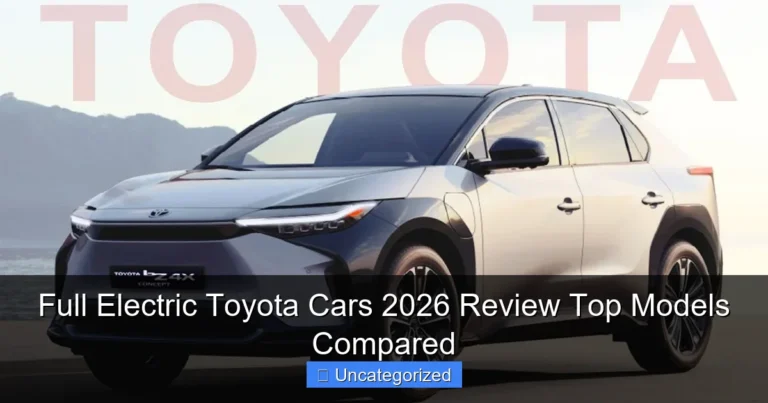
- 2021: Launch of the Toyota bZ4X and Subaru Solterra—the first vehicles born from the partnership.
- 2022: Expansion of collaboration to include hybrid models, next-gen battery tech, and software-defined vehicles (SDVs).
- 2023: Joint investment in a new battery R&D center in Japan to accelerate solid-state battery development.
This timeline illustrates how the Subaru Toyota electric car partnership has evolved from a platform-sharing agreement into a full-scale strategic alliance, with shared goals in electrification, safety, and global market expansion.
Strategic Objectives and Market Goals
The overarching goal of the partnership is to achieve carbon neutrality by 2050, with interim targets including 40% electrified vehicle sales by 2025 and 70% by 2030. For Subaru, this means transitioning from a primarily combustion-engine lineup to one where EVs and hybrids dominate. Toyota, meanwhile, aims to sell 3.5 million BEVs annually by 2030, with Subaru contributing a significant portion of that volume through shared models and regional market penetration.
Additionally, the partnership allows both brands to:
- Reduce R&D and production costs through platform and component sharing.
- Accelerate time-to-market for new EVs by leveraging Toyota’s global supply chain.
- Maintain brand identity while offering differentiated features (e.g., Subaru’s X-Mode off-road tech).
- Expand into new markets, particularly in North America, Europe, and Southeast Asia.
Technology and Platform Synergy: The e-TNGA Revolution
What Is the e-TNGA Platform?
The e-TNGA (Toyota New Global Architecture for Electric Vehicles) is a modular, scalable electric vehicle platform developed by Toyota specifically for BEVs. Unlike traditional platforms that must accommodate both internal combustion and electric powertrains, e-TNGA is designed from the ground up for electric propulsion. This gives it significant advantages in terms of battery packaging, weight distribution, and design flexibility.
The platform features:
- A flat floor for optimal battery placement.
- Modular battery packs (50 kWh to 100 kWh).
- Front, rear, or dual-motor AWD configurations.
- High torsional rigidity for improved handling and safety.
For Subaru, adopting the e-TNGA platform was a game-changer. Instead of spending years and billions developing its own EV architecture, Subaru could immediately launch competitive electric SUVs with Toyota’s proven technology. This is a prime example of how the Subaru Toyota electric car partnership leverages shared innovation for mutual benefit.
Subaru’s Engineering Touch: Enhancing the Base Platform
While the e-TNGA platform provides the foundation, Subaru has added its own engineering DNA to differentiate its vehicles. The Subaru Solterra, for example, features:
- X-Mode with Grip Control: A Subaru-exclusive off-road driving mode that optimizes torque distribution, traction, and hill descent control—ideal for snow, mud, and rough terrain.
- Symmetrical Dual-Motor AWD: A refined version of Subaru’s signature AWD system, with near-instant torque vectoring for improved cornering and stability.
- Higher Ground Clearance: 8.3 inches (vs. 8.1 in the bZ4X), making it more capable off-pavement.
- StarTex Upholstery: A vegan, recyclable interior material that aligns with Subaru’s eco-conscious branding.
This blend of Toyota’s scalable platform and Subaru’s rugged engineering creates a vehicle that appeals to Subaru’s core audience—outdoor enthusiasts, families, and safety-conscious drivers—while meeting the performance expectations of the EV market.
Battery and Charging Technology: Shared but Evolving
Both the Solterra and bZ4X use the same lithium-ion battery packs (71.4 kWh usable) and DC fast-charging capability (up to 150 kW). However, the partnership is already looking ahead to next-generation battery technology. Toyota has committed $13.5 billion to battery development through 2030, with a focus on:
- Lithium-ion improvements: Higher energy density, faster charging, and longer lifespan.
- Solid-state batteries: Targeting 2027-2030 for mass production, promising 50% more range, faster charging, and improved safety.
- Battery recycling: A joint effort to develop closed-loop recycling systems to reduce environmental impact.
Subaru benefits directly from these advancements. For instance, future Subaru EVs could feature Toyota-developed solid-state batteries, giving them a competitive edge in range (potentially 500+ miles per charge) and charging speed (under 15 minutes for 80% charge).
Market Impact and Consumer Benefits
Expanding EV Accessibility
One of the most significant outcomes of the Subaru Toyota electric car partnership is increased accessibility to high-quality, reliable EVs. Prior to the Solterra, Subaru had no fully electric vehicle in its lineup. The bZ4X and Solterra represent Toyota and Subaru’s first serious entries into the mass-market BEV segment—positioned as compact SUVs with AWD, priced between $45,000 and $55,000.
These vehicles fill a critical gap in the market: electric SUVs with true all-weather capability. Unlike many EVs that struggle in snowy or mountainous regions due to traction issues, the Solterra and bZ4X offer:
- Confident winter performance thanks to dual-motor AWD.
- Regenerative braking tuned for variable terrain.
- Heated steering wheels, seats, and mirrors as standard.
For consumers in cold climates or outdoor-focused regions (e.g., New England, Colorado, the Pacific Northwest), these features make the Solterra a compelling alternative to the Tesla Model Y or Ford Mustang Mach-E.
Brand Loyalty and Cross-Market Appeal
Subaru has one of the highest customer loyalty rates in the industry—over 60% of Subaru owners buy another Subaru. By launching the Solterra as a joint product, Toyota gains access to this loyal base, while Subaru introduces its customers to electric mobility without alienating them. The Solterra retains Subaru’s signature design cues (e.g., hexagonal grille, hawk-eye headlights) and safety features (e.g., EyeSight Driver Assist), ensuring a familiar experience.
Meanwhile, Toyota benefits from Subaru’s strong presence in the U.S. market, where SUVs and crossovers dominate. The bZ4X, though similar, targets a broader, more urban audience with a sleeker design and more tech-focused interior. This dual-brand strategy allows both automakers to capture different segments of the EV market without internal competition.
Cost Savings and Incentive Eligibility
Thanks to the shared platform and production lines, both the Solterra and bZ4X benefit from economies of scale, helping keep prices competitive. Additionally, both vehicles qualify for U.S. federal tax credits (up to $7,500) and state incentives (e.g., California’s Clean Vehicle Rebate), making them more affordable for middle-income buyers.
Tip: When shopping for a Solterra or bZ4X, check your state’s EV incentive programs. Some states offer additional rebates, charging credits, or HOV lane access—maximizing your savings.
Challenges and Criticisms: Navigating the Road Ahead
Initial Quality and Recall Issues
The rollout of the Solterra and bZ4X was not without hiccups. In 2022, both vehicles were recalled due to a risk of wheels detaching—a rare but serious safety issue. The problem was traced to improper wheel hub torque during manufacturing at the joint venture plant in Japan. While both companies acted quickly to fix the issue (re-torquing or replacing wheels), the incident raised questions about quality control in shared production environments.
However, the swift response demonstrated the strength of the partnership. Toyota and Subaru coordinated a global recall, shared diagnostic tools, and implemented new quality checks—highlighting their commitment to safety and transparency.
Range and Charging Limitations
Compared to rivals like the Tesla Model Y (330 miles EPA) or Hyundai Ioniq 5 (303 miles), the Solterra and bZ4X offer a modest 222–228 miles of range. While adequate for daily commuting, this falls short for long-distance travelers. The 150 kW DC fast charging is also slower than the 250 kW+ offered by Tesla and Hyundai.
Tip: Plan long trips using PlugShare or A Better Routeplanner (ABRP) to locate compatible fast chargers. The Solterra supports CCS charging, but availability varies by region.
Competition in a Crowded Market
The EV SUV market is increasingly competitive, with new entries from Kia, Hyundai, Ford, Volkswagen, and even luxury brands like Polestar and Rivian. To stay relevant, the Subaru Toyota electric car partnership must continue innovating. Future models must deliver:
- Longer range (300+ miles).
- Faster charging (200+ kW).
- Over-the-air (OTA) software updates.
- Advanced driver-assistance systems (ADAS).
The Road Ahead: Future Models and Global Expansion
Next-Generation EVs: 2025 and Beyond
The partnership has already announced plans for at least three new EVs by 2025:
- Subaru EV Crossover (2025): A smaller, more affordable EV based on an updated e-TNGA platform, targeting urban commuters.
- Toyota bZ3X (2024): A three-row SUV with optional 7-seat configuration, sharing tech with Subaru’s next-gen models.
- Subaru EV Pickup (2026, tentative): A rugged electric pickup for outdoor and commercial use, leveraging Subaru’s AWD expertise.
These vehicles will likely feature improved battery tech, enhanced software, and more personalized user experiences—aligning with the shift toward software-defined vehicles.
Global Market Strategy
While North America is the primary market for the Solterra and bZ4X, the partnership is expanding into Europe and Asia. Toyota has already launched the bZ4X in select European countries, and Subaru plans to introduce the Solterra in key markets like Germany and the UK by 2024. In Asia, the focus will be on hybrid-electric models, where infrastructure for full BEVs is still developing.
Tip: If you’re in a region with limited EV infrastructure, consider a plug-in hybrid (PHEV) as a bridge to full electrification. The partnership is also developing PHEV versions of existing models, such as the Outback and RAV4.
Investment in Charging and Ecosystem
Beyond vehicles, the partnership is investing in charging infrastructure and energy solutions. Toyota has partnered with charging networks like EVgo and ChargePoint, while Subaru is exploring mobile charging units for off-grid adventures. Both companies are also exploring vehicle-to-grid (V2G) technology, allowing EVs to power homes during outages—a feature that could be a major differentiator.
Conclusion: A Partnership Built for the Long Haul
The Subaru Toyota electric car partnership is more than just a business alliance—it’s a vision for the future of mobility. By combining Toyota’s global scale and electrification expertise with Subaru’s engineering precision and niche market appeal, the two automakers are creating a new standard for sustainable, capable, and consumer-friendly electric vehicles. From the shared e-TNGA platform to the rugged Solterra and tech-savvy bZ4X, the partnership has already delivered tangible results that resonate with drivers worldwide.
Looking ahead, the collaboration is poised to accelerate with next-gen batteries, expanded model lineups, and deeper integration of software and AI. While challenges like range, charging speed, and market competition remain, the partnership’s commitment to innovation, safety, and shared values gives it a strong foundation for long-term success. For consumers, this means more choices, better technology, and greater accessibility to electric vehicles that don’t compromise on performance or practicality.
As the automotive industry races toward electrification, the Subaru Toyota electric car partnership stands out as a model of strategic cooperation. It proves that even in a competitive market, collaboration can drive faster innovation, reduce environmental impact, and deliver real value to customers. The road to a zero-emission future is long, but with Subaru and Toyota leading the charge, the journey looks brighter—and more exciting—than ever.
Data Table: Key Specifications of Subaru Solterra vs. Toyota bZ4X
| Feature | Subaru Solterra | Toyota bZ4X |
|---|---|---|
| Powertrain | Dual-motor AWD | Dual-motor AWD |
| Horsepower | 215 hp | 215 hp |
| Battery Capacity | 71.4 kWh (usable) | 71.4 kWh (usable) |
| EPA Range | 222–228 miles | 222–228 miles |
| DC Fast Charging | Up to 150 kW | Up to 150 kW |
| Ground Clearance | 8.3 inches | 8.1 inches |
| Unique Feature | X-Mode with Grip Control | Panoramic sunroof option |
| Starting Price (2024) | $44,995 | $42,000 |
Frequently Asked Questions
What is the Subaru Toyota electric car partnership?
The Subaru Toyota electric car partnership is a strategic collaboration to co-develop affordable, next-generation electric vehicles (EVs) by sharing platforms, battery tech, and manufacturing resources. This alliance aims to accelerate EV innovation while reducing costs for both brands.
Why did Subaru and Toyota team up for electric cars?
The Subaru Toyota electric car partnership combines Toyota’s EV expertise with Subaru’s all-wheel-drive and safety technology to create competitive EVs faster. It also helps both companies meet stricter emissions regulations and growing global demand for sustainable vehicles.
Which electric vehicles will come from the Subaru Toyota partnership?
The collaboration has already produced models like the Subaru Solterra and Toyota bZ4X, built on a shared EV platform. Future models will include compact SUVs and sedans designed for efficiency, performance, and affordability.
How does the partnership benefit customers?
Customers gain access to more affordable EVs with Subaru’s rugged reliability and Toyota’s proven hybrid/battery tech. The Subaru Toyota electric car partnership also ensures wider availability of charging infrastructure and service networks.
Will the partnership affect Subaru’s AWD technology in EVs?
Yes—Subaru’s renowned symmetrical all-wheel-drive system will be adapted for EVs, enhancing traction and safety in electric models like the Solterra. Toyota’s electrification expertise ensures seamless integration without compromising performance.
Is the Subaru Toyota EV partnership expanding globally?
Absolutely. The Subaru Toyota electric car partnership targets key markets like North America, Europe, and Asia, with plans to launch multiple EVs by 2030. Localized production and charging solutions are part of their long-term strategy.