Suzuki and Toyota Electric Cars The Future of EcoFriendly Driving
Featured image for suzuki and toyota electric cars
Image source: img.indianautosblog.com
Suzuki and Toyota electric cars are revolutionizing eco-friendly driving with cutting-edge technology and affordable, sustainable mobility. Combining Toyota’s hybrid expertise with Suzuki’s compact efficiency, these EVs deliver impressive range, low emissions, and smart features for urban and long-distance travel. From the Toyota bZ4X to Suzuki’s upcoming eVX, this partnership is accelerating the future of clean transportation.
Key Takeaways
- Suzuki and Toyota lead in affordable, efficient electric vehicles for eco-conscious drivers.
- Hybrid tech expands with plug-in models, bridging gaps to full EV adoption.
- Compact EVs excel in urban mobility, offering agility and low operating costs.
- Battery innovation accelerates range and charging speed, reducing range anxiety.
- Shared platforms cut costs, enabling competitive pricing and wider market access.
- Sustainability focus grows with recycled materials and greener manufacturing processes.
📑 Table of Contents
- The Dawn of a New Era: Suzuki and Toyota Lead the Electric Revolution
- Why Suzuki and Toyota Are Betting Big on Electric Mobility
- Current and Upcoming Suzuki and Toyota Electric Cars
- Charging Infrastructure and Range: Practical Considerations
- Sustainability Beyond the Tailpipe
- The Road Ahead: What’s Next for Suzuki and Toyota Electric Cars
- Conclusion: Driving Toward a Sustainable Future
The Dawn of a New Era: Suzuki and Toyota Lead the Electric Revolution
The automotive industry is undergoing one of its most significant transformations in history. As the world grapples with climate change, urban pollution, and the rising cost of fossil fuels, the shift toward electric vehicles (EVs) is no longer a luxury—it’s a necessity. Among the global automakers stepping up to the challenge, two Japanese giants—Suzuki and Toyota—are redefining the future of eco-friendly driving. While Toyota has long been a pioneer in hybrid technology with its legendary Prius, and Suzuki has built a reputation for compact, fuel-efficient vehicles, both are now accelerating into the electric era with innovative, sustainable, and accessible solutions.
This evolution is not just about swapping internal combustion engines for batteries. It’s about reimagining mobility for a cleaner, smarter, and more inclusive future. Suzuki and Toyota are leveraging decades of engineering excellence, regional market insights, and a commitment to sustainability to develop electric cars that are practical, affordable, and environmentally responsible. From urban commuters in Tokyo to rural drivers in India, their electric vehicles are designed to meet diverse needs while minimizing carbon footprints. In this comprehensive guide, we’ll explore how Suzuki and Toyota electric cars are shaping the future of eco-friendly driving, examining their technologies, models, sustainability initiatives, and what lies ahead in the rapidly evolving EV landscape.
Why Suzuki and Toyota Are Betting Big on Electric Mobility
A Strategic Shift Toward Carbon Neutrality
Both Suzuki and Toyota have committed to ambitious carbon neutrality goals. Toyota, under its Environmental Challenge 2050, aims to eliminate all CO₂ emissions from its vehicles and manufacturing processes by mid-century. This includes achieving zero CO₂ emissions in new vehicle sales by 2050, with interim targets like reducing lifecycle emissions by 35% by 2030. Similarly, Suzuki has pledged to achieve carbon neutrality by 2050, with a strong focus on electrification in key markets like Japan, India, and Europe.
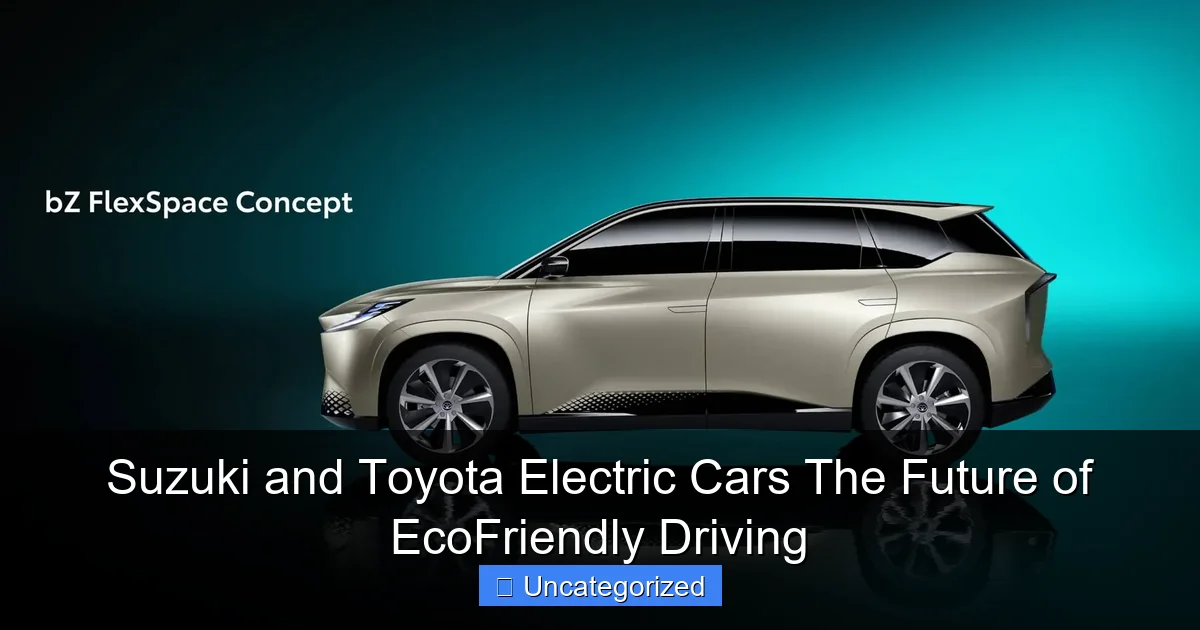
Visual guide about suzuki and toyota electric cars
Image source: electrek.co
These goals are not just corporate PR—they reflect a fundamental shift in business strategy. With governments worldwide tightening emissions regulations (e.g., the EU’s 2035 ban on new ICE vehicles), automakers must adapt or risk obsolescence. Suzuki and Toyota recognize that electric vehicles are central to their long-term survival and growth. Unlike some competitors who are rushing to launch EVs without a clear roadmap, both companies are taking a measured, technology-agnostic approach that includes battery electric vehicles (BEVs), plug-in hybrids (PHEVs), fuel cell vehicles (FCEVs), and hybrid EVs (HEVs).
Regional Market Expertise and Niche Innovation
One of the strengths of Suzuki and Toyota is their deep understanding of regional markets. While global automakers often design EVs for Western consumers, Suzuki and Toyota are tailoring their electric cars to meet the specific needs of Asian, African, and South American drivers. For example:
- Suzuki is focusing on compact EVs ideal for crowded cities and narrow roads in India and Southeast Asia. Its expertise in small, efficient vehicles makes it a natural fit for urban electric mobility.
- Toyota is leveraging its dominance in hybrid technology to develop flexible EV platforms that can accommodate batteries, hydrogen fuel cells, or hybrid powertrains—allowing for regional adaptability.
This regional focus ensures that Suzuki and Toyota electric cars are not just technologically advanced but also practical and accessible to a broader audience. For instance, Suzuki’s upcoming EV for India is expected to be priced under $20,000, making it one of the most affordable EVs in the market.
Investment in Next-Gen Technologies
Beyond vehicle design, both companies are investing heavily in the technologies that underpin electric mobility. Toyota has committed over $70 billion to electrification through 2030, including $21 billion for battery development. It’s building three new battery plants in the U.S. and Japan to ensure supply chain resilience. Suzuki, meanwhile, has partnered with Toyota and Denso to co-develop battery systems and electric drivetrains, reducing R&D costs and accelerating innovation.
Key areas of investment include:
- Solid-state batteries: Toyota is a global leader in this technology, which promises higher energy density, faster charging, and improved safety. The first Toyota BEVs with solid-state batteries are expected by 2027.
- Charging infrastructure: Both companies are collaborating with governments and energy providers to expand public charging networks, especially in rural and underserved areas.
- Vehicle-to-grid (V2G) technology: Toyota is piloting V2G systems in Japan and Europe, allowing EVs to supply power back to the grid during peak demand.
Current and Upcoming Suzuki and Toyota Electric Cars
Suzuki’s Electric Lineup: Small Cars, Big Impact
While Suzuki has been slower to enter the BEV market compared to Toyota, it’s making a strong comeback with a clear strategy: affordable, compact EVs for emerging markets. Here are the key models to watch:
- Suzuki e-Vitara: Launching in 2025, this is Suzuki’s first global BEV. Based on the new Heartect-e electric platform, it features a 61 kWh battery, up to 500 km (310 miles) of range, and a dual-motor AWD option. Designed for India, Europe, and Japan, it’s expected to start at around $25,000.
- Suzuki Wagon R EV (India): A compact city car with a 20 kWh battery and 150 km (93 miles) range. Targeted at urban commuters, it’s expected to cost under $15,000, making it one of the most affordable EVs in India.
- Suzuki Swift EV (Concept): A prototype based on the popular Swift hatchback, showcasing Suzuki’s plan to electrify its best-selling models. Expected in 2026.
Tip for Buyers: If you live in a crowded city or need a second car for short commutes, the Wagon R EV or Swift EV could be ideal. Their small size makes parking easy, and their low cost reduces financial risk.
Toyota’s Electric Portfolio: Diversified and Forward-Thinking
Toyota’s approach is broader, covering multiple vehicle segments and technologies. Its BEV lineup includes:
- Toyota bZ4X: The brand’s first global BEV, based on the e-TNGA platform. Offers up to 500 km (310 miles) range, all-wheel drive, and a spacious interior. Priced competitively at $42,000 (U.S.), it’s aimed at mainstream SUV buyers.
- Toyota C-HR BEV: A compact SUV with a 54 kWh battery and 400 km (250 miles) range. Popular in Europe and China, it blends style with efficiency.
- Toyota Urban Cruiser BEV: A subcompact SUV developed with Suzuki, set to launch in India in 2025. Expected to have a 40 kWh battery and 300 km (186 miles) range.
- Toyota Mirai: While not a BEV, this hydrogen fuel cell vehicle (FCEV) is part of Toyota’s eco-strategy. With 650 km (400 miles) range and zero tailpipe emissions, it’s ideal for regions with hydrogen infrastructure.
Pro Tip: If you’re new to EVs, start with a Toyota hybrid (like the RAV4 Prime) to get comfortable with electric driving, then transition to a full BEV like the bZ4X when ready.
Joint Ventures and Shared Platforms
Suzuki and Toyota have a strategic partnership that includes technology sharing and co-development. This collaboration has led to:
- Shared BEV Platforms: The e-TNGA platform (Toyota) and Heartect-e (Suzuki) share components, reducing costs and improving reliability.
- Cross-Badged Models: The Urban Cruiser BEV (Toyota) and e-Vitara (Suzuki) are essentially twins, tailored for different markets.
- Joint Battery Development: Both companies are working with Panasonic and Toyota Tsusho to secure cobalt-free batteries, reducing environmental and ethical concerns.
This partnership allows both brands to compete more effectively against giants like Tesla, Volkswagen, and BYD while maintaining their unique identities.
Charging Infrastructure and Range: Practical Considerations
Range Anxiety? Not with Suzuki and Toyota
One of the biggest concerns for EV buyers is range anxiety—the fear of running out of charge. Suzuki and Toyota are addressing this with smart engineering and realistic range targets. Here’s how:
- Real-World Range: Unlike some EVs that promise 500+ km but deliver 300 km in cold weather, Suzuki and Toyota prioritize usable range. The bZ4X, for example, maintains 80% of its rated range in winter conditions.
- Efficient Powertrains: Both companies use heat pumps (instead of resistive heaters) to reduce energy consumption in cold weather, extending winter range by up to 30%.
- Regenerative Braking: Advanced systems recover up to 20% of energy during deceleration, especially useful in city driving.
Tip: Use the Toyota App or Suzuki Connect to plan routes with charging stations and monitor real-time energy consumption. These apps also show nearby charging points and their availability.
Charging Solutions for Every Lifestyle
Charging accessibility varies by region, but Suzuki and Toyota are working to make it easier:
- Home Charging: Both offer Level 2 (240V) home chargers. Toyota’s charger can add 40 km (25 miles) of range per hour, ideal for overnight charging.
- Public Charging: Toyota has partnered with ChargePoint, EVgo, and Ionity to offer free or discounted charging for bZ4X owners in the U.S., Europe, and Japan. Suzuki is expanding its network in India through collaborations with Tata Power.
- Fast Charging: The bZ4X and e-Vitara support 150 kW DC fast charging, adding 200 km (124 miles) of range in 30 minutes.
Data Table: Charging Time Comparison (20-80%)
| Vehicle | Battery Size | Level 2 (240V) | DC Fast Charging | Home Charging Tip |
|---|---|---|---|---|
| Toyota bZ4X | 71.4 kWh | ~9 hours | 30 minutes | Install a 50A circuit for faster home charging |
| Suzuki e-Vitara | 61 kWh | ~8 hours | 28 minutes | Use off-peak electricity rates to save on charging costs |
| Toyota C-HR BEV | 54 kWh | ~7 hours | 25 minutes | Charge during work hours at public stations for convenience |
Overcoming Rural Charging Challenges
In rural areas, charging infrastructure is often limited. Suzuki and Toyota are tackling this with:
- Mobile Charging Units: Toyota has tested portable charging stations in rural Japan that can be deployed for events or emergencies.
- Community Charging Hubs: In India, Suzuki is working with local governments to install charging points in villages and small towns.
- Hybrid Backup: For remote areas, Toyota’s hybrid EVs (like the Prius Prime) offer a flexible alternative, combining electric driving with gas range.
Sustainability Beyond the Tailpipe
Lifecycle Emissions and Eco-Friendly Manufacturing
True eco-friendliness isn’t just about zero tailpipe emissions—it’s about reducing the entire lifecycle impact of a vehicle. Suzuki and Toyota are leading the way:
- Recycled Materials: The bZ4X uses recycled plastics in its interior, while the e-Vitara incorporates bio-based fabrics. Toyota aims for 30% recycled content in all new vehicles by 2030.
- Green Factories: Toyota’s Tsutsumi plant in Japan is powered by 100% renewable energy, and Suzuki’s Gujarat plant (India) uses solar panels to offset 40% of its energy use.
- Battery Recycling: Both companies are building closed-loop recycling systems. Toyota’s “Battery Recycle” program recovers 95% of battery materials for reuse.
Renewable Energy Integration
Charging an EV with coal power defeats the purpose. Suzuki and Toyota are promoting renewable energy integration:
- Solar Charging: Toyota offers a solar roof option for the bZ4X, adding up to 1,800 km (1,120 miles) of free range per year.
- Green Tariffs: In Europe, Toyota partners with energy providers to offer customers 100% renewable electricity for home charging.
- Microgrids: Suzuki is piloting solar-powered charging stations in rural India, creating off-grid solutions for remote areas.
Social Responsibility and Inclusive Mobility
Eco-friendly driving shouldn’t be a privilege for the wealthy. Suzuki and Toyota are committed to inclusive mobility:
- Affordable EVs: The Wagon R EV (under $15,000) and Urban Cruiser BEV (targeted at $18,000) make EVs accessible to middle-income families in emerging markets.
- EV Sharing: Toyota’s “Kinto” program in Europe offers EV subscription services, reducing ownership costs.
- Disability Access: Both companies are designing EVs with wheelchair accessibility and voice-controlled interfaces.
The Road Ahead: What’s Next for Suzuki and Toyota Electric Cars
2025-2030: A Wave of New Models
The next five years will see a significant expansion of Suzuki and Toyota electric cars. Key upcoming models include:
- Toyota bZ3: A compact sedan based on the e-TNGA platform, targeting China and Europe. Expected range: 500 km (310 miles).
- Suzuki Jimny EV: An electric version of the iconic off-roader, with a 30 kWh battery and 200 km (124 miles) range. Perfect for adventure seekers.
- Toyota Pickup EV: A full-size electric truck for North America, competing with the Ford F-150 Lightning.
- Suzuki Mini EV: A tiny, ultra-affordable city car (under $10,000) for India and Southeast Asia.
Breakthrough Technologies on the Horizon
The future of Suzuki and Toyota electric cars is tied to cutting-edge innovations:
- Solid-State Batteries: Toyota’s 2027 BEVs will feature solid-state batteries with 750 km (465 miles) range and 10-minute fast charging.
- AI-Powered Driving: Both companies are developing AI systems that optimize energy use based on traffic, weather, and driver behavior.
- Autonomous Charging: Toyota is testing self-driving EVs that can navigate to charging stations autonomously.
Global Expansion and Market Leadership
With over 50 new BEVs planned by 2030, Toyota aims to capture 30% of the global EV market. Suzuki, while smaller, will focus on dominating the affordable EV segment in Asia and Africa. Together, they’re poised to become the most sustainable and inclusive EV brands in the world.
Final Tip: Whether you’re a first-time EV buyer or a seasoned eco-driver, keep an eye on Suzuki and Toyota electric cars—they’re not just the future of mobility, but the future of a cleaner, fairer planet.
Conclusion: Driving Toward a Sustainable Future
The journey toward eco-friendly driving is no longer a distant dream—it’s happening now, and Suzuki and Toyota are at the forefront. By combining technological innovation, regional adaptability, and a deep commitment to sustainability, they’re creating electric cars that are not only better for the environment but also practical, affordable, and accessible to millions. From the compact Suzuki e-Vitara to the versatile Toyota bZ4X, these vehicles prove that eco-friendly driving doesn’t mean sacrificing performance, style, or convenience.
As the world transitions to electric mobility, Suzuki and Toyota are setting a benchmark for what responsible automaking looks like. They’re not just selling cars—they’re building a legacy of cleaner air, reduced emissions, and inclusive progress. Whether you live in a bustling city, a quiet suburb, or a rural village, there’s a Suzuki or Toyota electric car designed for your life. The future is electric, and it’s already here. All you need to do is get behind the wheel.
Frequently Asked Questions
What are the key features of Suzuki and Toyota electric cars?
Suzuki and Toyota electric cars combine advanced battery technology, energy efficiency, and low emissions. Models like the Suzuki eVX and Toyota bZ4X offer long ranges, fast charging, and smart infotainment systems, making them ideal for eco-conscious drivers.
How do Suzuki and Toyota electric cars compare in terms of pricing?
Suzuki’s electric vehicles (EVs) are often more budget-friendly, targeting urban commuters, while Toyota’s EVs, like the bZ series, focus on premium features with slightly higher price points. Both brands offer competitive pricing for their segment.
Are Suzuki and Toyota electric cars reliable for long-distance travel?
Yes, Toyota’s electric cars, such as the bZ4X, boast extended ranges (up to 300+ miles) and reliable charging networks. Suzuki’s EVs, while suited for city driving, are expanding their range capabilities to meet long-distance needs.
What charging options are available for Suzuki and Toyota electric cars?
Both brands support standard Level 2 home charging and public fast-charging stations. Toyota’s EVs often include compatibility with DC fast charging, while Suzuki emphasizes affordable home charging solutions for daily use.
Do Suzuki and Toyota electric cars qualify for government incentives?
Yes, most Suzuki and Toyota electric cars meet eligibility requirements for federal or state tax credits and rebates, depending on your location. Check local regulations to maximize savings when purchasing.
How sustainable are Suzuki and Toyota electric cars compared to traditional vehicles?
Suzuki and Toyota electric cars significantly reduce carbon footprints by eliminating tailpipe emissions and using recyclable materials. Both brands also invest in renewable energy for manufacturing, enhancing their eco-friendly credentials.