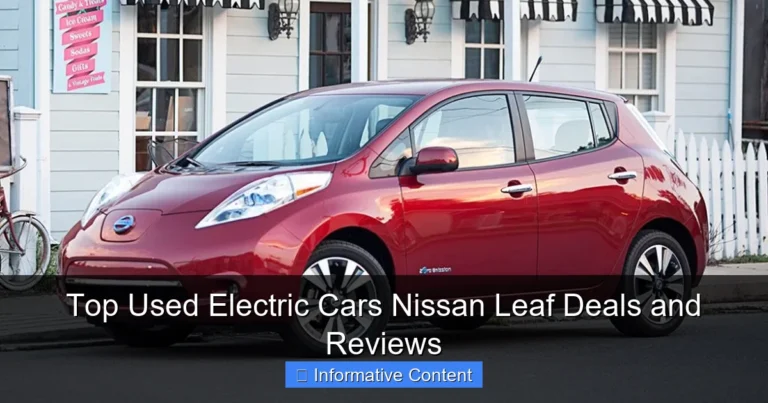
Top Electric Car Charging Stations for Nissan Leaf Drivers
Featured image for electric car charging stations nissan leaf
Image source: cdn.pixabay.com
Finding the best electric car charging stations for your Nissan Leaf is essential for maximizing range and convenience on every journey. Level 2 public chargers like those from ChargePoint and EVgo offer fast, reliable charging at home, work, or on the road, ensuring seamless integration into your daily routine. With wide network coverage and Leaf-specific compatibility, these stations deliver the speed and accessibility every EV driver needs.
Key Takeaways
- Choose Level 2 stations: Opt for 240V chargers to maximize Nissan Leaf charging speed.
- Verify connector compatibility: Ensure stations support CHAdeMO for fast DC charging.
- Use apps for real-time data: Leverage PlugShare or ChargePoint to locate available stations.
- Prioritize public networks: Rely on ChargePoint, EVgo, or Electrify America for reliability.
- Plan for road trips: Map DC fast-charging stops for long-distance travel.
- Check home charging options: Install a Level 2 charger for overnight convenience.
📑 Table of Contents
- Top Electric Car Charging Stations for Nissan Leaf Drivers
- Understanding Nissan Leaf Charging Compatibility
- Best Home Charging Stations for Nissan Leaf
- Public Charging Networks: Where to Charge Your Leaf on the Go
- Fast Charging: Maximizing Speed and Efficiency
- Charging Costs, Incentives, and Long-Term Savings
- Conclusion: Empowering Your Nissan Leaf Journey
Top Electric Car Charging Stations for Nissan Leaf Drivers
As electric vehicles (EVs) continue to surge in popularity, the Nissan Leaf remains one of the most accessible and widely recognized options for eco-conscious drivers. Since its launch in 2010, the Leaf has evolved through multiple generations, offering improved battery capacity, longer range, and enhanced charging compatibility. However, the true success of any EV depends not just on the vehicle itself, but on the infrastructure that supports it—specifically, electric car charging stations for Nissan Leaf drivers. Whether you’re a first-time Leaf owner or a long-time EV enthusiast, understanding where, how, and when to charge your Nissan Leaf is essential to maximizing your driving experience.
With over 500,000 Nissan Leafs sold globally, the demand for reliable, fast, and convenient charging solutions has never been greater. From home charging setups to public fast-charging networks, the options are expanding rapidly. But not all charging stations are created equal—some are faster, more compatible, or more strategically located than others. This comprehensive guide explores the top electric car charging stations for Nissan Leaf drivers, covering everything from Level 1 and Level 2 home chargers to public DC fast charging stations like CHAdeMO and CCS (in newer models). We’ll also dive into smart charging features, cost comparisons, and practical tips to help you charge smarter, save money, and reduce range anxiety on every journey.
Understanding Nissan Leaf Charging Compatibility
Before selecting a charging station, it’s crucial to understand the charging capabilities of your specific Nissan Leaf model. The Leaf has undergone significant changes over the years, and these changes affect which charging stations are compatible and how fast you can recharge.
Visual guide about electric car charging stations nissan leaf
Image source: publicdomainpictures.net
Charging Ports: CHAdeMO, CCS, and J1772
The original Nissan Leaf (2011–2017) uses the CHAdeMO standard for DC fast charging, which remains one of the most widely adopted protocols in North America and Asia. However, starting with the 2018 Leaf Plus and continuing with the 2023 and 2024 models, Nissan introduced a CCS (Combined Charging System) port in addition to CHAdeMO in certain trims—particularly in the U.S. and Europe. This dual-port design allows Leaf drivers to access both CHAdeMO and CCS fast chargers, greatly expanding charging options.
- CHAdeMO: Supports up to 50 kW (older Leafs) and up to 100 kW (Leaf Plus models). Found on all Leafs since 2011.
- CCS (Combo 1 or Combo 2): Available on 2018+ Leaf Plus models (especially in the U.S.). Supports up to 100 kW and is compatible with most newer fast-charging networks.
- J1772 (Type 1): Used for all Level 1 and Level 2 AC charging. Standard on all Nissan Leafs.
Pro Tip: If you own a 2018 or newer Leaf Plus, check your charging port configuration. Some trims have both CHAdeMO and CCS, while others may only have CHAdeMO. This affects which public fast chargers you can use.
Battery Capacity and Charging Speed
The charging speed also depends on your Leaf’s battery size:
- 40 kWh battery (2018–2024 standard Leaf): Charges from 0–80% in about 40 minutes on a 50 kW CHAdeMO or CCS charger.
- 62 kWh battery (2019–2024 Leaf Plus): Charges from 0–80% in 45–60 minutes on a 100 kW charger. Slower on 50 kW units.
Keep in mind that charging slows down significantly after 80% to protect battery health. This is normal and applies to all EVs.
Smart Charging and Vehicle Integration
Modern Nissan Leafs come with NissanConnect EV services, which allow you to remotely monitor charging status, set charging schedules, and preheat the cabin using a smartphone app. This integration works seamlessly with many smart charging stations, enabling features like delayed charging during off-peak electricity hours or load balancing in smart homes.
Best Home Charging Stations for Nissan Leaf
Charging at home is the most convenient and cost-effective way to keep your Nissan Leaf powered. Most Leaf owners charge overnight, taking advantage of lower electricity rates and ensuring a full battery each morning. But choosing the right home charger is key to efficiency, safety, and long-term savings.
Level 1 vs. Level 2 Charging
All Nissan Leafs come with a Level 1 charger (120V AC), which plugs into a standard household outlet. While convenient, Level 1 charging is slow—adding only 4–5 miles of range per hour. For a full charge on a 40 kWh battery, that’s up to 24 hours.
Upgrading to a Level 2 charger (240V AC) is highly recommended. These units deliver 7–11 kW of power, adding 25–30 miles of range per hour. A full charge takes 6–8 hours for a 40 kWh battery and 8–10 hours for the 62 kWh version.
Top-Rated Home Charging Stations
- ChargePoint Home Flex: One of the most popular choices. Offers 240V, 50-amp output (up to 11.5 kW), Wi-Fi connectivity, scheduling, and integration with the ChargePoint app. Compatible with NissanConnect for remote monitoring. Price: $699 (installation extra).
- JuiceBox 40: Smart features, 40-amp output (9.6 kW), sleek design, and real-time energy monitoring. Works with Alexa and Google Assistant. Price: $649.
- Grizzl-E Classic: Rugged, weather-resistant, and made in Canada. Offers 40-amp output (9.6 kW) and is ideal for harsh climates. No Wi-Fi (budget-friendly). Price: $399.
- Wallbox Pulsar Plus: Compact, smart charging with 40-amp output, app control, and energy usage tracking. Supports load management for homes with solar. Price: $599.
Tip: Most homeowners can install a Level 2 charger with a 50-amp circuit, but always consult a licensed electrician. Permits and utility rebates may be available—check with your local energy provider.
Installation Tips and Cost Savings
The average installation cost for a Level 2 charger is $500–$1,200, depending on your home’s electrical setup. However, many utility companies offer rebates of $200–$500. For example:
- PG&E (California): Up to $500 rebate
- Con Edison (New York): $500 rebate
- Xcel Energy (Colorado): $500–$700
Additionally, charging at home typically costs $0.10–$0.20 per kWh. A full 40 kWh charge costs $4–$8, compared to $10–$15 at public Level 2 stations and $15–$25 at DC fast chargers.
Public Charging Networks: Where to Charge Your Leaf on the Go
While home charging is ideal for daily use, public charging stations are essential for road trips, long commutes, or urban living without dedicated parking. The good news is that Nissan Leaf drivers have access to a growing network of public chargers—many of which are compatible with CHAdeMO and CCS.
Top Public Charging Networks for Nissan Leaf
- Electrify America: The largest DC fast-charging network in the U.S. with over 800 stations. Offers both CHAdeMO and CCS ports. Average speed: 50–150 kW. Pricing: $0.31–$0.43 per kWh (membership discounts available).
- EVgo: Specializes in fast charging, with over 850 stations. All locations support CCS, and many also have CHAdeMO. Average speed: 50–100 kW. Offers a $10/month membership for reduced rates.
- ChargePoint: Over 200,000 charging spots globally, including Level 2 and DC fast chargers. Many CHAdeMO-equipped stations. App integration is seamless with NissanConnect.
- Shell Recharge: Expanding rapidly in North America and Europe. Offers CCS and CHAdeMO fast chargers at gas stations and shopping centers.
- Greenlots (now part of Shell): Popular in the Pacific Northwest and Canada. Strong CHAdeMO support.
Real-World Example: A 2022 Nissan Leaf Plus driver traveling from San Diego to Los Angeles (120 miles) can use Electrify America stations in Oceanside and Santa Monica. Charging from 20% to 80% takes about 45 minutes on a 100 kW CCS charger.
Using Apps to Find and Navigate Charging Stations
Several apps help Leaf drivers locate, reserve, and pay for charging:
- PlugShare: Crowdsourced database of over 400,000 charging stations. Shows real-time availability, user reviews, and compatibility (CHAdeMO/CCS).
- ChargePoint App: Direct access to ChargePoint’s network. Enables payment, session tracking, and remote start/stop.
- Electrify America App: Real-time station status, pricing, and navigation. Offers “Reserve Now” feature.
- Google Maps: Now includes EV charging stations with filter options for CHAdeMO, CCS, and Level 2.
Pro Tip: Always check station reliability before arriving. Some public chargers are frequently out of service. Use PlugShare’s “Last Used” timestamp to verify recent activity.
Charging Etiquette and Best Practices
- Don’t overstay: Move your Leaf once charging is complete, especially at fast chargers. Most stations charge idle fees after 10–15 minutes.
- Use the right port: Don’t force a CCS plug into a CHAdeMO-only Leaf. Newer Leafs with dual ports can use either.
- Precondition the battery: Use navigation to the charger to warm up the battery (via NissanConnect), which can increase charging speed in cold weather.
Fast Charging: Maximizing Speed and Efficiency
DC fast charging is a game-changer for Nissan Leaf drivers, especially on long trips. But not all fast chargers are equally effective, and charging speed can vary based on battery temperature, state of charge, and charger capability.
How Fast Can a Nissan Leaf Charge?
The maximum charging rate depends on your model:
- 2018–2024 Leaf (40 kWh): Up to 50 kW (CHAdeMO)
- 2019–2024 Leaf Plus (62 kWh): Up to 100 kW (CHAdeMO or CCS)
However, charging speed follows a charging curve: rapid at first (0–50%), then slows to protect the battery (50–80%), and very slow after 80%. This means:
- 0–80%: 40–60 minutes (on 100 kW)
- 80–100%: Another 30–60 minutes
Tip: For road trips, aim to charge to 80% at each stop. This maximizes speed and efficiency. Top up to 100% only when necessary.
Optimizing Fast Charging Performance
- Precondition the battery: Use the Nissan Leaf’s navigation system to route to a charger. The car will automatically warm the battery, improving charging speed.
- Avoid extreme temperatures: Charging is slower in very cold or hot weather. Park in the shade or use a garage when possible.
- Choose high-power stations: Look for chargers with 100 kW or higher output. A 150 kW charger won’t charge your Leaf faster than 100 kW, but it ensures you’re not bottlenecked by an underpowered unit.
Future-Proofing: CCS vs. CHAdeMO
While CHAdeMO remains widely available, the industry is shifting toward CCS. Electrify America, EVgo, and others are phasing out CHAdeMO in favor of CCS. If you own a newer Leaf with both ports, use CCS when available—it’s the future. For older Leafs (pre-2018), CHAdeMO is still reliable, but consider a portable CCS-to-CHAdeMO adapter (available for ~$300) for flexibility.
Charging Costs, Incentives, and Long-Term Savings
One of the biggest advantages of owning a Nissan Leaf is the long-term savings on fuel and maintenance. But to maximize those benefits, it’s important to understand the real cost of charging and take advantage of available incentives.
Cost Comparison: Home vs. Public Charging
Below is a comparison of average charging costs for a 40 kWh Nissan Leaf (full charge):
| Charging Method | Power Source | Cost per kWh | Full Charge Cost | Time (0–100%) |
|---|---|---|---|---|
| Level 1 (Home) | 120V AC | $0.12 | $4.80 | 24 hours |
| Level 2 (Home) | 240V AC | $0.12 | $4.80 | 7–8 hours |
| Public Level 2 | 240V AC | $0.20–$0.30 | $8–$12 | 7–8 hours |
| DC Fast (CHAdeMO/CCS) | DC | $0.30–$0.43 | $12–$17 | 40–60 min (0–80%) |
Over a year, charging a Nissan Leaf at home could save you $500–$1,000 compared to gasoline, depending on your driving habits.
Federal, State, and Utility Incentives
Several programs can reduce your charging costs:
- Federal Tax Credit: Up to $7,500 for new EV purchases (applies to Leaf models meeting battery criteria).
- Home Charger Rebates: Many states and utilities offer $200–$700 rebates for Level 2 charger installation.
- Free Public Charging: Some cities (e.g., Portland, Seattle) offer free charging for EVs at public stations.
- Off-Peak Discounts: Utilities like SDG&E and Con Edison offer lower rates for charging between 11 PM–7 AM.
Long-Term Battery Health and Charging Habits
To extend your Leaf’s battery life:
- Charge to 80% for daily use; reserve 100% for trips.
- Use Level 2 charging when possible—less stress on the battery than frequent fast charging.
- Avoid deep discharges (below 20%) regularly.
Conclusion: Empowering Your Nissan Leaf Journey
The rise of electric car charging stations for Nissan Leaf drivers has transformed what was once a niche market into a mainstream mobility solution. Whether you’re charging at home with a sleek Level 2 unit, using a fast CHAdeMO charger during a cross-country trip, or relying on CCS compatibility in newer models, the infrastructure is more robust than ever. By understanding your Leaf’s charging capabilities, choosing the right stations, and leveraging smart technology and incentives, you can enjoy a seamless, cost-effective, and eco-friendly driving experience.
From the convenience of ChargePoint Home Flex and JuiceBox 40 to the expansive reach of Electrify America and EVgo, the tools are at your fingertips. Apps like PlugShare and NissanConnect EV put real-time data in your hands, while smart charging habits ensure your battery stays healthy for years. As charging networks continue to expand and evolve—especially with the shift toward CCS—Nissan Leaf drivers are well-positioned to lead the charge in the electric revolution.
So plug in, power up, and embrace the future. With the right knowledge and resources, your Nissan Leaf isn’t just a car—it’s a gateway to cleaner, smarter, and more sustainable transportation. The road ahead is electric, and it’s charged and ready.
Frequently Asked Questions
What type of charging stations are compatible with the Nissan Leaf?
The Nissan Leaf supports Level 1 (120V), Level 2 (240V), and DC fast charging (CHAdeMO) stations. For daily use, Level 2 stations offer the best balance of speed and convenience, while DC fast chargers are ideal for long trips.
Where can I find reliable electric car charging stations for Nissan Leaf near me?
Use apps like PlugShare, ChargePoint, or Nissan’s own “NissanConnect EV” app to locate nearby charging stations. Many public stations, including those at shopping centers and workplaces, are optimized for Leaf compatibility.
How long does it take to fully charge a Nissan Leaf?
Charging time varies by station type: Level 1 (8–20 hours), Level 2 (4–8 hours), and DC fast charging (30–60 minutes for 80%). Most Leaf drivers prefer Level 2 for overnight home charging.
Can I use a Tesla charging station for my Nissan Leaf?
Yes, but you’ll need a CHAdeMO-to-Tesla adapter for DC fast charging. Tesla’s Level 2 stations (Destination Chargers) may also require an adapter, depending on your Leaf’s model year.
Are home charging stations worth it for Nissan Leaf owners?
Absolutely. Installing a Level 2 home charger (like the ChargePoint Home Flex) saves time and money compared to public stations. Many regions also offer rebates for home charger installations.
What’s the difference between CHAdeMO and CCS charging for the Nissan Leaf?
The Leaf uses CHAdeMO for DC fast charging, while CCS (Combo) is common in newer EVs. CHAdeMO stations are widely available for Leaf drivers, but CCS adapters are not yet standard for Nissan’s current lineup.