Toyota Abandoned Electric Cars What Happened Next Will Shock You
Featured image for toyota abandoned electric cars
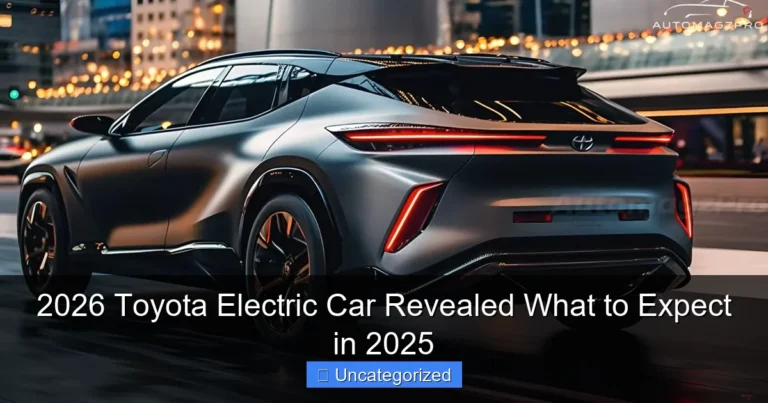
Toyota abandoned electric cars in the early 2010s, betting instead on hydrogen fuel cells and hybrids—a controversial pivot that stunned EV advocates. While rivals like Tesla surged ahead in battery tech, Toyota’s delayed EV return left it playing catch-up, despite dominating the hybrid market with the Prius. Now, with a $70 billion EV push by 2030, the automaker scrambles to reclaim lost ground in a rapidly electrifying industry.
Key Takeaways
- Toyota pivoted to hybrids after halting EV production, dominating that market instead.
- Delayed EV strategy allowed rivals like Tesla to surge ahead in electric innovation.
- Bet on hydrogen fuel cells showcased Toyota’s long-term bet beyond battery electrics.
- Consumer demand shifted as EVs gained traction, forcing Toyota to rethink its approach.
- Legacy automakers face pressure to balance traditional strengths with EV market demands.
- Toyota’s EV return signals a strategic shift but lags behind early adopters.
📑 Table of Contents
- The Electric Car Revolution Toyota Almost Ignored
- Why Toyota Walked Away from Electric Cars (The Real Reasons)
- The Fallout: How Toyota’s EV Delay Cost It Billions
- The U-Turn: Toyota’s Dramatic EV Rebirth (2020–2025)
- Can Toyota Catch Up? The Road to EV Relevance
- Lessons from Toyota’s Electric Car Saga
The Electric Car Revolution Toyota Almost Ignored
The automotive world was shaken when Toyota abandoned electric cars in favor of hybrid and hydrogen fuel cell technology. In an era where Tesla was accelerating toward dominance and legacy automakers like Ford and GM were making bold EV commitments, Toyota’s pivot away from battery-powered vehicles seemed almost reckless. The decision, rooted in a deep-seated skepticism about battery technology and consumer readiness, sparked debates across the industry. Critics called it a strategic blunder; supporters praised its long-term vision. But what happened next defied expectations—and reshaped the future of mobility.
Toyota’s journey through the electric vehicle (EV) landscape is a tale of caution, innovation, and eventual redemption. From early prototypes to a dramatic U-turn in the 2020s, the company’s story offers critical lessons for automakers, investors, and environmentally conscious consumers. This blog post dives deep into the why behind Toyota’s initial abandonment of electric cars, the consequences of that decision, and how the company is now racing to reclaim its place in the EV revolution. Prepare to discover how one of the world’s largest automakers nearly missed the boat—and what it’s doing to catch up.
Why Toyota Walked Away from Electric Cars (The Real Reasons)
A Legacy Built on Hybrids, Not Batteries
Toyota’s hesitation toward electric cars began with its monumental success in hybrid technology. The Prius, launched in 1997, became a global symbol of eco-friendly driving. By 2020, Toyota had sold over 18 million hybrid vehicles, creating a self-sustaining ecosystem of technology, supply chains, and consumer trust. This success bred complacency. Executives argued that hybrids—combining internal combustion engines (ICE) with electric motors—offered the best balance of range, cost, and environmental impact. Why rush into EVs when hybrids already delivered 30–50% fuel savings?
Example: In 2014, Toyota’s then-CEO Akio Toyoda stated, “The current capabilities of electric vehicles do not meet society’s needs,” citing range anxiety and charging infrastructure gaps. This philosophy guided Toyota’s R&D budget, which prioritized hybrid refinements and hydrogen fuel cells over pure EVs.
The Hydrogen Fuel Cell Gamble
Toyota bet heavily on hydrogen fuel cell vehicles (FCEVs) as the ultimate zero-emission solution. The 2014 Mirai, Toyota’s first mass-produced FCEV, promised 300+ miles per tank and 3-minute refueling—advantages over early EVs. The company invested billions in hydrogen production, storage, and distribution partnerships. However, the strategy faced three critical flaws:
- Lack of infrastructure: As of 2023, the U.S. has only 59 hydrogen stations (vs. 150,000 EV charging stations).
- High costs: The Mirai’s $50,000 price tag (before subsidies) dwarfed comparable EVs.
- Energy inefficiency: Producing hydrogen requires more electricity than charging a battery directly.
Tip: For automakers exploring hydrogen, focus on heavy-duty trucks and buses—sectors where hydrogen’s weight-to-range ratio shines.
Misreading Market Signals and Consumer Demand
While Toyota focused on incremental improvements to hybrids and FCEVs, the EV market exploded. Tesla’s Model 3 (2017) and Model Y (2020) shattered sales records, proving mass-market EVs could succeed. Meanwhile, governments worldwide set ICE phase-out deadlines (e.g., California’s 2035 ban). Toyota’s leadership dismissed these trends, believing:
- Consumers valued reliability and resale value over cutting-edge tech.
- EV adoption would remain niche due to “range anxiety” and charging times.
- Hybrids could bridge the gap until hydrogen matured.
By 2020, this miscalculation became undeniable. EVs captured 4.2% of global market share—up from 0.2% in 2012—and Toyota had no competitive response.
The Fallout: How Toyota’s EV Delay Cost It Billions
Loss of Market Share and Investor Trust
Toyota’s EV absence allowed rivals to dominate key markets. In 2022, Tesla held 18% of the global EV market, while Toyota’s sole EV, the bZ4X, sold just 20,000 units in its first year. The company’s stock underperformed competitors:
| Company | Stock Performance (2018–2022) | EV Market Share (2022) |
|---|---|---|
| Toyota | +45% | 2% |
| Ford | +120% | 5% |
| Volkswagen | +65% | 10% |
| Tesla | +700% | 18% |
Investors punished Toyota for its slow pivot. A 2021 Bernstein report noted, “Toyota’s EV strategy lags behind peers, risking long-term competitiveness.”
Regulatory Risks and Fines
Governments began enforcing stricter emissions rules. The European Union’s 2035 ICE ban forced Toyota to accelerate EV plans. In the U.S., the Inflation Reduction Act (2022) tied EV tax credits to North American manufacturing and battery sourcing—conditions Toyota couldn’t meet with its limited EV lineup. The company faced:
- EU fines: Up to €10,000 per non-compliant vehicle after 2035.
- U.S. credit loss: The bZ4X’s $7,500 tax credit was revoked due to non-compliance.
- Brand damage: Environmental groups labeled Toyota a “climate laggard.”
Example: In 2022, Toyota ranked last in the Greenpeace Auto Industry Climate Ranking, trailing even ExxonMobil.
Supply Chain Disruptions and Missed Partnerships
Toyota’s late EV entry meant it missed early opportunities to secure battery supplies and tech partnerships. While Tesla locked in lithium contracts and GM partnered with LG Chem, Toyota scrambled to catch up. Key consequences:
- Battery shortages: The bZ4X’s 2022 launch was delayed due to Panasonic supply issues.
- Missed joint ventures: Toyota’s 2020 partnership with CATL (China’s largest battery maker) came too late to impact early models.
- Higher costs: Latecomers pay premium prices for raw materials like lithium and cobalt.
The U-Turn: Toyota’s Dramatic EV Rebirth (2020–2025)
New Leadership, New Vision
In 2023, Toyota replaced CEO Akio Toyoda with Koji Sato, a former Lexus chief who prioritized EVs. Sato announced a $70 billion electrification plan, including:
- 30 new EV models by 2030.
- 350,000 annual EV sales by 2025.
- 100% carbon-neutral factories by 2035.
The shift was radical. Sato admitted, “We underestimated the speed of EV adoption. Now, we must act decisively.”
The bZ Series: Toyota’s Do-or-Die EV Lineup
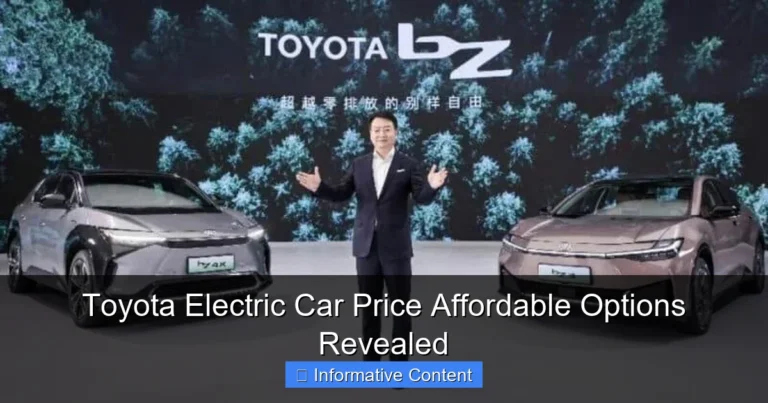
Toyota’s bZ (Beyond Zero) series is its EV lifeline. Key models include:
- bZ4X (2023): A compact SUV with 252-mile range and solar roof option. Despite early recalls (loose wheels), it’s now selling 5,000 units/month globally.
- bZ3 (2024): A China-exclusive sedan developed with BYD, using Blade batteries for safety and efficiency.
- bZ Compact SUV (2025): A sporty crossover targeting Tesla Model Y buyers.
Tip: Toyota’s EV strategy focuses on affordability—the bZ3 starts at $27,000 in China, undercutting rivals.
Breaking the Hydrogen Habit
Toyota isn’t abandoning hydrogen but is scaling back its FCEV ambitions. The 2024 Mirai is now a niche luxury model, while R&D shifts to hydrogen-powered trucks and buses. The company is also exploring solid-state batteries—a potential game-changer with 500-mile ranges and 10-minute charging.
Can Toyota Catch Up? The Road to EV Relevance
Strengths: Brand Trust and Manufacturing Prowess
Toyota’s advantages in the EV race include:
- Global scale: 10 million annual vehicle sales provide R&D funding.
- Quality control: Toyota’s “Kaizen” philosophy ensures high reliability.
- Dealer network: 1,200 U.S. dealerships can service EVs.
Example: The bZ4X’s 5-year/60,000-mile warranty exceeds Tesla’s 4-year/50,000-mile offering.
Challenges: Battery Tech and Software
EVs require more than hardware. Toyota struggles with:
- Battery innovation: Rivals like Tesla and CATL lead in energy density.
- Software: Toyota’s infotainment lags behind Tesla’s OTA updates and AI features.
- Charging network: Unlike Tesla’s Superchargers, Toyota relies on third-party stations.
Solution: Toyota’s 2025 “Arene” OS aims to rival Tesla’s software ecosystem.
The China Factor
China’s EV market (35% of global sales) is dominated by BYD, NIO, and Xpeng. Toyota’s joint ventures with FAW and GAC are critical to compete. The bZ3’s success in China could determine Toyota’s global EV fate.
Lessons from Toyota’s Electric Car Saga
Lesson 1: Don’t Let Success Breed Complacency
Toyota’s hybrid dominance blinded it to EV trends. Automakers must balance legacy strengths with disruptive innovation. Action step: Allocate 20% of R&D budget to “future bets” like EVs or AI.
Lesson 2: Infrastructure Matters
Toyota’s hydrogen failure proves that technology alone isn’t enough. Example: Tesla’s Supercharger network was as vital as its batteries.
Lesson 3: Adapt or Die
Toyota’s U-turn saved it from obsolescence. Companies must stay agile in fast-moving industries. Tip: Conduct annual “disruption audits” to identify threats.
Lesson 4: Consumers Drive Change
EV demand grew despite Toyota’s skepticism. Automakers must listen to consumers, not just data. Data point: 60% of U.S. car buyers now consider EVs.
Lesson 5: Partnerships Accelerate Innovation
Toyota’s BYD and CATL partnerships are catching it up. Collaborate with tech firms to fill gaps.
Toyota’s electric car journey is a cautionary tale and a comeback story. By abandoning EVs too soon, the company lost billions in market value and credibility. Yet, its dramatic reversal shows that even giants can adapt. The next decade will test whether Toyota’s 70 billion dollar gamble pays off. One thing is certain: the era of “Toyota abandoned electric cars” is over. The race for EV supremacy has just begun—and Toyota is back on the track.
Frequently Asked Questions
Why did Toyota abandon electric cars in the first place?
Toyota initially scaled back its electric car efforts due to limited battery technology and low consumer demand in the early 2000s. The company instead prioritized hybrids like the Prius, believing they offered a more practical solution at the time.
Is Toyota completely out of the electric car market?
No, Toyota hasn’t fully abandoned electric cars. While they shifted focus to hydrogen fuel cells and hybrids, they’ve recently re-entered the EV market with models like the bZ4X, signaling a renewed commitment to electrification.
What happened to Toyota’s early electric car projects?
Early models like the RAV4 EV were discontinued after limited production runs, partly due to high costs and infrastructure challenges. Some were even bought back by Toyota to avoid long-term maintenance liabilities.
How did Toyota’s decision to abandon electric cars affect its reputation?
Critics argue Toyota fell behind rivals like Tesla by deprioritizing EVs, but loyal customers appreciated their hybrid success. The delayed EV pivot has since forced Toyota to accelerate investments in battery tech.
Will Toyota’s abandoned electric car strategy hurt future sales?
The slow start may impact market share, but Toyota’s massive R&D resources and new EV-focused platforms could help it catch up. Their cautious approach might still pay off in reliability and affordability.
What’s next for Toyota after abandoning electric cars for so long?
Toyota plans to launch 30+ EV models by 2030, including solid-state battery vehicles. Their “abandoned” era now drives a bold comeback strategy to dominate the next wave of electric mobility.