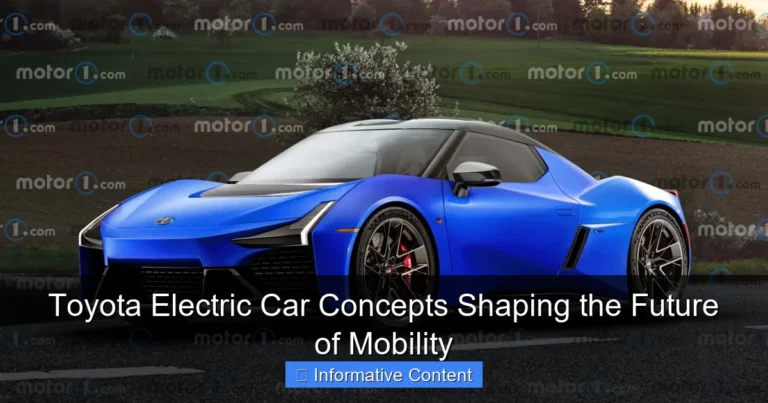
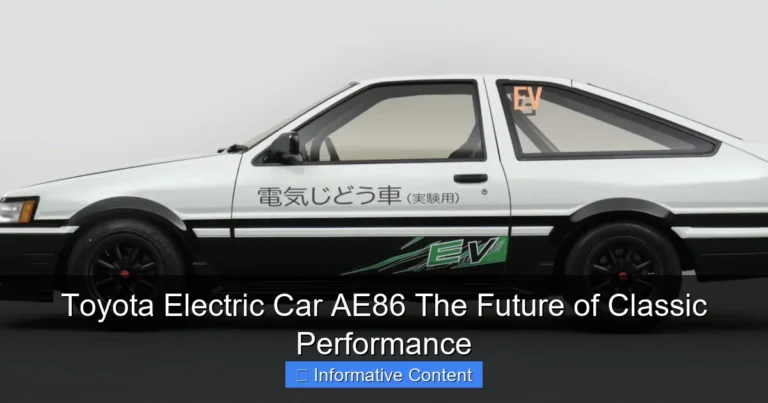
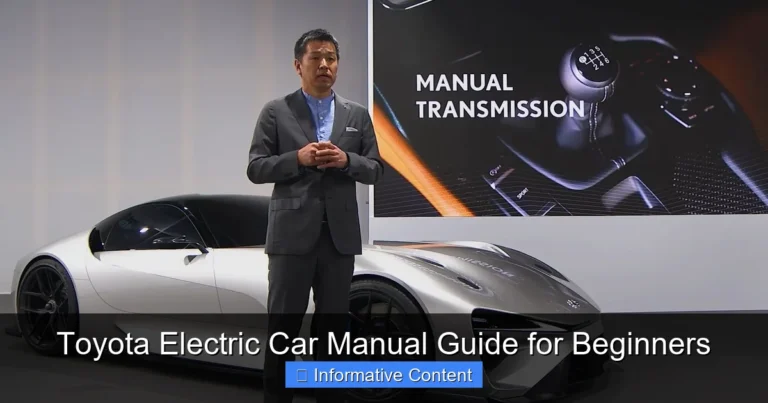
Toyota Battery Electric Car The Future of Eco Friendly Driving
Featured image for toyota battery electric car
Toyota’s battery electric car lineup marks a bold leap toward sustainable, zero-emission driving, combining cutting-edge EV technology with the brand’s legendary reliability. With advanced battery efficiency, rapid charging, and eco-conscious design, these vehicles are redefining the future of green mobility without sacrificing performance or style.
Key Takeaways
- Toyota’s BEVs offer zero-emission driving with advanced battery efficiency.
- Long-range models ensure practicality for daily and long-distance travel.
- Fast-charging tech reduces downtime, enhancing convenience for users.
- Sustainable materials used in interiors align with eco-friendly values.
- Smart integration with home energy systems boosts charging efficiency.
- Safety innovations like collision avoidance set new industry standards.
📑 Table of Contents
- Toyota Battery Electric Car: The Future of Eco-Friendly Driving
- The Evolution of Toyota’s Electrification Strategy
- Inside the Toyota Battery Electric Car: Technology and Innovation
- Toyota bZ4X: A Case Study in Modern BEV Design
- Sustainability Beyond the Tailpipe: Toyota’s Holistic Approach
- Challenges and Future Outlook for Toyota BEVs
- Data Table: Toyota BEV Models and Specifications (2023–2024)
- Conclusion: Driving Toward a Greener Tomorrow
Toyota Battery Electric Car: The Future of Eco-Friendly Driving
In an era where climate change dominates global conversations and sustainability becomes a non-negotiable priority, the automotive industry is undergoing a transformative shift. Among the pioneers of this green revolution stands Toyota, a brand long synonymous with reliability, innovation, and forward-thinking engineering. While Toyota made its mark with the Prius—the world’s first mass-produced hybrid vehicle—the company is now accelerating its commitment to zero-emission mobility with a bold new chapter: Toyota battery electric car (BEV) models. These vehicles represent more than just an alternative to gasoline; they embody a vision for cleaner air, reduced carbon footprints, and smarter transportation systems.
As governments worldwide set ambitious targets to phase out internal combustion engines and consumers grow increasingly eco-conscious, the demand for battery electric vehicles (BEVs) has surged. Toyota, once cautious about fully embracing BEVs, has pivoted with renewed vigor, investing billions into electrification, battery technology, and charging infrastructure. With the launch of models like the Toyota bZ4X, the company is proving that its legendary durability and customer-centric design can seamlessly integrate with the latest in electric mobility. This blog post explores Toyota’s journey into the world of battery electric cars, the technology behind them, their real-world performance, and why they may be the future of eco-friendly driving.
The Evolution of Toyota’s Electrification Strategy
From Hybrids to Full Electrification: A Strategic Pivot
Toyota’s journey into electrification began in 1997 with the launch of the Prius, a hybrid electric vehicle (HEV) that combined a gasoline engine with an electric motor and a small battery. Over the next two decades, Toyota sold over 15 million hybrids, establishing itself as the global leader in electrified mobility. However, the rise of pure battery electric vehicles (BEVs) from competitors like Tesla, Nissan, and Hyundai forced Toyota to rethink its long-term strategy. Initially, the company emphasized hydrogen fuel cells and plug-in hybrids (PHEVs), but by 2020, it recognized the growing market demand for BEVs and announced a comprehensive electrification roadmap.
In 2021, Toyota unveiled its “Beyond Zero” (bZ) sub-brand, signaling a full commitment to battery electric vehicles. The “bZ” stands for “beyond Zero,” representing Toyota’s goal of achieving not just zero emissions, but also zero traffic accidents, zero congestion, and zero environmental impact. This strategic pivot includes plans to launch 30 BEV models by 2030, covering all vehicle segments from compact city cars to full-size SUVs and pickup trucks. The shift reflects Toyota’s understanding that while hybrids are a critical bridge, BEVs are the ultimate destination for sustainable transportation.
Why Toyota Was Cautious—And Why It’s Now Going All-In
Toyota’s initial hesitance to embrace BEVs stemmed from legitimate concerns: battery longevity, charging infrastructure, and consumer range anxiety. Unlike startups that could afford to take risks, Toyota had a responsibility to its millions of loyal customers to deliver vehicles that were not only eco-friendly but also reliable, safe, and affordable. The company spent years researching battery degradation, thermal management, and fast-charging compatibility. By leveraging its vast manufacturing experience and partnerships with battery giants like Panasonic and CATL, Toyota ensured that its BEVs would meet the same high standards as its gasoline and hybrid models.
Today, Toyota’s BEV strategy is built on three pillars: battery innovation, global scalability, and customer trust. Unlike some competitors that rushed BEVs to market with limited real-world testing, Toyota’s approach prioritizes durability and long-term value. For example, the bZ4X underwent over 1 million miles of real-world testing before launch, including extreme weather conditions and off-road scenarios. This meticulous approach has earned Toyota early praise from industry analysts and environmental groups alike.
Inside the Toyota Battery Electric Car: Technology and Innovation
Advanced Lithium-Ion and Solid-State Battery Systems
At the heart of every Toyota battery electric car is a cutting-edge battery system designed for performance, safety, and longevity. The current generation, including the bZ4X, uses lithium-ion (Li-ion) pouch batteries developed in collaboration with Panasonic. These batteries offer a high energy density of up to 170 Wh/kg, enabling a driving range of up to 250–315 miles (EPA estimated) depending on the model and configuration.
But Toyota isn’t stopping there. The company is investing heavily in solid-state battery (SSB) technology, which promises to revolutionize electric mobility. SSBs use a solid electrolyte instead of liquid, offering several advantages:
- Faster charging: Potential for 10–15 minute full charges
- Higher energy density: Up to 2x the capacity of Li-ion
- Improved safety: Reduced risk of fire or leakage
- Longer lifespan: Over 1,000 charge cycles with minimal degradation
Toyota aims to launch its first solid-state BEV by 2027–2028, positioning it as a game-changer in the industry. In fact, the company holds more SSB patents than any other automaker—over 1,000—giving it a significant technological edge.
E-TNGA Platform: The Backbone of Toyota’s BEV Lineup
All Toyota BEVs are built on the e-TNGA (Toyota New Global Architecture) platform, a modular electric vehicle architecture designed for flexibility, safety, and efficiency. Unlike traditional platforms, e-TNGA allows Toyota to:
- Produce BEVs in the same factories as gasoline and hybrid vehicles, reducing costs
- Customize battery size, motor placement, and wheelbase for different models
- Integrate advanced driver assistance systems (ADAS) and over-the-air (OTA) software updates
The platform supports both front-wheel drive (FWD) and all-wheel drive (AWD) configurations. For example, the bZ4X FWD model uses a single 201-hp motor, while the AWD version features dual motors delivering 215 hp and 248 lb-ft of torque. This modularity ensures that Toyota can quickly scale its BEV offerings across global markets without compromising quality or performance.
Regenerative Braking and Energy Efficiency
Toyota’s BEVs incorporate advanced regenerative braking systems that convert kinetic energy back into electricity during deceleration. Drivers can adjust the level of regeneration using paddle shifters, allowing for one-pedal driving in urban environments. This feature not only improves energy efficiency but also reduces brake wear—saving owners money on maintenance.
Additionally, Toyota uses heat pump climate control systems in its BEVs, which are up to 30% more efficient than traditional resistive heaters. This is especially important in cold climates, where cabin heating can significantly reduce range. By optimizing every component—from aerodynamics to tire rolling resistance—Toyota ensures that its BEVs deliver maximum miles per kWh, minimizing environmental impact.
Toyota bZ4X: A Case Study in Modern BEV Design
Design and Interior: Where Style Meets Sustainability
The Toyota bZ4X is the brand’s flagship BEV and a showcase of its design philosophy. With a sleek, futuristic silhouette and a 0.28 drag coefficient, the bZ4X is engineered for efficiency. The front fascia features a closed grille, sharp LED headlights, and a bold “hammerhead” design that sets it apart from traditional SUVs. The interior blends minimalism with functionality, featuring a 12.3-inch touchscreen infotainment system, a digital instrument cluster, and sustainable materials like plant-based plastics and recycled fabrics.
One standout feature is the “Yoke” steering wheel (available on select trims), inspired by racing cars and designed to improve visibility and driver engagement. The cabin also includes ample legroom, a flat floor (thanks to the e-TNGA platform), and a panoramic sunroof, creating a spacious and comfortable environment for passengers.
Performance and Real-World Driving Experience
Behind the wheel, the bZ4X delivers a smooth, quiet ride—typical of BEVs—but with Toyota’s signature refinement. The FWD model accelerates from 0–60 mph in 7.1 seconds, while the AWD version does it in 6.5 seconds, making it competitive with rivals like the Ford Mustang Mach-E and Hyundai Ioniq 5.
Real-world drivers report a range of 230–280 miles on a full charge, depending on driving style, terrain, and temperature. For example, a 2023 test by Car and Driver found that the AWD bZ4X achieved 264 miles in mixed city/highway driving—close to the EPA’s 252-mile estimate. Off-road capability is also impressive, with 8.3 inches of ground clearance and Toyota’s X-MODE system for traction in snow, mud, or sand.
Pro Tip: To maximize range, use the “Eco” driving mode, pre-condition the battery when connected to a charger, and avoid aggressive acceleration. Toyota’s app also provides personalized energy usage reports to help drivers optimize efficiency.
Charging and Connectivity: Staying Powered On the Go
The bZ4X supports DC fast charging up to 150 kW, allowing the battery to charge from 10% to 80% in about 30 minutes at compatible stations. For home charging, it comes with a 7.6 kW Level 2 charger (sold separately) that can fully recharge the battery in 9–10 hours. Toyota also partners with ChargePoint and EVgo to provide discounted charging rates for bZ4X owners.
Connectivity features include:
- Over-the-air (OTA) software updates
- Remote climate control and charging scheduling via the Toyota app
- Voice-activated navigation and entertainment
- Wi-Fi hotspot capability (with subscription)
These features ensure that the bZ4X remains up-to-date and convenient, even as technology evolves.
Sustainability Beyond the Tailpipe: Toyota’s Holistic Approach
Green Manufacturing and Supply Chain
Toyota’s commitment to eco-friendly driving extends beyond the vehicles themselves. The company’s BEV production facilities—including the Tahara Plant in Japan and the Kentucky plant in the U.S.—are powered by renewable energy, including solar panels and wind turbines. In fact, Toyota aims to achieve carbon-neutral manufacturing by 2035.
The supply chain is equally green. Toyota works with suppliers to reduce emissions in battery production, such as using recycled cobalt and nickel. The company also recycles 90% of end-of-life vehicle components, including batteries, through its “Battery 3R” program (Reuse, Refurbish, Recycle).
Smart Cities and Mobility Ecosystems
Toyota isn’t just building cars—it’s building mobility ecosystems. The company is piloting projects in cities like Tokyo and Singapore to integrate BEVs with smart grids, autonomous shuttles, and ride-sharing platforms. For example, the “Toyota Woven City” in Japan is a prototype smart city where BEVs, hydrogen vehicles, and AI-powered infrastructure coexist to create a zero-emission urban environment.
Additionally, Toyota is developing vehicle-to-grid (V2G) technology, allowing BEVs to supply electricity back to homes or the grid during peak demand. This not only supports renewable energy integration but also provides financial incentives for owners through utility programs.
Environmental Impact and Carbon Reduction
A single Toyota battery electric car can reduce CO2 emissions by up to 50% over its lifetime compared to a gasoline-powered vehicle, even when accounting for battery production and electricity generation. In regions with clean energy grids (e.g., California, Norway), the reduction exceeds 70%. Toyota’s goal is to reduce lifecycle emissions by 30% per vehicle by 2030, contributing to global climate targets.
Challenges and Future Outlook for Toyota BEVs
Addressing Range Anxiety and Charging Infrastructure
Despite advancements, challenges remain. Range anxiety persists, especially in rural areas with limited fast-charging stations. Toyota is addressing this by:
- Expanding partnerships with charging networks
- Offering free charging for the first three years with bZ4X purchases
- Developing portable charging solutions for emergencies
The company also advocates for government incentives to accelerate charging infrastructure deployment, particularly in underserved regions.
Competition and Market Position
Toyota faces stiff competition from Tesla, Volkswagen, and Chinese brands like BYD. However, Toyota’s strengths lie in its global distribution network, brand trust, and hybrid legacy. Many customers who own Priuses or RAV4 Hybrids are likely to transition to Toyota BEVs, creating a natural upgrade path.
Future models, such as the bZ3X (compact SUV) and bZ5X (large SUV), will target high-demand segments, while the bZ Compact SUV (announced for 2025) aims to capture the urban commuter market.
Long-Term Vision: A Carbon-Neutral Future
By 2035, Toyota plans for 100% of its sales in major markets (U.S., Europe, Japan) to be electrified, with BEVs making up a significant portion. The company also aims to sell 3.5 million BEVs annually by 2030, supported by a $70 billion investment in electrification and battery R&D.
Data Table: Toyota BEV Models and Specifications (2023–2024)
| Model | Range (EPA est.) | Horsepower | 0–60 mph | Fast Charging (10–80%) | Starting Price |
|---|---|---|---|---|---|
| bZ4X FWD | 252 miles | 201 hp | 7.1 sec | 30 min | $42,000 |
| bZ4X AWD | 228 miles | 215 hp | 6.5 sec | 30 min | $44,080 |
| bZ3X (2025, projected) | 280 miles | 230 hp | 6.8 sec | 25 min | $38,000 |
| bZ5X (2025, projected) | 300 miles | 260 hp | 6.2 sec | 28 min | $50,000 |
Conclusion: Driving Toward a Greener Tomorrow
The Toyota battery electric car is more than a technological achievement—it’s a promise to future generations. By combining decades of engineering excellence with a bold vision for sustainability, Toyota is redefining what it means to drive eco-friendly. From the innovative e-TNGA platform to the game-changing potential of solid-state batteries, Toyota’s BEVs offer a compelling mix of performance, reliability, and environmental responsibility.
For consumers, the choice is clear: a Toyota BEV isn’t just a car; it’s a statement. A statement that you care about the planet, value long-term savings, and demand quality. Whether you’re a city commuter, a family adventurer, or an eco-conscious professional, there’s a Toyota BEV designed to fit your life.
As charging infrastructure improves, battery technology advances, and public awareness grows, the transition to electric mobility will accelerate. And with Toyota leading the charge—backed by its global presence, customer trust, and relentless innovation—the future of eco-friendly driving looks brighter than ever. The road ahead is electric, and Toyota is paving it with purpose.
Frequently Asked Questions
What is the range of a Toyota battery electric car?
Toyota battery electric cars, like the bZ4X, offer an estimated range of up to 250 miles on a single charge, depending on driving conditions and trim. This makes them ideal for daily commutes and long-distance eco-friendly driving.
How long does it take to charge a Toyota electric car?
Charging times vary: Level 2 (240V) charging can fully recharge the battery in about 9–12 hours, while DC fast charging can deliver 80% charge in roughly 30 minutes. Toyota is expanding fast-charging infrastructure for added convenience.
Are Toyota battery electric cars eligible for tax incentives?
Yes, many Toyota battery electric car models qualify for federal and state tax credits in the U.S., depending on battery sourcing and vehicle price. Check current incentives to maximize your savings on purchase.
What safety features do Toyota electric cars include?
Toyota electric vehicles come with Toyota Safety Sense™ 3.0, including adaptive cruise control, lane-keeping assist, and automatic emergency braking. Additional EV-specific safeguards protect the battery and charging system.
How does Toyota’s electric car compare to Tesla?
Toyota battery electric cars prioritize reliability, spacious interiors, and rugged design, while Tesla leads in charging network and software. Both offer competitive range and tech, but Toyota appeals to traditional car buyers.
What is Toyota’s plan for future battery electric cars?
Toyota plans to launch 10 new battery electric car models by 2026, targeting 1.5 million global EV sales annually by 2027. Their strategy includes solid-state batteries for longer range and faster charging by 2027.