Toyota Car Electric Revolution The Future of Eco Friendly Driving

Featured image for toyota car electric
Toyota is leading the electric revolution with a bold lineup of eco-friendly vehicles that blend innovation, reliability, and sustainability. From the all-electric bZ4X to hybrid breakthroughs, Toyota car electric models deliver impressive range, cutting-edge tech, and a reduced carbon footprint—proving green driving doesn’t mean sacrificing performance.
Key Takeaways
- Toyota leads the shift to electric with innovative, eco-friendly models.
- Hybrid tech bridges the gap to full EV adoption seamlessly.
- Charging infrastructure is expanding, making electric driving more convenient.
- Affordable options will soon make Toyota EVs accessible to all.
- Battery breakthroughs promise longer range and faster charging times.
- Sustainability focus ensures eco-friendly materials in every new model.
📑 Table of Contents
- Toyota Car Electric Revolution: The Future of Eco-Friendly Driving
- The Evolution of Toyota’s Electric Strategy
- Top Toyota Electric Models: Performance, Range, and Features
- Charging Solutions and Infrastructure
- Environmental Impact and Sustainability Efforts
- Cost of Ownership and Incentives
- Conclusion: Embracing the Toyota Electric Future
Toyota Car Electric Revolution: The Future of Eco-Friendly Driving
The automotive world is undergoing a seismic shift, and at the forefront of this transformation stands Toyota car electric technology. As climate change concerns intensify and governments worldwide implement stricter emissions regulations, Toyota—a company once synonymous with hybrid innovation—is now accelerating its electric vehicle (EV) ambitions. From the groundbreaking Prius to today’s bZ series, Toyota has consistently pushed the boundaries of sustainable mobility, proving that eco-friendly driving doesn’t mean sacrificing performance, reliability, or comfort.
For decades, Toyota’s hybrid vehicles dominated the green car market, but the company’s recent pivot toward all-electric models signals a new chapter. With over $70 billion allocated to electrification by 2030 and plans to launch 30 battery-electric vehicle (BEV) models globally, Toyota is redefining what it means to be a leader in clean transportation. This revolution isn’t just about replacing gasoline engines with batteries; it’s about reimagining the entire driving experience—from energy efficiency and smart connectivity to safety features and ownership costs. Whether you’re a longtime Toyota loyalist or a first-time EV shopper, understanding Toyota’s electric strategy is crucial for navigating the future of eco-friendly driving.
The Evolution of Toyota’s Electric Strategy
From Hybrids to Full Electrification: A Strategic Shift
Toyota’s journey into electrified transportation began in 1997 with the launch of the first-generation Prius, the world’s mass-produced hybrid electric vehicle. Over the next two decades, Toyota sold more than 20 million hybrid vehicles globally, establishing itself as a pioneer in fuel-efficient technology. However, while competitors like Tesla, Volkswagen, and General Motors charged ahead with all-electric models, Toyota maintained a cautious approach, focusing on hybrids, plug-in hybrids (PHEVs), and hydrogen fuel cell vehicles (FCEVs).
This strategic patience allowed Toyota to refine battery technology, thermal management systems, and charging infrastructure partnerships before fully committing to BEVs. By 2021, the company unveiled its “Beyond Zero” (bZ) brand, signaling a bold new direction. The bZ4X, Toyota’s first global all-electric SUV, launched in 2022 as the flagship of this initiative. Unlike previous electrified models, the bZ4X was designed from the ground up as a BEV, featuring dedicated EV architecture (e-TNGA) optimized for performance, range, and safety.
Key milestones in Toyota’s electrification timeline:
- 1997: First-generation Prius hybrid debuts
- 2005: Introduction of the RAV4 EV (limited release)
- 2014: Launch of Mirai hydrogen fuel cell vehicle
- 2021: Announcement of 30 BEV models by 2030
- 2022: Global rollout of bZ4X SUV
- 2023: Expansion of bZ lineup with compact and mid-size concepts
Why Toyota Delayed Full EV Commitment
Toyota’s slower transition to BEVs compared to rivals wasn’t due to lack of innovation but rather a calculated risk assessment. The company prioritized total lifecycle emissions over headline-grabbing zero-emission claims. In many regions, especially where electricity generation relies heavily on fossil fuels, hybrids often produce lower overall emissions than BEVs. Additionally, Toyota emphasized infrastructure readiness—charging networks, battery recycling, and raw material supply chains—before scaling EV production.
For example, Toyota partnered with Panasonic to develop solid-state batteries that promise longer range (up to 745 miles), faster charging (10-15 minutes), and enhanced safety. These next-generation batteries are expected to debut in 2027, addressing key consumer concerns about EV limitations. By focusing on technological maturity and sustainability, Toyota aims to deliver BEVs that are not just cleaner but genuinely superior to internal combustion engine (ICE) vehicles in every aspect.
Top Toyota Electric Models: Performance, Range, and Features
Toyota bZ4X: The Flagship All-Electric SUV
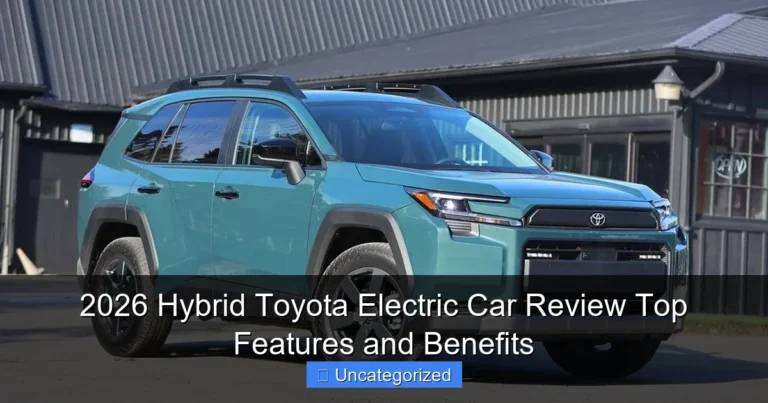
The bZ4X represents Toyota’s most ambitious step into the BEV market. Available in front-wheel drive (FWD) and all-wheel drive (AWD) configurations, this midsize SUV offers a balance of practicality and innovation. The FWD model delivers an EPA-estimated 252 miles of range, while the AWD version achieves 228 miles—competitive figures in its class. Both versions feature a 71.4 kWh lithium-ion battery and DC fast charging capability (up to 150 kW), allowing an 80% charge in approximately 30 minutes.
Standout features of the bZ4X include:
- Solar Roof: Optional photovoltaic panels that can generate up to 1,800 miles of range per year under ideal conditions
- One-Pedal Driving: Regenerative braking system for smoother deceleration and energy recovery
- X-MODE AWD: Off-road traction control for snow, mud, and uneven terrain
- Safety Sense 3.0: Advanced driver assistance systems (ADAS) with lane tracing, adaptive cruise control, and emergency steering
Owners praise the bZ4X’s quiet cabin, intuitive infotainment system (with wireless Apple CarPlay and Android Auto), and spacious interior. However, some critics note that the range drops significantly in cold weather, a common challenge for BEVs. To mitigate this, Toyota recommends pre-conditioning the battery while plugged in and using seat heaters instead of cabin heating when possible.
Upcoming Models: Expanding the bZ Lineup
Beyond the bZ4X, Toyota has teased several upcoming Toyota car electric models that will cater to diverse needs:
- bZ Compact SUV: A smaller, more affordable BEV targeting urban commuters (expected 2024)
- bZ Large SUV: A three-row family hauler with 300+ miles of range (slated for 2025)
- bZ Sedan: A sleek, aerodynamic model designed for efficiency (concept revealed in 2023)
- bZ Van: An electric commercial van for fleet operators (in development)
These models will leverage Toyota’s new BEV platform, which supports modular battery packs (ranging from 50 kWh to 100 kWh), dual-motor AWD systems, and over-the-air (OTA) software updates. The company also plans to introduce bidirectional charging (vehicle-to-grid or V2G) in select models, allowing EVs to power homes during outages or stabilize the electrical grid.
Hybrid and PHEV Options: Bridging the Gap
For buyers not ready to go fully electric, Toyota offers a robust lineup of hybrid and plug-in hybrid vehicles (PHEVs) that combine ICE efficiency with electric convenience. The Prius Prime PHEV, for instance, provides 44 miles of all-electric range and 52 MPG in hybrid mode, making it ideal for daily commutes. Similarly, the RAV4 Prime PHEV delivers 42 miles of electric driving and 94 MPGe, along with 302 horsepower for spirited acceleration.
Tips for maximizing hybrid/PHEV benefits:
- Charge regularly to take advantage of electric-only driving
- Use the “Hold” mode to preserve battery charge for city driving
- Plan trips using the vehicle’s energy flow display to optimize efficiency
- Consider home solar panels to offset charging costs
Charging Solutions and Infrastructure
Home Charging: Convenience and Cost Savings
For most Toyota car electric owners, home charging will be the primary method of replenishing battery power. Toyota recommends installing a Level 2 charger (240 volts) for optimal convenience. A Level 2 charger can fully recharge a bZ4X in about 9-12 hours, compared to 30+ hours using a standard 120-volt household outlet.
Home charging setup options:
- Dedicated Circuit: Requires an electrician to install a 40-amp, 240-volt circuit (cost: $500-$1,200)
- Smart Charger: Wi-Fi-enabled units (e.g., ChargePoint Home Flex) allow scheduling and energy monitoring
- Load Management: Systems that prevent circuit overload when multiple appliances are running
To reduce costs, Toyota partners with utility companies to offer discounted rates for off-peak charging. For example, in California, PG&E provides a special EV rate plan that charges $0.13/kWh between 12 AM and 3 PM, compared to $0.45/kWh during peak hours. Setting the bZ4X to charge during these periods can cut energy costs by up to 70%.
Public Charging Networks: Accessibility and Reliability
Toyota has forged strategic partnerships to ensure seamless access to public charging stations. All new BEVs come with a free 3-year membership to the ChargePoint network, which includes over 60,000 chargers in North America. Additionally, Toyota integrates PlugShare and Google Maps into its infotainment system, displaying real-time availability, pricing, and compatibility for nearby stations.
Key public charging networks for Toyota EVs:
- ChargePoint: 50 kW DC fast chargers (free for first 3 years)
- EVgo: 350 kW ultra-fast chargers (pay-per-use or subscription)
- Electrify America: 150-350 kW chargers (free for first 30 minutes on select plans)
- Shell Recharge: Growing network with loyalty rewards
When using public chargers, Toyota advises:
- Always verify charger compatibility (CCS or CHAdeMO)
- Start charging sessions via the network’s app to avoid unexpected fees
- Monitor charging progress remotely to prevent overcharging
- Carry a portable charging cable for emergencies
Future-Proofing: V2G and Smart Grid Integration
Toyota is pioneering vehicle-to-grid (V2G) technology through pilot programs in California, Denmark, and Japan. In these systems, parked EVs feed stored energy back into the grid during peak demand periods, earning owners credits on their electricity bills. The bZ4X’s bidirectional charging capability (when paired with an approved inverter) enables this functionality.
For instance, a V2G-enabled bZ4X could provide 7 kWh of power during a 2-hour peak window, offsetting $1.40 in energy costs (at $0.20/kWh). Over a year, this could save owners hundreds of dollars while supporting grid stability. Toyota estimates that a fleet of 10,000 V2G-equipped EVs could power 5,000 homes during emergencies.
Environmental Impact and Sustainability Efforts
Reducing Carbon Footprint Across the Lifecycle
Toyota’s carbon neutrality strategy extends beyond tailpipe emissions to encompass the entire vehicle lifecycle. From raw material sourcing to end-of-life recycling, the company employs a “cradle-to-cradle” approach:
- Materials: 20% of bZ4X interior materials are recycled or bio-based (e.g., bamboo, soy foam)
- Manufacturing: Toyota’s Kentucky plant runs on 100% renewable energy
- Battery Recycling: Partnership with Redwood Materials to recover 95% of battery materials
- End-of-Life: Take-back programs for batteries, with 80% reuse rate for second-life applications
According to a 2023 lifecycle analysis, the bZ4X produces 50% fewer CO2 emissions over 150,000 miles compared to a gasoline-powered RAV4. This gap widens to 70% in regions with clean electricity grids (e.g., Norway, British Columbia).
Addressing Battery Sustainability Challenges
Toyota tackles critical BEV concerns head-on:
- Resource Scarcity: Developing cobalt-free batteries to reduce reliance on conflict minerals
- Water Usage: Closed-loop cooling systems in battery production reduce water consumption by 40%
- Second-Life Batteries: Used EV batteries power forklifts, backup systems, and solar farms
- Solid-State Innovation: Next-gen batteries will last 1,500 cycles (vs. 1,000 for lithium-ion)
The company’s “Battery 30@30” initiative aims to produce 30 GWh of batteries annually by 2030—enough for 300,000 bZ4X equivalents—while reducing battery costs by 50% through economies of scale and process optimization.
Cost of Ownership and Incentives
Upfront Costs vs. Long-Term Savings
While the Toyota car electric models have higher sticker prices than their ICE counterparts, the total cost of ownership (TCO) often favors BEVs. Consider this comparison for a 5-year ownership period (15,000 miles/year):
| Vehicle | MSRP | Fuel/Energy Cost | Maintenance | Depreciation | Total TCO |
|---|---|---|---|---|---|
| bZ4X (FWD) | $42,000 | $1,800 (electric) | $1,200 | $18,000 | $21,000 |
| RAV4 Hybrid | $31,000 | $3,750 (gas) | $1,800 | $12,000 | $24,550 |
| RAV4 (ICE) | $28,000 | $6,000 (gas) | $2,500 | $11,000 | $27,500 |
Note: Energy costs based on $0.15/kWh (home charging) and $4.00/gallon (gas). Maintenance includes routine services and tire rotations.
Key factors driving BEV savings:
- Lower Energy Costs: Electricity is cheaper per mile than gasoline
- Reduced Maintenance: No oil changes, spark plugs, or exhaust systems
- Higher Resale Value: BEVs depreciate slower than ICE vehicles (25% vs. 35% over 5 years)
Government Incentives and Tax Credits
Multiple programs can offset the initial purchase price:
- Federal Tax Credit: Up to $7,500 for qualifying BEVs (bZ4X currently eligible)
- State Rebates: California ($2,000), New York ($2,000), Colorado ($5,000)
- Utility Discounts: Free home charger installation (e.g., Southern California Edison)
- HOV Lane Access: Solo drivers in electric vehicles exempt from carpool rules in 10 states
To claim incentives, owners should:
- Verify eligibility through the IRS Energy Credits website
- Keep purchase documents and charging receipts
- File IRS Form 8936 with their tax return
- Check for local programs via Database of State Incentives for Renewables & Efficiency (DSIRE)
Conclusion: Embracing the Toyota Electric Future
Toyota’s car electric revolution is not a fleeting trend but a fundamental transformation rooted in decades of innovation. By combining its legendary reliability with cutting-edge EV technology, Toyota is making eco-friendly driving accessible, practical, and enjoyable. The bZ4X and upcoming models demonstrate that electric vehicles can excel in range, safety, and user experience—without compromising the durability Toyota owners expect.
As battery advancements, charging infrastructure, and sustainability practices continue to evolve, Toyota is well-positioned to lead the next generation of mobility. Whether you choose the all-electric bZ4X, a plug-in hybrid like the Prius Prime, or await future solid-state battery models, you’re investing in a cleaner, smarter transportation future. The road ahead is electric, and Toyota is paving the way with a vision that balances environmental responsibility with real-world usability. For drivers seeking a seamless transition to sustainable mobility, the Toyota car electric revolution isn’t just the future—it’s already here.
Frequently Asked Questions
What makes the Toyota car electric lineup stand out in the EV market?
Toyota’s electric cars combine decades of hybrid expertise with cutting-edge battery technology, offering reliability and efficiency. Models like the bZ4X feature all-wheel drive and solar charging options, setting them apart from competitors.
How long does it take to charge a Toyota electric car?
Using a Level 2 charger, most Toyota electric vehicles reach full charge in 6-9 hours. DC fast charging can replenish 80% of the battery in about 30 minutes, depending on the model and conditions.
What is the driving range of Toyota’s electric vehicles?
Toyota’s electric cars offer ranges from 200 to 300+ miles per charge, with the bZ4X achieving up to 252 miles on a single charge. Real-world range varies based on driving habits, terrain, and temperature.
Does Toyota offer home charging solutions for their electric cars?
Yes, Toyota partners with Qmerit to provide professional home charging station installation. Buyers can choose from Level 2 chargers with smart features like scheduling and energy tracking.
Are Toyota electric vehicles eligible for government incentives?
Many Toyota car electric models qualify for federal tax credits up to $7,500, plus potential state rebates. Eligibility depends on the vehicle’s battery components and assembly location under current regulations.
How does Toyota’s warranty cover electric vehicle components?
Toyota offers an 8-year/100,000-mile battery warranty for electric vehicles, plus 3-year/36,000-mile bumper-to-bumper coverage. Additional powertrain protection extends to 5 years/60,000 miles.